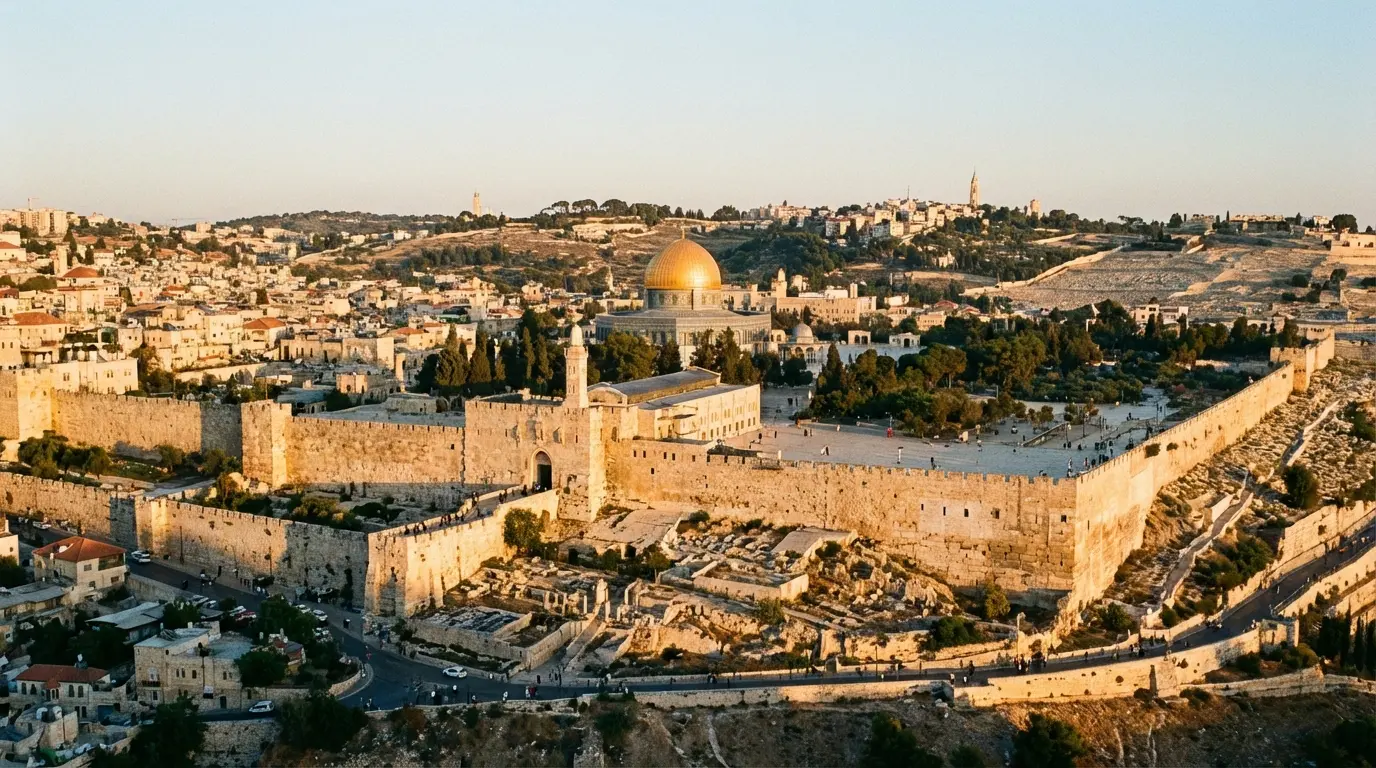
There’s a moment that happens to almost every group leader I’ve ever accompanied to Israel. It’s usually not at the Western Wall, though that’s extraordinary. And it’s not at the Sea of Galilee, though that tends to move people deeply too. It’s somewhere quieter, somewhere they didn’t expect. A narrow alley in the Old City. The tomb of a rabbi they’ve read about their whole lives. A mosaic floor from the first century, still intact beneath their feet. Something clicks, and they understand, maybe for the first time, that they’re not standing near history. They’re standing inside it.
That’s what an israel heritage tour is really about. Not a checklist of sites, but a layered encounter with the faith traditions that shaped your congregation’s entire worldview. The land is the text made physical. And when your community walks it together, something changes in how they understand their own spiritual lives.
This guide is written for you, the organizer. The rabbi, the pastor, the synagogue president, the church leader who carries the weight of planning something meaningful for people who are trusting you with one of the most significant experiences of their lives. I want to help you understand what Israel actually offers, what most groups miss, and what the journey will look and feel like when it’s done well.
What Makes Israel Different From Every Other Heritage Destination
You can visit ancient sites almost anywhere in the world. Greece, Egypt, Jordan, Turkey, all of them have layers of human history reaching back thousands of years. But Israel is different, and I think it’s worth saying why clearly.
In most ancient destinations, the sacred story is historical. It happened, it was meaningful, and it’s now preserved behind glass or cordoned off with velvet ropes. In Israel, the story is still active. The communities are still here. The prayers are still being said in the same languages, in many of the same buildings, pointing toward the same mountains. Judaism, Christianity, and Islam are all living traditions in this land, not museum exhibits. That’s genuinely unusual, and it changes how a visit feels.
For your congregation, that means their own faith isn’t something they’re studying from a distance. They’re walking into it. The texts they’ve read, the traditions they observe, the holidays they celebrate, they have physical addresses here. That’s a rare and honestly quite overwhelming thing to experience, and most people aren’t prepared for how affecting it is.
There’s also the sheer density of it. Jerusalem alone holds thousands of years of sacred history within a few square kilometers. A single morning’s walk can take you from a first-century synagogue ruin to a Crusader church to an Ottoman bazaar to a living Jewish neighborhood where the Shabbat candles are lit on Friday evening just as they always have been. That density is both exhilarating and, at times, hard to absorb. Having a guide who can help your group slow down and actually inhabit each place, rather than photograph and move on, makes an enormous difference.
The Four Holy Cities: And What Each One Means
Judaism recognizes four cities as especially sacred: Jerusalem, Safed, Tiberias, and Hebron. Most heritage tours touch Jerusalem and maybe Tiberias. Fewer make time for Safed and Hebron, which is a shame, because each one has a character that the others don’t, and together they tell a more complete story of the Jewish relationship to this land.
Jerusalem
Jerusalem is where most heritage journeys begin and end, and honestly, it earns that centrality. The Old City is divided into four quarters, each carrying its own weight of history, and the Western Wall, the last standing structure from Herod’s Temple, remains one of the most spiritually charged places I’ve encountered anywhere. The Temple Mount above it, sacred to both Judaism and Islam, and the Church of the Holy Sepulchre nearby (revered by multiple Christian traditions as the site of the crucifixion and resurrection) make the Old City a place where the Abrahamic faiths genuinely converge in a way you don’t find anywhere else on earth.
For Jewish groups, the experience of approaching the Wall with your community, of having a moment of prayer in that ancient courtyard, is something that tends to stay with people for the rest of their lives. For Christian groups, the stations of the Via Dolorosa and the Garden of Gethsemane carry a different kind of weight, quieter, maybe, but no less profound.
Safed
Safed (Tzfat) is perched in the hills of the Upper Galilee, and if Jerusalem is the city of kings and prophets, Safed is the city of mystics. The Kabbalist masters settled here in the 16th century, and the town became the world center of Jewish mysticism. The Ari’s tomb (Rabbi Isaac Luria, the most influential Kabbalist of his era) draws visitors year-round. The Etz Chaim Synagogue, founded in 1742, still holds regular services. And the winding stone alleyways of the artists’ quarter have a quality of stillness that’s genuinely unusual in Israel, which tends toward noise and energy.
Groups with any interest in Jewish spirituality, mysticism, or the inner life of the tradition tend to find Safed unexpectedly moving. It’s a place that rewards slowness.
Tiberias
Tiberias sits on the western shore of the Sea of Galilee, and for Jewish tradition, it’s the burial place of two towering figures: Maimonides (the Rambam, the great medieval philosopher and legal scholar) and Rabbi Akiva (the second-century sage who, according to tradition, died with the Shema on his lips). The Galilee region more broadly carries the weight of the Mishnah and Talmud, much of rabbinic Judaism as we know it was shaped here, after the destruction of the Second Temple.
For Christian groups, the Sea of Galilee is where much of Jesus’s ministry took place, and a boat ride on the water, following the path of the Gospels, can be quietly extraordinary.
Hebron
Hebron is the most historically and politically complex of the four holy cities, and I want to be honest about that rather than gloss over it. It’s in the West Bank, the access arrangements are different from other sites, and it requires careful logistical planning. But the Cave of Machpelah, the tomb of the Patriarchs and Matriarchs, where Abraham, Isaac, Jacob, Sarah, Rebecca, and Leah are traditionally believed to be buried, is one of the oldest continuously venerated sacred sites in the world. For Jewish groups especially, standing at the tomb of the founding family of the people is something that simply can’t be replicated anywhere else. It’s worth the extra planning.
Beyond the Famous Sites: What Most Groups Miss
The Western Wall and the Church of the Holy Sepulchre are famous for good reason. But an israel heritage tour that only visits the famous sites is a bit like visiting Rome and only seeing the Colosseum. There’s so much more, and some of it is, honestly, more moving.
Shiloh is where the Tabernacle stood, where the Ark of the Covenant rested for roughly 369 years before it was brought to Jerusalem. This was the spiritual center of ancient Israel before the Temple existed, and yet most standard itineraries skip it entirely. I’m not sure why. It’s a powerful site, especially for groups with a deep connection to the biblical narrative.
Zippori (also called Sepphoris) is a first-century city that was, at its peak, one of the most important urban centers in the Galilee. The “Mona Lisa of Galilee”, a breathtaking mosaic portrait of a woman, part of a larger Roman dining room floor, has to be seen in person to be fully appreciated. The site also includes a synagogue floor with a stunning zodiac mosaic from the Byzantine period. Zippori sits near Nazareth and is almost never on standard tour itineraries, which is a genuine loss.
Ein Karem is a quiet village on the outskirts of Jerusalem, the traditional birthplace of John the Baptist. It’s a place I know personally, and I’ll say more about it in the next section. But many groups who visit Jerusalem never even know it exists.
Mount Meron, with the tomb of Rabbi Shimon bar Yochai, the compiler of the Zohar and the foundational text of Kabbalah, draws one of the largest annual pilgrimages in Israel. Outside of Lag B’Omer, though, it’s often tranquil and deeply atmospheric.
How Heritage Tours in Israel Actually Work
Group tours for congregations
Most congregational heritage tours work on a model where the group travels together, with a dedicated guide for the duration. The itinerary is built around your community’s specific tradition, interests, and pace. A synagogue group and a church group might visit many of the same sites, but the emphasis, the stories, and the spiritual framing will be completely different.
Group leaders generally don’t need to manage the day-to-day logistics on the ground. A good tour operator handles hotel pickup and dropoff from Tel Aviv and Jerusalem, coordinates with local guides and site administrators, and makes sure your group is where it needs to be. Your role, and it’s an important one, is to be the spiritual leader of the experience. To gather your community at the meaningful moments, to reflect together, to pray together if that’s your practice. The logistical questions shouldn’t be falling on you.
One practical note: with groups of 15 or more participants, the group leader travels with a complimentary spot. It’s a standard arrangement, and it means the person doing the most planning and carrying the most responsibility for the trip can participate fully without additional cost.
Private tours for families
Some families, especially those planning a bar or bat mitzvah trip, a multigenerational pilgrimage, or a journey connected to a specific family heritage, prefer a private arrangement. The pacing is different, the itinerary can be more tailored, and the experience is more intimate. This is particularly meaningful for families who have roots in specific communities or regions of Israel and want to trace that lineage on the ground.
Planning Your Journey: Practical Essentials
When to go. The two best seasons for heritage travel in Israel are spring (March through May) and autumn (September through November). Summers are genuinely hot, and the peak tourist season means crowding at major sites. The shoulder seasons offer more comfortable weather, less congestion, and often a calmer, more contemplative experience at sacred spaces. Spring also brings the landscape into bloom, which is lovely in the Galilee especially.
How long. Most meaningful congregation trips run between eight and twelve days. Shorter than that and you’re rushing; you might see the major sites but you won’t have time to absorb them. Longer than that, and fatigue becomes a factor, though some groups with very specific research or family heritage goals do extended journeys of two weeks or more.
What to prepare your community. The most useful thing you can do before the trip is help your congregation engage with the places you’ll be visiting before you arrive. Not a lecture series necessarily, but maybe a few texts, a story or two about a particular site, a sense of what they’ll encounter. Groups that arrive with some prior engagement tend to have a much richer experience because they’re not starting from zero when they walk through the gate.
Physical considerations. Many heritage sites involve uneven terrain, stairs, and a fair amount of walking. This is worth communicating honestly to your community in advance. Most sites are accessible for people with moderate mobility, and a good guide will know the best approach routes. But it’s worth knowing before you go, so no one is caught off guard.
A Note From Dina
I want to say something directly, from one person who loves this land to someone who is considering bringing their community here.
I grew up in Ein Karem. I spent my childhood in the hills around Jerusalem, running past olive trees that were old when my grandfather was young. When I started working with Israel’s Ministry of Tourism over twenty years ago, I didn’t think of it as a career. I thought of it as a way to share something I had been given for free, something that had shaped who I am.
When I lead a group through the Old City, or stand at the tomb of Maimonides, or walk the shores of the Galilee with a congregation that has traveled thousands of miles to be here, I’m not narrating someone else’s story. This is my home. These are my people’s stories, and in many cases, they’re your community’s stories too.
I don’t think there’s a more meaningful journey you can offer your congregation. And I take the responsibility of it seriously, probably more seriously than I can adequately express. So if you’re considering this, please reach out. I’d love to talk about what would be most meaningful for your specific community.
Frequently Asked Questions
Is Israel safe for group travel?
It’s one of the most common questions I hear, and I understand why. The honest answer is that the experience of visiting Israel as a heritage traveler, in the areas and during the seasons when groups typically travel, is generally quite safe. The country has an extensive security infrastructure, and the tourist areas of Jerusalem, the Galilee, and the Mediterranean coast are well-patrolled and well-managed. Like any destination in the world, specific conditions can change, and it’s always worth checking current advisories before finalizing travel. What I can say from twenty-plus years of leading groups here is that the vast majority of journeys are peaceful, moving, and entirely uneventful from a safety perspective.
How far in advance should we start planning?
For congregation trips, I’d suggest starting the conversation at least nine to twelve months before your intended departure. The best travel seasons fill up, and there are meaningful decisions, around itinerary, accommodation, group size, and community preparation, that benefit from time. Six months is workable, but you’ll have fewer options. Four months or less and we’re in reactive mode, which nobody enjoys.
Can we customize the itinerary around our tradition or community’s specific interests?
Yes, and honestly this is one of the most important things to get right. A journey that’s built around your congregation’s actual spiritual life, rather than a generic checklist of famous sites, is a completely different experience. We build itineraries around the stories, traditions, and texts that matter to your specific community. If your congregation has a deep connection to Kabbalah, we spend meaningful time in Safed. If you’re leading a Christian pilgrimage focused on the life of Jesus, the Galilee and Jerusalem get shaped very differently than they would for a Jewish heritage group. The conversation about what matters to you is where planning really starts.
What should participants bring?
Comfortable walking shoes that you’ve already broken in are probably the single most important practical item. Layers for temperature variation, especially in Jerusalem in spring or autumn, where mornings and evenings can be cool while afternoons are warm. Modest dress for sacred sites (both Jewish and Muslim sites require covered shoulders and knees; head coverings are expected at some locations). A small journal is something many travelers wish they’d brought, because the experiences tend to accumulate faster than memory alone can hold.
How do I explain the cost to my congregation?
This is a real question and I respect it. Heritage travel to Israel is a significant investment. The most honest framing I know is this: it’s probably the most spiritually significant journey your community will take together, and the effects of it tend to last for decades, not just weeks. People come back changed. Relationships in the community deepen. Faith gets grounded in something physical and real. That doesn’t make the cost easy for every family, and it’s worth thinking carefully about how to structure the trip to be accessible to as many members of your community as possible. Group size, trip length, and accommodation choices all affect the overall cost, and there’s usually more flexibility than people expect.
For more on what Heritage Tours offers in Israel, visit our Israel destination page.
Thinking about bringing your congregation to Israel? Dina Aharon was born in Ein Karem, Jerusalem. She’s been leading heritage journeys here for over 20 years. Contact us, she’ll personally help you plan the trip.