One question comes up in almost every planning conversation: when should we go?
It’s more complicated than most travel guides make it sound. For a heritage journey, a Jewish congregation coming for Passover, a church group that’s dreamed of the Via Dolorosa, a community that wants to experience Shabbat in Jerusalem the way it’s actually lived, the calendar matters as much as the weather.
So let’s work through it honestly.
The Short Answer (for group leaders who need it fast)
Spring (March-May) and Autumn (September-November) are the best times to bring your congregation to Israel.
Both seasons offer mild temperatures, meaningful festival opportunities, and itineraries that don’t require hiding indoors by noon. If you can align your dates with Passover, Easter, or Sukkot, even better. Those weeks are spiritually electric in a way that’s hard to replicate any other time of year.
If neither season works, Winter (December-February) is a solid third option, especially for Christian groups drawn to Christmas in Bethlehem. Summer is the one season most heritage groups avoid, and I’ll explain why.
Spring (March-May): The Heritage Traveler’s Favorite Season
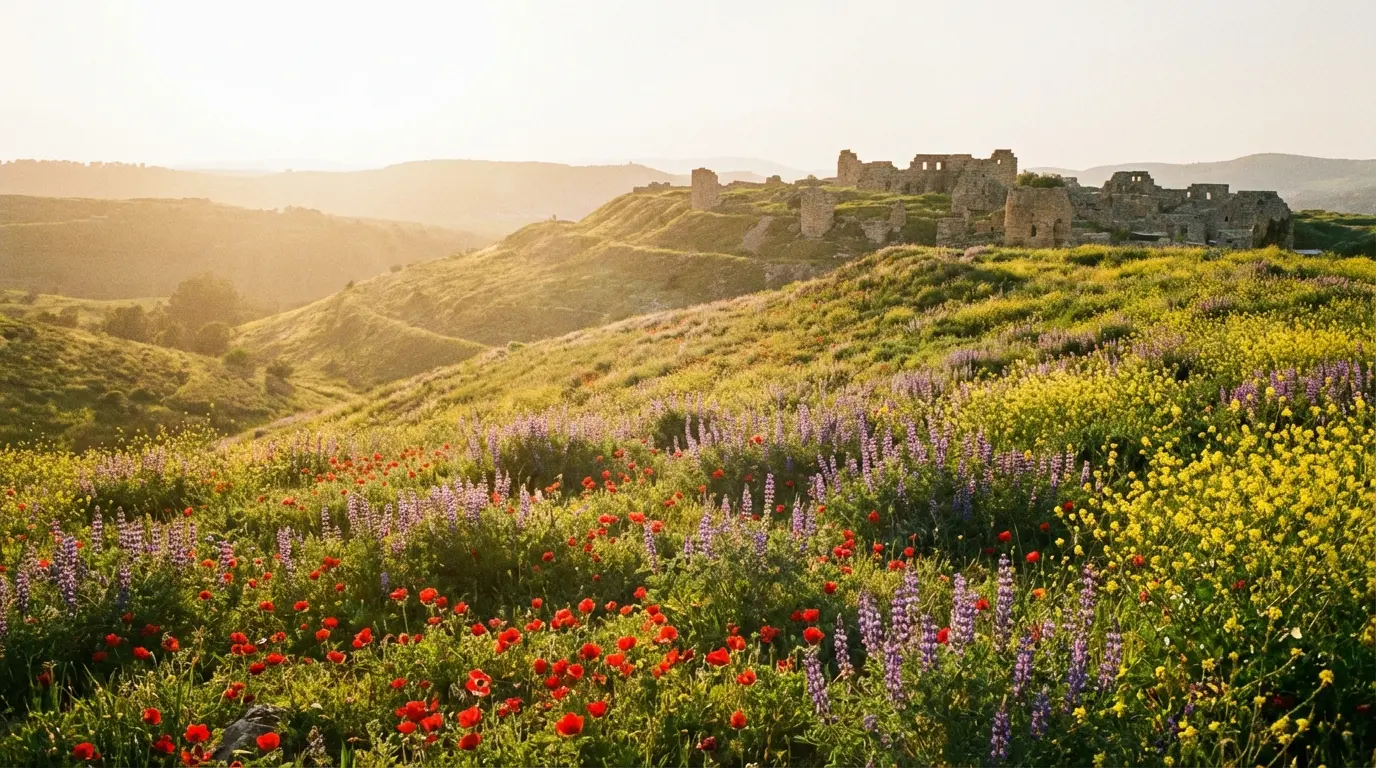
Spring is probably the most popular season for faith-based travel to Israel, and it earns that reputation. Temperatures are right, daytime highs around 70-79°F (21-26°C) in Jerusalem, cooler in the mornings, warm but manageable in the afternoons. The landscape is at its most beautiful: Galilee carpeted in wildflowers, the Judean hills still green, the air in Jerusalem clean and cool before the summer sets in.
Passover in Jerusalem
For Jewish groups, Passover in Jerusalem belongs on a short list of genuinely once-in-a-lifetime experiences. The city fills with Jewish families from Israel and around the world. The Kotel on the night of the Seder is unlike anything else.
That said: book early. 12-18 months early. Hotels fill fast and prices spike during festival week. Most restaurants in Jerusalem close entirely for Passover, and those that stay open require advance reservations. The week of Passover itself (Chol HaMoed) is also a national holiday, which means Israeli families are traveling everywhere. Popular sites are crowded, but it’s a different kind of crowd. Families celebrating. There’s something wonderful about that if you plan around it.
Easter in Bethlehem and the Old City
For Christian groups, Easter may be the most meaningful time to be here. The Good Friday processions along the Via Dolorosa draw pilgrims from all over the world. The Church of the Holy Sepulchre is packed, but there’s also an energy in that space during Holy Week that you don’t find at other times of year.
Bethlehem at Easter is worth knowing about separately from Jerusalem. The Church of the Nativity holds services, and the town itself is less overwhelmed than it is during Christmas season.
Practical note: for Easter, book 12-18 months out. No exceptions.
Weather, Wildflowers, and Crowd Levels
Outside the major festival windows, March through early April offers lower crowds and some of the most beautiful scenery of the year. By late April crowds build as Passover and Easter approach. May is warm and pleasant, with visitor numbers easing after the spring festivals.
Autumn (September-November): The Second Peak Season
If Spring is the favorite, Autumn is a very close second. The summer heat has broken by mid-September. The rains haven’t started yet. Temperatures settle into a similar comfortable range, good for walking, cool in the evenings.
And the festival calendar in Autumn is, if anything, richer than Spring.
Sukkot: Israel’s Most Festive Week
If you want to experience Israel in full celebratory mode, plan around Sukkot. It falls in late September or October (the Hebrew calendar shifts dates each year), and it’s probably the most visually joyful week in the Jewish year. Sukkot, the festival booths, appear on balconies, in hotel courtyards, and throughout the Old City’s alleys. The Simchat Torah celebration at the end of the holiday, with Torah scrolls carried through the streets, singing and dancing, is something most visitors simply don’t expect.
For Jewish congregations especially, Sukkot in Jerusalem is the kind of experience that reshapes how people understand what a living Jewish civilization actually looks like.
High Holy Days and What That Means for Planning
Rosh Hashanah and Yom Kippur fall before Sukkot, usually in September. Many venues, restaurants, and shops close during this period. Yom Kippur is unlike anything most visitors have seen: the roads genuinely empty of cars, Jerusalem falling into a deep quiet that some groups find moving and others find logistically challenging.
The practical takeaway: plan hotel dinners in advance for these dates. If you’re organizing with Heritage Tours, this is handled. If you’re planning independently, build in that extra layer.
Winter (December-February): Quiet, Meaningful, Cold
Winter is an underrated time to visit Israel. And it’s worth considering seriously if your group has flexibility.
Christmas in Bethlehem
For Christian groups, Christmas in Bethlehem is a bucket-list experience. Manger Square fills on Christmas Eve. Midnight Mass at the Church of the Nativity is something people remember for the rest of their lives. It’s crowded and logistically complex, but it’s also spiritually electric in a way that’s specific to that place and that night.
Jerusalem in winter is cold, average highs around 50-55°F (10-13°C), with cold nights. It snows occasionally, maybe once or twice in a typical winter and sometimes not at all. When it does snow, the Old City looks extraordinary. But group logistics become complicated fast.
Outside the Christmas window, November through early December and January through February are the quietest and most affordable time to visit. Hotels drop their rates significantly. You can stand in the Church of the Holy Sepulchre in January and actually be still. For groups focused on depth over atmosphere, winter is genuinely worth considering.
Summer (June-August): Why Most Heritage Groups Avoid It
July and August temperatures regularly hit 95-100°F (35-38°C) in Jerusalem, and higher in the desert. The Dead Sea area can approach 110°F.
For a heritage itinerary built around walking, and they almost always are, because the sites that matter in Israel don’t come to you, summer is genuinely difficult. Most groups end up compressing outdoor activities into early morning and late evening, spending midday in air-conditioned museums or on the bus, and finishing the trip more exhausted than inspired.
It can be done. Indoor sites like the Israel Museum, Yad Vashem, and underground excavations are comfortable year-round. But if you have any flexibility in your dates, this is the season experienced heritage travelers skip.
Planning Around Shabbat (What Every Group Leader Needs to Know)
This is probably the most practically important section in this entire guide, and it gets skipped in too many planning conversations.
Shabbat begins at sunset on Friday and ends after nightfall on Saturday. In Jewish-majority cities, Jerusalem especially, this has real, concrete effects on your group.
Friday afternoon: Most Jewish-owned businesses, restaurants, and shops close several hours before sunset. Don’t plan on finding a restaurant to seat your group of 30 on Friday evening without advance arrangements.
Public transportation: In Jerusalem, Haifa, and other major cities, public buses effectively stop running for Shabbat. Private drivers and taxis are available but harder to find and more expensive. If your group is moving anywhere on Saturday, pre-arrange it.
Kosher restaurants in Jerusalem: Mostly closed from Friday evening through Saturday night. Hotel meal arrangements are the practical solution. Heritage Tours handles this routinely.
Don’t fight Shabbat. Plan around it and lean into it.
Kabbalat Shabbat in the Old City is one of the most beautiful things you will see in Israel. The pace of the city slows. Families walk to synagogue. A stillness settles over the stone streets. If your group is anywhere near the Jewish Quarter at sunset on a Friday, step outside for 20 minutes. Regardless of tradition or background, it’s worth seeing.
The Practical Booking Timeline
Passover or Easter week: 12-18 months out. No exceptions. Hotels fill and prices spike quickly.
Sukkot or other autumn peak: 9-12 months is generally sufficient, though for larger groups (30+), earlier is better.
Christmas in Bethlehem: 12 months minimum. The accommodation situation around Jerusalem-Bethlehem during Christmas week is tight.
Shoulder season (November, late May, early June): 6-9 months is usually workable.
Low season (January-February): More flexibility, but group logistics, guides, buses, hotel blocks, still benefit from 6 months of lead time.
The general rule: if you’re organizing for more than 15 people, start earlier than you think you need to.
Frequently Asked Questions
Do we need visas? Most Western passport holders, including US and UK citizens, don’t need a visa for stays under 90 days. Confirm current requirements with your national travel authority.
Is Israel safe for group travel? The answer depends on current conditions, which change. Dina Aharon monitors the situation constantly and plans itineraries within safe parameters. Her on-the-ground perspective after 20+ years is more reliable than any static travel advisory.
What about kosher food? Israel has an extensive kosher food infrastructure. Most hotels catering to heritage travelers are fully kosher or have kosher options. Heritage Tours handles dietary arrangements as a standard part of group planning.
What if some members of our group can’t do a lot of walking? The Old City has uneven stone paving. Masada has a cable car. Yad Vashem is mostly accessible. Communicate any mobility limitations early, the itinerary can be built around them.
For more on what Heritage Tours offers in Israel, visit our Israel destination page.
Thinking about bringing your congregation to Israel? Dina Aharon was born in Ein Karem, Jerusalem. She’s been leading heritage journeys here for over 20 years. Reach out, she’ll personally help you plan the trip.