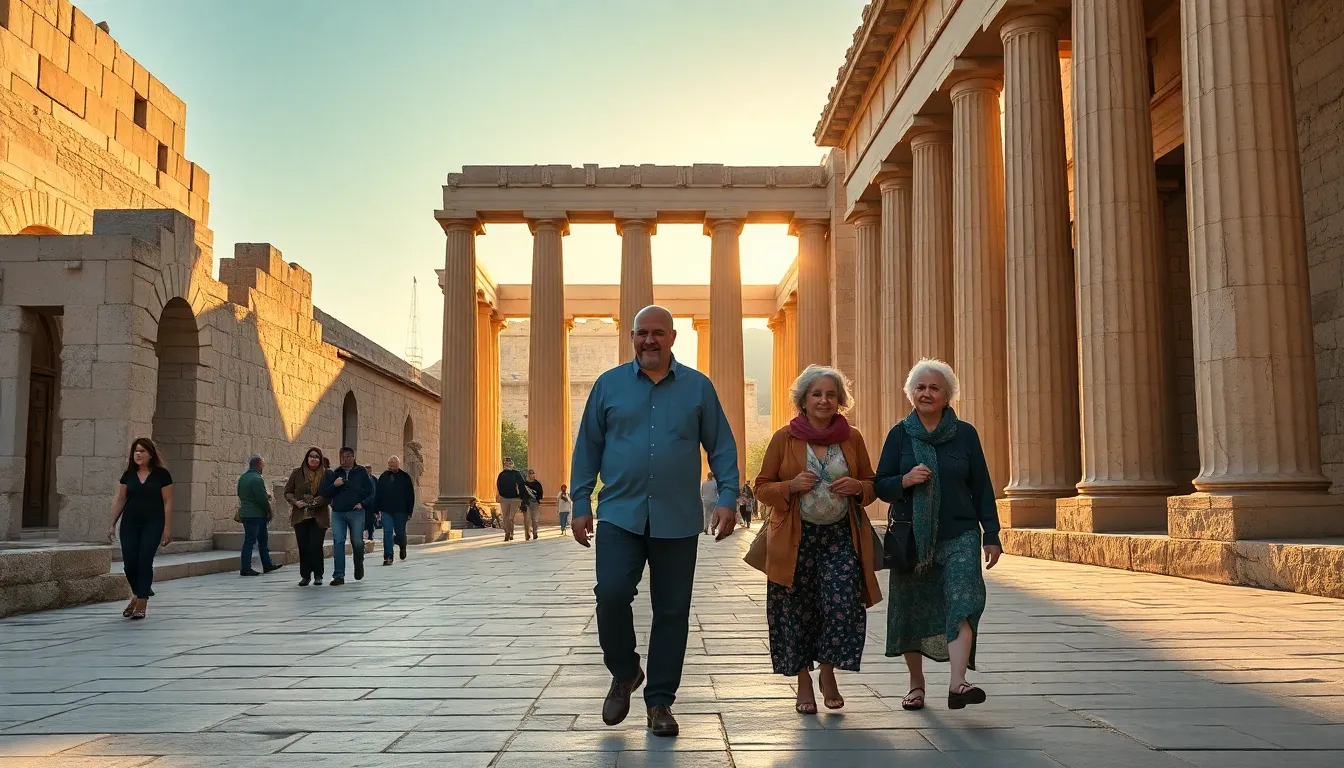
I have watched a lot of multigenerational groups travel Greece, and the moment I look for is not at a famous site. It is on a bus, late in the afternoon, when a teenager who spent the morning bored stiff is suddenly leaning over a seat to ask his grandfather what it was like in his church growing up. That is the trip a family heritage tour can give you, if you build it right. Get the pacing wrong and the grandparents are exhausted by day three and the kids are restless by lunch. Get it right and the generations carry each other.
This itinerary is built for that exact challenge. Grandparents who walk slowly and tire early. Parents holding the middle together. Kids and teens who need motion, story, and something to do with their hands. The goal is not to find a pace that suits everyone equally. It is to build days that give each generation its own moment while keeping the group together for the parts that matter.
I will walk you through ten days the way I would shape them for a congregation traveling with three generations in the same group.
Days 1 and 2: Athens, the Acropolis, and Easing Everyone In
Athens is where most groups land, and for a mixed-age group, the first day is sacred. Do not schedule anything heavy. Jet lag hits grandparents and toddlers hardest, and a long first-day site visit poisons the rest of the trip. We arrive, we settle into the hotel, and we take a short, flat walk through the Plaka in the evening for a first taste.
Day two is the Acropolis, and here is where mixed-age planning earns its keep. The climb is real, and it is uneven underfoot. For the grandparents, there is an accessibility lift on the north side that most groups never hear about, and we book it in advance. The kids get the Parthenon as a story, not a lecture. I tell them about the chryselephantine statue of Athena, forty feet of gold and ivory, and suddenly they are interested. The ancient agora below, where Paul walked and debated, gives the older members the heritage anchor while the younger ones have room to roam the open ground.
The trick on day two is to split intensity. Morning at the heights for those who want it, with a meeting point and a shaded cafe for anyone who would rather sit out the climb. No one feels left behind, because the group reconvenes for the agora together.
Day 3: Corinth, Where the Story Gets Concrete
The drive to Ancient Corinth is about ninety minutes, and the bus time is a gift for a mixed group. Grandparents rest. Parents breathe. Kids look out the window at a landscape that finally stops looking like a city.
Corinth is where I get the kids invested. Paul lived here for eighteen months and worked as a tentmaker, and I frame it for the young ones as a real person with a real job in a real, messy, busy port city. The bema, the raised platform where Paul stood before the proconsul Gallio, is still there, and it is the kind of physical, you-can-stand-here detail that lands across every age. For the older members, reading from First Corinthians on the spot turns the ruins into something living.
The site is open and largely flat, which makes it kinder on slow walkers than the Acropolis. We stop at the Corinth Canal on the way back. It is not a heritage site, but the kids love it and everyone needs a moment that asks nothing of them.
Day 4: A Lighter Day, Built on Purpose
Every multigenerational itinerary needs a deliberate soft day, and I put it on day four before the longer push north. This is not wasted time. This is what keeps the grandparents standing on day eight.
Depending on your group, this is a half-day at the Temple of Poseidon at Sounion, an easy coastal drive with a clifftop view the kids will remember longer than any ruin, or a slower morning in Athens with free time for families to wander at their own speed. The point is to release the pressure valve. Groups that skip the soft day pay for it later in tired feet and short tempers.
Days 5 and 6: Thessaloniki, Living History in a Real City
Thessaloniki is a working modern city, not an archaeological park, and that makes it easier on a mixed group. There are cafes, a waterfront, shade, and benches. Paul preached in the synagogue here and wrote two letters to this community, and the early churches, the Rotunda and Hagios Demetrios, are active places of worship rather than roped-off ruins.
For the heritage core, the Rotunda gives the older generation the weight of one of the oldest Christian buildings in the world while the kids can actually walk inside it. Thessaloniki is also one of the great Jewish heritage cities, once called the Jerusalem of the Balkans, and for an interfaith or curious group the Jewish Museum adds a layer. I will say plainly: the Holocaust material there is heavy, and with children in the group, the parents and I talk in advance about which members go in and which take the younger kids to the waterfront instead. You can read more about that side of the city in our 10-day heritage itinerary for Greece.
Two nights in one hotel matters here. Unpacking once, sleeping in the same bed twice, is a real comfort for the oldest and youngest travelers.
Day 7: Philippi and Lydia’s River, the Emotional Center
This is the day that tends to hold the whole group at once. Philippi is where Paul planted the first church in Europe, and the baptistery by the river, where tradition says Lydia was baptized, is a simple, quiet place. There is no grand cathedral. Just water and memory.
I have watched grandparents and grandchildren stand at that river together and felt the trip land for both of them at the same time. Many groups hold a short service or a baptism renewal here. For a multigenerational congregation, this is often the photograph that ends up framed at home, three generations at the riverside. The ground is gentle, the walk is short, and no one is excluded from the moment.
Days 8 through 10: Slowing Down to Finish Strong
The last stretch of a family trip should taper, not sprint. Tired groups make their worst memories at the end. I build the final days around fewer sites and longer meals.
Depending on your group, this is a return south with a Meteora detour, the monasteries perched on rock pillars, which is spectacular but does involve stairs and is best planned with the grandparents’ comfort in mind. Or it is an unhurried close in Athens with a farewell dinner and free time for families to find their own last memory of Greece. We end on rest, on shared food, and on the kind of unscheduled hours where the generations actually talk.
Adapting the Pace to Your Group
No two multigenerational groups are the same. A group with active grandparents and older teens can push harder and add Meteora or an island day. A group with young children and slower walkers needs more soft days, more bus rest, and shorter site visits. We shape the pace, the walking, and the meeting points around exactly who you are bringing.
One thing worth knowing as you plan: with Heritage Tours, the group leader travels free when you bring fifteen or more participants. For a pastor or rabbi organizing a family trip across a congregation, that changes the math early.
FAQ: Planning a Multigenerational Greece Heritage Trip
How do you keep grandparents and kids on the same itinerary?
By splitting intensity, not the group. On hard-access days like the Acropolis, we offer a climb for those who want it and a shaded meeting point for those who do not, then reconvene for the parts everyone can share. The heritage moments that matter, like Lydia’s river at Philippi, are chosen partly because every generation can reach them together.
What sites are hardest for older travelers in Greece?
The Acropolis and Meteora involve the most climbing and uneven ground. The Acropolis has an accessibility lift we book in advance. Corinth, Philippi’s baptistery, and the churches of Thessaloniki are much gentler. We plan the route so the demanding sites are spaced out and never stacked back to back.
Will teenagers be bored on a heritage trip?
Not if the story is told as a story. Teens engage when a site is framed around real people and real stakes rather than dates and architecture. Free time, motion, and a few non-heritage stops like the Corinth Canal or the coast at Sounion give them room to breathe. The best moments often happen on the bus, between the sites.
How many days should a multigenerational group plan for?
Ten days is the comfortable shape, with deliberate soft days built in. A shorter eight-day version works for active groups. Rushing is the most common mistake with mixed ages, and it costs you the quiet moments that make the trip worth taking.
Can you accommodate dietary and mobility needs across a large family group?
Yes. We arrange meals around dietary needs, book accessible transport and lifts where they exist, and structure the daily pace around the slowest comfortable walker. The goal is that no one is left out of the meaningful moments.
If you are imagining this trip for your congregation, with the grandparents and the grandkids in the same group, I would love to help you shape it. The pace can be built around exactly who you are bringing. See how the group experience works on our group heritage tours page or our Greece heritage page.
Contact us whenever you are ready to start planning.