I have walked groups through the Jewish Museum Berlin more times than I can count, and I still watch people fall silent in the same place every time. It is not in front of an artifact. It is in an empty concrete room. That tells you something about this museum that no other museum I know can claim. Here, the building itself does the teaching.
For a rabbi or an educator bringing a group to Berlin, the Jewish Museum is essential, but it is not a place to walk through quickly with an audio guide. It rewards preparation. Let me tell you what is there, how the architecture works on people, and how to lead a group through it well.
The Building Is the First Exhibit
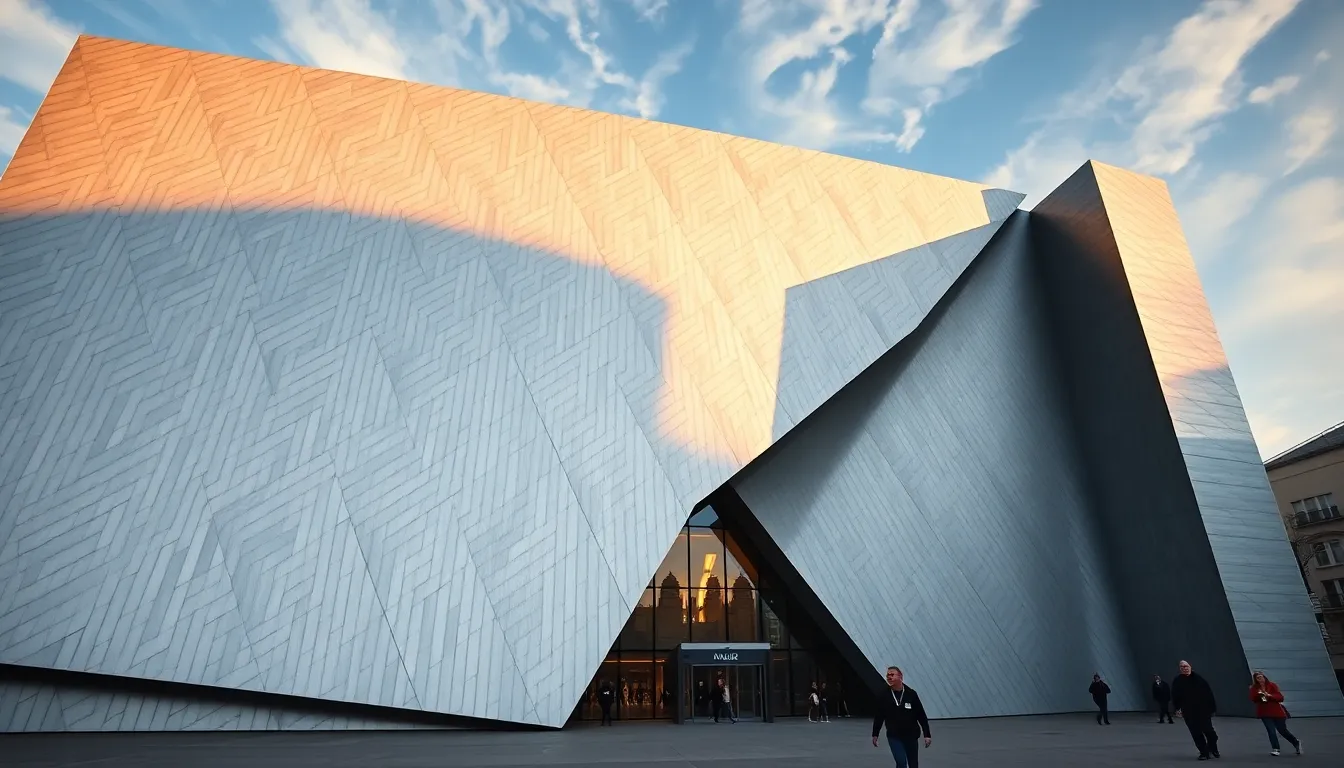
The museum’s main structure was designed by the architect Daniel Libeskind, and it opened to the public in 2001. Most museums are neutral containers for the objects inside them. This one is not. Libeskind designed the building to make you feel the Jewish experience in Germany in your body before you read a single label.
From above, the building is a sharp, broken zigzag, sometimes described as a fractured Star of David. Its zinc-clad walls are slashed with irregular windows that follow no comfortable pattern. Inside, the floors tilt slightly. Walls lean. You lose your bearings on purpose.
I tell groups in advance: you may feel unsettled walking through here, and that is intended. Libeskind built absence and disorientation into the architecture so that loss is not just a fact you learn but a thing you sense. For a congregation, naming this beforehand matters, because the discomfort is part of the encounter, not a flaw to push past.
The Three Axes
The lower level is organized around three intersecting paths Libeskind called axes.
The Axis of Continuity leads up into the main exhibition, the ongoing story of Jewish life in Germany. The Axis of Emigration leads to the Garden of Exile, a tilted grid of tall concrete pillars with olive trees growing out of reach at the top. Walking through it on the uneven ground gives a physical sense of the disorientation of leaving everything behind. The Axis of the Holocaust leads to the Holocaust Tower.
The Holocaust Tower
The Holocaust Tower is the room where groups fall silent. It is a tall, bare, unheated concrete shaft. A heavy door closes behind you. There is no light except a single thin slit high above, far out of reach, and the muffled sound of the city outside.
There is nothing to look at. Nothing to read. And that emptiness is the most powerful memorial space many of my travelers have ever stood in. I let groups stay in silence here. No commentary. No rushing. When a rabbi wants to say Kaddish or a few words, this is often where it happens. I treat this room with the gravity it asks for, and I ask groups to do the same.
The Permanent Exhibition: 1,700 Years in One Story
Above the axes, the main exhibition tells the story of Jewish life in Germany across roughly seventeen centuries, from the Roman-era community in Cologne through the present day.
What I value about this exhibition for groups is its scope. It does not begin and end with the Holocaust. It shows medieval communities, the flowering of Jewish thought in the German Enlightenment, the contributions of German Jews to science, music, philosophy, and commerce, and the rich ordinary life of families and congregations across the centuries. The Holocaust sits within that long story, which is exactly the right frame.
The exhibition was fully renewed and reopened in 2020, so it reflects current scholarship and presentation. For an educator, it is a rare chance to give students the full sweep, the thousand years of flourishing, not only the destruction. If your group has visited Cologne earlier in the trip, the museum picks up that same 1,700-year thread, which you can read about in our Jewish Cologne heritage guide.
The Memory Void and “Shalekhet”
Cutting through the building from top to bottom are empty vertical spaces Libeskind called voids, representing absence, the Jewish life and culture removed from Germany.
One of these, the Memory Void, holds an installation called Shalekhet, or Fallen Leaves, by the artist Menashe Kadishman. The floor is covered with more than ten thousand open-mouthed faces cut from heavy iron. Visitors are invited to walk across them. The metal cries out underfoot, a harsh ringing that fills the void.
I prepare groups for this. Walking on the faces is intended, and the sound it makes is meant to be hard to bear. It is dedicated not only to Jewish victims of the Holocaust but to all victims of violence and war. Many of my travelers describe it as the moment the scale of loss became physical for them.
How to Lead a Group Through It Well
A few things I have learned over many visits.
Give it enough time. Rushing this museum defeats it. I plan for at least two and a half to three hours, more if the group wants to engage the full permanent exhibition.
Brief the group before you enter. Tell them the building is meant to disorient. Tell them about the Holocaust Tower and Shalekhet before they reach them, so the emotional spaces do not catch people unprepared. A congregation that knows what is coming can be present rather than startled.
Build in time to process afterward. I never schedule the museum tightly against another heavy site on the same day. People need a meal, a walk, a chance to talk. A short gathering with your rabbi or educator at the end gives the group somewhere to put what they felt.
Book ahead. Timed entry and group bookings are standard, and confirming in advance keeps the visit calm. We handle that coordination for our groups.
Where It Fits in a Berlin Itinerary
The Jewish Museum pairs naturally with Berlin’s wider memorial landscape. Many groups visit it on a different day from the Memorial to the Murdered Jews of Europe, because two such weighty experiences in one day is more than most communities should carry at once.
I also like to follow the museum, which holds so much grief in its architecture, with an encounter with living Jewish Berlin: the New Synagogue, kosher tables, the active community that has returned to the city. The full arc, medieval roots, destruction, and revival, is laid out in our Jewish heritage in Germany guide.
Heritage Tours arranges the bookings, the guiding, and the pacing so your group can give this museum the attention it deserves. Group leaders travel free with fifteen or more participants.
You can learn more on our Germany destination page or see how we structure group heritage tours.
FAQ: The Jewish Museum Berlin
Who designed the Jewish Museum Berlin?
The architect Daniel Libeskind designed the museum’s main building, which opened to the public in 2001. The structure is famous in its own right: a sharp zigzag form clad in zinc, with slashed windows and tilting interior spaces designed to make visitors physically sense absence and disorientation. The building is considered part of the exhibition itself.
What is the Holocaust Tower?
The Holocaust Tower is a tall, bare, unheated concrete room at the end of one of the building’s three axes. A heavy door closes behind visitors, and the only light is a single slit high overhead. There is nothing to read or look at. The emptiness and silence make it one of the most powerful memorial spaces in the world, and it is often where a group pauses for reflection or Kaddish.
How long does a group need at the museum?
Plan for at least two and a half to three hours, and more if your group wants to fully engage the permanent exhibition. The museum rewards a slower pace. It is best not scheduled tightly against another emotionally heavy site on the same day, and a group should build in time to process and talk afterward.
What does the permanent exhibition cover?
The permanent exhibition, fully renewed and reopened in 2020, tells the story of Jewish life in Germany across roughly seventeen centuries, from the Roman-era community in Cologne to the present. It places the Holocaust within a much longer story of Jewish flourishing, thought, and ordinary life, which makes it especially valuable for educators who want students to see the full sweep.
What is the “Fallen Leaves” installation?
Shalekhet, or Fallen Leaves, by the artist Menashe Kadishman, covers the floor of the Memory Void with more than ten thousand open-mouthed iron faces. Visitors walk across them, and the metal rings harshly underfoot. It is dedicated to all victims of violence and war, and many visitors describe it as the moment the scale of loss became physical. Groups should be told about it before they enter the space.
If you are bringing a community to Berlin, the Jewish Museum is one of the experiences I most want to prepare you for, because how you lead a group through it shapes what they carry home. I would be glad to help you plan it well.
Contact us whenever you are ready to start the conversation.