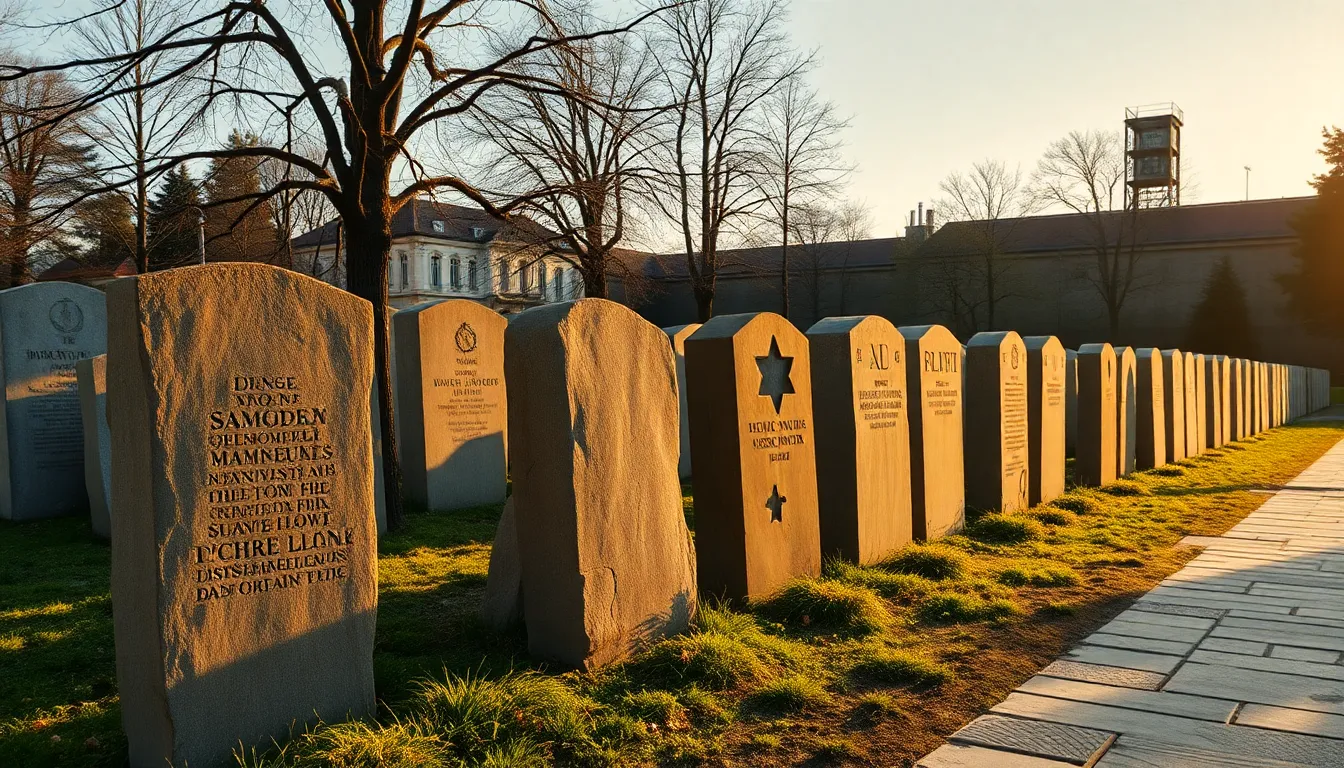
A rabbi called me last winter with a question I have heard many times, but never twice in the same voice. “Where do we take them,” he asked, “Germany or Poland?” He was not asking about flights or hotels. He was asking where his congregation should go to stand inside their own history, and he wanted to make the right choice for the people who would carry it home.
I have led Jewish heritage groups through both countries for over twenty years. I want to be careful here, because this is not a comparison like any other. We are talking about two lands where Jewish life flourished for a thousand years and where it was nearly destroyed. Neither country is a product to be ranked. But you do have a real decision to make, and you deserve an honest guide to making it. So let me lay out what each journey actually holds.
Two Different Stories Within the Same History
The first thing I tell every group leader is that Germany and Poland tell different parts of the same story, and the difference matters more than people expect.
Germany is where the catastrophe was conceived and ordered. It is the land of the perpetrators, but it is also the land of a deep and ancient Jewish civilization. The Rhineland communities of Speyer, Worms, and Mainz, the ShUM cities, were centers of Jewish learning eight hundred years before the Shoah. Germany is the story of how a culture that gave the Jewish world Rashi’s teachers and the great medieval academies became the engine of its near-destruction. That tension is the heart of a German journey.
Poland is where most of the killing happened, and where the largest Jewish community on earth had lived. Before the war, three million Jews lived in Poland. The shtetl, the Hasidic courts, the Yiddish language, much of what we now think of as Eastern European Jewish life had its home there. Poland is also where Auschwitz, Treblinka, and the other death camps stand. A Polish journey is, more than anything, a journey of remembrance at the place where the loss is largest and most concentrated.
Neither is “more important.” They are different encounters, and your community will respond to them differently.
What a Germany Heritage Journey Holds
A German journey tends to move between two emotional registers, and good groups learn to hold both.
There is the register of ancient Jewish presence. In Worms you stand in the oldest Jewish cemetery in Europe, with stones going back to the eleventh century. You see the Rashi synagogue. You walk streets where Jewish scholarship shaped the entire Ashkenazi world. This is not a story of victims. It is a story of a thriving, learned, rooted people.
Then there is the register of the modern catastrophe. Berlin holds the Memorial to the Murdered Jews of Europe, the Wannsee villa where the deportations were coordinated, the Topography of Terror, the deeply moving Jewish Museum. Dachau, near Munich, was the first concentration camp and the model for the rest.
Germany’s Honest Reckoning
Here is something that surprises many of my groups: Germany has done more public, official, painful work of remembrance than almost any nation in history. The memorials are not hidden. The Stolpersteine, the brass “stumbling stones” set into sidewalks outside the homes of murdered Jews, are everywhere. The German government funds Holocaust education. For a group wrestling with the question of how a society faces its own guilt, Germany offers a living answer, and it is often the most thought-provoking part of the trip.
What a Poland Heritage Journey Holds
A Polish journey is heavier and, for most groups, more directly devastating. That is not a warning to stay away. For many communities, that weight is precisely the point.
Poland is where you walk through Auschwitz-Birkenau. It is where you stand at the ramp, see the barracks, the mountain of shoes, the railway line. There is no comparable concentration of loss anywhere else. Groups often describe Poland as the place where the abstraction of six million becomes unbearably specific.
But Poland is also Kraków’s Kazimierz quarter, the restored synagogues, the rich pre-war world you can still trace in the streets of Lublin and Warsaw. It is the Hasidic pilgrimage sites, the graves of great rebbes that draw visitors from around the world. For groups with Eastern European family roots, Poland is frequently where the personal genealogy lives.
The Emotional Weight to Prepare For
I am direct with leaders about this: a Poland trip centered on the death camps asks more of your people emotionally than almost anything else they will do together. It requires real pastoral preparation, real debriefing, and a guide who knows how to hold a group in those moments. Done well, it is transformative. Done without preparation, it can overwhelm. We build that care into every Poland itinerary, and I tell leaders not to underestimate what their community will need from them.
Which One Fits Your Community
Let me give you the practical guidance I give on the phone.
Choose Germany when your community wants to hold the full arc, the ancient flourishing alongside the catastrophe, and when the question of how a perpetrator society reckons with its past speaks to your people. Germany also tends to be the gentler first trip for a congregation new to heritage travel, because the emotional load is more distributed across a thousand years of story.
Choose Poland when remembrance at the heart of the loss is the central purpose, when your community has Eastern European roots they want to trace, or when your group is spiritually ready for a more concentrated encounter with the Shoah itself.
Many leaders, over time, do both. A common path is Germany first, then Poland a few years later when the community is ready to go deeper. There is no wrong order, only the order that fits where your people are now.
You Do Not Have to Choose Just One Country
For groups with the time, a combined Germany and Poland journey is possible and powerful. You can move from the Rhineland communities through Berlin and on to Kraków and Auschwitz, tracing the story from its medieval roots to its darkest chapter. It is a longer trip, usually ten days or more, and it asks more of your people, but it tells the whole story in one arc.
If you are weighing all of this, I would rather talk it through than have you guess from a page. Every congregation arrives with a different history, a different readiness, and a different reason for going.
FAQ: Germany vs. Poland for Jewish Heritage Travel
Is Poland or Germany more emotionally intense for a Jewish heritage group?
Poland, in most cases, because a Polish itinerary usually centers on the death camps, where the loss is most concentrated. Germany distributes its emotional weight across a longer story that includes a thousand years of Jewish flourishing. Neither is easy, but Germany is often the gentler first heritage trip for a community new to this kind of travel.
Can we visit Auschwitz on a Germany trip?
Auschwitz is in Poland, near Kraków, not in Germany. If visiting Auschwitz is essential to your group’s purpose, that points toward a Poland itinerary or a combined Germany and Poland journey. We can build either one around your community’s needs.
Which country is better for tracing family genealogy?
It depends entirely on where your families came from. Communities with Eastern European roots usually find their genealogy in Poland. Those with German-Jewish ancestry, including many families who left in the 1930s, find it in Germany. We help groups research this before deciding, since the personal connection often shapes the right choice.
How long should a Jewish heritage trip to Germany or Poland be?
A focused single-country trip works well at seven to nine days. A combined Germany and Poland journey usually needs ten days or more to do both with the care they deserve. We would rather build a slightly longer trip than rush your group through sites that ask for time and reflection.
Should our first heritage trip be Germany or Poland?
For many congregations, Germany makes a strong first journey because it holds both the flourishing and the loss, and the emotional load is more distributed. Poland often comes as a second trip, once a community is ready for a more concentrated encounter with the Shoah. But the right starting point depends on your people, and we are glad to help you read that.
If you are deciding where to take your community, our private vs. group heritage tour guide is a good companion read, and you can see how we structure these journeys on our Germany destination page and our group heritage tours page. When you are ready, contact us and we will talk it through together. This decision deserves a conversation, not a checkout button.