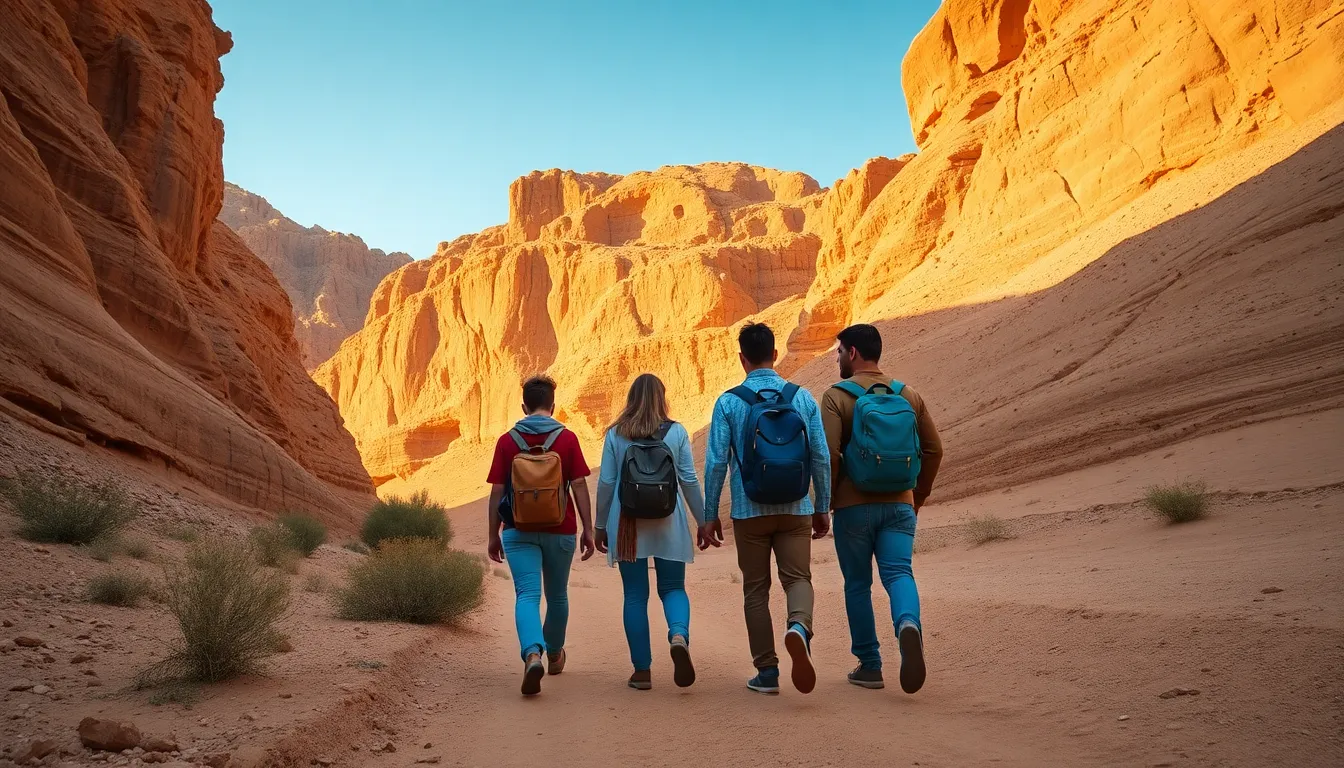
The first time I led a youth group through Egypt, I tried to run my standard adult itinerary at the same pace. Long museum mornings, slow reflective stops, a lot of standing and listening. By the third day, I had thirty teenagers staring at their phones in front of a five-thousand-year-old artifact, and I understood I had built the wrong trip.
Young people do not connect to Egypt the way their parents do. They connect through their bodies, through challenge, through doing something hard together and surviving it. The Exodus story is, at its heart, a story about young people walking out of slavery into the unknown. If you build the itinerary so your group feels that physically, the meaning lands without you having to force it.
What follows is the framework I now use for teen and young-adult faith groups. It keeps the core heritage spine of our 8-day Egypt itinerary, but it trades passive viewing for movement, and it leaves room for the kind of late-night conversations where the real work of a youth trip actually happens.
Before You Go: What a Youth Trip Needs That an Adult Trip Does Not
A youth itinerary lives or dies on pacing and ownership. Teenagers check out the moment they feel like passengers. So I build in jobs. One student leads the morning gathering. Another tracks the day’s reading. Small groups rotate responsibility for the evening debrief. The trip becomes theirs, not a thing being done to them.
I also front-load the physical days. Tired teenagers in air-conditioned museums are bored teenagers. Tired teenagers after climbing a mountain are quiet, open, and ready to talk. Plan the order accordingly.
Recommended base for the Cairo portion: a hotel near Old Cairo with space for the group to gather in the evenings. The gathering space matters more than the room quality.
Day 1: Cairo on Foot, Not Behind Glass
I keep the first museum visit short and targeted. At the Egyptian Museum we go straight to the New Kingdom rooms, the period scholars connect to the Exodus, and I give the group a scavenger task. Find the evidence of forced labor. Find a face that looks like it could be one of your ancestors. Find something that surprises you. Twenty minutes of hunting beats two hours of wandering.
Then we get out into the city. Khan el-Khalili bazaar in the afternoon is perfect for this age group. The noise, the bargaining, the smells, the sheer human density of Cairo. I send small groups on a simple challenge: buy a gift for someone back home for under a set budget, and you have to talk to at least three vendors. They come back loud, laughing, and already feeling like they belong to the place.
Evening gathering. First night, I keep it simple. Each person says why they came. No speeches. Just the truth, one sentence each.
Day 2: Coptic Cairo and the Jewish Quarter
This is the heritage heart of the Cairo days, and with a youth group I teach it through story rather than dates.
At Ben Ezra Synagogue, I tell them about the geniza, the storage room where a thousand years of ordinary Jewish letters, contracts, and shopping lists were discovered. Teenagers connect to this instantly. It is a thousand-year-old version of the messages on their own phones. I ask them what from their own lives they would want a future generation to find. The answers are usually better than anything I could have scripted.
A few steps away, the Hanging Church carries the weight of the earliest Christian communities. For Christian youth groups, standing in a place where people have worshipped continuously for over a thousand years reframes what their faith actually is. It is not new. It is not fragile. It survived empires.
We finish with a quiet walk through the old Jewish quarter, where most of the community left in the mid-twentieth century. I ask one question and let it sit: what does it mean for a community to leave a home it held for a thousand years? For young people thinking about identity and belonging, that question does real work.
Day 3: Into the Desert Toward the Sea
Today the trip changes gear. We leave the city behind and drive toward the Red Sea coast, crossing the same desert terrain the fleeing Israelites would have crossed. For a youth group, the long drive is not dead time if you use it well. I assign the Exodus reading in stages across the bus, with different students reading aloud. By the time we reach the water, they have walked the story to it.
At the sea, we read the Song of the Sea from Exodus 15 together. Standing at the edge of the water and reading “the horse and its rider he has hurled into the sea” hits differently than reading it in a youth room back home. The space carries the words. I have watched cocky sixteen-year-olds go completely quiet at this spot.
Evening gathering. This is the night I ask: what would you walk away from if you knew freedom was on the other side? Let them sit with it.
Days 4 and 5: The Sinai and the Mountain
This is the centerpiece of a youth itinerary, and the reason the trip works.
We cross into the Sinai and drive into one of the most austere, beautiful landscapes on earth. Towering granite, white wadis, a silence most teenagers have literally never experienced. We base near Saint Catherine’s, rest, eat together, and brief the group on the early ascent.
The climb of Mount Sinai, Jebel Musa, the Mountain of Moses, begins around 2:00 or 3:00 in the morning to reach the summit by dawn. The mountain rises to 2,285 meters. The Camel Path takes two to three hours, and the final 750 Steps of Repentance are steep and cut straight into the rock. It is cold, dark, and genuinely demanding.
I am honest with youth groups about this beforehand. It is hard. You will want to stop. And then you will stand at the summit watching the sun come up over the Sinai, having done something difficult together, and you will understand why the story puts the mountain where it does. I have never had a young person regret the climb. Not once.
At the summit, I read one line. Exodus 19:3: “Moses went up to God, and the Lord called to him from the mountain.” Then silence, and the sunrise, and a group of exhausted young people who just did something they will talk about for the rest of their lives.
At the base sits Saint Catherine’s Monastery, occupied by Orthodox monks for nearly 1,500 years, home to the bush traditionally identified as the burning bush and one of the finest early manuscript libraries in the world. For a group that just climbed the mountain above it, the monastery lands as more than a stop. It is proof that people have been coming to this place for the same reason they did, for a very long time.
Day 6: The Exhale Coast and Heading Home
After the mountain, the group needs an exhale. We drive to Nuweiba on the Gulf of Aqaba, where granite mountains drop straight into clear blue water. The afternoon is for the sea, snorkeling, or simply sitting. This is where the bonds set. The hard part is behind them, and young people who have struggled up a mountain together in the dark talk to each other differently afterward.
For groups with extra time, the route back to Cairo for departure can include a closing gathering in Coptic Cairo. I bring the group into a circle and ask each person for one word they are carrying home. The closing circle, simple as it is, is the thing youth leaders tell me their students remember years later. Not a site. The moment the group named what happened to them.
For more on the spine this itinerary follows, see our guides to the spiritual sites in Egypt and an Exodus-focused itinerary that goes deeper on the narrative mapping.
FAQ: Youth Group Trip to Egypt
Is Egypt safe for a youth group trip?
We only run group trips with full ground coordination, vetted guides, and the appropriate permits for travel in the Sinai and other regions that require them. For a youth group specifically, we keep groups together, build clear daily structure, and brief students on local norms before each city. With proper coordination, a youth heritage trip to Egypt is well within the range of what faith communities run every year.
Is the Mount Sinai climb too hard for teenagers?
For most teenagers it is the highlight, not the obstacle. The Camel Path is a sustained uphill walk rather than a technical climb, and the pace is set to reach the summit by dawn. The cold and the early start are the real challenges, not the terrain. We brief students beforehand, pace the group, and have alternatives for anyone who needs them. The shared difficulty is exactly what bonds a youth group.
How physically demanding is the overall itinerary?
This itinerary is built to be active. Expect a lot of walking, a long desert drive, beach time, and one pre-dawn mountain ascent. It suits teen and young-adult groups in normal health. If your group includes students with mobility needs, we can adjust the route, or you may want our accessible Egypt itinerary instead.
What is the right group size for a youth trip?
Most youth heritage groups run well between fifteen and thirty-five students plus chaperones. Group leaders travel free with fifteen or more participants, which helps the math when a synagogue or church is building a trip from its youth program. We talk through the chaperone ratio with you during planning.
How long should a youth Egypt trip be?
Six to eight days is the sweet spot. Long enough to reach the mountain and the sea and to let the group bond, short enough to fit a school break and keep energy high. We can compress or extend depending on your calendar.
If you lead a youth program at a synagogue or church and you are thinking about Egypt, I would love to talk it through. A youth trip is different from an adult one, and it deserves an itinerary built for who your students actually are, not a slower trip handed down to them.
Tell me about your group, the ages, the energy, what you want them to carry home, and we will build the journey around that. Reach out when you’re ready, and let’s start the conversation.