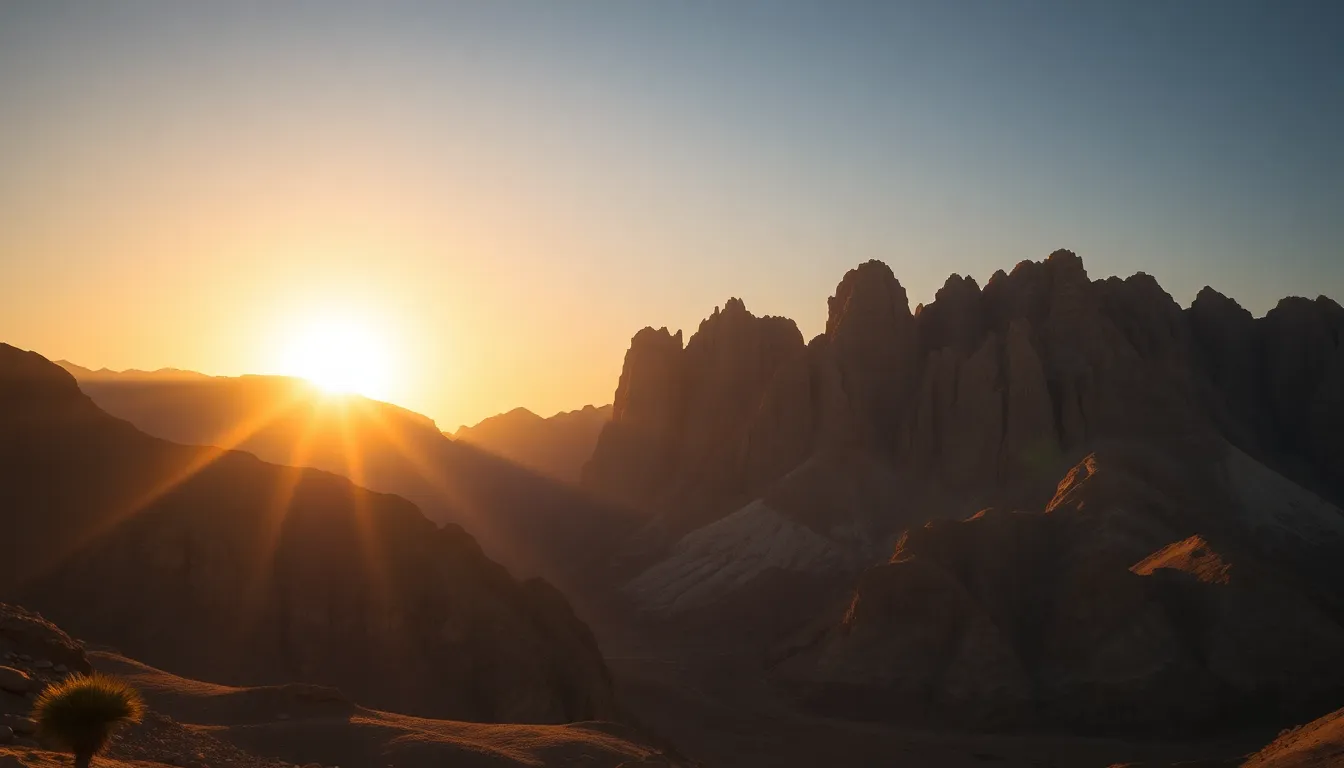
I have climbed Mount Sinai in the dark more times than I can count, and I still get nervous before every group does it. Not about the trail. About whether I can prepare people for what happens at the top. We reach the summit before dawn, the cold biting, everyone tired and quiet, and then the light comes up over the wilderness and something happens that I have never once been able to predict or manufacture. People who insisted they were not emotional weep. People in their seventies who doubted they could make the climb stand at the summit and cannot speak. The Sinai does that.
Of all the heritage regions in Egypt, Sinai is the one where the biblical story is not just remembered but, for many, encountered. This is the wilderness of the wandering, the mountain of the Law, the ground where the covenant was given. For a rabbi, pastor, or educator, no place in Egypt carries more spiritual weight. This guide is how I orient a group to the region before we go, so they arrive ready for what it asks of them.
Why Sinai Matters to Faith Travelers
The Sinai Peninsula is the triangle of desert and mountain between mainland Egypt and the land of Israel. For both Jewish and Christian traditions, it is one of the most sacred landscapes on earth, because this is where the Bible places the central events after the Exodus, the forty years of wilderness wandering and the giving of the Law at Mount Sinai.
For Jewish travelers, Sinai is the place of revelation, where the covenant at the heart of Jewish faith was given. For Christian travelers, that same revelation is foundational, and Sinai adds layers of its own, Saint Catherine’s Monastery, the site traditionally identified with the burning bush, and the deep monastic heritage of the desert. For both, the experience is less about monuments and more about standing in the wilderness itself.
I tell groups plainly: Cairo and Luxor will impress you. Sinai may change you. It is a different kind of stop, and it deserves to be approached that way.
Mount Sinai: The Mountain of the Law
The mountain traditionally identified as the biblical Mount Sinai, also called Mount Horeb or, locally, Jebel Musa, the Mountain of Moses, rises in the southern part of the peninsula. This is the place tradition holds Moses received the Ten Commandments and the Law.
The Pre-Dawn Ascent
The climb to the summit is the emotional heart of any Sinai journey, and I consider it the single most powerful experience in all of heritage Egypt. Most groups make the ascent in the dark, starting in the early hours of the morning to reach the summit by sunrise. The climb takes a few hours, either by foot along the longer path or up the steep final stretch known as the Steps of Repentance.
I never undersell the climb. It is physically demanding, cold at night, and steep near the top. But I also tell groups the truth, that I have brought people up this mountain who were certain they could not do it, and watched them reach the summit and find it was the most meaningful thing they had ever done. We pace the climb for the group, take it slowly, and no one is left behind.
What Happens at the Summit
There is nothing I can say in advance that fully prepares a person for standing on that summit at sunrise. The wilderness opens out below in every direction, raw and silent, and the light comes. Rabbis and pastors lead prayers there that I have seen last a long time. People read from Scripture. People simply stand. For a faith group, this is the place where the giving of the Law stops being a story told at a table and becomes a place you have stood. That shift is the reason we come.
For the broader Exodus geography that leads to this mountain, our Egypt heritage travel guide traces the full trail from the Nile Delta.
Saint Catherine’s Monastery
At the foot of Mount Sinai sits Saint Catherine’s Monastery, one of the most extraordinary heritage sites in the world and a destination in its own right.
The Oldest Continuously Inhabited Monastery
Saint Catherine’s is the oldest continuously inhabited Christian monastery on earth. The Byzantine emperor Justinian built the fortified monastery in the sixth century, on a site that had been held sacred since the time of Moses. Monks have prayed here, without interruption, for nearly fifteen hundred years. Walking through its ancient walls, a Christian group is stepping into a living thread of faith that has never been broken.
The monastery holds one of the most important libraries of ancient manuscripts in the world, second in significance, by many accounts, only to the Vatican. It was here that the Codex Sinaiticus, one of the oldest surviving complete copies of the Christian Scriptures, was found. For educators and clergy, that fact alone makes the monastery a profound stop.
The Burning Bush
Within the monastery grounds grows a bush that tradition identifies as a descendant of the burning bush, where the Bible says God spoke to Moses and called him to lead the Israelites out of Egypt. Whatever a person makes of the tradition, standing before it, inside this ancient monastery, at the foot of the mountain of the Law, gathers the whole Exodus story into a single place. I have watched groups grow very quiet here.
The Wilderness of the Wandering
Beyond the mountain and the monastery, the Sinai wilderness itself is part of the heritage. The Bible describes forty years of wandering through this desert, and the landscape has barely changed. The same stark valleys, the same granite peaks, the same vast silence.
I make a point of letting groups simply be in the wilderness rather than rushing through it. There is something the desert teaches that no site visit can. When you read the wilderness narratives, the complaints, the manna, the longing, and you are sitting in the actual landscape where the story places them, those passages read differently forever after. The harshness of the desert makes the endurance of that generation, and the patience the story describes, suddenly tangible.
For groups continuing on to Israel, Sinai is also the natural bridge. The wilderness leads, in the biblical narrative, toward the Jordan and the Land. A combined Egypt and Israel journey follows that same arc, from bondage to wandering to home, and Sinai sits right at its hinge.
The Coastal Sinai and Practical Access
The Sinai is not only mountains. Its Red Sea coast, around Sharm el-Sheikh and the Gulf of Aqaba, is a different world of warm water and resort infrastructure. For heritage groups, the coast usually serves as a comfortable base or a place to rest before or after the demanding mountain ascent, rather than a heritage destination in itself.
Access to the Saint Catherine and Mount Sinai region takes planning. It is remote, reached by road across the peninsula, and the mountain climb requires real preparation. We handle the logistics, transport, local guides, the overnight near the monastery that the pre-dawn climb requires, so the group can focus entirely on the experience.
Practical Orientation for Faith Groups in Sinai
A few things I tell every group leader planning Sinai.
The Mount Sinai ascent is the most physically demanding part of any Egypt itinerary. We assess the group honestly, pace the climb, and make sure anyone who wants to attempt it is supported. The cooler months are far better for the climb, though Sinai nights can drop below freezing in winter, so packing warm layers is essential. Our best time to visit Egypt guide covers the Sinai micro-climate in detail.
An overnight near Saint Catherine’s is part of the plan, since the pre-dawn start requires it. We arrange suitable accommodation in the region.
Saint Catherine’s Monastery has specific visiting hours and access rules, which we coordinate so the visit fits the climb and the group’s schedule.
Good footwear, warm layers, a headlamp, and water are non-negotiable for the climb, and we brief every group thoroughly in advance.
And as everywhere, with 15 or more participants the group leader travels free, which helps when you are building a Sinai journey for your congregation. To see how we structure these trips, visit our group heritage tours page.
FAQ: Sinai Heritage Travel
What is the significance of Mount Sinai?
Mount Sinai, also called Mount Horeb or Jebel Musa, is the mountain where the Bible places the giving of the Law, including the Ten Commandments, to Moses. For both Jewish and Christian traditions, it is one of the most sacred sites on earth, the place of the covenant at the heart of the faith. Climbing it to the summit at sunrise is, for many faith travelers, the most powerful experience of an Egypt journey.
How hard is the climb up Mount Sinai?
The climb is physically demanding, taking a few hours, usually in the dark to reach the summit by sunrise, and it is cold and steep near the top. That said, we pace it carefully for each group and support every climber. I have brought people in their seventies up this mountain successfully. The cooler months make the climb far more comfortable, and warm layers are essential since Sinai nights can be freezing.
What is Saint Catherine’s Monastery?
Saint Catherine’s is the oldest continuously inhabited Christian monastery in the world, built by the emperor Justinian in the sixth century at the foot of Mount Sinai. It holds one of the most important ancient manuscript libraries on earth, where the Codex Sinaiticus was found, and on its grounds grows a bush tradition identifies with the biblical burning bush. It is a profound stop for any faith group.
Is the Sinai accessible and safe for faith groups?
The Saint Catherine and Mount Sinai region is remote and requires planning, but it is regularly visited by faith pilgrims from around the world. We handle all transport, local guides, and the overnight the pre-dawn climb requires, and we stay current on conditions. We would not run a program here if we had safety concerns. With good preparation, the region is accessible to mixed-age groups, with the climb adjusted to each person.
Can Sinai be combined with an Israel heritage tour?
Yes, and it is one of the most natural combinations we offer. In the biblical narrative, the Sinai wilderness leads toward the Jordan River and the Land of Israel. A combined Egypt and Israel journey follows that same arc, from the Exodus through the wilderness to the Promised Land, with Sinai sitting right at its turning point. Many groups find this the most complete heritage experience available.
If Sinai is calling your community, the mountain, the monastery, the wilderness itself, I would love to help you plan it well. This is a region that rewards preparation more than any other, and preparing groups for it is some of the most meaningful work I do. Start at our Egypt heritage destination page.
When you are ready, contact us and we will build the journey around your people, so that when they stand on that summit at sunrise, they are ready for what it gives them.