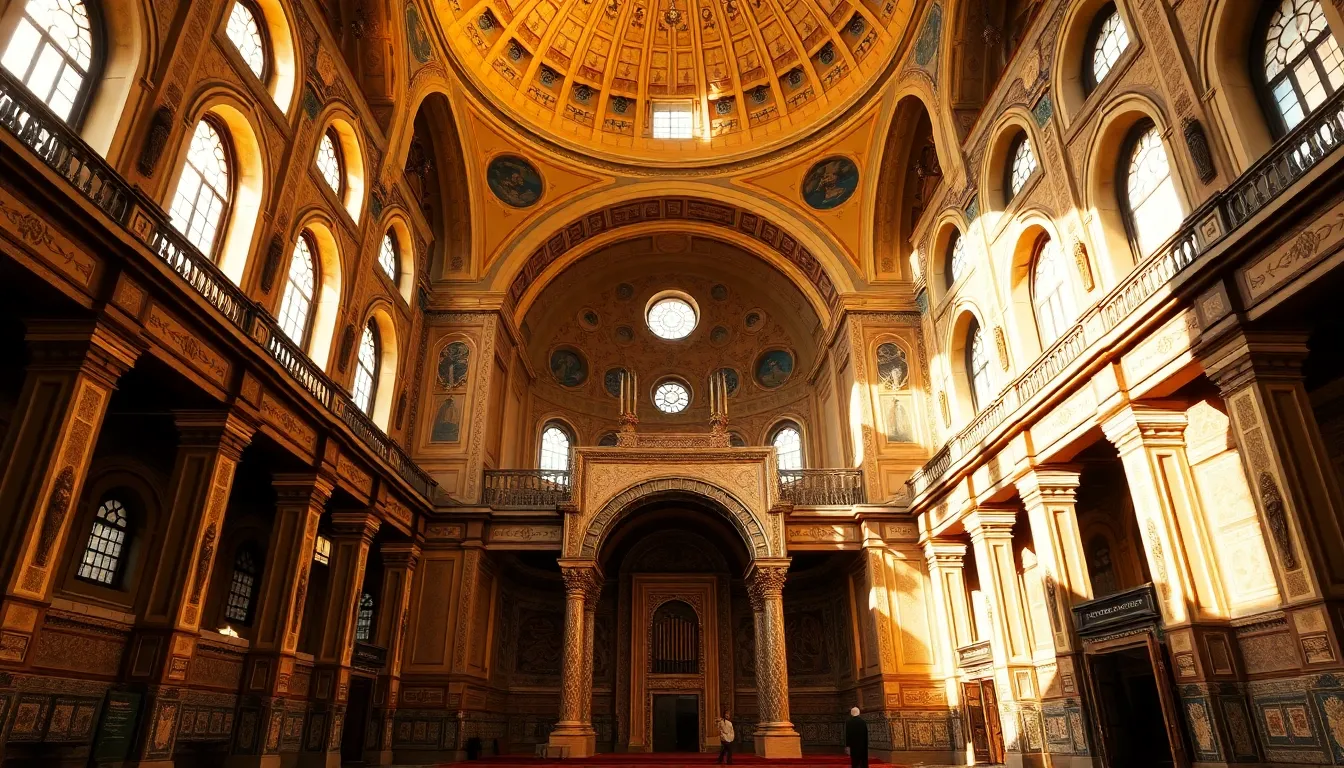
A man on one of my Cairo groups told me, on the first morning, that his family was Karaite from Cairo. He had grown up hearing the name of the old quarter, Haret el-Yahud, from his grandmother, but he had never seen it. When we walked those streets together a few days later, he kept stopping, touching walls, going quiet. At one point he said, “I always thought we were a footnote. Standing here, I realize we were a whole world.” That sentence has stayed with me, because it captures something most people, even many Jews, do not know: Egypt’s Jewish story is not one community. It is layers upon layers, and the Karaite and Sephardic layers are among the richest and least understood.
I have been bringing Jewish groups to Egypt for more than twenty years, and one of the things I most love is helping people see past the single story. The Exodus is the foundation. But the Jewish life that continued in Egypt for thousands of years after was astonishingly diverse, and the Karaite community of Cairo in particular is one of the most remarkable Jewish stories almost nobody tells. Let me open it up.
Egypt’s Jewish Community Was Never One Thing
By the early twentieth century, Egypt’s Jewish population of roughly 80,000 to 100,000 was a mosaic. There were Rabbanite Jews and Karaite Jews. There were Sephardim whose families traced back to the expulsion from Spain, and others whose roots in Egypt ran far deeper than that. There were Mizrahi families long rooted in the Arab world, and Ashkenazi arrivals from Europe. They spoke Arabic, Ladino, French, Italian, and Judeo-Arabic, sometimes within a single family. To talk about Egyptian Jewry as one community is to flatten one of the most layered Jewish societies that has ever existed.
This diversity is part of what makes Cairo and Alexandria so rewarding for a heritage group willing to look closely. You are not visiting a single story. You are visiting a society that held many kinds of Jewish life side by side, in a cosmopolitan world that produced rabbis, philosophers, merchants, lawyers, and a thriving Karaite community that most Jewish travelers have never heard described in any detail.
The Karaite Jews of Cairo
The Karaites are one of the oldest and most distinctive branches of the Jewish people, and Cairo was, for centuries, one of their great centers.
Who the Karaites Are
Karaite Judaism is a movement that took shape in the early medieval period and is defined by its approach to scripture. Karaites accept the written Torah as the binding authority but do not accept the rabbinic Oral Law, the Talmud, as Rabbanite Jews do. Instead they read scripture directly, with their own interpretive tradition. This led, over the centuries, to differences in practice in areas like the calendar, the laws of Shabbat, and dietary law. Karaites are unmistakably Jewish, with their own long and learned tradition, distinct from the Rabbanite majority.
For most Jewish travelers, the Karaites are a name half-remembered from a history class, if that. Standing in Cairo and learning that this was one of the living hearts of Karaite Judaism for a thousand years is genuinely revelatory. The intellectual exchange between Karaite and Rabbanite scholars in medieval Cairo was vigorous and productive, and it shaped Jewish thought in ways that are still being studied.
The Karaite Community in Old Cairo
Cairo’s Karaite community lived alongside the Rabbanite community, with its own synagogues, its own institutions, and its own quarter within the broader Jewish areas of the old city. The community persisted into the twentieth century as a recognizable and active part of Egyptian Jewish life, with its own leadership and its own places of worship. When the great departure of Egyptian Jewry came after 1948 and 1956, the Karaites left too, with significant communities reestablishing themselves in Israel and the United States, where Egyptian Karaite tradition continues today.
For a group that includes people of Karaite descent, or simply travelers curious about the full breadth of Jewish history, walking the old quarters and learning the Karaite story on the ground is moving in a particular way. This is a living tradition with a Cairo address, and standing in that address connects the present community to its roots.
The Sephardic Layers of Egyptian Jewry
Alongside and intertwined with all of this is the Sephardic dimension of Egypt’s Jewish history, which is itself layered.
From the Spanish Expulsion Onward
When Jews were expelled from Spain in 1492 and from Portugal soon after, the Sephardic diaspora spread across the Mediterranean, and Egypt received its share. These families brought the Ladino language, the liturgical and culinary traditions of Iberian Jewry, and a distinctive culture that mingled with the Jewish life already long established in Egypt. Over the following centuries, Sephardic identity became a major thread in Egyptian Jewry, especially in the prosperous, cosmopolitan communities of modern Cairo and Alexandria.
The grand Sha’ar Hashamayim synagogue in downtown Cairo, built in 1905, served exactly this world: the prosperous Sephardic community of the early twentieth-century Levantine city. Its Moorish Revival architecture speaks of a confident, cultured, deeply rooted community at the height of its presence in modern Egypt. We cover the synagogue and the broader sweep in our guide to Jewish heritage in Egypt.
Maimonides and the Medieval Sephardic World
No account of Sephardic heritage in Egypt is complete without Moses Maimonides, the Rambam, one of the towering figures of Jewish history. Born in Córdoba in Spain, Maimonides fled the persecutions of his time and eventually settled in Fustat, Old Cairo, where he served as physician, community leader, and one of the most influential Jewish legal and philosophical authorities of all time. His presence in Cairo ties the city directly to the Sephardic world and to the very heart of medieval Jewish thought. For a heritage group, the knowledge that the Rambam lived, worked, healed, and wrote here gives Old Cairo a stature that few cities in the Jewish world can match.
How a Group Encounters This Layered History
This is heritage that rewards depth, and it depends almost entirely on interpretation. The physical remains, the synagogues, the old quarters, the cemeteries, are real, but the layers of meaning are not labeled on a wall. They live in the telling.
Walking the Quarters and Synagogues
A group exploring the Karaite and Sephardic dimensions of Egyptian Jewry spends time in Old Cairo: in the Jewish quarter of Haret el-Yahud, at the standing synagogues including Sha’ar Hashamayim, and in the Coptic quarter where Ben Ezra Synagogue sits with its thousand years of history and its world-changing Geniza. The Cairo Geniza itself, with its mountain of documents, is in large part the record of exactly this layered medieval society, Rabbanite and Karaite, local and Sephardic, in constant exchange. Our guides connect the standing stones to the human history, so the quarters speak.
The Value of a Knowledgeable Guide
I cannot overstate this. The Karaite and Sephardic layers of Egyptian Jewry are not signposted for tourists. A general guide will walk you past them without a word. What makes this heritage come alive is a guide who knows the difference between Karaite and Rabbanite, who can explain where Maimonides lived and what he did there, who understands what Haret el-Yahud held and who lived in it. That depth of interpretation is the entire experience, and it is exactly what we build our Egypt groups around. For the practical structure, see our Egypt heritage destination page and our group heritage tours, and for the people who built and then left this world, our piece on the Jewish cemeteries of Cairo.
FAQ: Sephardic and Karaite Heritage in Egypt
Who are the Karaite Jews of Egypt?
The Karaites are an ancient and distinct branch of the Jewish people who accept the written Torah as binding but do not follow the rabbinic Oral Law, the Talmud, as Rabbanite Jews do. Cairo was one of the great centers of Karaite Judaism for roughly a thousand years, with its own synagogues, institutions, and quarter within Old Cairo’s Jewish areas. The community persisted into the twentieth century and left, along with the rest of Egyptian Jewry, after 1948 and 1956, reestablishing significant communities in Israel and the United States where the Egyptian Karaite tradition continues today.
What is the difference between Karaite and Rabbanite Jews?
Both are unmistakably Jewish, with long and learned traditions. The core difference is the authority of the Oral Law. Rabbanite Jews, the majority, follow the Talmud and the body of rabbinic interpretation alongside the written Torah. Karaites accept only the written Torah as binding and read scripture directly with their own interpretive tradition, which led over the centuries to differences in the calendar, Shabbat observance, and dietary law. In medieval Cairo the two communities lived side by side, and their scholarly exchange was vigorous and influential.
What is Egypt’s Sephardic heritage?
After the expulsion from Spain in 1492, Sephardic Jews spread across the Mediterranean, and many settled in Egypt, bringing the Ladino language and Iberian Jewish traditions that mingled with the Jewish life already long established there. Sephardic identity became a major thread in Egyptian Jewry, especially in the prosperous cosmopolitan communities of modern Cairo and Alexandria. The grand Sha’ar Hashamayim synagogue, built in 1905, served exactly this world. Egypt’s Sephardic story also reaches back to Maimonides, the Rambam, who settled in Old Cairo in the medieval period.
Did Maimonides live in Egypt?
Yes. Moses Maimonides, the Rambam, born in Córdoba in Spain, fled the persecutions of his era and eventually settled in Fustat, Old Cairo, where he served as a physician, community leader, and one of the most influential Jewish legal and philosophical authorities in history. His presence ties Cairo directly to the Sephardic world and to the heart of medieval Jewish thought, and it gives Old Cairo a stature in Jewish history that few cities can match.
How does a heritage group experience this layered history?
By spending time in Old Cairo with a guide who knows the layers: the Jewish quarter of Haret el-Yahud, the standing synagogues including Sha’ar Hashamayim and Ben Ezra, and the Coptic quarter. The Cairo Geniza is in large part the documentary record of exactly this layered medieval society, Rabbanite and Karaite, local and Sephardic, in constant exchange. None of this is labeled for tourists, so the depth of the guide’s interpretation is the whole experience, which is what we build our Egypt heritage groups around.
If your community’s story includes the Sephardic world, the Karaite tradition, or simply a hunger to understand the full depth of Jewish history in Egypt, I would love to help you encounter it on the ground. This is heritage that comes alive in the telling, and we know how to tell it. Get in touch and let’s plan a journey that does it justice.