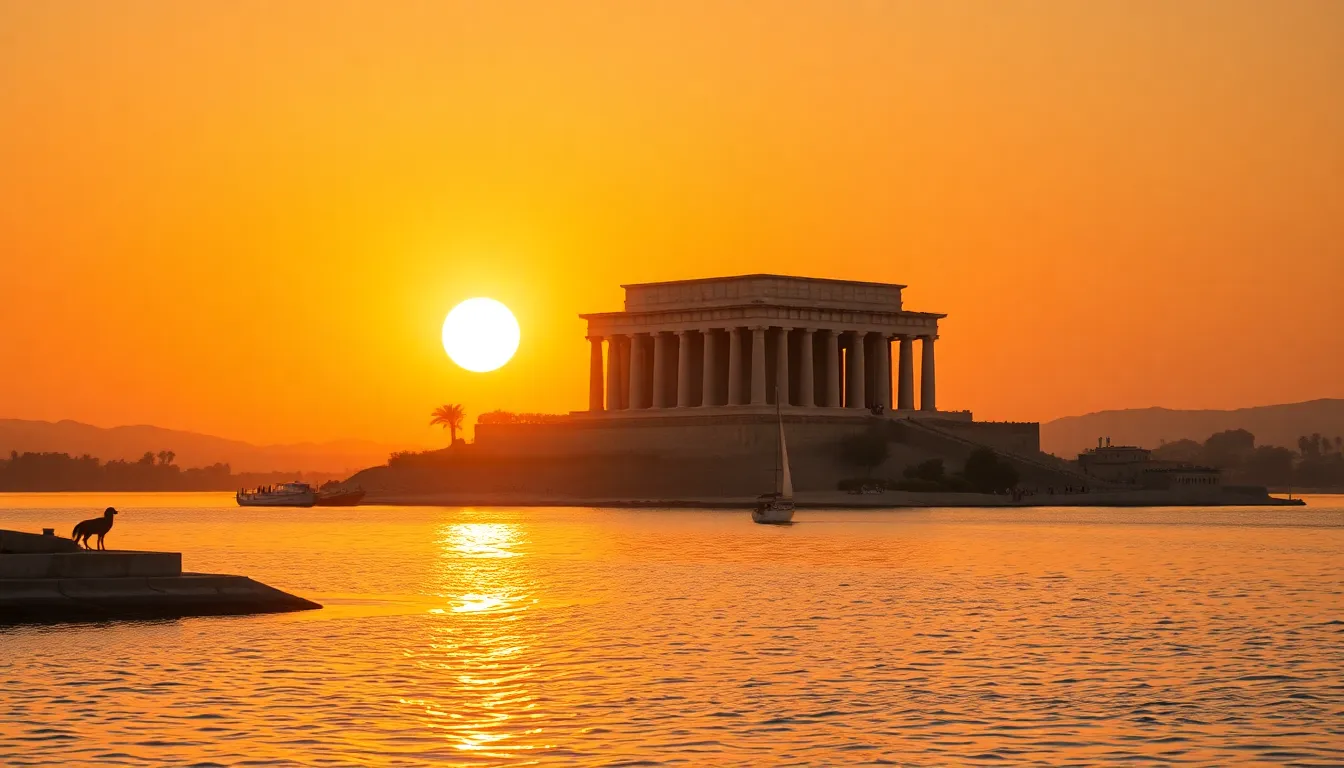
You reach Philae by boat. That is the first thing I tell a group, because it changes the whole feeling of the visit. You step off the bus at Aswan, walk down to a small dock, and a motorboat carries you across the water to an island. As you cross, the temple rises out of the Nile in front of you, its pylons reflected in the river. Nobody talks much on that crossing. They just watch it come closer.
I have brought faith groups to Philae for years, and it is one of the sites that surprises people most. They come to Egypt for the pyramids and the Exodus story, and then they stand on this island in the southern Nile and find themselves moved by something they did not expect. Philae is a temple of survival. It survived its own near-drowning, and it carries the last whispers of the ancient Egyptian religion into the Christian age. For a heritage group, that layered story is the gift.
What Philae Is
Philae is a temple complex on an island in the Nile near Aswan, in the far south of Egypt, close to the historic border with Nubia. Its centerpiece is the great Temple of Isis, one of the most beautiful and complete temple complexes in all of Egypt. The construction we see today dates mostly to the Ptolemaic period, the dynasty of Greek-speaking pharaohs descended from one of Alexander the Great’s generals, with additions by the Roman emperors who ruled Egypt after them.
Isis was one of the most beloved deities of the ancient world. Her worship spread far beyond Egypt, across the Mediterranean, into Greece and Rome. Philae was her holiest sanctuary, a pilgrimage destination that drew worshippers from across the ancient world. The temple is covered in carved reliefs and inscriptions, and the level of detail is extraordinary. Walls of carved figures, columns crowned with floral capitals, sanctuaries and birth houses and colonnaded courts.
The Last Temple of the Old Religion
Here is the detail that makes Philae remarkable, and that I always make sure a group understands. Philae was the last functioning temple of the ancient Egyptian religion. Long after the rest of Egypt had become Christian, the priests of Isis at Philae kept the old rites alive. The final dated hieroglyphic inscription anywhere in the world, carved in 394 CE, is found at Philae. The last known inscription in Demotic, the everyday Egyptian script, is here too.
The temple was finally closed by order of the Christian emperor Justinian in the sixth century, and parts of it were converted into a church. You can still see Coptic crosses carved into the ancient walls, and the marks where Christian worshippers altered the pagan reliefs. For a faith group, that physical overlay is striking. On these walls you can read, quite literally in the stone, the moment when the ancient world gave way to the Christian one.
Why Philae Matters for a Heritage Group
A faith group might reasonably ask why an Isis temple, a pagan sanctuary, belongs on their itinerary. I understand the question, and I welcome it, because the answer is part of what makes heritage travel different from religious tourism.
The world the biblical story unfolds in was a world full of temples like Philae. When the prophets of Israel proclaimed one God, they were proclaiming it against the backdrop of exactly this kind of devotion: beautiful, ancient, deeply felt worship of many gods. To stand at Philae is to feel the religious world that the Bible’s monotheism was speaking into and standing apart from. You understand the prophets better when you have seen what they were contending with.
And the Christian overlay makes Philae a place where two chapters of faith history meet on the same stone. The early Egyptian church, one of the oldest Christian communities on earth, planted its cross in the most sacred sanctuary of the old religion. For Christian groups, that is a vivid image of the gospel reaching the ends of the known world. The southern frontier of Egypt, the last holdout of the old gods, was reached and transformed.
There is also a Nubian dimension. This region was the gateway to Nubia, the land the Bible calls Cush. Cush appears throughout the Hebrew Bible, and a Cushite official serves in the court of Judah’s king in the book of Jeremiah. Standing at Aswan, at the historic border, you are at the threshold of that biblical world too.
The Rescue of Philae
I cannot talk about Philae without telling the rescue story, because it is one of the great heritage achievements of the modern world, and groups always find it gripping.
In the 20th century, Egypt built two dams at Aswan to control the Nile and generate power. The original Aswan Low Dam, completed in 1902, raised the water level so much that the island of Philae was flooded for most of each year. For decades, visitors could only glimpse the temple through the water, or row among its half-submerged columns. The reliefs began to suffer.
When the much larger Aswan High Dam was planned in the 1960s, Philae faced a far worse fate. The temple would be caught between the two dams, in water that fluctuated constantly, soaking and drying the stone until it disintegrated. So an international rescue was launched under the banner of UNESCO. Engineers built a temporary dam around the island, pumped the water out, and then dismantled the entire temple complex, stone by stone. Around 40,000 blocks were carefully measured, numbered, and moved.
The temple was rebuilt on the nearby island of Agilkia, on higher ground safe from the water, with the landscape of the original island recreated to match. The reconstruction was so precise that when you visit today, you are seeing the temple essentially as it always stood, just on a different island. It was finished in 1980.
I tell groups this story because it speaks to something they care about deeply: the work of preserving heritage so that the next generation can stand where we stand. The rescue of Philae is a parable of memory, of refusing to let something sacred be lost. That theme sits at the heart of why faith communities travel to these places at all.
How Groups Visit Philae
Philae is part of the Aswan leg of an Egypt itinerary. Most heritage trips that reach the southern Nile base a group in Aswan for a night or two, often in combination with a Nile cruise that ends or begins here.
The visit itself is straightforward and a real highlight. From the dock, motorboats carry the group across to the island. The boatmen wait while you tour, then return you. I always advise a group to negotiate the boat clearly in advance, which a good operator handles so no one is haggling at the water’s edge.
Plan for around two hours on the island. That gives time to walk the full complex, see the Temple of Isis, the colonnades, the birth house, and the Coptic crosses on the walls, without rushing. Aswan is one of the hotter parts of Egypt, so morning visits are far more comfortable. Some groups also do the evening Sound and Light show here, which is atmospheric on an island in the dark river, though I help each group weigh whether it fits their pace.
Practical Access Notes
- The boat crossing is short and calm, but it is a step down into a small boat and a step up again. For travelers with mobility concerns, the boatmen are helpful and a steady arm makes it easy.
- Footing on the island is uneven stone in places, as at most ancient sites. Good shoes matter.
- Sun and heat are significant in Aswan. Hats, water, and an early start make the difference.
- Pair it well. Aswan also offers the High Dam itself, the unfinished obelisk in the ancient quarries, and Nubian village visits, so Philae usually sits within a fuller Aswan day.
For the wider context of how Aswan and the southern Nile fit a faith itinerary, our Egypt heritage travel guide lays out the regions together.
Pairing Philae with the Wider Journey
Philae pairs naturally with the rest of the Aswan area and with the temple sites further south. Groups continuing deeper into the Nubian heartland often go on to Abu Simbel, the colossal temples of Ramesses II, which sit a few hours south of Aswan. Together, Philae and Abu Simbel tell the story of Egypt’s southern frontier and the same UNESCO rescue effort that saved them both from the rising water.
For groups who want to go beyond the famous stops, I weave in some of the hidden heritage sites in Egypt that most tours never reach. And because Aswan heat shapes the whole experience, the question of season matters: our guide to the best time to visit Egypt for a heritage journey walks through the calendar in detail.
FAQ: The Temple of Philae
What is the Temple of Philae known for?
Philae is the great Temple of Isis, one of the most complete and beautiful temple complexes in Egypt, set on an island in the Nile near Aswan. It is famous as the last functioning temple of the ancient Egyptian religion, holding the final dated hieroglyphic inscription in the world (394 CE), and for its dramatic rescue from flooding in the 20th century.
Why was Philae moved to a different island?
The construction of the Aswan dams flooded the original island of Philae. To save the temple from the constantly fluctuating water that would have destroyed it, an international UNESCO-led effort in the 1960s and 70s dismantled the entire complex, around 40,000 blocks, and reassembled it on the higher nearby island of Agilkia, recreating the original setting. It was completed in 1980.
Why would a faith group visit a temple of Isis?
Philae helps a heritage group understand the religious world the biblical story stood within and apart from. It also carries a Christian chapter: the early Egyptian church converted part of the temple into a church, and Coptic crosses are carved into the ancient walls. On one site you see both the old religion and the arrival of Christianity at the southern edge of the ancient world.
How do you get to the Temple of Philae?
You reach Philae by boat. From a dock near Aswan, small motorboats carry visitors across the water to the island, wait during the tour, and return them. The crossing is short and calm. Most heritage itineraries include Philae as part of the Aswan leg of the journey.
How long does a visit to Philae take?
Plan for around two hours on the island to walk the full complex without rushing, including the Temple of Isis, the colonnades, the birth house, and the Coptic crosses. Morning visits are far more comfortable, as Aswan is one of the hotter parts of Egypt.
Philae is the kind of site that catches a group off guard, in the best way. They arrive expecting a pagan ruin and leave having stood at the meeting point of the ancient world and the Christian one, on an island that was saved from drowning by people who refused to let it be lost. If you are planning your congregation’s Egypt journey, this is a stop I love to build into the southern Nile days. Group leaders travel free with fifteen or more participants, and we handle every detail.
Contact us when you are ready to begin. I would be glad to help.