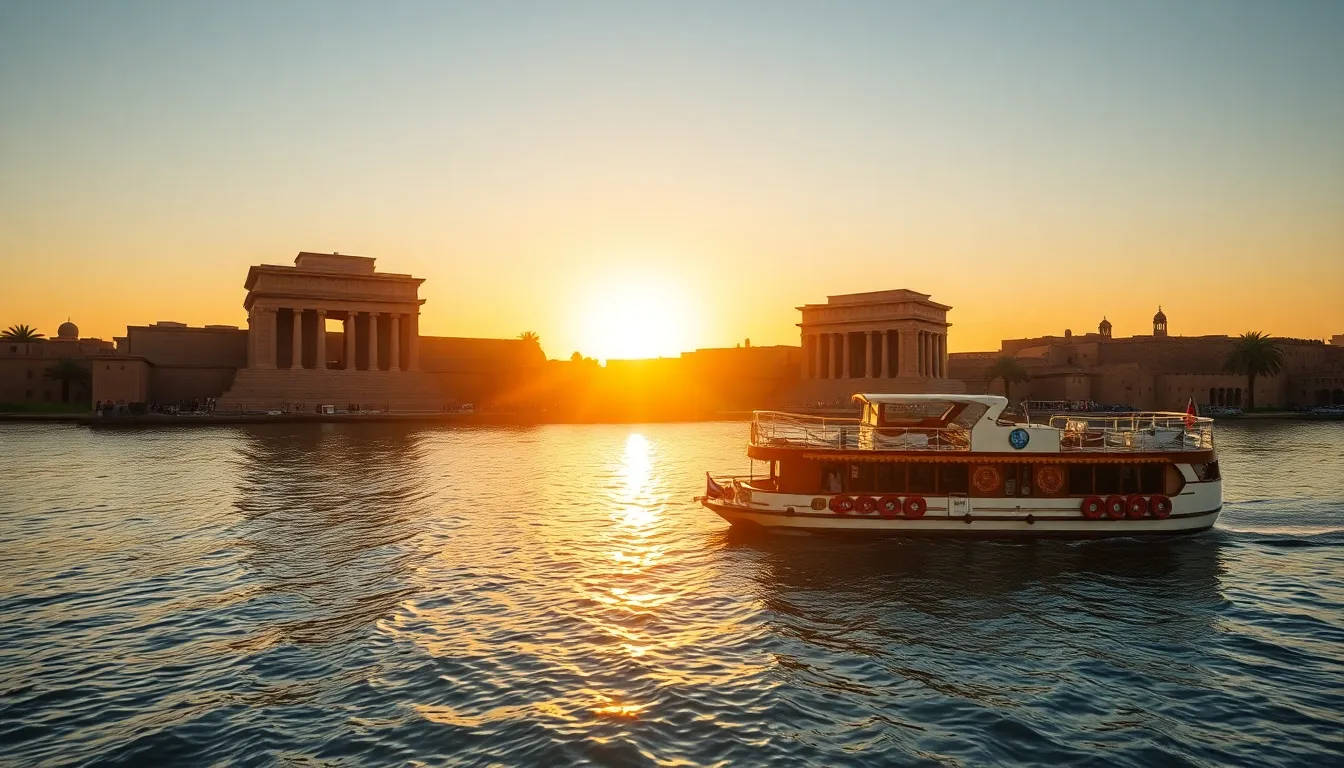
For years I resisted putting Nile cruises on our heritage itineraries. A cruise felt like the opposite of what we do. Buffet dinners, sun decks, a parade of temples photographed and forgotten by the next morning. It looked like tourism, not pilgrimage.
I was wrong, and a group leader I respect changed my mind. She pointed out that the Nile is not a backdrop to the biblical story. The Nile is a character in it. The river that was turned to blood. The river the baby Moses was drawn out of. The river that fed the civilization the whole Exodus story sets itself against. Move slowly along that river with a group that is reading the right texts, and a cruise stops being sightseeing and becomes something closer to meditation.
So this is the itinerary I now build for groups that want the Luxor and Aswan stretch of Egypt with real heritage depth rather than a checklist of temples. It pairs naturally with the Cairo and Sinai spine of our 8-day Egypt heritage itinerary, and many groups combine the two.
Why the River Itself Is the Heritage Site
Before the temples, understand the water. Egyptian civilization existed because of the Nile and almost nowhere else. The plagues in Exodus are, in large part, an assault on the Nile and the gods bound to it. The Egyptian world the Israelites lived in was a river world.
So I treat the sailing time as the actual heart of this trip, not the gap between stops. The hours on deck, watching the same green strip of life along the water that has been farmed continuously since the Bronze Age, are when the texts open. I schedule the temple visits early and late to dodge the heat, and I protect the slow river hours in between. Most cruise operators run it the other way around. They treat the river as transit. We treat it as the destination.
Days 1 and 2: Luxor, the Imperial Capital
We begin in Luxor, ancient Thebes, the capital of Egypt at the height of its imperial power, the New Kingdom, the period scholars most associate with the Exodus.
On the east bank, the temples of Karnak and Luxor are the largest religious complexes the ancient world ever built. I frame them honestly for faith groups. This is the architecture of the power the Exodus story stands against, the visible scale of the civilization that held the Israelites. Standing in the vast hall of columns at Karnak, the group feels the weight of what it meant to be a small enslaved people inside an empire this confident.
On the west bank, the Valley of the Kings holds the tombs of the pharaohs of that era, including rulers connected by tradition to the Exodus. I bring groups here not for the spectacle, though the spectacle is real, but to stand at the burial places of the very kings the story names as adversaries. It lands differently than reading their names on a page.
Reading on the river. Exodus 5, the bricks without straw, read on deck after a day among the monuments that forced labor built.
Day 3: Sailing South to Edfu and Kom Ombo
This is the first full sailing day, and I guard it carefully.
We sail south along the Nile, stopping at the temple of Edfu, the best-preserved temple in Egypt, dedicated to the falcon god Horus, and at the double temple of Kom Ombo on the riverbank. Both are remarkable. But the deeper work happens in the hours between them, on deck, watching the river.
I run a guided reflection on this day. The Nile as the source of Egyptian life, and the plagues as the systematic dismantling of that source. The river turned to blood. The darkness over the land of the sun. When you read those passages while actually moving along the Nile, watching the irrigation channels and the date palms and the farmers working the banks, you understand what the plagues were attacking. Not random disasters, but an assault on the Egyptian world itself.
Reading on the river. Exodus 7, the Nile turned to blood, read while sailing the Nile. The setting carries the words.
Day 4: Aswan and the Edge of Egypt
Aswan sits at Egypt’s traditional southern frontier, the edge of the ancient world, where Egypt met Nubia. The pace here is slower and the river is at its most beautiful, broad and island-studded and calm.
We visit the temple of Philae, set on its island, one of the most atmospheric sites in all of Egypt. For groups interested in how ancient religion worked, in what the Israelites were surrounded by and called to leave behind, Philae is a quiet, powerful teacher.
The afternoon I keep deliberately open. A felucca sail, the traditional wooden sailboat, on the calm water around the Aswan islands is the single most peaceful experience on the river. For a faith group, an hour drifting in silence under sail, after days of temples and crowds, is its own kind of prayer. I have watched groups go completely quiet on a felucca and stay that way, by choice.
Reading on the river. Psalm passages on the waters, or for groups moving toward the Exodus, a first reading of Exodus 13, the going out, since Aswan is where the trip begins to turn back north and outward.
Day 5: From the River to the Story’s Spine
A river cruise on its own is a beautiful experience, but for a faith group it is incomplete. The Nile chapters are the setting and the confrontation. The going out, the sea, and the mountain happen elsewhere.
So I build this itinerary to flow into the heritage spine. From Aswan or Luxor, groups fly to Cairo and join the core route, Cairo’s Jewish and Coptic heritage, the land of Goshen in the Delta, the Red Sea coast, and the Sinai with Mount Sinai. The cruise gives you the river world the Israelites lived in. The spine gives you the deliverance.
For how that spine is structured, see our Exodus-focused itinerary and the full 8-day heritage itinerary. For the individual sites that matter most, see our guide to the spiritual sites in Egypt.
How a Cruise Changes the Practical Picture
A few honest notes for group leaders weighing this option.
A Nile cruise is genuinely comfortable. For groups with older members or anyone who struggles with long days on their feet, the cruise portion is the easiest part of any Egypt trip. You unpack once. The temples come to you. The hardest part of the cruise is walking through the temple sites themselves, and even those are manageable for most.
Timing matters more on the river than almost anywhere in Egypt. Luxor and Aswan are brutally hot from June through August, regularly above 40°C. The river is at its best from October through April. For how that maps to the faith calendar, see our guide to the best time to visit Egypt.
For the full structure of a combined river-and-spine journey, our Egypt heritage destination page and our group heritage tours page cover how we put it together.
FAQ: Nile Cruise Heritage Itinerary
Can a Nile cruise really be a heritage trip and not just sightseeing?
Yes, if you build it that way. The difference is in how you use the river. We treat the sailing hours as the heart of the trip, with guided readings and reflection on the Nile’s central role in the Exodus story, rather than as transit between temples. A cruise that frames the river as a character in the biblical narrative becomes a genuine heritage experience, not a sightseeing parade.
How does a cruise connect to the Exodus story?
The Nile is woven through the Exodus narrative. It is the river turned to blood, the river the infant Moses was drawn from, the source of the Egyptian power the story sets itself against. The plagues are largely an assault on the Nile and the gods tied to it. Sailing the river while reading those texts gives the confrontation a setting nothing else can.
Should we do a cruise instead of the Sinai portion?
I would not choose one over the other. The cruise gives you the river world the Israelites lived in. The Sinai gives you the mountain where the people received the law. They are different movements of the same story. Most of our groups combine a short cruise with the core Cairo-and-Sinai spine for the complete arc.
Is a Nile cruise good for older or less mobile groups?
It is the most comfortable part of any Egypt itinerary. You unpack once, the temples come to you, and the river days are restful. The temple visits involve some walking on uneven ground, but the overall load is light. For groups with significant mobility needs, see our accessible Egypt itinerary for how we adapt further.
What is the best length for the cruise portion?
Three to four nights between Luxor and Aswan covers the major sites without rushing and leaves room for the slow river hours that make it meaningful. Paired with four to five days on the Cairo-and-Sinai spine, that gives a full and well-paced journey.
If your community wants Egypt’s river chapter done with real depth, not a checklist of temples photographed from a sun deck, I would love to talk it through with you.
Every group brings a different relationship to the story, and the river rewards groups that move through it slowly with the right texts in hand. Tell me what your people are looking for, and we will build the sailing and the spine around it. Reach out when you’re ready, and let’s start the conversation.