Every Passover, for our whole lives, we say the words: we were slaves in Egypt, and the Lord brought us out. I have said them at hundreds of Seders. But the first time I stood in the flat farmland of the eastern Nile Delta, in the region the Torah calls Goshen, and said those words out loud to a group standing beside me, something happened that no Seder table had ever given me. The story stopped being a story. It became ground under my feet. A man in the group, a cantor, started to sing very quietly, and we all just stood there in the field and let it move through us.
I have traced the Exodus geography with Jewish groups for more than twenty years. This guide is for rabbis, educators, and heritage travelers who want to understand how the biblical route through Egypt maps onto real places, what we know and honestly do not know, and what it means to walk that geography as a community.
A Word About What We Can and Cannot Know
Let me be straight before we begin, because honesty is the only way to lead this well. The exact route of the Exodus is debated among archaeologists and biblical scholars, and the precise locations of many places named in the text are uncertain. I am not going to stand in a field and tell your group “the sea split right here” as though it were a settled fact. That would be a disservice to them and to the story.
What I can tell you is that the broad geography of the narrative is real and visitable, that several of the places named in Exodus correspond to identifiable regions and archaeological sites, and that walking this landscape gives the Passover story a physical reality that is genuinely transforming, regardless of the scholarly debates over exact coordinates. The uncertainty does not weaken the experience. If anything, holding the question honestly makes the encounter deeper.
Goshen: Where the Israelites Lived
The Torah places the Israelites in the land of Goshen, in the eastern Nile Delta. This was rich farmland, well watered and fertile, where Jacob’s family settled in the time of Joseph and grew into a people over the generations of the sojourn in Egypt.
Goshen is not a single site you can pin on a map with a sign. It is a region, the eastern Delta, and it is visitable as a landscape. When I bring a group there, we stand in the agricultural country of the eastern Delta and I read the text aloud: how the family of seventy came down to Egypt, how they were fruitful and multiplied, how a new Pharaoh arose who knew not Joseph. The flat green fields stretching out around us are the kind of land the text describes. People settle into the story differently when they can see the soil.
The Store Cities: Pithom and Rameses
Exodus names two cities the enslaved Israelites built for Pharaoh: Pithom and Rameses, the store cities. And here the geography touches real archaeology in a way that grips groups.
The city of Rameses is associated by many scholars with the great site of Pi-Ramesses, the capital of Ramesses II, whose remains lie near the modern town of Qantir in the eastern Delta. In its day Pi-Ramesses was one of the largest cities in the ancient world. Excavations in the region have uncovered mudbrick construction of the kind described in Exodus and evidence of Semitic laborers present in the Delta during the New Kingdom period, the broad era associated with the biblical narrative.
I always tell groups plainly: this is not proof of the Exodus, and serious scholars debate the connections. But standing in the eastern Delta, looking at the land where a great Egyptian capital was built with mudbrick and where Semitic laborers are attested, gives the words “they made their lives bitter with hard bondage, in mortar and in brick” a physical weight they never had at the Seder table. The sites themselves are not grand tourist attractions with preserved temples. They are quiet, often just earth and low remains. And that quietness is part of their power. Groups stand there without needing to say much.
Memphis and the World of Pharaoh
Nearby, the ancient capital of Memphis and the step pyramid at Saqqara give groups a sense of the scale and power of the Egyptian civilization the Israelites stood against. To understand the Exodus you have to feel what Pharaoh’s Egypt was: one of the mightiest civilizations the world had ever seen, and against it stood Moses with nothing but the word of God. Seeing those monuments makes the audacity of the demand, “let my people go,” land with full force.
The Route Out: Toward the Sea
When Pharaoh finally let the people go, the text says God did not lead them by the direct coastal road toward the land of the Philistines, the obvious route, but turned them toward the wilderness by the way of the Sea of Reeds, the Yam Suf, traditionally rendered as the Red Sea.
This is where the geography becomes most debated and most evocative. The text names a sequence of encampments, Succoth, Etham, Pi-hahiroth, places whose exact locations scholars cannot agree on. The body of water of the crossing, the Yam Suf, has been variously identified with one of the lakes along the line of the modern Suez Canal, with an arm of the Red Sea, or with marshlands in the eastern Delta. I walk groups through these possibilities honestly, because the debate is part of the intellectual richness of the journey, and educators in particular find it fascinating.
Standing Where the Geography Lives
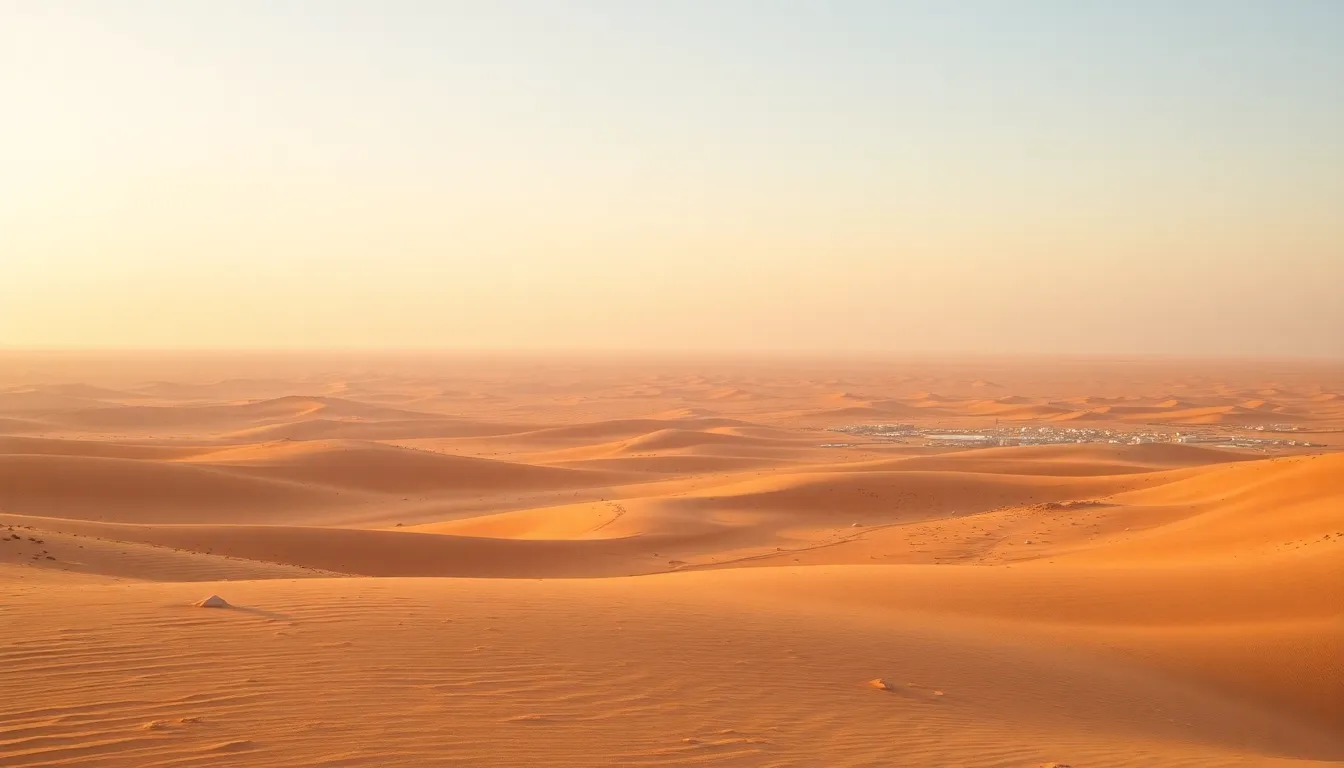
What I do not do is pretend to a certainty no one has. What I do instead is bring groups to the eastern edge of the Delta and toward the waters that lie between Egypt and Sinai, and let the landscape and the text speak together. We read the crossing aloud, the wall of water on the right hand and on the left, and we stand at the threshold between the land of bondage and the wilderness of freedom. Whatever the exact coordinates, the geography of departure is real: a people leaving the fertile, settled Delta and walking out into the harsh, open wilderness toward an unknown future. That movement, from slavery into the frightening freedom of the desert, you can feel on the ground.
The Sinai Dimension
The Exodus story does not end at the sea, of course. It continues into the wilderness of Sinai and to the mountain where the covenant was given. Sinai is its own enormous chapter, with its own logistics and access considerations that have to be coordinated carefully and separately when we plan group itineraries. I mention it here so groups understand the full shape of the journey, from Goshen through the sea and on toward the mountain, even though the Sinai leg is planned on its own terms. The traditional pre-dawn ascent of Mount Sinai is, for many of my groups, the emotional summit of the entire Exodus journey.
Why Walking the Exodus Matters
People sometimes ask whether it is worth tracing geography that is so uncertain. My answer, after twenty years, is an unhesitating yes.
The Exodus is the foundation of Jewish identity. It is woven into our daily prayers, into the Shema’s reminder that God brought us out of Egypt, into the ethical core of the Torah, the command, repeated dozens of times, to love the stranger because we were strangers in the land of Egypt. To stand in that land, to feel the bondage in the brick of the Delta and the freedom in the open wilderness, is to encounter the source of all of it. Groups come home and say the Haggadah differently for the rest of their lives. The words are no longer only words. They have ground under them now.
We handle this story as the sacred and serious thing it is, holding the honest uncertainty and the profound meaning together. For the fuller context, our main Jewish heritage guide to Egypt sets the Exodus within the whole arc of Jewish life in Egypt, and our guide to the best time to visit Egypt explains why traveling around Passover gives this journey its deepest resonance.
How Heritage Tours Leads the Exodus Route
Tracing the Exodus well takes a guide who can hold scholarship and reverence in the same hand, who knows the archaeology of the Delta and the debates over the route and the depth of the text, and who can stand in a quiet unmarked field and make three thousand years present. That is the heart of what we do.
We map a route through the visitable Exodus geography, coordinate access to the Delta sites and the surrounding monuments of Pharaoh’s Egypt, handle the separate planning that the Sinai leg requires, and build the itinerary so the story unfolds as a coherent journey from Goshen toward freedom. We provide the transport and logistics so your group never struggles with unfamiliar ground, and we time the trip, where you wish, to align with the Passover season for maximum resonance.
You can see how the Exodus route fits into a full journey on our Egypt heritage destination page and our group heritage tours overview.
FAQ: The Exodus Route Through Egypt
Where did the Israelites live in Egypt?
The Torah places them in the land of Goshen, in the fertile eastern Nile Delta, where Jacob’s family settled in the time of Joseph and grew into a people. Goshen is a region rather than a single marked site, and it is visitable as a landscape. Standing in the agricultural country of the eastern Delta gives the early chapters of the Exodus story a real physical setting.
Are the store cities of Pithom and Rameses real places?
The city of Rameses is associated by many scholars with Pi-Ramesses, the capital of Ramesses II, whose remains lie near modern Qantir in the eastern Delta. Excavations there have found mudbrick construction and evidence of Semitic laborers in the region during the New Kingdom period. This is not proof of the Exodus, and scholars debate the connections, but it gives the biblical account of brick-making bondage a tangible setting.
Do we know the exact route of the Exodus?
No. The precise route and the locations of many named encampments, such as Succoth, Etham, and Pi-hahiroth, are debated among scholars, and even the body of water of the crossing, the Yam Suf or Sea of Reeds, has several proposed identifications. What is real and visitable is the broad geography: a people leaving the settled Delta and moving out into the wilderness toward Sinai. The honest uncertainty does not diminish the experience.
Is the Sinai part of the same trip?
The Sinai is the next great chapter of the Exodus story, continuing to the mountain of the covenant, but it involves its own access and logistical considerations that are planned separately. Many groups include a Sinai leg, often centered on the traditional pre-dawn ascent of Mount Sinai, which is for many travelers the emotional peak of the whole journey. Heritage Tours coordinates the Sinai planning on its own terms.
Is it worth tracing the Exodus when the sites are unmarked and uncertain?
Yes. The Exodus is the foundation of Jewish identity, woven into daily prayer and the ethical core of the Torah. Standing in the land of the story, feeling the bondage in the Delta and the freedom of the open wilderness, transforms how people relate to the Passover narrative for the rest of their lives. The quiet, unmarked character of the sites is part of what makes the encounter so powerful.
If you are a rabbi or educator thinking about walking the Exodus with your community, I would love to talk it through with you, especially if you are considering the Passover season. It is the most profound journey I lead, and it asks to be led with both honesty and reverence. Reach out through our contact page whenever you are ready to begin the conversation.