Every group leader asks me this question, and most of them ask it nervously, half-expecting me to brush it off. I won’t brush it off. Safety is the question a pastor or rabbi has a genuine responsibility to ask, because they are answerable to families who are entrusting them with parents, spouses, and sometimes teenagers.
So here is an honest briefing. Not reassurance, not a sales pitch. The actual safety picture for a faith group traveling to Egypt, including the things that are genuinely fine and the few things that deserve real attention. After twenty years of taking groups through this country, I can tell you exactly what to worry about and what not to.
The Short, Honest Answer
Egypt is safe for organized heritage groups traveling on a structured itinerary with a professional operator. The tourist corridors where heritage groups actually travel, Cairo, Luxor, Aswan, the Nile Valley, the Saint Catherine’s area of Sinai, are heavily protected and see millions of visitors a year without incident.
That sentence has conditions in it, and the conditions matter. “Organized,” “structured,” and “professional operator” are doing real work. An independent traveler wandering into areas Egypt’s own government restricts is a different situation than a guided faith group following a planned route. Heritage groups travel in the protected corridor. That’s the whole point.
What “Safe” Actually Means Here
Let me separate the kinds of safety, because they get blurred together and the blurring causes unnecessary fear.
Terrorism and Regional Conflict
This is what most people are actually asking about, and I’ll be direct. Egypt has, in past years, had security incidents, and certain regions remain genuinely off-limits: the northern Sinai (a completely different area from the Saint Catherine’s monastery region groups visit), and parts of the Western Desert near the Libyan border. No legitimate heritage itinerary goes near those places.
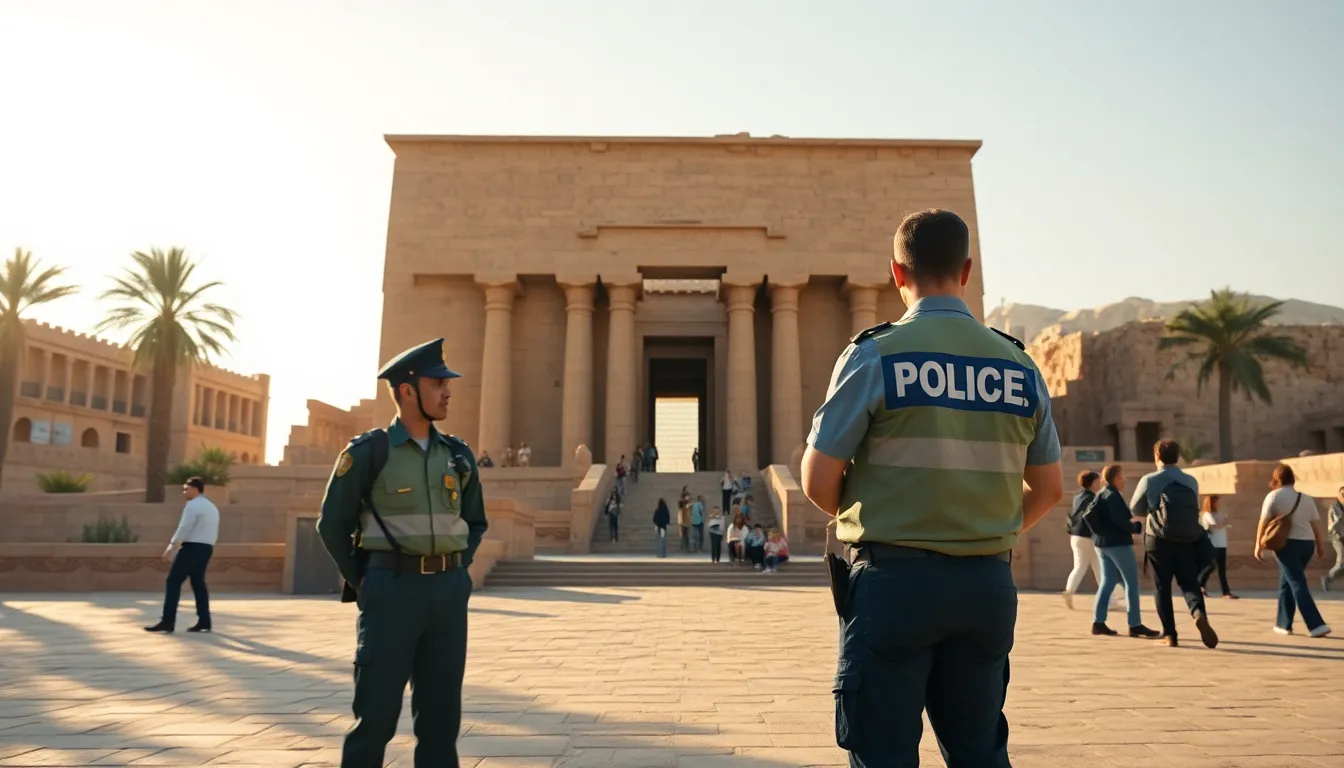
The tourist corridor where groups travel is a national economic priority for Egypt, and the country protects it accordingly. You will see a visible security presence at major sites, on tourist routes, and around hotels: tourist police, checkpoints, metal detectors at site entrances. Some travelers find this presence reassuring and some find it startling. It is simply how Egypt secures the places visitors go. It is not a sign of danger. It’s the opposite.
Always check your own government’s current travel guidance before booking. For US travelers, that’s the State Department’s country page for Egypt, which distinguishes clearly between the safe tourist regions and the restricted areas. Read it. It will calm you more than it alarms you, because it confirms that the places you’re actually going are not the places of concern.
Everyday Crime
Violent crime against tourists is rare in Egypt. The more realistic everyday concerns are petty: pickpocketing in crowded bazaars, overcharging, and the persistent, aggressive sales pressure at major tourist sites. None of these are dangers to your physical safety. They’re nuisances, and a prepared group handles them easily.
The Scams and Hustle Nobody Warns You About
This is the part that actually catches groups off guard, far more than any security concern. Tourist Egypt runs on a culture of persistent selling and small hustles, particularly at the Pyramids, the Khan el-Khalili bazaar, and temple entrances. Someone hands your traveler a “gift,” then demands payment. A “free” camel photo becomes a negotiation to get back down. A guide who isn’t yours attaches himself to your group and expects a tip.
This is not dangerous. It is tiring, and it can rattle people who weren’t prepared for it. The defense is simple: travel as a group with your own licensed guide, and don’t engage. “La shukran” (no thank you), said with a smile and no hesitation, ends most of it. We brief every group on this before they land, because the travelers who know it’s coming barely notice it, and the ones who don’t can have a rough first afternoon.
Health and Physical Safety, the Real Risks
Honestly, for most faith groups the genuine risks are health-related and physical, not security-related. These are the ones I spend the most time on.
Heat. Egypt’s summer heat is a real hazard, not a discomfort. Luxor in July can exceed 45°C (113°F), and at that temperature, mid-day outdoor site visits are unsafe for older travelers. We build summer itineraries around early mornings and late afternoons with forced mid-day breaks. For a mixed-age group, traveling in the cooler months (October, November, March, December through February) removes this risk almost entirely.
Stomach illness. The most common thing that actually disrupts a trip is traveler’s stomach. Drink only bottled or filtered water, including for brushing teeth. Be cautious with raw vegetables and street food. A good operator manages where the group eats. Bring the basic medications you’d want, because a mild case is common and easily managed if you’re prepared.
The Sinai climb. The pre-dawn Mount Sinai ascent is the most physically demanding thing on a typical itinerary: roughly 7 kilometers and 750-plus stone steps in the dark, summit temperatures near or below freezing even in warm seasons. It’s safe for prepared people, but group leaders need honest conversations with older members about whether the climb is right for them individually. Not everyone needs to summit, and camel transport covers most of the path.
Sun and hydration. Closed-toe shoes, sunscreen, a hat, and a refillable water bottle are not optional. The desert sun is stronger than people expect.
Why a Guided Group Is the Safest Way to See Egypt
Here’s the thing that ties all of this together. Nearly every safety consideration in Egypt is mitigated by the simple fact of traveling as an organized group with a professional operator.
You are never navigating alone. You have a licensed local guide who knows which areas to enter and which to avoid, who handles the hustle, who knows where it’s safe to eat. You travel by private coach, door to door, not in unmarked taxis or on your own through unfamiliar streets. Your itinerary stays inside the protected corridor by design. Site access, including the more sensitive sites, is pre-arranged so you’re never improvising at a gate.
The risks that face an independent backpacker, getting lost, wandering into the wrong area, being targeted alone, simply don’t apply to a group moving together with people who do this for a living. This is exactly why I tell nervous group leaders that organized heritage travel is the safest possible way to experience Egypt. It’s not a marketing line. It’s structurally true.
How to Brief Your Congregation
Set expectations honestly before you go, and you’ll prevent most of the anxiety. Tell your group three things:
- You’ll see security, and it means you’re protected. The police presence and checkpoints are normal and reassuring, not alarming.
- The sales pressure is real but harmless. Don’t engage, say no with a smile, and let the guide handle it.
- The genuine risks are heat, hydration, and stomach, all manageable with the precautions we’ll give you.
A group that walks in with accurate expectations has a calm, wonderful trip. A group that walks in either naive or terrified has a harder time. Your job as the leader is to give them the truth, which sits comfortably in the middle.
For the on-the-ground specifics, our Egypt heritage travel guide covers the hustle, the heat, and site etiquette in detail. The best time to visit Egypt breakdown helps you avoid the seasons where heat becomes a real safety factor. And because health is the genuine risk, our guide on travel insurance for an Egypt group covers the coverage that matters for older members.
FAQ: Is Egypt Safe for Heritage Groups?
Is Egypt safe for tourists right now?
For organized heritage groups traveling the tourist corridor (Cairo, Luxor, Aswan, the Nile Valley, the Saint Catherine’s region of Sinai) with a professional operator, yes. These areas are a national economic priority and are heavily protected. Certain regions, including northern Sinai and the western desert near Libya, are genuinely restricted, but no legitimate heritage itinerary goes near them. Always check your government’s current travel guidance before booking.
What are the real risks for a faith group in Egypt?
The genuine risks are mostly health and physical, not security: summer heat (a real hazard for older travelers), traveler’s stomach illness, and the physical demand of the Mount Sinai climb. The security presence you’ll see is reassuring, not alarming. The most common surprise is the persistent sales pressure at tourist sites, which is tiring but harmless.
Is the Mount Sinai climb safe for older travelers?
It’s safe for prepared people, but it’s the most demanding thing on a typical itinerary: about 7 kilometers and 750-plus steps in the dark, with summit temperatures near freezing. Group leaders should have honest conversations with older members about whether the climb is right for them individually. Camel transport covers most of the path, and not everyone needs to summit. Some have a profound experience waiting at the base.
Why is the police presence at Egyptian sites so visible?
Because protecting tourists is a national economic priority, Egypt maintains visible tourist police, checkpoints, and metal detectors at major sites and on tourist routes. Some travelers find this startling at first, but it is simply how the country secures the places visitors go. It signals protection, not danger. Briefing your group on this in advance prevents unnecessary anxiety.
Is it safer to travel Egypt in a group than independently?
Yes, meaningfully so. Nearly every safety consideration in Egypt is reduced by traveling as an organized group with a professional operator: a licensed guide who knows which areas to avoid and how to handle the hustle, private door-to-door transport, an itinerary that stays inside the protected corridor, and pre-arranged site access. The risks that face a lone backpacker don’t apply to a group moving together.
Egypt is one of the most rewarding places I take groups, and in twenty years I have brought thousands of people through it safely. The fear most leaders carry before the trip almost always dissolves within the first day, replaced by the sheer wonder of where they’re standing.
If you have specific safety questions about your group, your route, or your travelers, I’d rather answer them honestly than have you carry the worry.
Reach out here and ask me anything. No pitch, just straight answers.