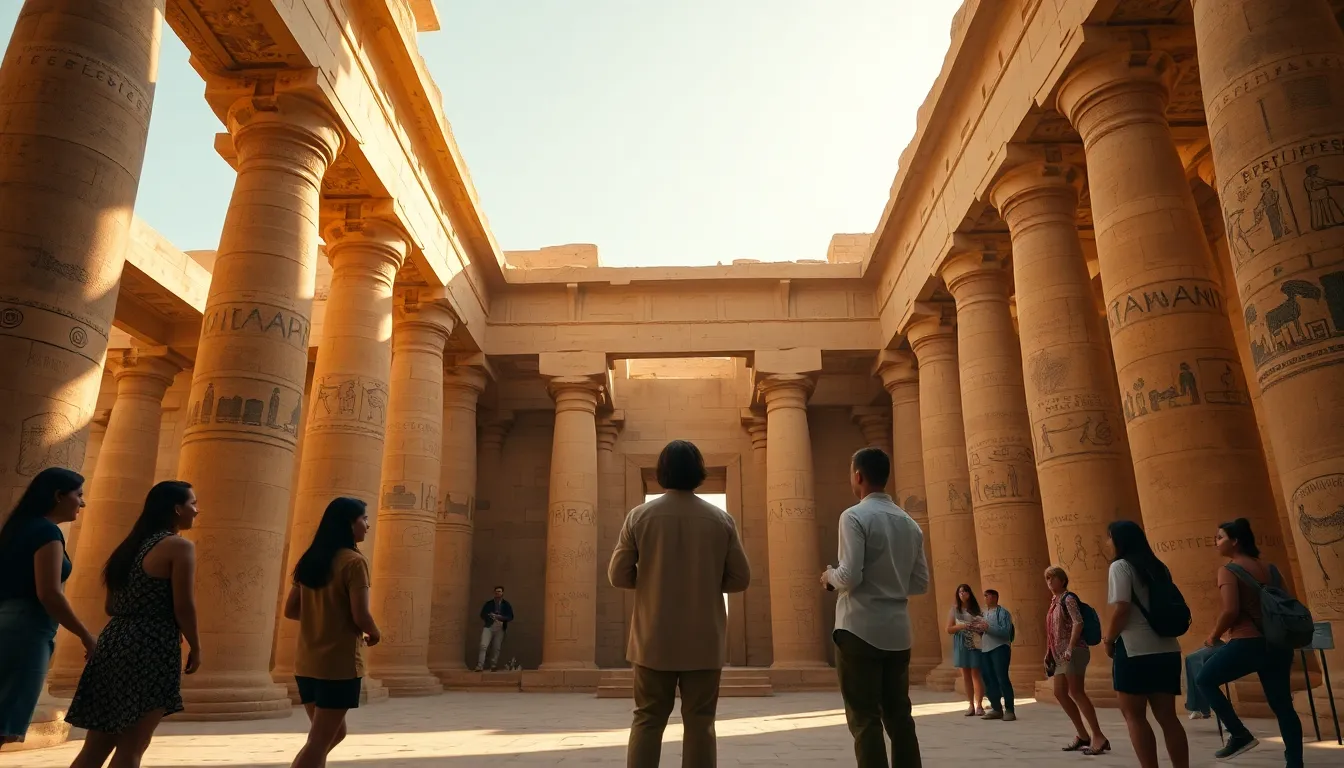
There is a moment I look for on every trip, and it tells me whether the journey was a tour or an education. It is the moment a traveler stops taking photos and starts asking questions. Not “what is this,” but “wait, so this connects to what we read.” That shift, from looking to understanding, does not happen by accident. It happens when a leader has framed the trip as learning from the very beginning, and has built the scaffolding that turns standing in a place into knowing something you did not know before.
This is for the clergy and educators who want more than a meaningful week. You want your travelers to come home having actually learned, with knowledge that lasts past the jet lag. Egypt is one of the richest classrooms on earth for this, and I want to show you how to teach in it. Because the same journey can be a sightseeing trip or a genuine education, and the only difference is the framing you bring.
Why Egypt Is an Extraordinary Classroom
Most heritage destinations teach one tradition. Egypt teaches the convergence of several, layered in the same ground, which makes it a uniquely rich place to learn.
Stand in the Coptic Quarter of Old Cairo and within a short walk you have Ben Ezra Synagogue, where the Cairo Geniza preserved a thousand years of Jewish life, and the Church of Abu Serga, one of the oldest churches in the world, built where tradition says the Holy Family sheltered. Travel south and you are among the temples of Luxor and Karnak and the tombs of the Valley of the Kings, the civilization the Exodus narrative judges and overturns. Egypt is where the Exodus happened, where the Holy Family fled, where the Septuagint translated Hebrew scripture into the Greek that shaped the early church. These are not competing stories. They are layers of one place in conversation with each other. For a teacher, that density is a gift. Few classrooms hold so many threads in one frame. Our complete group heritage tour guide lays out the full range of what Egypt holds.
The Three Phases of an Educational Journey
Real learning on a heritage trip has a shape: before, during, and after. Skip any one of them and you have a tour. Build all three and you have an education.
Before: Build the Frame
People can only see what they have a frame for. A traveler who arrives knowing the Exodus narrative, the history of Jewish Egypt, and the story of the flight into Egypt sees ten times more at every site than a traveler who arrives blank. So the educational trip begins weeks before departure.
Run a pre-trip learning series, three sessions or six weeks. Teach the narratives. Teach the history. Give people the names and the dates and the stories, so that when they stand at Elephantine or in the Church of Abu Serga, they are recognizing something rather than encountering it cold. We provide content for these sessions and will join one. This pre-trip frame is the single highest-leverage thing an educator can do, because it determines how much of the trip people are actually able to see.
During: Teach in Layers
On the ground, the educational leader works in layers with the guide. The guide carries the history of the place, the dates, the archaeology, the architecture. You carry the meaning, the text, the connection to what the group studied before they came. The richest site visits move between these layers: the guide explains what the Hanging Church is and when it was built, and then you open the scripture, ask the question, draw the line back to the pre-trip study. The traveler experiences the place in stereo, fact and meaning at once. That is when the questions start, and the questions are the sound of learning happening.
Build in time for this. The most common educational mistake is an itinerary so packed there is no room to teach. Leave space at the key sites for a reading, a question, a few minutes of stillness. The space is where the learning lands.
After: Make It Stick
Learning that is not consolidated fades. The educational leader plans for the return. A debrief evening once everyone is home, where travelers articulate what they learned and what changed for them, turns a vivid memory into durable knowledge. A follow-up teaching that draws on the trip, a sermon series, a class, lets the journey keep teaching after it ends. Without this phase, the trip becomes a beautiful blur. With it, it becomes a permanent part of how your travelers read scripture for the rest of their lives.
Teaching Different Audiences
The educational frame shifts depending on who you are teaching, and a good leader adjusts.
Adult Learners
Most heritage groups are adults, and adults learn best when the trip respects their intelligence. Give them real history, real text, real complexity. Do not flatten the difficult parts. Adults find the layered, in-conversation quality of Jewish and Christian Egypt genuinely fascinating when you trust them with it. The pre-trip series can go deep, and the on-site teaching can ask hard questions.
Older Students and Youth Groups
Egypt works well for older teenagers, and for a youth group the educational frame is even more important, because it is the difference between a trip they forget and a trip that shapes their faith and their understanding of the world. Younger travelers need more active framing, more questions directed at them, more connection to what they already know. The physical reality of standing where a story happened lands powerfully on young people when an educator helps them see it.
Mixed Clergy and Educator Groups
Some of the richest trips combine clergy and educators, professional and lay teachers traveling together. These groups can sustain a high level of teaching, and they often co-teach on the ground, different voices opening different layers at different sites. If your group is composed this way, lean into it. Let multiple teachers lead at different moments.
The Practical Frame Supports the Educational One
An education needs the logistics to disappear so the learning can happen, and that is our part. We handle visas, hotels, ground transport, site access including the advance permissions some Egyptian sites require, entrance fees, and guides who carry the historical layer with real depth. We arrange the pickups so your group never navigates Cairo independently. When the operational layer is fully managed, the educator is free to do the one thing only they can do: teach. Our group heritage tours are built around exactly this freedom.
This is also where the leader policy serves the educational mission. When you bring 15 or more participants, you as the leader travel free, covering flights, hotels, guides, and entrance fees. For an educator or a school, that means the teacher whose presence makes the trip educational rather than merely sightseeing does not add cost to the group. The community’s investment carries the journey, and the teaching presence is built in. If you are still assembling the trip, our guide on building a congregation trip from scratch walks the full sequence, and timing matters too, which our season-by-season guide covers in detail.
FAQ: Educational Egypt Heritage Trips
How do I turn an Egypt trip into a real educational experience?
Build all three phases: before, during, and after. Run a pre-trip learning series so travelers arrive with a frame and can actually see what they are looking at. On the ground, teach in layers, letting the guide carry the history while you carry the meaning and the text. After the trip, hold a debrief and follow-up teaching to consolidate the learning. A tour skips the before and after. An education builds all three, which is what turns a vivid week into lasting knowledge.
What makes Egypt a good destination for educational faith trips?
Its density. Few places on earth layer so many traditions in the same ground. In one walk through Coptic Cairo you have a thousand-year-old synagogue and one of the oldest churches in the world. Egypt is where the Exodus happened, where the Holy Family fled, and where the Septuagint shaped the early church. For a teacher, that convergence is a gift, because the threads are in conversation with each other rather than competing, which makes Egypt one of the richest classrooms a faith community can enter.
How much should travelers study before the trip?
As much as you can give them, because people only see what they have a frame for. A traveler who arrives knowing the narratives and the history sees far more at every site than one who arrives cold. A pre-trip series of three sessions or six weeks, teaching the Exodus, the Holy Family, and the history of Jewish and Christian Egypt, is the single highest-leverage thing an educator can do. We provide content for these sessions and will join one to help.
Is an Egypt heritage trip suitable for youth or student groups?
Yes, for older teenagers especially, and the educational frame matters even more with young travelers. The physical reality of standing where a story happened lands powerfully on young people when an educator helps them see it, asks them questions, and connects it to what they already know. Egypt involves some physically active days, particularly in the heat of Luxor and Aswan, so the cooler months are best for student groups, and we plan the pacing around the group’s needs.
Who should do the teaching, the guide or the leader?
Both, in layers. The guide carries the historical layer, the dates, archaeology, and architecture, with real depth. You carry the meaning layer, the text, the spiritual connection, the link back to what the group studied before they came. The richest site visits move between the two, fact and meaning together. You do not need to be an expert on Coptic history. The guide holds that. Your job is to open the meaning, which is the part only you, who know your group and your tradition, can do.
If you want your travelers to come home having genuinely learned, not just having seen beautiful things, the framing is everything, and it starts long before the plane. I would be glad to help you design the pre-trip curriculum, structure the on-site teaching, and plan the reflection that makes it stick. Explore our Egypt heritage destination page to see the classroom you will be teaching in, and when you are ready, reach out and we will build the educational journey together.