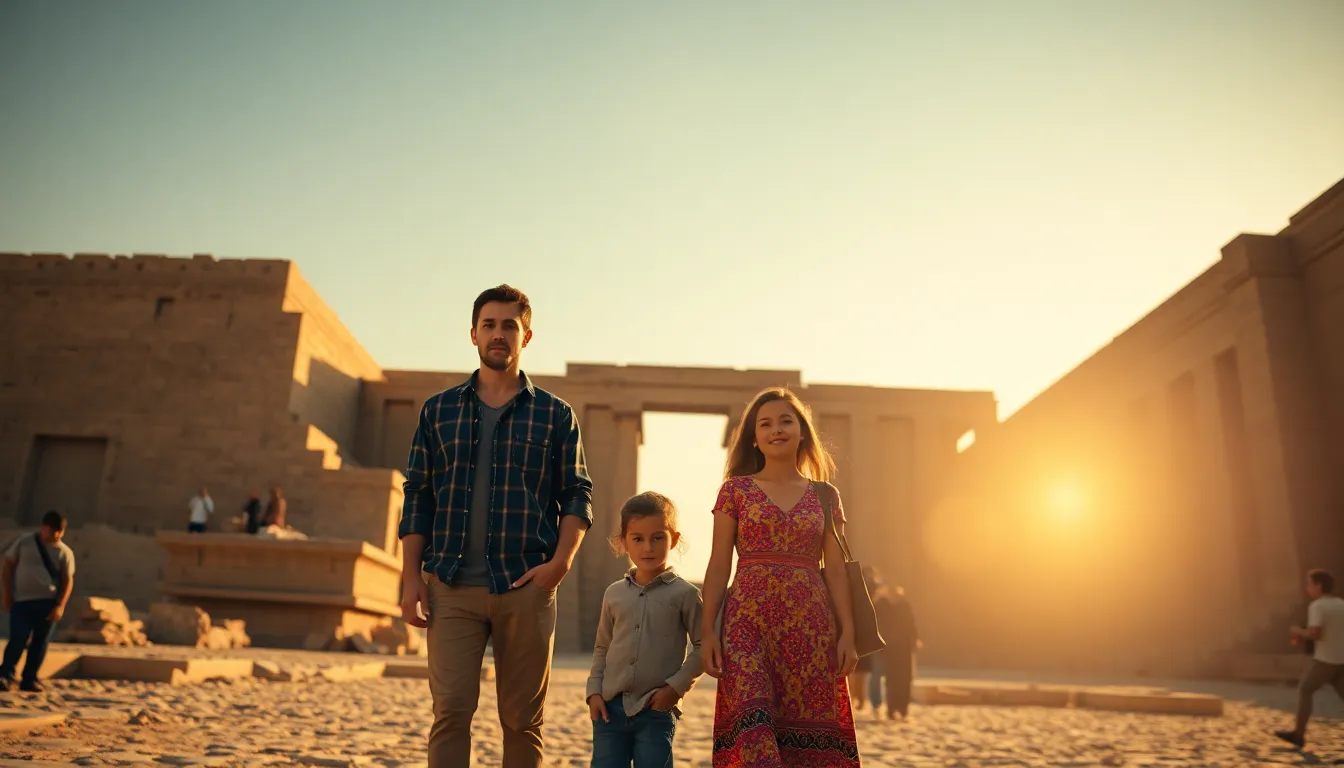
A few years ago a family asked me to help them plan a bar mitzvah trip that was not about a party. The father said something I have repeated to dozens of families since. He said, “I do not want my son to remember the band. I want him to remember who he is.” So we took the family to Egypt, and the boy read from the Torah in a place that connected his coming of age to the oldest story our people tell. He will not forget it. Neither will his parents.
I have been leading Jewish heritage groups to Egypt for more than twenty years, and a bar or bat mitzvah journey is among the most meaningful trips I help families build. This guide is for parents, rabbis, and educators thinking about framing a coming-of-age around the Exodus, the story that made us a people.
Why Egypt for a Bar or Bat Mitzvah
A bar or bat mitzvah marks the moment a Jewish child becomes responsible for the tradition, accountable to the commandments, a full member of the covenant. It is a moment of belonging. And there is no story that grounds Jewish belonging more deeply than the Exodus from Egypt.
Every year at the Seder, we tell our children that in every generation a person is obligated to see themselves as if they personally went out of Egypt. We say it. But to stand a thirteen-year-old in the land of Goshen, to walk them through the landscape of the story they have heard their whole life, turns those words into something they can feel in their body. The obligation becomes real.
That is what Egypt offers a coming-of-age trip that a destination party cannot. It does not mark the milestone with celebration alone. It marks it with meaning. The child does not just become a bar or bat mitzvah. They understand, in a way that lasts, where the responsibility they are taking on comes from.
Framing the Journey Around the Exodus
The whole trip can be shaped as a movement through the Exodus narrative, which gives a young person a thread to follow and a story to inhabit. This is the difference between visiting sites and living a story.
The Land of Bondage
The journey often begins in the eastern Nile Delta, the region the Bible calls Goshen, where the Israelites settled and were eventually enslaved. The archaeological site near Qantir, associated with the ancient city of Pi-Ramesses, holds the remains of one of the great cities of the ancient world, built in part by Semitic laborers during the period that frames the biblical story.
There are no dramatic ruins for tourists here, and that is part of why it works for a young person. Standing in the flat delta landscape, looking at the soil and the mudbrick, a thirteen-year-old understands something simple and profound: this was real. People like us were here. They suffered here. And they left.
The Cry for Freedom and the Departure
From the place of bondage, the narrative moves toward freedom. The story of Moses standing before Pharaoh, the plagues, the night of the first Passover, the departure toward the sea. For a young person on the cusp of taking responsibility for the tradition, the figure of Moses carries real weight. He was reluctant. He doubted himself. He spoke with difficulty. And he became the leader who brought a people out of slavery.
We walk the landscape of the eastern Delta and toward the Red Sea coast, and we tell the story as we go. A good guide does not lecture a teenager. A good guide draws them in, asks them questions, lets them wonder. By the time the family reaches the water, the child is not a spectator. They are inside the story.
The Wilderness and the Covenant
The Exodus does not end at the sea. It ends, in a sense, at Sinai, where the people received the Torah and became bound to it. That is the exact thing a bar or bat mitzvah celebrates: taking the Torah upon oneself. The Sinai dimension requires its own coordination today, and we plan it carefully with each family, but the resonance is unmatched. A young person standing in the Sinai wilderness, about to accept the commandments themselves, is completing the same arc the whole people completed there.
The Ceremony Itself
Families often ask whether the child can actually read from the Torah on the trip, and the answer is yes, with planning. Egypt has historic synagogues where, with advance coordination, a Jewish group can hold a service.
A bar or bat mitzvah reading at a place like the Ben Ezra Synagogue in Old Cairo, one of the oldest synagogues in the world still standing, gives the ceremony a frame nothing at home can match. The child reads the Torah in a building that has held Jewish prayer for over a thousand years, in the land where the story they are reading about took place. For families who want the historic depth, this is the heart of the trip.
Heritage Tours handles all the coordination for these ceremonies, including proper notice to custodial authorities and, where appropriate, arrangements for a minyan. We work with your rabbi, not around them. Many families bring their own rabbi to lead the service, and we build the logistics around what your community needs. For more on Egypt’s surviving synagogues and which ones suit a ceremony, see our heritage map of the synagogues of Egypt.
Designing the Trip for a Young Person
A coming-of-age trip is not a trip for adults that a child happens to attend. The whole experience should be shaped with the young person at the center, while still working for the parents, grandparents, and any others traveling along.
Keeping a Teenager Engaged
The classic ancient Egyptian sites do real work here. The Pyramids of Giza, the Sphinx, the treasures of Tutankhamun, the temples of Luxor. These are the things a thirteen-year-old has imagination for already, and they anchor the trip in wonder. A young person who is awed by the pyramids in the morning is more open to the quiet weight of Goshen in the afternoon. The grandeur and the meaning reinforce each other.
We pace these trips for energy and attention. We build in breaks. We let a young person be a young person. The goal is not to march a teenager through a curriculum. It is to let the story find them, surrounded by things that genuinely amaze them.
Bringing the Generations Together
Some of the most moving bar and bat mitzvah trips I have led are multi-generational. Grandparents come. The story passes down in real time. A grandfather telling his grandson what Egypt means, while standing in Egypt, is a memory that family will hold forever. This is part of why these trips land so deeply. They are not only about the child. They are about the chain, the child taking their place in a line that stretches back to the people who left this very land.
The Practical Picture
Families always have practical questions, and they should. A few of the things parents most want to know.
Egypt is a safe destination for Jewish family groups when the trip is organized properly, with the right context and the right people on the ground. Egyptian hospitality toward visitors is genuine and warm. We handle all hotel pickups and dropoffs, so a family is never navigating an unfamiliar major city on their own.
On group structure, one thing worth knowing for families thinking about doing this with their wider community: with Heritage Tours, the group leader travels free with fifteen or more participants. Many families turn a bar or bat mitzvah into a community trip, inviting friends and relatives to join, which makes the experience richer and the economics easier. A rabbi or synagogue leader building such a trip should know that threshold exists.
Timing matters too. Spring, around Passover, carries the strongest resonance for an Exodus-themed journey, since the story is fresh in everyone’s mind. Fall, after the High Holidays, offers excellent weather and lighter crowds. We help every family find the window that fits their calendar and their child’s school schedule. For a fuller treatment of timing, our destination team can walk you through the season-by-season picture.
FAQ: Bar and Bat Mitzvah Trips to Egypt
Can my child actually have their bar or bat mitzvah ceremony in Egypt?
Yes. Egypt has historic synagogues, including the Ben Ezra Synagogue in Old Cairo, where a Jewish group can hold a Torah service with advance coordination. A child can read from the Torah in a building that has held Jewish prayer for over a thousand years. Heritage Tours arranges all the access and notice required, works with your rabbi, and where appropriate helps arrange a minyan. Many families bring their own rabbi to lead the ceremony.
Is Egypt safe for a Jewish family bar or bat mitzvah trip?
Yes, when the trip is organized properly. Jewish heritage travelers, including families and synagogue groups, visit Egypt regularly and have meaningful experiences without incident. The key is proper preparation, proper context, and working with people who know the ground. Heritage Tours handles all hotel pickups and dropoffs and all site coordination, so a family is never navigating an unfamiliar city alone. Egyptian hospitality toward visitors is genuine.
What is the best age for a bar or bat mitzvah trip to Egypt?
The natural window is the year surrounding the bar or bat mitzvah itself, typically around age twelve to thirteen, when the child is preparing for or has just marked the milestone. At that age a young person has the imagination to be moved by the ancient sites and the maturity to feel the weight of the Exodus story. We pace these trips for a young person’s energy and attention, balancing the grandeur of sites like the pyramids with the quieter, meaningful moments.
What is the best time of year to go?
Spring, around Passover, carries the strongest spiritual resonance for an Exodus-themed coming-of-age trip, because the story is fresh for everyone. Fall, after the High Holidays from late October into November, offers excellent weather and lighter crowds, which is easier for multi-generational groups. We help each family choose the window that fits their child’s school calendar and their community’s rhythm. Passover-season trips should be planned well in advance.
Can we turn this into a trip for our whole community?
Many families do exactly that, inviting relatives and friends from their synagogue to join the journey. It makes the experience richer for the child and brings the generations together around the story. With Heritage Tours, the group leader travels free with fifteen or more participants, which helps the economics when a bar or bat mitzvah becomes a community trip. We help structure the whole thing around your family and your congregation.
If you are a parent or rabbi thinking about framing a coming-of-age around the Exodus, I would love to talk with you about what this journey can be for your child and your community. There is nothing quite like watching a young person take their place in the story while standing in the land where it began. Learn more at our Egypt heritage destination page, explore how group heritage tours work, and reach out when you are ready.