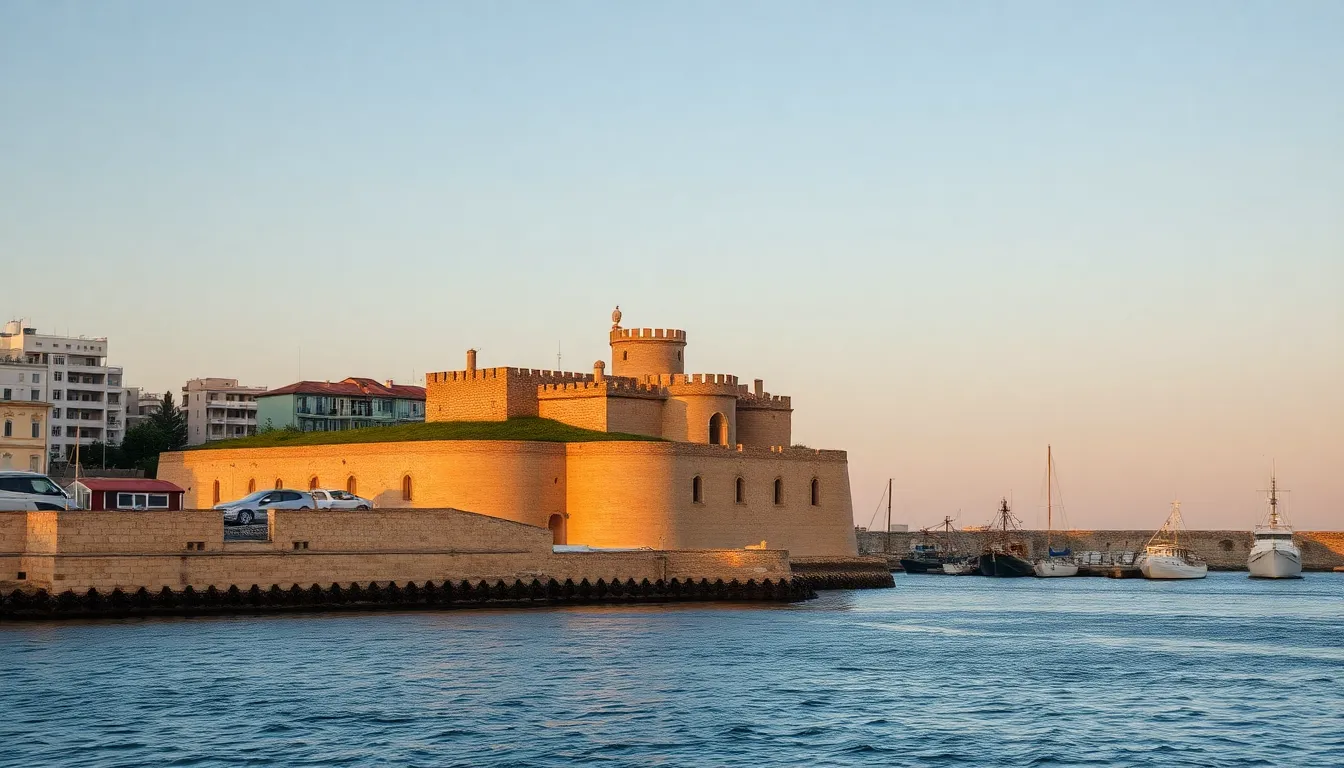
I tell groups that Alexandria is the city that changed how the world reads the Bible, and most of them have no idea what I mean until we get there. This is the city where Jewish scholars translated the Hebrew Scriptures into Greek, producing the Septuagint, the version the early church read and quoted. It is the city where one of the greatest libraries of the ancient world drew thinkers from across the Mediterranean. And it is a city with a salt-air, Mediterranean feel that surprises every group coming up from Cairo.
For a rabbi, pastor, or educator, Alexandria is a different kind of heritage stop than Cairo. The ancient layers here are quieter and harder to see, often below the modern streets or beneath the sea. But the ideas that came out of this city are everywhere in both traditions. This guide is how I orient a group before we arrive, so they understand what they are looking at even when the stones are gone.
Why Alexandria Matters to Faith Travelers
Alexandria was founded by Alexander the Great in 331 BC and became, within a couple of generations, the intellectual capital of the ancient world. For faith travelers, three things make it essential.
First, it was home to an enormous and influential Jewish community, possibly the largest Jewish community anywhere in the ancient world outside Judea. Second, it is where that community produced the Septuagint, the Greek translation of the Hebrew Bible that shaped Judaism and Christianity alike. Third, it became one of the great early centers of Christianity, producing some of the most important thinkers in church history.
When I bring a group here, I am not asking them to be impressed by ruins. I am asking them to stand in the place where their own Scripture and theology took recognizable shape.
The Greco-Roman Layer
You cannot understand Alexandria’s Jewish and Christian heritage without first understanding the Greek world it lived inside. This was a Greek city in Egypt, then a Roman one, and that hybrid culture is the soil everything else grew in.
The Library and the Bibliotheca Alexandrina
The ancient Library of Alexandria is the most famous institution of the ancient world that no longer physically exists. At its height it aimed to gather every book in existence, and it drew scholars from everywhere. It is gone, lost over centuries, but its memory still shapes how we think about knowledge itself.
Modern Alexandria built the Bibliotheca Alexandrina, a striking contemporary library and cultural center on the harbor, as a deliberate echo of the ancient one. I include it because it gives a group a tangible place to stand and talk about the city’s intellectual legacy. It also houses exhibits and manuscripts that help educators connect the ancient story to the present.
Roman Alexandria
Several Greco-Roman sites survive and are worth a group’s time. The Catacombs of Kom el Shoqafa, a remarkable underground burial complex, blend Egyptian, Greek, and Roman styles in the same carved walls, a perfect picture of how cultures mixed here. Pompey’s Pillar, a towering Roman column, marks the site of the ancient Serapeum. The Roman amphitheater at Kom el Dikka is the best-preserved set of Roman ruins in the city.
These are not biblical sites in the direct sense, but they are the physical world the Jewish and Christian communities of Alexandria lived inside, and they help a group feel the texture of the ancient city.
Jewish Heritage in Alexandria
The Jewish community of Alexandria is one of the most consequential in all of Jewish history, even though little of it remains visible today.
The Septuagint
The single most important thing to understand about Jewish Alexandria is the Septuagint. In the third and second centuries BC, Jewish scholars here translated the Hebrew Bible into Greek for a Jewish community that increasingly spoke Greek rather than Hebrew. Tradition says seventy scholars did the work, which is where the name comes from.
This translation did something enormous. It made the Hebrew Scriptures readable across the Greek-speaking world, and it became the version that the writers of the New Testament most often quoted. When a Christian today reads an Old Testament passage cited in the Gospels, they are usually reading an echo of the Alexandrian Septuagint. I tell groups: the bridge between the Hebrew Bible and the Greek New Testament was built in this city.
Philo and the Community
Alexandria produced Philo, the Jewish philosopher whose work to harmonize the Hebrew Scriptures with Greek thought influenced both later Jewish and Christian theology. The community he belonged to was large, organized, and prosperous for centuries.
Today, the Eliyahu Hanavi Synagogue stands as the great surviving witness to that history. It is one of the largest synagogues in the Middle East, a grand nineteenth-century building that recalls a community that once numbered in the tens of thousands. Visiting it with a Jewish group is moving in the same bittersweet way that Cairo’s Jewish quarter is. We are standing in the house of a community that is nearly gone, and we are choosing to remember it. For the wider arc of Jewish Egypt, our Cairo heritage guide covers Ben Ezra Synagogue and the Geniza, which belong to the same story.
Christian and Coptic Heritage in Alexandria
For Christian travelers, Alexandria is one of the foundational cities of the faith, even though, like the Jewish heritage, much of it is no longer visible above ground.
The See of Saint Mark
Coptic tradition holds that the Evangelist Mark brought Christianity to Alexandria in the first century and was its first bishop. That makes Alexandria the historic seat of the Coptic Orthodox Church, the See of Saint Mark. For Coptic Christians, this city is the cradle of their church. St. Mark’s Coptic Orthodox Cathedral in the city continues that lineage, and a relic of Saint Mark is held there.
The School of Alexandria
Alexandria was home to the Catechetical School, the first major Christian school of theology, where thinkers like Clement of Alexandria and Origen worked out some of the earliest systematic Christian thought. For pastors and educators, this is the headline. The intellectual framework of early Christianity was forged in significant part right here, in the same city and the same Greek intellectual culture that had produced the Septuagint a few centuries earlier.
I find this is the moment Alexandria clicks for Christian groups. The Hebrew Bible was translated into Greek here. Then, in the same city, Greek-speaking Christians built the first great school of theology on that same translated Scripture. The continuity is not abstract. It happened on this ground.
How Alexandria Fits a Heritage Itinerary
Alexandria is usually an extension rather than the center of an Egypt heritage trip, and that is the right way to think about it. Most of our groups base in Cairo and come to Alexandria for one or two days, often as a day trip or an overnight on the Mediterranean coast.
I am honest with groups about what Alexandria is and is not. It does not offer the dense, walkable concentration of ancient sites that Old Cairo does. Much of its ancient glory is gone, lost to fire, earthquake, and the sea. What Alexandria offers instead is the experience of standing where some of the most important religious ideas in history took shape, and a change of pace, sea air, a different light, a Mediterranean rhythm.
For educators and clergy who care about the history of Scripture and theology, that trade is well worth it. For a group that primarily wants to see standing ancient monuments, I will be candid that Luxor or Aswan may move them more. We help you decide based on what your community is really coming for.
Practical Orientation for Faith Groups in Alexandria
A few practical notes I share with group leaders.
The drive from Cairo to Alexandria takes roughly three hours each way. We plan the day to make the travel comfortable and worthwhile, and an overnight on the coast often makes more sense than a long there-and-back day for an older group.
The sites are more spread out than in Old Cairo, so a good guide and organized transport matter even more here. Our team handles all of it, so your group moves together rather than navigating a large modern city.
Visiting the synagogue and the cathedral may require advance coordination, which we handle as part of planning. We brief groups on modest dress for religious sites.
And as always, with 15 or more participants the group leader travels free. To understand how we structure these journeys, see our Egypt heritage destination page.
FAQ: Alexandria Heritage Travel
Why is Alexandria important for Bible heritage?
Alexandria is where Jewish scholars translated the Hebrew Bible into Greek, producing the Septuagint, the version most quoted in the New Testament. It was also home to one of the largest Jewish communities of the ancient world and to the first major Christian school of theology. For anyone interested in how the Bible was transmitted and how early theology formed, Alexandria is foundational.
What is the Septuagint and where was it made?
The Septuagint is the Greek translation of the Hebrew Bible, made by Jewish scholars in Alexandria in the third and second centuries BC. Its name comes from the tradition that seventy scholars produced it. It became the Scripture of the Greek-speaking Jewish world and the version the early church most often read and quoted, which is why Alexandria sits at the heart of both Jewish and Christian heritage.
Can you still see Jewish and Christian sites in Alexandria?
Yes, though much of the ancient city is gone. The Eliyahu Hanavi Synagogue remains as a major witness to the once-vast Jewish community. St. Mark’s Coptic Orthodox Cathedral continues the tradition of Mark’s founding of the church here. The Greco-Roman catacombs, Pompey’s Pillar, and the Roman amphitheater show the ancient world these communities lived inside.
Is Alexandria worth adding to an Egypt heritage tour?
For groups focused on the history of Scripture and early theology, absolutely. For groups primarily wanting standing ancient monuments, Luxor and Aswan may deliver more. We help each group decide based on what they are coming for. Most groups visit Alexandria as a one or two day extension from a Cairo base.
How long does it take to get to Alexandria from Cairo?
The drive is roughly three hours each way. For a comfortable visit, especially with older members, we often suggest an overnight on the Mediterranean coast rather than a long day trip. We handle all transport and pacing so the travel does not wear the group down.
If Alexandria speaks to your community, whether for the Septuagint, the early church, or simply the chance to stand where so much of Scripture took shape, I would love to talk it through. You can start at our group heritage tours page or read our best time to visit Egypt guide to align the trip with your calendar.
When you are ready, contact us and we will build an itinerary that fits your people.