People ask me about Evan Roberts almost every time I lead a group into South Wales, and the question underneath the question is usually the same. How did a twenty-six-year-old former coal miner and blacksmith’s apprentice end up at the center of a national awakening? I have stood with pastors in Loughor and watched them work through that puzzle in real time. The answer is humbling, because the more you learn about Roberts, the less it looks like a story about a great man and the more it looks like a story about an ordinary one who got out of the way.
If you want your congregation to understand the Welsh Revival, you have to understand its most visible figure. And you have to be careful not to make him into something he never claimed to be.
Who Evan Roberts Was
Evan Roberts was born in 1878 in Loughor, near Swansea, into a Welsh Calvinistic Methodist family. He worked in the coal mines from boyhood and later trained as a blacksmith. He was, by every account, a serious young man, devoted to prayer, steeped in Scripture, and carrying for years a deep burden for revival in Wales before any of it became public.
That long pre-history matters. Roberts did not appear from nowhere in 1904. He had been praying for an awakening for a decade. He was preparing for the ministry, studying at a grammar school in Newcastle Emlyn, when a series of meetings, including one under Seth Joshua, brought him to a point of profound spiritual experience. He felt compelled to go home to Loughor and speak to the young people there.
When I tell groups this, I emphasize the years of hidden prayer. Roberts was not a sudden phenomenon. He was a long obedience that finally became visible. For a congregation, that is a more useful picture than the lightning-bolt version.
Moriah Chapel, Loughor: Where He Began
In the autumn of 1904, Roberts returned to Loughor and asked permission to speak to the young people of Moriah Chapel after the regular service. A small group stayed. He gave them four points, which became closely associated with the revival: confess any known sin to God, put away any doubtful habit, obey the Spirit promptly, and confess Christ publicly.
From those small meetings, something caught. Within weeks the gatherings outgrew the building. Word spread along the valleys. By the end of 1904 Roberts was a name known across Wales and, before long, reported in newspapers far beyond it.
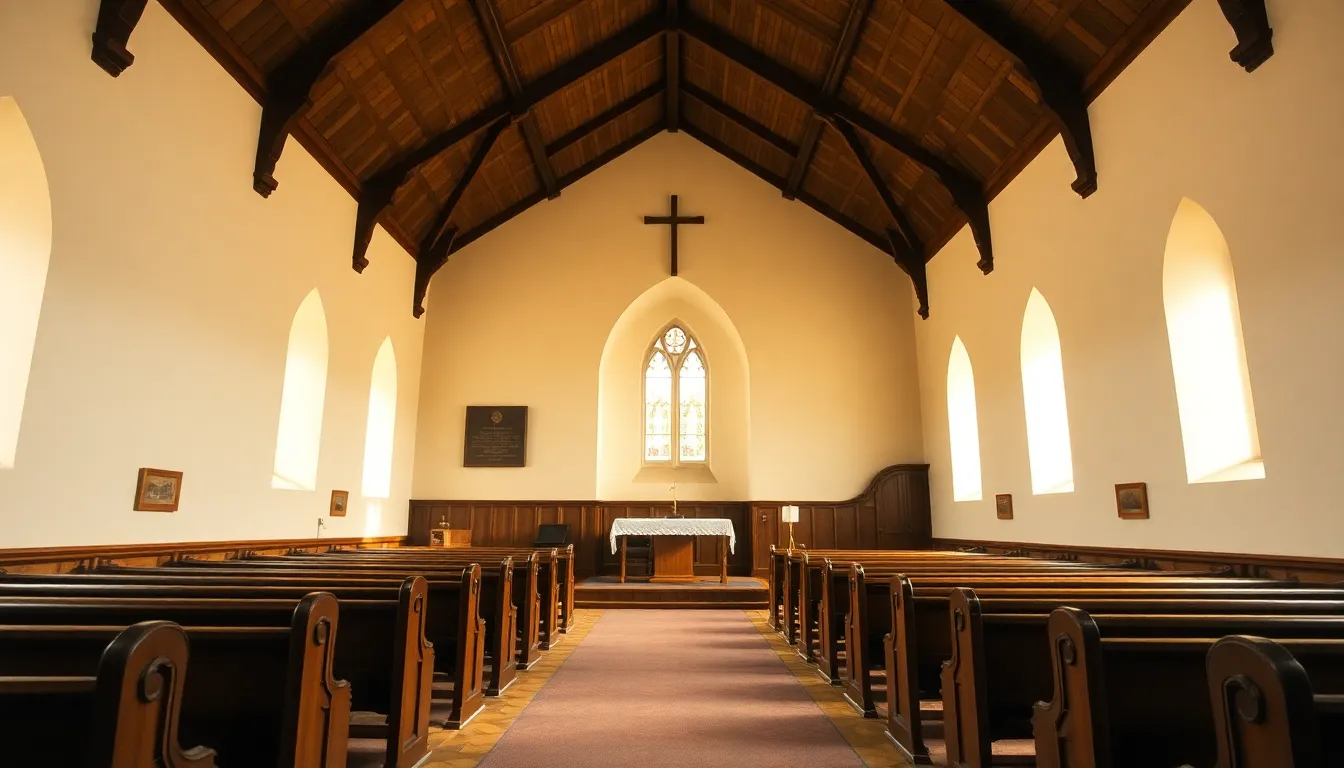
Moriah Chapel in Loughor is the anchor site of any Evan Roberts trail. Standing there, you grasp how modest the beginning was. This was not a stadium. It was a chapel meeting room, and a handful of young people who stayed behind.
The Way He Led, and Why It Mattered
Here is the part that surprises most groups. Evan Roberts was not, by the standards of the great revivalists, a powerful pulpit orator. He often did not preach in the conventional sense at all. He would frequently sit, pray, weep, and wait, and let the meeting move under what he believed was the direct leading of the Holy Spirit. Singing, spontaneous prayer, and testimony from the congregation carried the meetings as much as anything he said.
He resisted being made the center. He spoke against the idea that the revival depended on him. He sometimes withdrew from meetings or stayed silent for long stretches, precisely because he did not want people looking to the man instead of to God. There is a real theological seriousness in that, and it is part of why his story holds up.
I find that this leadership style speaks powerfully to pastors and rabbis alike, leaders who carry the weight of being the visible figure in their own communities. Roberts modeled a kind of leadership that constantly pointed away from itself. That is worth a conversation with any group of leaders standing in that chapel.
There is one more figure I always bring into the story here, because Roberts did not work alone. A group of singers traveled with him, and Annie Davies and others gave the meetings their musical voice. The press attention that fixed on Roberts as the single hero flattened a movement that was always carried by many. When I lead a group, I name those others on purpose. It keeps Roberts in proportion, which is exactly how he wanted to be kept.
The Cost: What Happened to Roberts After
I do not leave groups with only the triumphant chapter, because that would not be honest. The revival’s intensity was enormous, and so was the toll on Roberts personally. The pace, the public attention, the spiritual and emotional strain, and what appears to have been genuine physical and nervous exhaustion took a severe toll. By 1906 he had largely withdrawn from public life. He spent years in relative seclusion and never again played a public role on the scale of 1904 to 1905. He lived quietly until his death in 1951.
That arc matters for a faith group. It raises real questions about how communities care for the people God uses, about the difference between a movement and a man, and about what faithfulness looks like when the public season ends and a long quiet life follows. When I bring leaders here, this is often the part of the day that produces the deepest conversation.
Building an Evan Roberts Trail Into a Wider Welsh Itinerary
The Roberts sites cluster around Loughor and the South Wales valleys, which makes them easy to combine with the broader revival trail. Most groups I take do not visit Roberts in isolation. They set him within the movement he helped ignite and the chapel culture that shaped him.
A typical structure starts at Moriah Chapel in Loughor, moves through the revival’s spread in the valleys, and weaves in the Welsh hymnody that carried the awakening. If your group sings, build that in deliberately. The chapels were built for it.
For the wider context, our United Kingdom spiritual sites hub lays out how the Welsh story fits within British Christian heritage, and the companion piece on the Welsh Revival of 1904-05 heritage trail gives you the geography of the whole movement.
FAQ: Evan Roberts and the Welsh Revival for Faith Groups
Who was Evan Roberts?
Evan Roberts was a young Welsh Calvinistic Methodist, born in Loughor in 1878, who became the most visible figure of the 1904 to 1905 Welsh Revival. A former coal miner and blacksmith’s apprentice preparing for ministry, he had prayed for revival in Wales for years before holding the Loughor meetings that helped ignite the awakening.
What was special about how Evan Roberts led the revival meetings?
Roberts often did not preach in the usual sense. He emphasized prompt obedience to the Holy Spirit and frequently let meetings move through singing, spontaneous prayer, and congregational testimony rather than formal sermons. He deliberately resisted being made the center of the movement, repeatedly pointing people away from himself and toward God.
Can you visit the chapel associated with Evan Roberts?
Yes. Moriah Chapel in Loughor, near Swansea, is the central site connected to Roberts and the start of the revival. Because access can vary, groups usually travel with an operator who arranges entry in advance. The site is modest, which is part of its impact.
What happened to Evan Roberts after the revival?
The intensity of the revival took a severe personal toll. By 1906 Roberts had largely withdrawn from public ministry, and he spent much of the rest of his life in relative seclusion. He died in 1951. His later years raise meaningful questions for faith leaders about caring for those God uses and about faithfulness beyond a public season.
Should Evan Roberts be the focus of a Welsh heritage trip, or part of a wider story?
Most group leaders set Roberts within the broader revival and the wider Welsh chapel culture rather than treating him as the whole story. He himself resisted being the center. Placing him inside the movement he helped ignite gives a richer and more accurate picture for your congregation.
If your group wants to walk the chapels of the Welsh Methodist revival and sit with the story of Evan Roberts, we can help you shape an itinerary that honors both the awakening and the man. Explore our United Kingdom destination page, see how leading a group works on our group heritage tours, or contact us to begin planning.