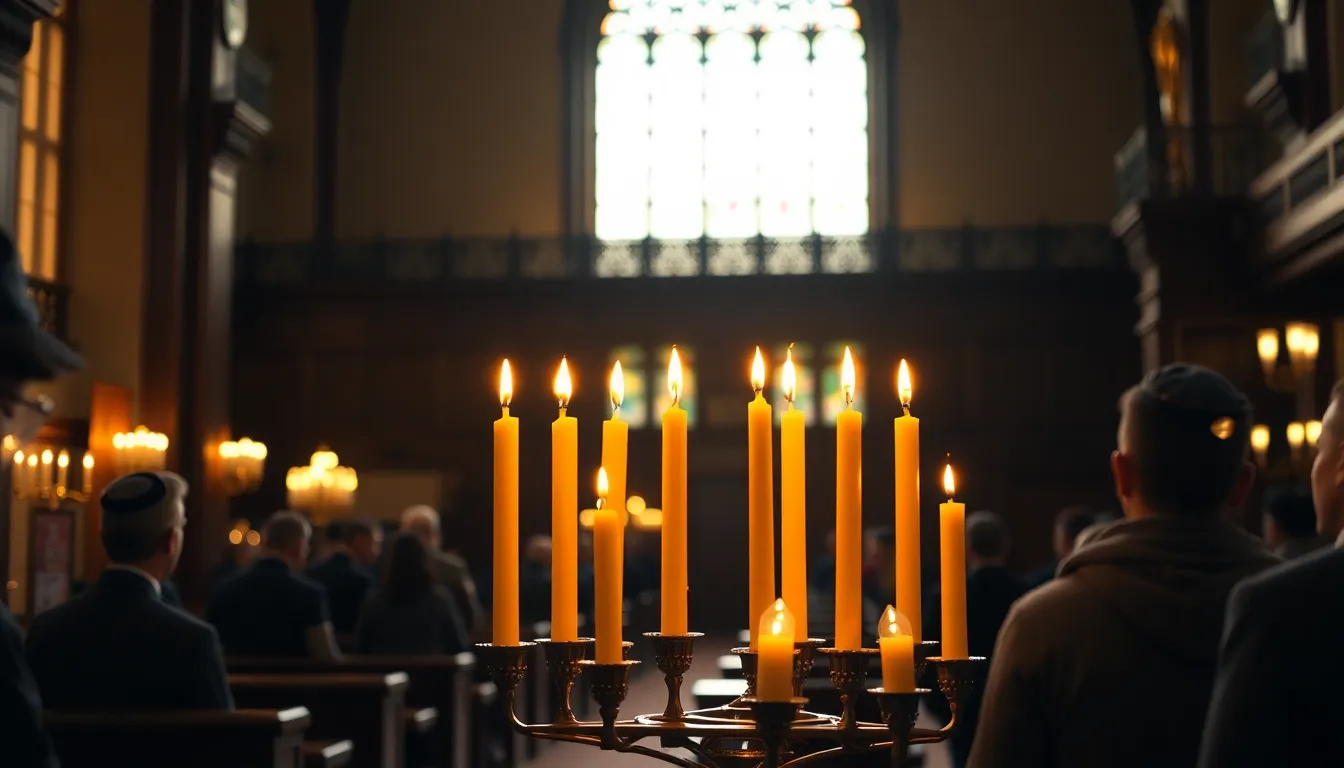
Of all the decisions that go into a Scotland, Wales, and Northern Ireland heritage tour, the one I care about most is where the group keeps Shabbat. Get it right, and Shabbat becomes the emotional center of the whole trip, the moment the heritage stops being something you look at and becomes something you live. Get it wrong, and it becomes a logistical scramble that drains the day instead of crowning it. So before we talk sites and routes, I talk Shabbat. This guide is how I think it through with a group leader, and how a meaningful Shabbat gets built into a three-nations journey.
Why Shabbat Anchors the Whole Trip
A heritage tour through these communities is, at its heart, about Jewish continuity, communities that rose, flourished, and in many cases faded. There is no more powerful way to honor that than to keep Shabbat in one of these very places. When your group davens in a small Scottish, Welsh, or Northern Irish synagogue, joins a local community for services, and shares a Shabbat meal in a city most of them never knew held Jewish life, the abstract becomes personal. They are not studying a community. They are, for one Shabbat, part of one.
That is why I build the itinerary around Shabbat rather than fitting Shabbat into the itinerary. Everything else can flex. Shabbat is the fixed point.
Choosing the Right City for Shabbat
The single most important Shabbat decision is which city you spend it in, because the communities differ a great deal in size and what they can host.
Glasgow: The Natural Choice
For most groups, Glasgow is where I plan Shabbat. It has the largest Jewish community on the itinerary, centered in the Giffnock and Newton Mearns area, with active synagogues, the strongest kosher infrastructure, and a community accustomed to Jewish communal life. That combination, a living community to join, services to attend, and kosher provision close at hand, makes Glasgow the most reliable and rewarding place to keep Shabbat in this region.
When a group keeps Shabbat in Glasgow, they can experience an active community at prayer, not just a historic building. That living connection is what I want for them.
Edinburgh, Cardiff, and Belfast: Possible, With Care
The smaller communities can host a group Shabbat too, and there are times it makes real sense, when the heritage focus of the trip points there, or when a community specifically welcomes the group. But these are smaller congregations with more limited infrastructure, so a Shabbat in Edinburgh, Cardiff, or Belfast needs more careful arrangement: catering organized in advance, accommodation within walking distance of the synagogue, and coordination with the local community. It can be deeply moving to keep Shabbat with a small congregation that rarely sees visitors. It simply has to be planned with care.
The Community Welcome
One of the quiet joys of these smaller communities is how meaningful a visiting group can be to them, and how warmly they often respond.
In large cities, a visiting group is one more group. In a small community in Cardiff or Belfast or Edinburgh, a congregation arriving for Shabbat can be a genuine event, a boost to the minyan, a sign that the wider Jewish world remembers them, a shared simcha. I have seen local members moved by the presence of visitors, and I have seen my groups moved by the welcome. That mutual encounter is something you rarely get keeping Shabbat in a major center. It is one of the strongest reasons to bring a group to these communities at all.
We always coordinate with the local community in advance, with respect for their customs and their capacity. A group should arrive as a blessing to a small congregation, never as a burden.
Practical Shabbat Logistics
Beyond choosing the city, a meaningful group Shabbat depends on a handful of practical pieces falling into place.
Walking Distance Accommodation
For an observant group, the hotel has to be within walking distance of the synagogue. This shapes which accommodation we choose and is one of the first things I lock in. Get this right and Shabbat flows. Get it wrong and the whole day fights you.
Shabbat Meals
Friday night and Shabbat day meals are arranged in advance through kosher catering and supply, which ties directly to the kashrut planning I cover in our guide to keeping kosher across these communities. Where possible we create proper communal meals, the group together, candles lit, the table set, so that Shabbat feels like Shabbat and not like a series of arrangements.
The Pre-Shabbat and Post-Shabbat Rhythm
I plan the days around Shabbat with intention. Friday is structured so the group arrives unhurried, settled, and ready well before candle-lighting, never racing the clock. Saturday night, after Havdalah, can open back into the trip. This rhythm matters. A rushed approach to Shabbat undermines the very peace it is meant to offer.
Shabbat and the Heritage Itself
There is a beautiful resonance when the Shabbat city is also a heritage city. Keeping Shabbat in Glasgow while exploring Scottish Jewish history, or in Cardiff while tracing the Welsh communities, or in Belfast while learning the story of that northern community, weaves observance and history into one experience. The group is not just learning about Jewish life in these places. They are continuing it, for one Shabbat, with their own prayers.
That is the deepest thing a heritage tour can offer, and Shabbat is where it happens most fully.
Building Shabbat Into a Three-Nations Journey
A three-nations itinerary through Scotland, Wales, and Northern Ireland usually includes one central Shabbat, occasionally two for longer trips. Where they fall depends on your route, your group’s observance, and which communities you most want to connect with. I treat that placement as a design decision, not an afterthought, because it determines the emotional shape of the whole journey.
You can see how the communities connect on our Jewish heritage of the United Kingdom hub, and our United Kingdom destination page explains how we build these itineraries around your group’s needs.
Let Shabbat Be the Heart of It
If your community keeps Shabbat, do not see it as a constraint on a United Kingdom heritage tour. See it as the centerpiece. A well-planned Shabbat in one of these communities, with a warm local welcome, proper meals, and time to actually rest, is what your group will remember longest. The sites teach them the history. Shabbat lets them live it.
If you want a meaningful Shabbat built into your community’s journey through Scotland, Wales, and Northern Ireland, that is exactly the kind of planning we do. Heritage Tours designs every itinerary around your group’s observance and interests, and with 15 or more participants, the group leader travels free.
FAQ: Observing Shabbat on a UK Heritage Tour
Where is the best place to keep Shabbat on a Scotland, Wales, and NI tour?
For most groups, Glasgow. It has the largest Jewish community on the itinerary, with active synagogues, strong kosher infrastructure, and a community accustomed to Jewish life. That lets a group join a living community for services rather than only visiting historic buildings. Smaller communities can host Shabbat too, with more advance arrangement.
Can a group keep Shabbat in Cardiff, Edinburgh, or Belfast?
Yes, with careful planning. These are smaller communities with more limited infrastructure, so a Shabbat there requires catering arranged in advance, accommodation within walking distance of the synagogue, and coordination with the local community. Keeping Shabbat with a small congregation that rarely sees visitors can be especially moving.
How do you arrange Shabbat meals for a group?
Friday night and Shabbat day meals are arranged in advance through kosher catering and supply, coordinated with local communities and supervised suppliers. Where possible we create communal meals for the whole group, so Shabbat has its proper character rather than feeling like a set of logistics.
Why visit a small community for Shabbat instead of a large one?
A visiting group can mean a great deal to a small congregation, strengthening the minyan and signaling that the wider Jewish world remembers them. The welcome is often warmer and more personal than in a major center, and the mutual encounter between a visiting group and a small community is one of the most meaningful experiences on the trip.
How many Shabbatot are usually in a three-nations itinerary?
Most trips include one central Shabbat, with longer journeys occasionally including two. Where it falls is planned around your route, your group’s observance, and the communities you most want to connect with, since that placement shapes the emotional rhythm of the whole tour.
If you would like to build a meaningful Shabbat into your community’s United Kingdom journey, contact us and we will plan it with the care it deserves.