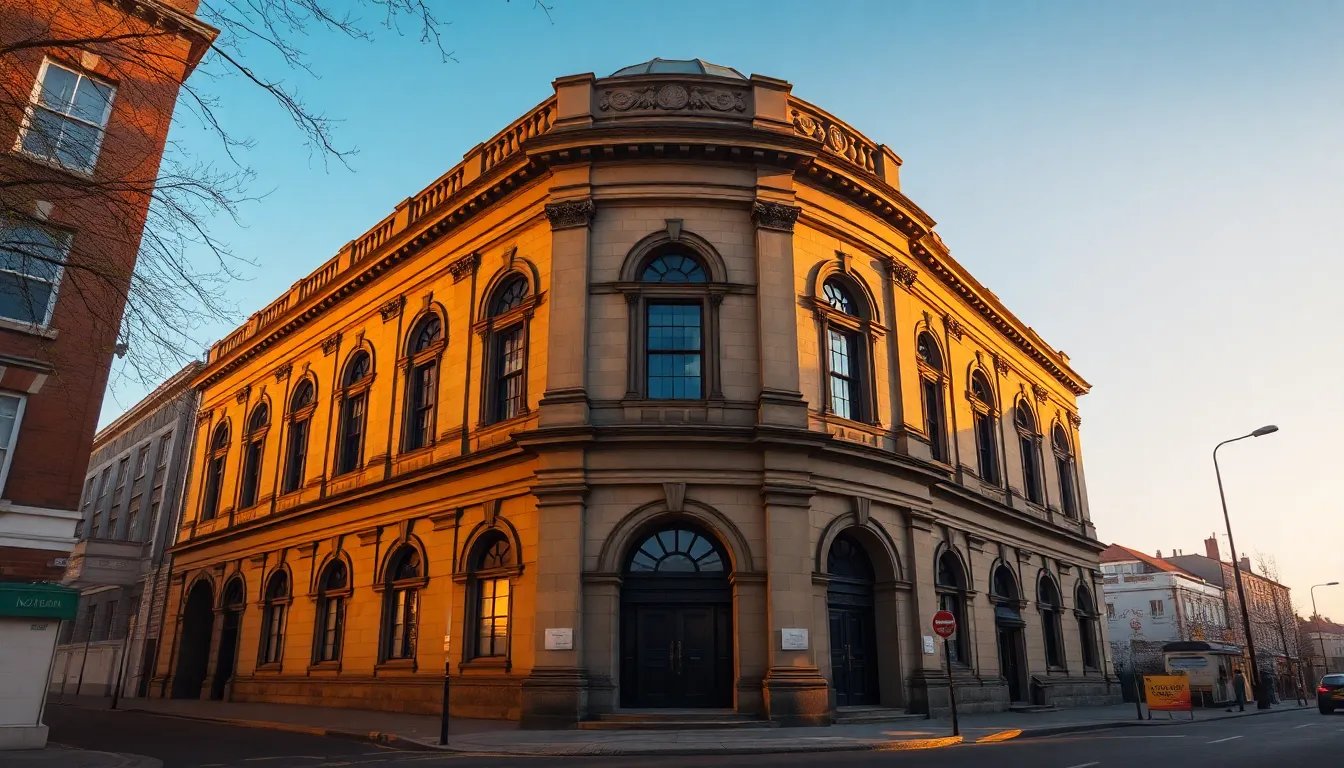
The first time I brought a group to Cardiff, one of the rabbis turned to me on Cathedral Road and said he had no idea there had ever been a Jewish community in Wales at all. That is the most common reaction I get. People think of London, maybe Manchester, and stop there. But Cardiff held a Jewish community that built grand synagogues, sent its sons to fight in two world wars, and produced figures who shaped Welsh public life. The story is smaller than London’s. It is not less worth telling.
This guide is for group leaders thinking about adding the Welsh capital to a United Kingdom heritage itinerary. I want to give you the real picture, the buildings still standing, the history behind them, and what a group actually experiences when they walk these streets.
How Jews Came to Cardiff
Cardiff’s Jewish community grew up with the city itself. For most of its history Cardiff was a modest town. Then coal changed everything. In the 19th century the docks turned Cardiff into one of the busiest coal-exporting ports in the world, and people came from across Britain and Europe to work and trade.
Jewish settlement followed that growth. A handful of families were present by the 1840s, enough to establish a small congregation and consecrate a burial ground. The community was formally organized by the middle of the century. Then came the waves of Eastern European immigration in the 1880s and after, Jews fleeing the pogroms of the Russian Empire, and Cardiff’s numbers swelled. Many arrived with little, peddled goods, opened small shops, and slowly built the institutions a community needs.
By the early 20th century Cardiff held a few thousand Jews. That is the community that built the synagogues your group will see.
The Synagogues: Cathedral Road and Beyond
For a heritage group, the buildings are the anchor. Cardiff’s congregational history runs through a series of synagogues, and the story of which ones survive tells you a great deal about what happened to the community.
Cathedral Road
The Cathedral Road Synagogue, opened in 1897, was the great statement of Cardiff Jewry at its height. It was a large, dignified building in a prosperous part of the city, and it announced that the community had arrived. For decades it was the heart of Orthodox Jewish life in Cardiff.
As the community shifted northward through the 20th century and numbers declined, the building was eventually sold. It no longer functions as a synagogue. But the structure is still there, and standing in front of it, you can read the ambition of the people who raised it. When I bring a group here, I ask them to picture the congregation that filled it on a High Holiday morning, the families, the choir, the sense that this community expected to last.
Cyncoed and the Living Community
As Jewish families moved to the northern suburbs, the center of community life moved with them. The Cardiff United Synagogue at Cyncoed serves the Orthodox community today. There has also been a Reform presence in the city. The point worth making to your group is that Cardiff is not only a story of buildings that closed. There is still a Jewish community here, smaller than it was, but present, holding services, marking the calendar, keeping the thread unbroken.
The Older Sites
Cardiff’s earlier synagogues, including buildings in the older part of the city that the community outgrew or left behind, mark the route the community traveled as it moved and changed. A good local guide can walk you past these sites and explain how the geography of Jewish Cardiff shifted decade by decade.
The Cemeteries
I always try to include a cemetery visit when a group is willing, because the stones say things the synagogues cannot. Cardiff’s Jewish burial grounds hold the names of the founding families, the immigrant generation, the soldiers, the shopkeepers, the rabbis. The Hebrew on the older stones, the dates that cluster around the great immigration years, the occasional inscription in Yiddish or Welsh, all of it tells the story in a quieter register.
For a faith group, standing among these graves is often the most moving part of the Cardiff visit. It is one thing to hear that a community lived here. It is another to read the name of a man who was born in Lithuania, died in Cardiff, and was buried according to the same rites your congregation keeps today.
Cardiff and Welsh Jewish Life
Cardiff was the largest of the Welsh Jewish communities, but it did not stand alone. Swansea, Merthyr Tydfil, Newport, and the valley towns all held congregations at one time, woven into the industrial life of South Wales. Cardiff, as the capital and the major port, became the natural center, the place with the largest community, the most institutions, and the longest continuous Jewish presence.
Understanding that wider Welsh context makes the Cardiff visit richer. Your group is not looking at an isolated outpost. They are looking at the surviving heart of a regional Jewish world that once stretched across the coalfields. For groups that want the fuller picture, pairing Cardiff with the history of Swansea and Merthyr Tydfil shows both the reach of that world and its decline.
Building Cardiff Into a Wider Itinerary
Cardiff rarely stands alone on a heritage tour. It works best as part of a journey through Jewish Wales, or as the Welsh chapter of a wider three-nations itinerary that also takes in Scotland and Northern Ireland. The distances are manageable, and the contrasts are instructive. A group that sees Glasgow, then Cardiff, then Belfast comes away understanding that British Jewish history was never one story but many, shaped by local industry, immigration, and circumstance.
If your group keeps kosher or observes Shabbat, Cardiff requires planning. The community is small, and the infrastructure is not what you would find in London or Manchester. I cover the practical side of this in our guides to keeping kosher and observing Shabbat across these communities. With enough lead time, both are very doable.
You can see how the Welsh, Scottish, and Northern Irish threads fit together on our Jewish heritage of the United Kingdom hub, and our United Kingdom destination page lays out how we structure these journeys.
What a Cardiff Visit Gives a Group
Cardiff is not a place most congregations have on their radar, and that is exactly why it lands the way it does. There is no crowd, no queue, no sense of a heritage site processed for mass tourism. There is a city that once held a thriving Jewish community, the buildings that community raised, the graves of its people, and a small living congregation that carries it forward.
For a group leader, that intimacy is the gift. Your people will have these places largely to themselves. The conversations happen without distraction. And the lesson, that Jewish life took root and flourished even in a Welsh coal port most of your congregation has never heard of, is one they will carry home.
If you are thinking about Cardiff for your community, I would welcome the conversation. Heritage Tours builds every itinerary around the specific history and interests of your group, and with 15 or more participants, the group leader travels free.
FAQ: Jewish Heritage Travel to Cardiff
Is there still a Jewish community in Cardiff today?
Yes. The community is much smaller than at its early 20th-century peak, but it is active. The Cardiff United Synagogue at Cyncoed serves the Orthodox community, and there has been a Reform presence in the city as well. Your group can see both the historic buildings and the living community that continues Jewish life in the Welsh capital.
Can you still visit the Cathedral Road Synagogue?
The Cathedral Road Synagogue, opened in 1897, no longer functions as a synagogue and has been sold and repurposed. The building still stands, and it remains a powerful stop on a heritage walk because of its scale and its place in the community’s history. A local guide can explain how the congregation grew, peaked, and eventually moved north.
How long does a Cardiff Jewish heritage visit take?
A focused visit covering the historic synagogue sites, the living community, and a cemetery can fill a meaningful half-day to a full day, depending on your pace and how much discussion your group wants. Cardiff usually works best as part of a wider Welsh or United Kingdom itinerary rather than as a standalone destination.
Why did the Cardiff Jewish community grow in the first place?
Cardiff’s growth as a major coal-exporting port in the 19th century drew people from across Britain and Europe. Jewish settlement followed, with early families present by the 1840s and large numbers arriving during the Eastern European immigration of the 1880s and after. The community built its institutions alongside the city’s industrial rise.
Does Cardiff work for a kosher-observant or Shabbat-observant group?
It can, with planning. The infrastructure is modest compared to London or Manchester, so kosher catering and Shabbat arrangements need to be coordinated in advance. We handle this regularly and can walk you through what is realistic for your group’s needs.
If you would like to talk through what a Cardiff visit could look like for your community, contact us and we will start the conversation.