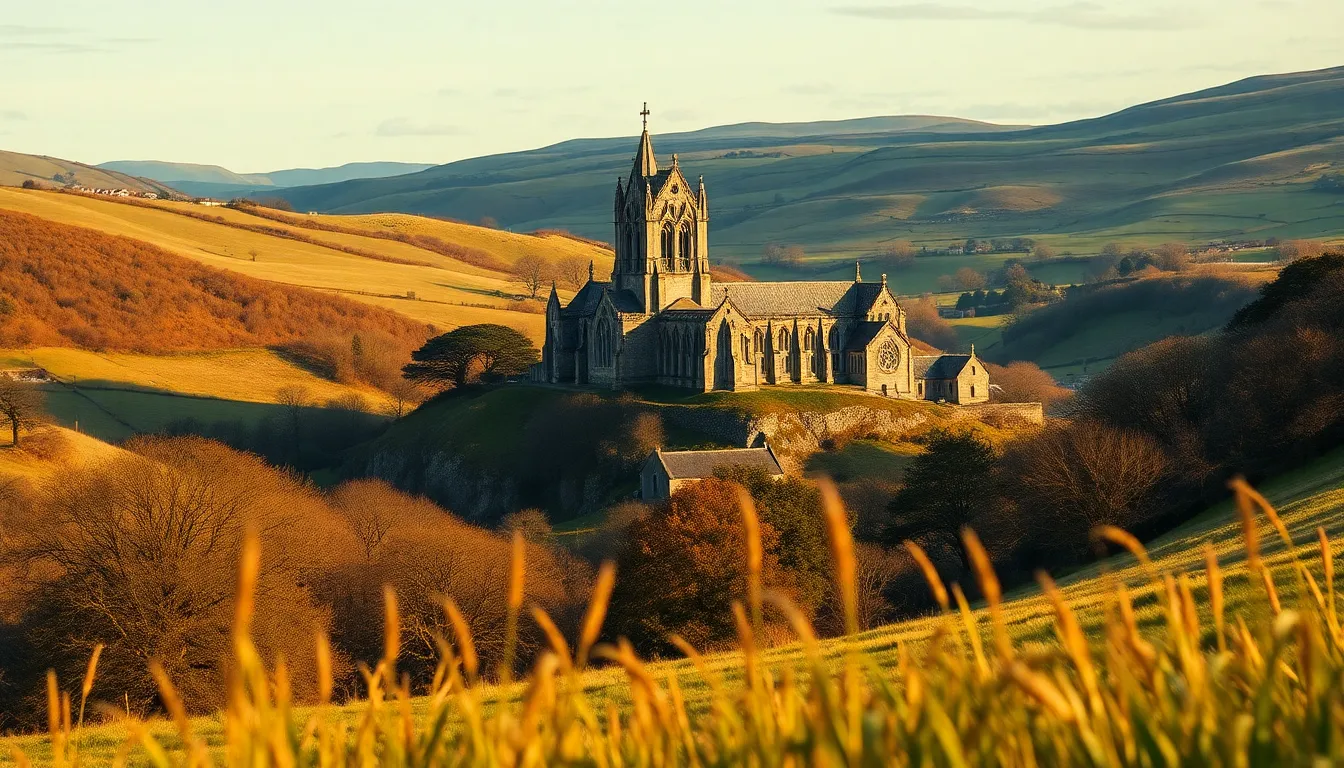
The Edge of Wales, Where the Celtic Saints Landed
The first time I brought a group to St Davids, we came over the last hill and the cathedral simply appeared below us, sunk into a green valley so that its tower barely rises above the fields. One of the group, a pastor who had seen a great deal of the world, went quiet for a long moment and then said: “I did not know there was anywhere like this left.” That is Pembrokeshire. It sits at the far southwest tip of Wales, as far as you can go before the land runs out into the Atlantic, and it holds the deepest Celtic Christian roots in the whole country.
I have led heritage groups across Wales for many years, and St Davids is where I bring the ones who want the oldest layer of the faith story. This is not a region of crowds and coaches. It is a region of sea cliffs, ancient holy wells, and a cathedral city so small it is really a village. This guide is meant to orient you before you plan a trip here.
Why Pembrokeshire Matters
Pembrokeshire is the cradle of Welsh Christianity. In the sixth century, when the Gospel was carried across the western seas by missionary monks, this exposed coast became one of the great landing grounds. Saints arrived from Ireland, from Brittany, from the wider Celtic world, and the peninsula filled with monasteries, chapels, and holy wells. The whole region became known, with reason, as the land of the saints.
At the center of it stands David, the patron saint of Wales, who founded his monastic community here in the sixth century. The settlement that grew around it became St Davids, and the great medieval cathedral built on the site is still the heart of Welsh national faith. For a group, Pembrokeshire offers the Celtic Christian story in its purest form, set against some of the finest coastal scenery in the British Isles. You can see how it fits the wider picture in our hub guide to United Kingdom heritage travel.
St Davids: The Heart of the Region
The Cathedral
St Davids Cathedral is the reason most groups come, and it does not disappoint. Built into its hidden valley below the town, partly so that raiders from the sea could not spot it, the cathedral has stood as a place of pilgrimage for the better part of a thousand years. In the medieval period it was held that two pilgrimages to St Davids equaled one to Rome, which tells you how central this small Welsh shrine was to the whole of western Christendom.
Inside, the building rewards a slow visit: the ancient nave with its leaning columns, the shrine of Saint David himself, and a quiet that settles over a group almost at once. I usually give the cathedral unhurried time and let people sit with it rather than march them through.
St Non’s and the Holy Wells
Just outside the city, on the cliffs above the sea, sits St Non’s chapel and well, traditionally the birthplace of David. It is a simple, weather-worn spot, the ruined chapel and the spring beside it looking out over the Atlantic, and for many groups it carries more feeling than the grand cathedral itself. The holy wells scattered across Pembrokeshire are part of what makes this region distinct, small places of prayer that long predate the cathedrals and reach back to the earliest Celtic faith.
The City That Is a Village
St Davids holds the title of Britain’s smallest city, granted because of its cathedral, yet it is small enough to walk end to end in minutes. That intimacy is part of its gift. A group can settle here for a couple of nights and feel the rhythm of the place rather than passing through.
The Saints’ Coast
Beyond St Davids, the wider Pembrokeshire coast is studded with sites tied to the age of the saints. The coastline is protected as a national park, and the long-distance coast path threads past tiny medieval chapels, ancient churchyards, and landing places where the early missionaries are said to have come ashore. Offshore lie islands that were themselves places of retreat and prayer in the Celtic centuries.
For a group, this means Pembrokeshire offers something rare: heritage and landscape woven together. A short walk along the cliffs to a remote chapel becomes part of the spiritual experience, not a separate excursion. The Celtic faith here was always a faith of the sea and the wild edge, and you feel that in a way no museum can convey.
Where Pembrokeshire Fits in a Welsh Trip
Pembrokeshire holds the Celtic layer of the Welsh story. The other great Welsh layer, the spiritual awakening of 1904, sits to the east in the mining valleys of the south, and the two pair naturally into a fuller Welsh journey. You can read about that more recent chapter in our guide to the Welsh Revival of 1904, and the Jewish heritage of Cardiff and the valleys in our Jewish heritage overview.
Wales itself is compact, so a focused trip can hold both St Davids in the west and the Revival country in the south without long transfers. Pembrokeshire also sits within reach of the ferry crossings to Ireland, which is why some groups use Wales as a bridge into a wider Welsh and Irish journey.
Planning a Visit
Getting to Pembrokeshire takes commitment, and that is part of its character. It is a long drive west from Cardiff and the Welsh border, on roads that narrow as you near the coast. I treat that journey as part of the trip rather than a chore, since the country grows wilder and more beautiful the further you go. A standard tour coach can reach St Davids, but the smaller cliffside sites sometimes call for a smaller vehicle and a short walk on foot.
I usually give Pembrokeshire two nights at least, based in or near St Davids. That lets a group take the cathedral slowly, walk out to St Non’s, and reach a stretch of the saints’ coast without rushing. On timing, the comfortable window is the same as across these northern lands: May to September, with the longest daylight and the gentlest weather. Early summer is glorious here, with the cliffs in flower and the light lasting late. The wider seasonal picture is in our United Kingdom heritage hub.
What to Prepare Your Group For
Pembrokeshire is a coastal, outdoor region, and the weather off the Atlantic turns fast. A genuinely waterproof jacket and sturdy shoes are essential, since the cliff paths and the approaches to wells and chapels can be uneven and muddy. The reward for that small effort is reaching places that feel untouched.
As always, a little preparation deepens everything. A group that arrives knowing the story of David, of the age of the Celtic saints, and of why this coast became holy ground gets far more from standing at St Non’s well above the sea. When people already carry the story, these quiet places speak loudly.
FAQ: Pembrokeshire and St Davids Heritage
What makes St Davids significant for faith travelers?
St Davids is the cradle of Welsh Christianity. Saint David founded his monastic community here in the sixth century, and the cathedral built on the site became one of the great pilgrimage destinations of medieval Europe, so important that two pilgrimages here were once held to equal one to Rome. It remains the spiritual heart of Wales and the center of the country’s Celtic Christian heritage.
Is Pembrokeshire hard to reach for a group?
It takes a long drive west from Cardiff and the Welsh border, on roads that narrow toward the coast. A standard coach can reach St Davids, though some of the smaller cliffside sites call for a smaller vehicle and a short walk. I treat the journey as part of the experience, since the landscape grows wilder and more beautiful the closer you get.
How does Pembrokeshire fit with the rest of Wales?
Pembrokeshire holds the Celtic layer of the Welsh story, while the Revival of 1904 sits to the east in the southern mining valleys. Because Wales is compact, a focused trip can hold both without long transfers. Pembrokeshire is also near the ferry crossings to Ireland, so some groups use Wales as a bridge into a wider journey.
How long should a group spend in Pembrokeshire?
I recommend at least two nights, based in or near St Davids. That lets a group take the cathedral slowly, walk out to St Non’s chapel and well, and reach a stretch of the saints’ coast without rushing. Pembrokeshire rewards a slower pace more than most regions.
Do group leaders really travel free?
Yes. On all Heritage Tours group itineraries, when your group includes 15 or more participants, the group leader travels free. It is how we honor the work that pastors, rabbis, and educators put into gathering their communities.
If the saints’ coast of Pembrokeshire is calling to your community, I would love to talk through the possibilities. Begin with our United Kingdom heritage destination and our group heritage tours, then contact us whenever you are ready to start the conversation.