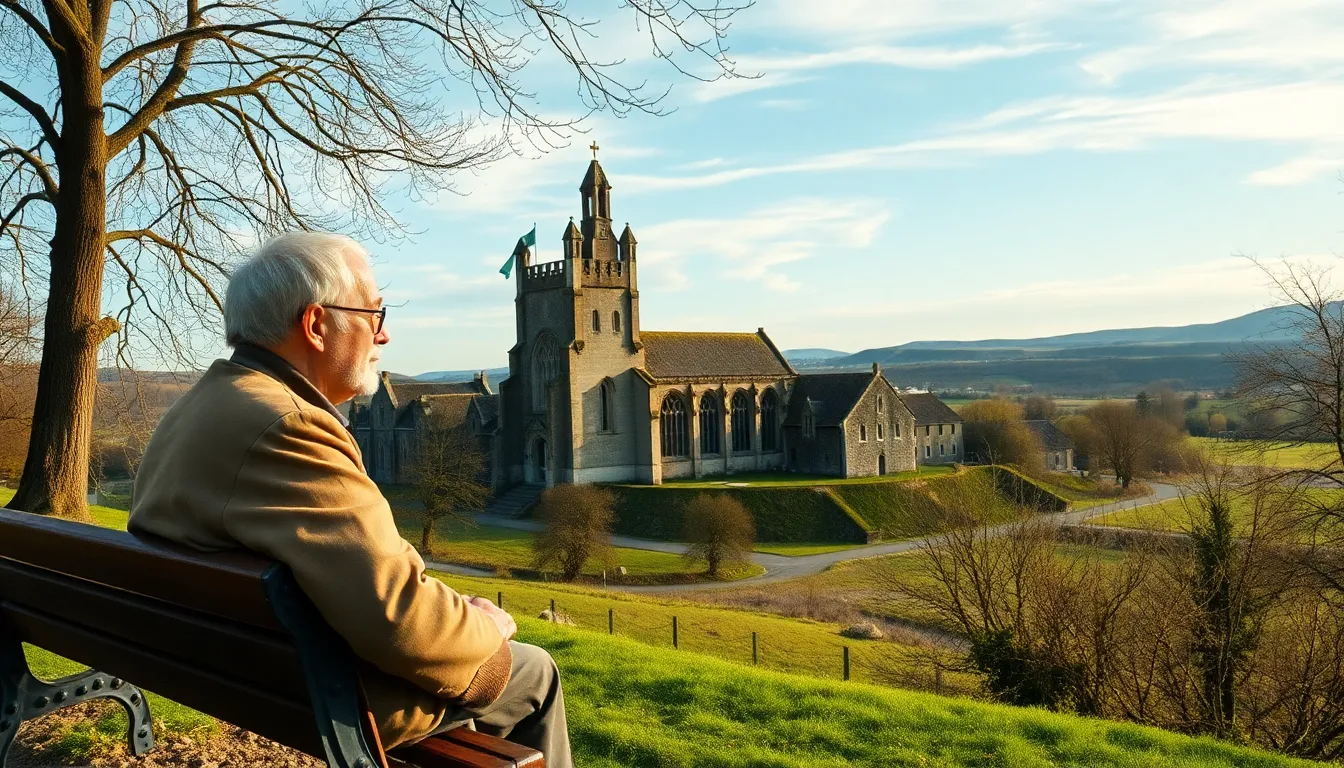
On almost every faith group I have led through Scotland, Wales, and Northern Ireland, the age range runs from people in their twenties to people in their eighties. That is one of the beautiful things about a congregation traveling together, and it is also the planning challenge nobody wants to talk about until it is a problem on the ground. Someone with a cane should not have to sit alone on the coach while the group climbs to the abbey ruin. And the group should not have to skip the abbey ruin because one person cannot climb to it.
Both of those outcomes are failures, and both are avoidable. I have learned that mixed mobility is not a reason to water down a heritage trip. It is a reason to plan it more thoughtfully. Here is how I keep everyone genuinely included, from the cobbled old towns to the island abbeys.
Name the Real Range Before You Plan Anything
The first mistake is treating “mobility” as one thing. It is not. A group can hold someone who walks fine but tires quickly, someone who uses a cane on uneven ground, someone who cannot manage stairs, and someone in a wheelchair, all at once. Each of those needs a different solution, and a plan built for the average serves none of them.
So I ask group leaders for an honest mobility picture early, the same way I ask about dietary needs. Who can walk how far. Who struggles with stairs. Who needs to avoid uneven ground. Who uses a mobility aid and what kind. This is not about labeling people. It is about building a trip where each person knows, before they go, that there is a real plan for them at every stop.
You can see how this fits the wider logistics of these trips in our United Kingdom group tour guide.
Understand What the Terrain Actually Throws at You
Celtic heritage sites were not built for accessibility, and being honest about that is the only way to plan around it. Here is what your group actually meets.
Abbey and castle ruins often involve uneven stone, worn steps without handrails, and ground that is centuries old. Some have good level approaches to the most meaningful spots; others do not.
Old town cobbles, in places like Edinburgh’s Royal Mile or the historic quarters, are charming and genuinely hard on anyone with a cane, a hip, or a wheelchair. They are also unavoidable in some towns.
The islands, including Iona, involve ferry crossings, sometimes a short walk from the landing, and weather that can turn a flat path slick. The crossings themselves are very manageable, but they are a transition point worth planning.
The weather turns gentle terrain difficult. A flat grass path is easy in sun and treacherous in the rain that these nations deliver often. Mobility planning here is partly weather planning.
None of this rules out the great sites. It just means we go in knowing exactly where the hard ground is.
Build the Itinerary Around Inclusion, Not Around the Average
The core of my approach is simple: I do not build the trip for the fittest travelers and ask everyone else to keep up, and I do not build it for the least mobile and ask everyone else to slow to a crawl. I build in options at the demanding sites so the group does the same site together, each at the level that works for them.
In practice that looks like a few consistent moves. Where a site has a hard climb to a ruin and a beautiful, accessible spot lower down, we make the lower spot a real destination, not a consolation. The guide gives the meaningful talk there, so the person who cannot climb still gets the heart of the place. Those who want the climb take it and rejoin the group. Nobody is excluded from the encounter, only from the stairs.
We also pace the days so they do not stack. Two physically demanding sites back to back will break the less mobile travelers and sour the trip for them. We spread the demanding ground out, with gentler days and rest built between, so energy lasts the whole trip rather than collapsing on day four.
For more on setting the right rhythm and expectations with your people, see our guide to preparing your group for a Celtic heritage journey.
The Coach Is Your Best Accessibility Tool
One of the strongest reasons to run a group trip with a dedicated coach, rather than rental cars, is mobility. The coach goes as close to each site as the road allows, which shortens every walk. It carries the mobility aids. It is a warm, dry place to rest for anyone who needs to sit a stop out. And it lets us drop travelers at an accessible point and collect them at another, so a person who cannot do a full circuit can still do the part that matters.
A good local coach driver who knows these roads is also an accessibility asset in himself. He knows which approach to a site is gentler, where the drop-off is closest, and how to position the coach so the walk is shortest. That knowledge is invisible until you are without it, white-knuckling a rental car on a single-track Highland road with an eighty-year-old who needs the door close to the entrance.
Handle the Ferries and Islands With a Plan
The islands are often the spiritual heart of a Celtic trip, and they are very doable for mixed-mobility groups with the right preparation. The ferry crossings are short and manageable, but they are a transition where a person with limited mobility needs support, so we plan who helps whom and we do not rush. On the island, we identify in advance which parts of the site are accessible and which require help, so there are no surprises at the landing.
The one thing I will always be honest about: a small number of the most remote or rugged spots genuinely cannot be made accessible to a wheelchair, and I will tell you that plainly rather than promise something we cannot deliver. When that is the case, we build a meaningful alternative for those travelers nearby, so the day still holds something real for them rather than a long wait.
Prepare Your People, and Pair Them Up
A lot of inclusion is social, not logistical. I encourage leaders to set the tone early: this is a group that moves at a pace where everyone belongs, and helping each other is part of the trip, not an imposition. Groups that adopt that spirit take care of their own beautifully. A younger traveler walks with an older one. Someone carries a bag. The fast walkers learn that the point was never speed.
I also tell leaders to be honest with less mobile travelers before they commit, so they come with accurate expectations and the right preparation: the shoes, the medication, the mobility aid, the willingness to sit out a climb without feeling left behind. A traveler who knows the plan arrives confident. A traveler caught off guard by a flight of medieval stairs arrives anxious, and anxiety travels through a group fast.
FAQ: Mixed Mobility on a UK Heritage Trip
Can someone in a wheelchair join a Celtic heritage tour?
In most cases, yes, with planning. We design the itinerary so wheelchair users do the same sites as the group at accessible points, with the coach getting as close as the road allows and the guide giving the meaningful talks where everyone can gather. A small number of the most remote or rugged spots genuinely cannot be made wheelchair accessible, and we are honest about those in advance and build a meaningful nearby alternative rather than promising something we cannot deliver.
How do you keep less mobile travelers from being left behind at demanding sites?
We build options into the demanding sites rather than splitting the group into included and excluded. Where there is a hard climb to a ruin and an accessible spot lower down, we make the lower spot a real destination where the guide gives the heart of the talk. Those who want the climb take it and rejoin. Everyone shares the encounter; only the stairs are optional. We also pace the days so demanding sites never stack back to back.
Are the island ferries a problem for older or less mobile travelers?
The ferry crossings are short and very manageable, and they are not a reason to skip the islands, which are often the spiritual heart of the trip. They are a transition point where less mobile travelers need a bit of support, so we plan who helps whom, we do not rush, and we identify in advance which parts of the island site are accessible. With that preparation, mixed-mobility groups do the islands comfortably.
Should I tell you about mobility needs even for travelers who “manage fine”?
Yes, please. A traveler who walks fine but tires quickly, or who struggles only with stairs, still benefits from a plan built with them in mind. The more complete and honest the mobility picture you give us early, the better we pace the days, position the coach, and choose the gentler approaches. There is no downside to telling us, and a real cost to a need we discover on the ground.
Does a mixed-mobility group mean a watered-down trip for everyone else?
No. Done well, the more mobile travelers barely notice the accommodations, because the demanding climbs and ruins are still there for those who want them. What changes is that the trip is paced sustainably and built with options, which honestly improves the experience for everyone, since even fit travelers welcome a trip that does not exhaust them by day four.
If you are leading a group that spans a wide range of ages and abilities, that is not an obstacle to a great heritage trip. It is exactly the kind of group these journeys are best at serving, with the right planning. I am glad to walk through your group’s specific mobility picture and show you how we keep everyone genuinely included.
Start the conversation here, or look at how we run our group heritage tours across the United Kingdom.