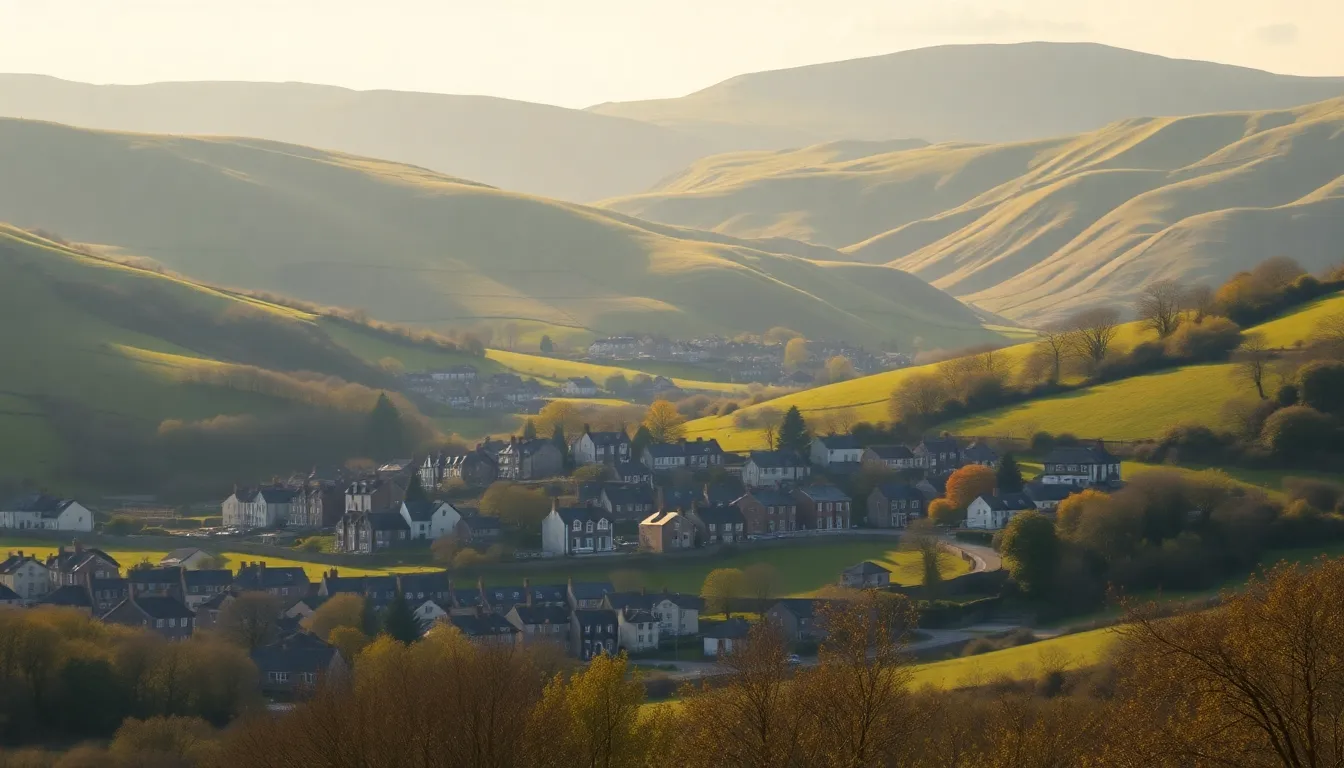
I will tell you honestly that Wales is the leg of a United Kingdom trip that surprises groups most. People come expecting Scotland and England, and they have rarely given a thought to the Jewish history of the Welsh mining valleys. Then we stand in a small valley town, in front of a building that was once a synagogue and is now something else entirely, and I watch the surprise turn into something deeper. Because the Welsh story is, in large part, a story of decline, of communities that flourished and then faded as the coal industry that sustained them died. And telling a story of decline well, with dignity rather than gloom, is some of the most meaningful work I do on the road.
For rabbis, ministers, and educators planning a heritage journey, Wales offers something the bigger destinations do not. It is a story of small communities, of arrival and departure, of memory rather than monument. Handled with care, it can be one of the most affecting parts of a whole trip.
How Jews Came to Wales
Welsh Jewish history follows the coal. As the South Wales coalfield boomed through the nineteenth and into the twentieth century, it drew people from across Britain and Europe in search of work and trade. Among them were Jewish immigrants, many of them part of the same great migration from Eastern Europe that built the communities of Glasgow, Manchester, and London. Some came directly from the Russian Empire; others moved on from the ports and cities where they had first landed.
They settled in Cardiff, the great coal port and the largest community, and they spread out into the valley towns: Merthyr Tydfil, Tredegar, Pontypridd, Brynmawr, and others. In the valleys they were typically traders and shopkeepers rather than miners, drapers, jewellers, furniture dealers, pawnbrokers, serving the mining communities around them. Small congregations formed, synagogues were built or adapted, and for a time these little communities had real life: services, cheders, burial societies, the full machinery of Jewish communal existence in places few people today would associate with it at all.
When I describe this to a group, I want them to grasp the scale. These were tiny communities, sometimes only a few dozen families. But they were complete. They had what they needed to live a Jewish life, far from the great centers, in the green valleys of industrial Wales.
Cardiff: The Center of Welsh Jewry
Cardiff was, and remains, the heart of Jewish life in Wales. As the port through which Welsh coal sailed to the world, it grew into a substantial city, and its Jewish community grew with it. Cardiff had the institutions that the smaller valley communities looked to: larger synagogues, communal organizations, and the critical mass that allowed Jewish life to be sustained over generations.
Of all the Welsh communities, Cardiff is the one that endured. While the valley congregations rose and fell with the coal, Cardiff’s community, though much reduced from its peak, has continued. For a group, Cardiff is the natural base for exploring Jewish Wales. It anchors the story, holds the surviving communal life, and provides the contrast against which the valley communities can be understood. The city had the size to survive the industry’s collapse; the small valley towns did not.
The Valleys: Communities That Came and Went
This is the part of Wales that stays with people. The valley communities are, for the most part, gone. As the coal industry declined through the twentieth century, the towns that depended on it lost population and prospects. The Jewish families, who had always been traders dependent on a thriving local economy, moved on, to Cardiff, to England, to wherever work and community could be found. One by one, the small valley congregations closed.
What remains is poignant and worth seeing. In several valley towns, the old synagogue buildings still stand, repurposed now as homes, chapels, or businesses. A former synagogue in Merthyr Tydfil, one of the more striking examples, survives as a building even as its congregation has long since dispersed. Jewish cemeteries remain on hillsides, sometimes the most enduring trace of a community that has otherwise vanished. These cemeteries, quiet and often beautifully situated, are among the most moving stops a group can make.
I tell group leaders to approach the valleys honestly. There is no thriving community to visit here, no active synagogue full of people. What you find instead is memory: a building that was, a cemetery that endures, a story of a community that lived fully and then left. The right response is not sadness for its own sake but respect. These were real lives, real congregations, and the fact that they ended does not diminish that they were.
Telling a Story of Decline with Dignity
I want to spend a moment on this, because it is the heart of how to do Wales well. A story of decline can collapse into mourning, and that does a disservice to the people who lived it. The valley communities were not tragedies. They were successes that ran their natural course. People came, built lives, raised children, kept their faith, and then, when the economy that brought them collapsed, they did what immigrant communities have always done: they moved to where life was possible. That is not failure. It is resilience.
When I stand with a group at a closed valley synagogue or a hillside cemetery, I frame it that way. We honor what was here. We read the names where we can. We acknowledge that the community is gone, and we resist the urge to make that the only point. The fuller truth is that these people lived, contributed, and carried their tradition with them when they left. The community did not die. It relocated. The Torah scrolls went to Cardiff or beyond. The families continued elsewhere. What ended was a chapter, not the story.
This is also where the weight of the wider Jewish century sits in the background. Many of these families had relatives in Eastern Europe who did not get out, who were murdered in the Holocaust. The Welsh communities were, in part, the lucky branch of families whose other branches were destroyed. Holding that quietly, without letting it overwhelm the visit, is part of telling the Welsh story with the dignity it deserves.
Building a Welsh Leg Into a UK Trip
Wales works best as a focused addition to a wider United Kingdom journey rather than a standalone destination. A common shape is to base in Cardiff, spend time with the surviving community and its history, then make selective trips into the valleys to see the closed synagogues and cemeteries that tell the rise-and-fall story.
Wales pairs naturally with England to its east and complements a Scottish leg as well. Across a full British trip, a group can see the spectrum of communities: the confident Victorian arrival of Glasgow’s Garnethill Synagogue, the older continuity of Jewish Edinburgh, and the small valley communities of Wales that flourished and faded. Seen together, these tell a fuller and more honest story of British Jewry than any single city can, a story of communities that grew, endured, and sometimes ended, each in its own way.
For a faith group, Wales adds something the larger destinations cannot: the experience of standing where a community was and is no longer, and learning to honor it without despair. That is a spiritual exercise as much as a historical one, and it is one of the reasons I never leave Wales off a serious British itinerary.
FAQ: Jewish Heritage in Wales
Was there really a Jewish community in the Welsh valleys?
Yes. As the South Wales coalfield boomed in the nineteenth and early twentieth centuries, Jewish immigrants, mostly traders and shopkeepers, settled in valley towns like Merthyr Tydfil, Tredegar, and Pontypridd, alongside the larger community in Cardiff. They formed small but complete congregations with synagogues, cheders, and burial societies, far from the great urban centers.
What happened to the valley communities?
They declined and largely disappeared as the coal industry collapsed through the twentieth century. The Jewish families, who depended on a thriving local economy, moved to Cardiff, to England, or further afield. The small congregations closed one by one. What remains are repurposed synagogue buildings and hillside cemeteries that mark where these communities once lived.
Is there still a Jewish community in Wales?
Yes, centered in Cardiff. As the major coal port, Cardiff grew large enough to sustain Jewish communal life through the industry’s decline, and although much reduced from its peak, the community continues. Cardiff is the natural base for a group exploring Jewish Wales and the contrast against which the lost valley communities are understood.
What can a group actually see in the valleys?
Mainly memory rather than active community life. Several former synagogue buildings still stand, repurposed as homes, chapels, or businesses, including a notable one in Merthyr Tydfil. Jewish cemeteries remain on hillsides, often quiet and beautifully situated, and are among the most moving stops. A good guide tells the story of each community on the spot.
How should a group approach a story of decline?
With dignity rather than gloom. These communities were not failures; they were successes that ran their natural course, then relocated when the local economy collapsed. The right response is to honor what was there, read the names where possible, and recognize that the families and their traditions continued elsewhere. The community moved on; it did not vanish.
If your community’s United Kingdom journey can make room for Wales, I would be glad to help you shape it, base in Cardiff and reach into the valleys with the care this story needs. You can see how we structure these journeys at our United Kingdom destination page and our group heritage tours, where the group leader travels free with fifteen or more participants.
Contact us whenever you are ready to start planning.