I want to tell you about two communities that no longer exist in the way they once did. That sentence might make you hesitant to bring a group. It should not. Some of the most meaningful heritage visits I have led have been to places where the community has gone, because what remains, the buildings, the graves, the records, asks a question every congregation should sit with: what happens to a Jewish community over generations, and what do we owe its memory?
Swansea and Merthyr Tydfil hold the oldest Jewish history in Wales. To walk these places with a group is to trace the full arc of a community, from founding to flourishing to quiet decline. I do not take groups here to mourn. I take them to remember well.
The Oldest Welsh Communities
Jewish settlement in Wales is older than most people assume, and it begins not in Cardiff but in the older industrial centers.
Swansea
Swansea holds the claim to the oldest formally organized Jewish community in Wales. Jews were present in the town by the second half of the 18th century, drawn by trade and the growth of the port. A burial ground was established in the 1760s, one of the earliest markers of organized Jewish life anywhere in Wales. A congregation followed, and by the 19th century Swansea had a settled community with its own synagogue and institutions.
This was a community of merchants, shopkeepers, and tradespeople woven into the commercial life of a busy Welsh port. It was never large, but it was rooted, and it endured for generations.
Merthyr Tydfil
Merthyr tells the more dramatic story. In the early 19th century Merthyr Tydfil was one of the great iron towns of the world, the largest town in Wales for a time, its furnaces feeding the industrial revolution. Where industry boomed, people came, and among them came Jews.
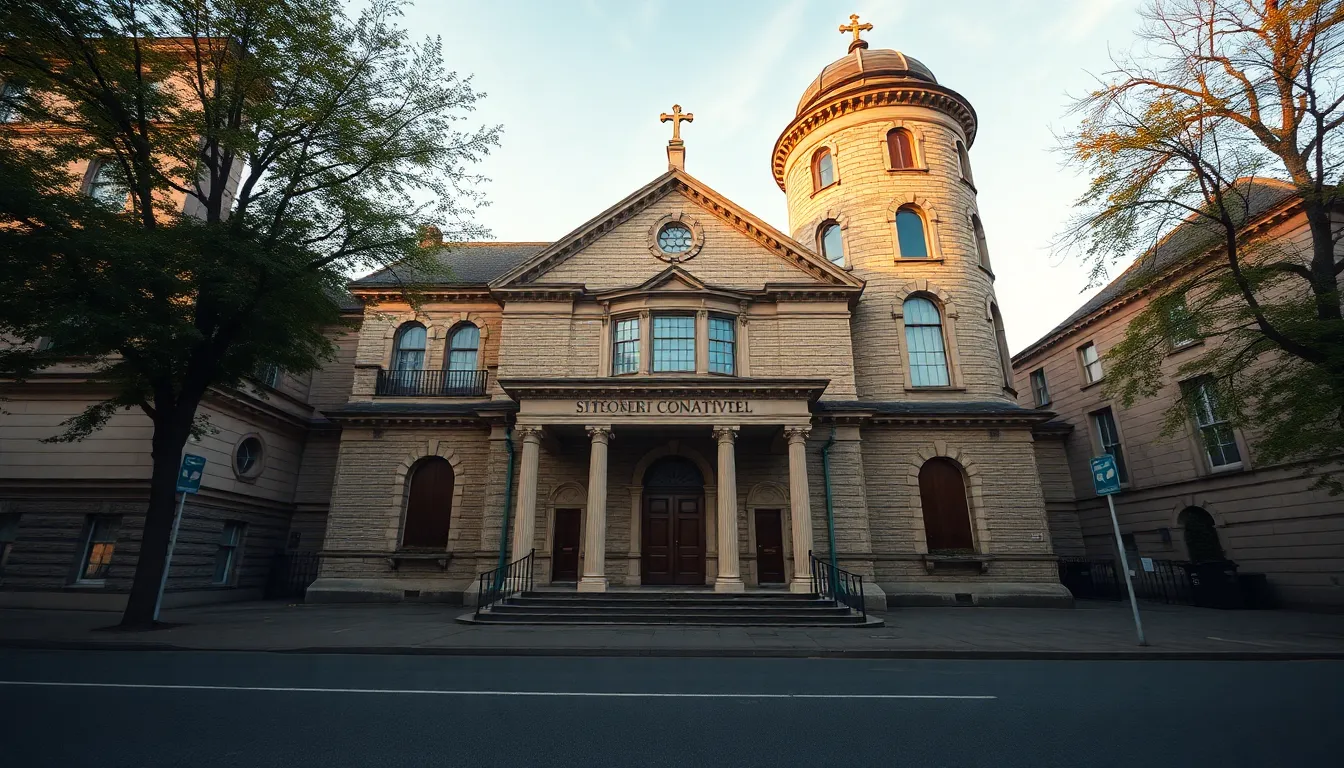
The Merthyr community grew alongside the ironworks. The congregation built a synagogue on a hillside above the town, a striking building that still stands and that became, in time, one of the most recognized symbols of Welsh Jewish heritage. For a community in a Welsh valley town, raising a synagogue like that was a statement of permanence and pride.
Life in the Industrial Communities
It is worth helping your group picture what these lives looked like, because they were different from the urban Jewish experience of London or even Cardiff.
These were small communities in industrial towns. The Jewish families were often the local drapers, jewelers, furniture sellers, and pawnbrokers, providing goods and credit to a working population. They were a visible, recognized part of town life. Children went to local schools. Men served in local trades and, later, in the wars. The community kept its synagogue, its cemetery, its festivals, and its mutual aid, the same institutions a Jewish community keeps anywhere, scaled to a few dozen or a few hundred families.
There were hard chapters too. Merthyr and the South Wales valleys saw periods of real tension, including episodes of anti-Jewish disturbance during times of industrial unrest. Telling that honestly matters. But the dominant story across the decades was one of Jewish families living, working, and worshipping as part of the fabric of these Welsh towns.
The Decline, Told With Dignity
Here is the part that requires care, and the part I think groups need most.
These communities declined for reasons that had little to do with hostility and everything to do with economics and demography. When the iron and coal industries contracted, the towns lost population. Young people left for the cities, for Cardiff, for London, for opportunity. Each generation, fewer remained. The minyan got harder to gather. The synagogue that once filled now held a handful. Eventually, in both Swansea’s later history and in Merthyr, the congregations could no longer sustain regular worship.
This is not a story of catastrophe. It is the slower, quieter loss that comes when a community ages and disperses and is not replenished. In Merthyr the synagogue closed and the building passed out of communal hands, though efforts have been made to preserve it as a heritage site precisely because of what it represents. In Swansea the community shrank dramatically over the 20th century.
When I stand with a group at one of these closed synagogues, I do not soften this into a happy ending it does not have. I let it be what it is. A community lived here for generations. It raised these walls. It buried its dead in that ground. And then, through no single villain’s fault, it faded. There is dignity in saying that plainly, and there is a lesson in it for every congregation that thinks of itself as permanent.
What Remains to Visit
For all that has been lost, there is real substance for a group to see.
The Merthyr synagogue building survives and is among the most significant pieces of Welsh Jewish heritage, with ongoing interest in its preservation and interpretation. Swansea’s historic Jewish sites, including its old burial ground, mark some of the earliest organized Jewish life in Wales. The cemeteries in both communities hold the founding families and the immigrant generations, their Hebrew inscriptions weathered but legible, their dates telling the story of arrival, growth, and gradual departure.
A knowledgeable guide makes the difference here. Without context, a closed building is just a closed building. With context, it becomes the last witness to a community’s whole life.
Placing These Communities in the Welsh Story
Swansea and Merthyr are best understood alongside Cardiff, the larger community that absorbed many of the families who left the valleys. Seeing the Cardiff community after the valley towns completes the arc: the smaller industrial communities feeding into the capital, the capital itself eventually contracting too. Together they tell the full story of Jewish South Wales.
For groups building a wider United Kingdom journey, these Welsh communities pair naturally with the Northern Irish story, where Belfast saw a parallel rise and decline. Our Jewish heritage of the United Kingdom hub shows how these threads connect, and the United Kingdom destination page explains how we structure these multi-community itineraries.
Why Take a Group to a Community That Is Gone
I understand the instinct to focus a heritage trip on living, vibrant Jewish life. There is a place for that. But there is also profound value in standing where a community used to be. It teaches your congregation that Jewish history is not only triumph and survival. It is also continuity that has to be chosen, generation after generation, or it fades.
Groups come away from Swansea and Merthyr quieter and more thoughtful than they arrive. They have seen what a community leaves behind. They have read the names. And many of them go home thinking differently about their own congregation and what it means to keep a community alive.
If you would like to bring your group to these communities and tell their story with the care it deserves, I would welcome the conversation. Heritage Tours builds every itinerary around your group’s interests, and with 15 or more participants, the group leader travels free.
FAQ: Jewish Heritage in Swansea and Merthyr Tydfil
Which is the oldest Jewish community in Wales?
Swansea holds the claim to the oldest formally organized Jewish community in Wales, with a burial ground established in the 1760s and Jewish presence in the town from the second half of the 18th century. Merthyr Tydfil’s community grew slightly later, alongside the town’s rise as a major iron-producing center.
Can you still visit the Merthyr Tydfil synagogue?
The historic Merthyr synagogue building still stands and is one of the most significant pieces of Welsh Jewish heritage. It no longer functions as an active synagogue, and there has been ongoing interest in preserving and interpreting it as a heritage site. A guided visit explains the community that built it and the reasons it eventually closed.
Why did these Jewish communities decline?
The decline was driven mainly by economics and demography rather than hostility. When the iron and coal industries contracted, the towns lost population, and young Jewish families moved to larger cities for opportunity. Over generations the communities shrank below the size needed to sustain regular worship.
Is it appropriate to bring a group to a community that no longer exists?
Yes, and many groups find it deeply meaningful. Visiting a community that has faded teaches that Jewish continuity must be chosen by each generation. Handled with dignity and good context, these visits are among the most reflective stops on a heritage tour.
How do Swansea and Merthyr fit into a wider tour?
They pair naturally with Cardiff, the larger community that absorbed many families who left the valleys, and with the wider three-nations story of Scotland, Wales, and Northern Ireland. Most groups visit them as part of a Welsh or United Kingdom itinerary rather than on their own.
If you would like to talk through how to include Swansea and Merthyr in your group’s journey, contact us and we will begin planning.