Walking Where Patrick Walked
There is a moment I wait for on every trip to this corner of Northern Ireland. We are standing on the low hill at Saul, in County Down, where tradition says Patrick built his first church on Irish soil, and I watch a group realize that this is not a legend wrapped in shamrocks and parades. This is a real place, on a real hill, where a real man began the work that changed a nation. Patrick stops being a holiday and becomes a person.
Counties Armagh and Down hold the heart of the Patrick story. They are not large, and they are easy to underestimate next to the famous sites of Scotland or the Welsh coast. But for a faith group, this small region carries some of the deepest Celtic Christian heritage anywhere in these islands. I have led groups along the Patrick trail for years, and it never fails to move people. This guide is meant to orient you before you plan.
Why Armagh and Down Matter
Patrick arrived in Ireland in the fifth century, first as a captive shepherd and later, after his escape and his calling, as a missionary bishop. The two counties of Armagh and Down hold the places most closely tied to his life and his burial. Together they form the natural center of any journey into the origins of Irish Christianity.
This is the oldest layer of the faith story in these nations, the Celtic Gospel carried across the western seas, the same root you can trace from Iona to St Davids in our hub guide to United Kingdom heritage travel. In Armagh and Down, that root is at its very source. For Christian groups especially, this region is a chance to stand at the beginning of a story that shaped the whole of the British and Irish church.
Armagh: The Ecclesiastical Capital
The City of Patrick
Armagh is the spiritual capital of Ireland, north and south. Patrick chose it as the seat of his church in the fifth century, and it has carried that role ever since. To this day, both the Catholic and the Church of Ireland archbishops who lead the whole island take their title from Armagh, a remarkable continuity reaching back more than fifteen hundred years.
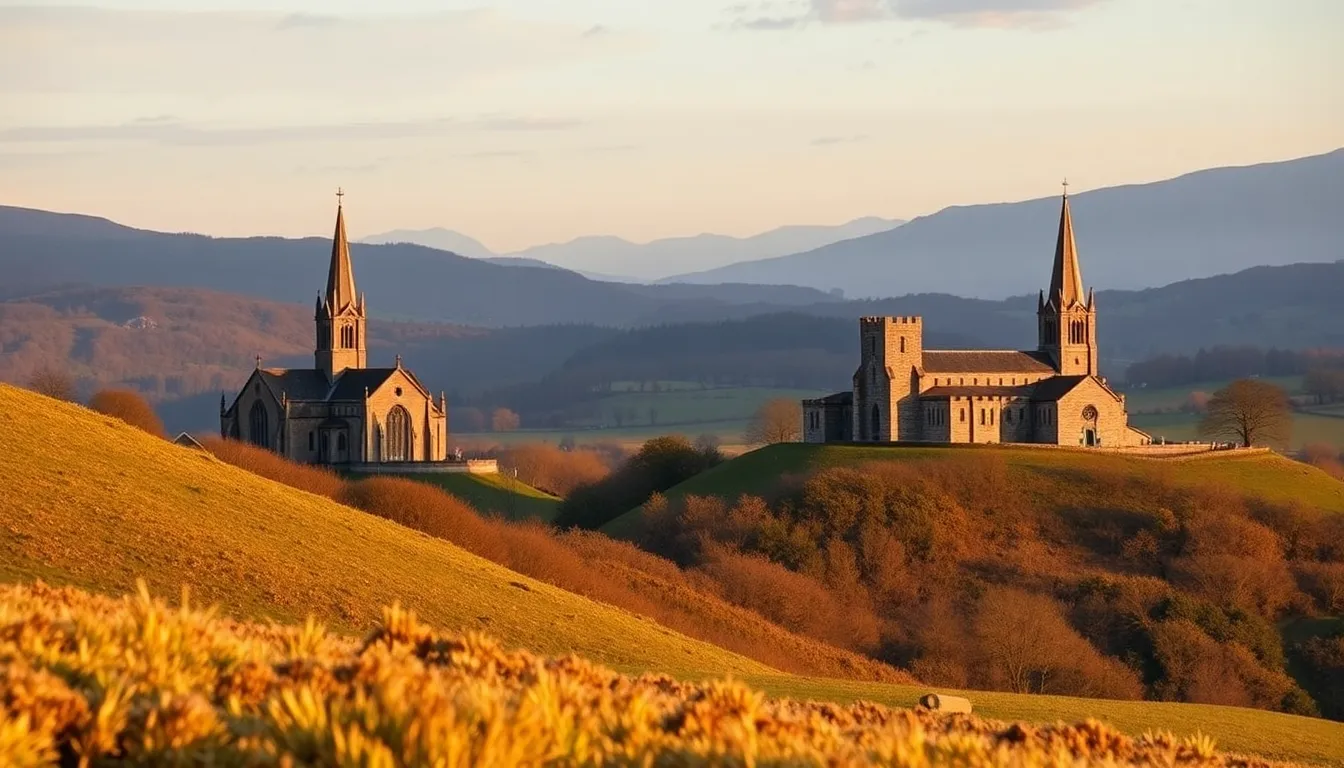
The city is small and walkable, built around two facing hills. On each hill stands a cathedral, both named for Saint Patrick. The older, the Church of Ireland cathedral, sits on the site of Patrick’s original church and holds centuries of history within its walls. The newer Catholic cathedral rises across the way, its twin spires visible for miles. For a group, the two cathedrals facing one another tell their own quiet story about the shape of Irish Christianity over the centuries.
Standing at the Source
What strikes most groups in Armagh is the sheer depth of continuity. This is not a reconstructed heritage site. It is a living city that has been the center of Irish church life since Patrick himself walked its hill. Taking time here, rather than rushing on, lets a group feel the weight of that.
County Down: The Patrick Trail
Saul
A short distance away in County Down lies Saul, traditionally the site of Patrick’s first church in Ireland, given to him by a local chieftain who became his first convert. A simple memorial church stands there now, on a gentle hill in quiet farmland. There is little to see in the way of grand architecture, and that is exactly the point. Saul is about place, not spectacle. Many group leaders tell me it is the spot where the Patrick story becomes most real for their people.
Downpatrick
Nearby Downpatrick takes its name from the saint, and tradition holds that Patrick is buried here, in the grounds of the cathedral on the hill above the town. A great granite slab marks the traditional grave, a simple stone bearing his name. Downpatrick also holds an excellent visitor center devoted to Patrick’s life, which helps a group separate the history from the legend and understand who this man actually was. I often use Downpatrick as the place where the whole trail comes together.
The Wider Landscape
The country around Saul and Downpatrick, with its low green hills running down toward the sea, is gentle and unhurried. The Patrick sites sit close together, which makes this an easy and rewarding region to move a group through at a thoughtful pace.
Where This Region Fits in a Northern Ireland Trip
Armagh and Down hold the Patrick layer of the story. The other great heritage strand in Northern Ireland runs along the Antrim coast to the north, where the Ulster-Scots Presbyterian settlements tell a very different and later chapter. The two pair naturally into a fuller Northern Ireland journey, and you can read about that other strand in our guide to the Antrim coast and Ulster-Scots heritage.
Belfast, with its own remarkable Jewish heritage, sits within easy reach as a base or a stop, and you can read about it in our Jewish heritage overview. Many groups combine the Patrick country of Armagh and Down with the Antrim coast and Belfast into one well-rounded Northern Ireland trip. The region also connects by ferry to Scotland, which is how some groups link the Patrick story to the wider Celtic Christian trail.
Planning a Visit
Northern Ireland is compact, which is a real gift for group travel. The Patrick sites of Armagh and Down sit fairly close together, the roads are good, and there are no ferries or remote single-track stretches to plan around. A standard coach moves easily here.
I usually give the Patrick region a full day, sometimes a day and a half if the group wants to take Armagh and the Down sites slowly. Belfast makes a practical base, within reach of both, with strong hotel options. On timing, the comfortable window matches the rest of these northern nations: May to September, with long daylight and the mildest weather. The full seasonal picture is in our United Kingdom heritage hub.
What to Prepare Your Group For
Many of the Patrick sites are outdoor and rural, with hilltop churches, grassy graveyards, and uneven ground. Comfortable shoes and a waterproof layer are wise, since Irish weather changes quickly in any season. None of it is strenuous, but the gentle paths and slopes reward sensible footwear.
A little preparation, as ever, transforms the experience. A group that arrives knowing Patrick’s true story, the captivity, the escape, the calling, and the mission, gets far more from standing at Saul and Downpatrick than one expecting parades and shamrocks. When people already carry the real story, these quiet hills speak with surprising power.
FAQ: Armagh and Down Saint Patrick Heritage
Where is Saint Patrick actually associated with in Northern Ireland?
Counties Armagh and Down. Armagh was the seat of Patrick’s church and remains the ecclesiastical capital of all Ireland. In County Down, Saul is held to be the site of his first church in Ireland, and Downpatrick is the traditional place of his burial. Together these form the natural center of the Patrick trail.
Is the Patrick story mostly legend?
There is real history beneath the legend. Patrick was a genuine fifth-century missionary bishop, and we have his own writings to draw on. Sites like Saul and Downpatrick carry strong tradition rather than certainty, but the Downpatrick visitor center does an excellent job of separating the documented man from the folklore, which helps a group meet the real Patrick.
How does this region fit with the rest of Northern Ireland?
Armagh and Down hold the Celtic Christian layer, while the Antrim coast to the north holds the later Ulster-Scots Presbyterian story. The two pair naturally, and Belfast, with its notable Jewish heritage, sits within easy reach of both. Many groups combine all three into one well-rounded Northern Ireland trip.
How much time should a group spend on the Patrick trail?
A full day covers the main sites in Armagh and Down at a reasonable pace. I often suggest a day and a half so the group can take Armagh and the Down sites slowly. Belfast makes a practical base, within easy reach of the whole region, with good accommodation.
Do group leaders really travel free?
Yes. On all Heritage Tours group itineraries, when your group includes 15 or more participants, the group leader travels free. It is how we honor the work that pastors, rabbis, and educators put into bringing their communities together.
If the Patrick country of Armagh and Down is calling to your community, I would love to talk through what the journey could look like. Begin with our United Kingdom heritage destination and our group heritage tours, then contact us whenever you are ready to start the conversation.