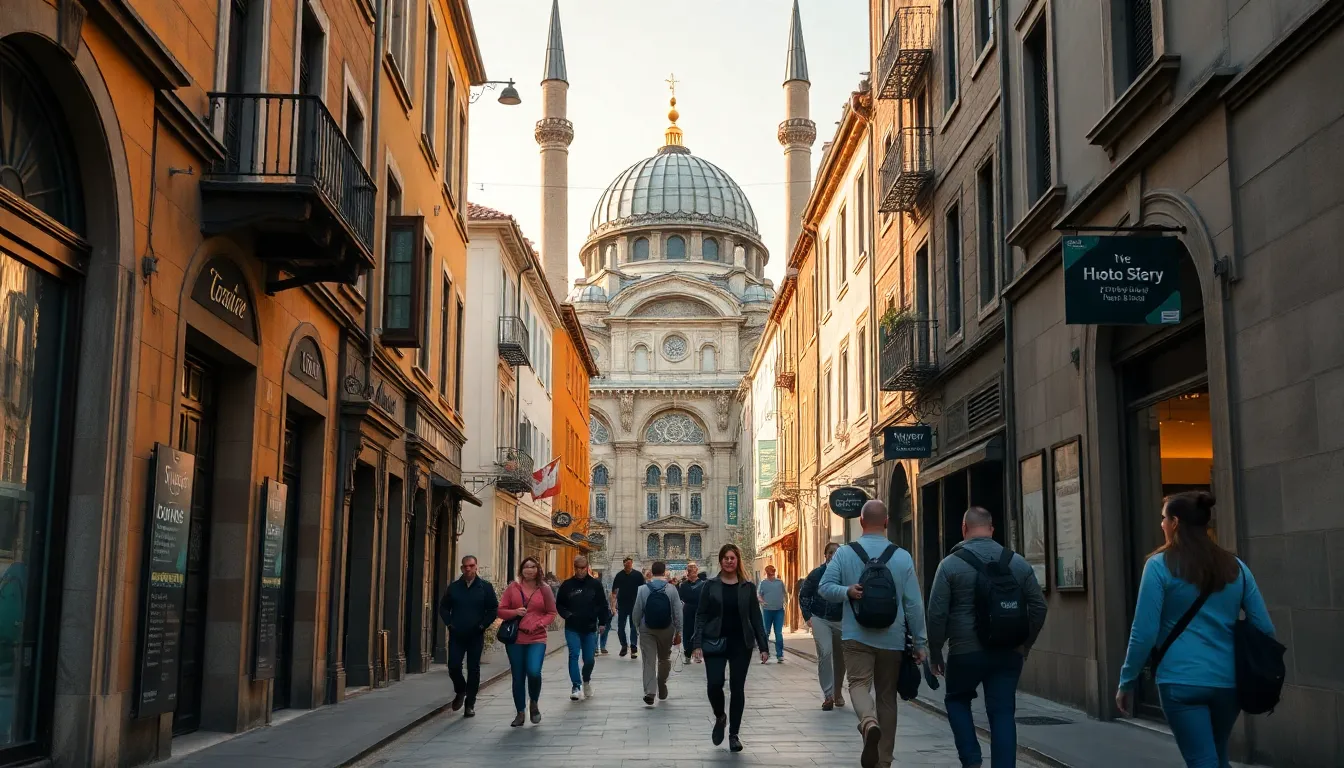
When a pastor or a rabbi calls me about Turkey, the safety question almost always comes early, and often it comes a little nervously, like they are not sure they are allowed to ask it. You are not only allowed to ask it. You are obligated to. You are about to ask people to trust you with their parents, their teenagers, their friends, on the other side of the world. So let me give you a straight answer, not a brochure answer.
Turkey is safe for well-organized heritage groups, and millions of faith travelers visit every year without incident. But “safe” is not a single fact. It depends on where you go, how you travel, and who is looking after the details. Let me give you the full picture so you can make the call with clear eyes.
The Geography of Safety: Where Heritage Groups Actually Go
The most important thing to understand is that the parts of Turkey that appear in news stories about regional tension are not the parts heritage groups visit. This distinction matters enormously, and it gets lost in headlines.
The heritage circuit (Istanbul, Cappadocia, the Aegean coast around Ephesus and the Seven Churches, Antalya) sits in the west and center of the country. The areas the U.S. State Department flags with elevated warnings sit along the far southeastern border with Syria and Iraq, hundreds of miles from anywhere on a normal itinerary. A good heritage tour does not go near them. It is the difference between visiting Florida and reading about a problem on the Texas border. Same country, completely different world.
Check the Current Advisory, but Read It Carefully
Always check the U.S. State Department travel advisory before you commit, and check it again closer to departure. Turkey typically sits at an overall “exercise increased caution” level, with specific “do not travel” carve-outs for the southeastern border provinces only. Read the regional breakdown, not just the headline number. The headline lumps the whole country together; the regional detail tells you what actually applies to your trip, which is almost always “the safe part.”
Istanbul: A Major City, Treated Like One
Istanbul is one of the great cities of the world, and like any great city, it rewards normal urban common sense. The real risks here are not dramatic. They are the ordinary risks of a busy metropolis.
- Pickpocketing in crowded tourist areas (the Grand Bazaar, tram stops, the area around the major mosques). Keep wallets in front pockets, bags zipped and in front of you, and watch your phone.
- Overcharging and tourist scams, which I cover below.
- Traffic. Istanbul drivers move fast and crosswalks are more of a suggestion. Cross with the group, not alone.
What you are not likely to encounter is violent crime against tourists, which is rare. The risks are the inconvenient kind, not the frightening kind, and a group moving together with a guide handles them easily.
The Scams Worth Knowing About
A handful of tourist scams come up often enough that I always brief my groups on them. None are dangerous. They are designed to separate distracted travelers from money, and naming them ahead of time defuses them completely.
- The friendly stranger and the shoeshine. Someone drops a brush, you helpfully pick it up, and suddenly you owe for a shoeshine you did not ask for. Smile and walk on.
- The taxi meter games. “Broken” meters, long routes, or a quick bill swap. The fix is simple: groups use the private coach and pre-arranged transfers, so your people almost never take a taxi alone.
- The carpet and the tea. You are invited in for tea, which is gracious and genuine Turkish hospitality, but it can shade into high-pressure sales. There is no obligation to buy. Enjoy the tea, admire the work, leave freely.
The thread through all of these: a guided group is a hard target. Scams work on confused solo tourists, not on thirty people moving together with someone local who knows the playbook.
Health, Heat, and the Older Traveler
For a congregation group, the most likely thing to actually go wrong is not crime at all. It is heat, dehydration, an upset stomach, or a fall on uneven ancient stone. These are the real risks, and they are manageable with planning.
Turkish tap water is generally not recommended for drinking; bottled water is cheap and everywhere, and a good itinerary keeps it stocked on the coach. Summer heat at exposed sites like Ephesus is genuinely taxing for older travelers, which is one more reason I steer groups toward the spring and fall shoulder seasons. Medical care in the major cities is modern and good, with quality private hospitals in Istanbul and the tourist regions. The single most important health decision you make is insurance, which I treat as non-negotiable for any group with older members and cover fully in our guide on travel insurance for a Turkey heritage group.
Are Women Safe Traveling in Turkey?
Yes, and women travel through Turkey on heritage tours all the time. A few practical notes help. Turkey is a Muslim-majority country, and modest dress is appreciated, especially at religious sites, where covering shoulders and knees is expected and a head covering is required for women in mosques. This is not a safety issue so much as a respect issue, but dressing in keeping with local norms also draws less unwanted attention. Solo women may field more conversation from vendors than they would at home; within a group, this is a non-issue. I get into the dress specifics in our guide on what to pack for a Turkey heritage tour.
Why a Group Is the Safest Way to See Turkey
Here is the honest truth at the center of all this. The risks I have described are the risks of independent, distracted, solo travel. Nearly every one of them shrinks to almost nothing inside a well-run group.
A group travels in a private coach, not random taxis. A group moves with a licensed local guide who knows which streets, which vendors, and which situations to steer around before you ever notice them. A group has a leader counting heads and an operator on call if anything goes sideways. Your people are never alone in a place they do not understand, which is exactly the condition that makes travelers vulnerable in the first place. The structure that makes a heritage trip meaningful is the same structure that makes it safe.
This is also why I am comfortable bringing mixed-age congregations, including travelers well into their seventies and eighties, to Turkey year after year. We build the pace and the support around the group, and you can see how that works on our group heritage tours page and across the regions on our Turkey destination page. Once the safety question settles, the next one is usually paperwork, which I walk through in our guide on visas and entry for a Turkey heritage trip.
FAQ: Turkey Safety for Faith Groups
Is Turkey safe to visit right now?
For the western and central heritage regions (Istanbul, Cappadocia, Ephesus and the Aegean coast, Antalya), yes. Millions of faith travelers visit yearly without incident. The areas under elevated U.S. advisories are the far southeastern border provinces, hundreds of miles from any normal heritage itinerary. Always check the current State Department advisory and read the regional breakdown, not just the headline.
What are the real risks for a heritage group in Turkey?
The likeliest issues are ordinary, not dramatic: pickpocketing in crowded tourist spots, tourist scams, summer heat at exposed sites, and minor stomach trouble. Violent crime against tourists is rare. A group moving together with a licensed guide handles every one of these easily, which is why guided travel is the safest way to see the country.
Is Turkey safe for women travelers?
Yes, and women travel Turkey on heritage tours regularly. Modest dress is appreciated, especially at religious sites where covered shoulders and knees, and a head covering for women in mosques, are expected. Within a group, the occasional extra attention solo women might field from vendors is a non-issue.
Do I need to worry about the U.S. travel advisory level?
Read it, but read it carefully. Turkey’s overall level usually reflects the troubled southeastern border, not the heritage regions you will actually visit. The regional detail in the advisory is what applies to your trip, and for the standard circuit that detail is reassuring. Check it when you book and again before departure.
How do groups stay safe day to day?
Private coach instead of taxis, a licensed local guide who steers around problems before they start, a leader counting heads, and an operator on call. Your people are never alone in an unfamiliar place, which removes the condition that makes travelers vulnerable. Bottled water, sun protection, and good travel insurance cover the rest.
If safety is the question holding you back from leading your people to Turkey, I would rather talk it through with you directly than have you carry it alone. I have brought a lot of congregations through this country, and I am happy to tell you exactly how we look after every traveler on the ground.
Contact us and let’s have that conversation.