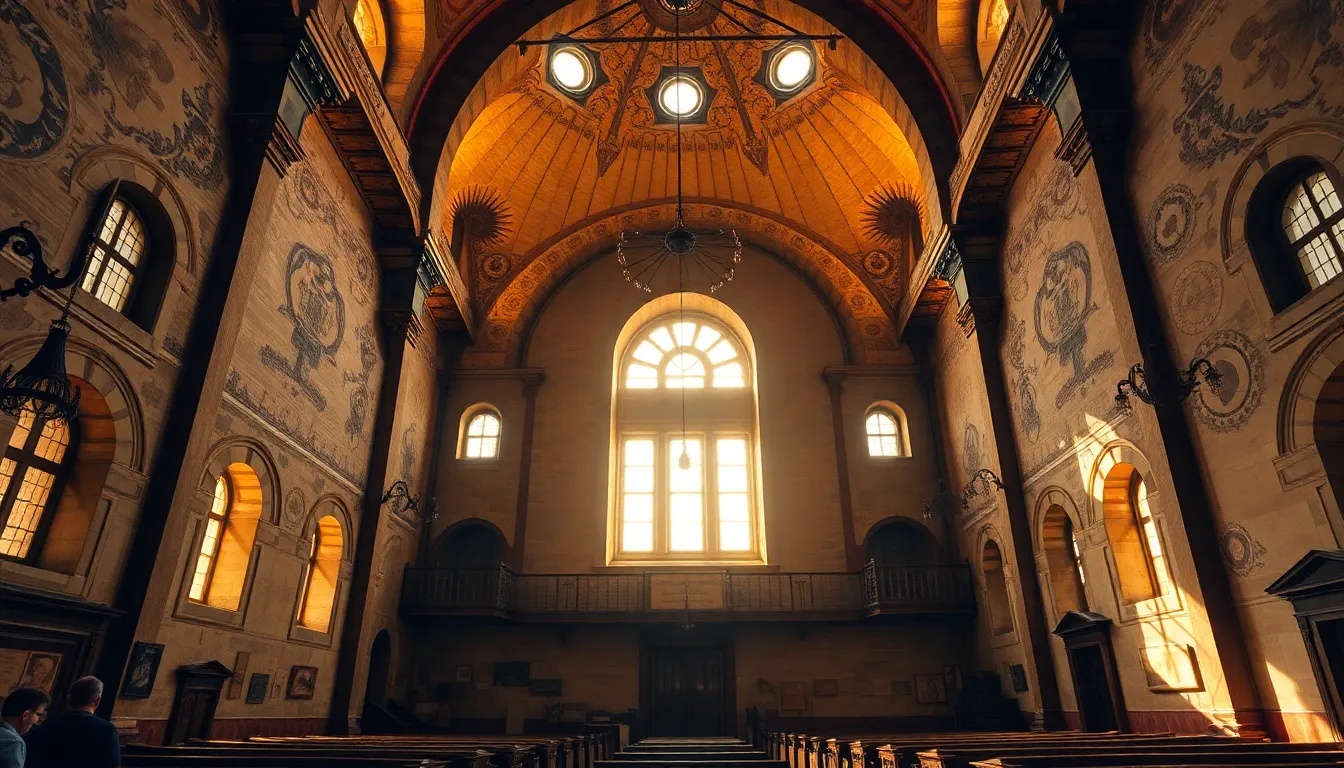
I sat with a rabbi a while back who told me his congregation knew the Spanish expulsion of 1492 as a date and a tragedy, and nothing more. They knew their families had come “from somewhere over there” and that the somewhere had vanished. He wanted to give them the rest of the story. Not the ending in Spain, but what happened after: where the exiled families went, who took them in, what they rebuilt. That story lives in Turkey, and standing inside it changed his community in a way no sermon had managed.
If you are a rabbi thinking about a heritage journey for your congregation, Turkey holds something Israel and Spain do not. Israel is the destination of the longing. Spain is the loss. Turkey is the place where Sephardic life did not end but began again, and continued for five hundred years. Building a journey here means building the bridge between the expulsion and the present. Let me walk you through how I help rabbis put that journey together.
Why Turkey Is the Sephardic Story’s Second Home
When Spain expelled its Jews in 1492, Sultan Bayezid II opened the Ottoman Empire to them. The line attributed to him still lands: he marveled that Ferdinand was called a wise king for impoverishing his own country and enriching Bayezid’s. The exiled families arrived in Istanbul, Izmir, Salonica, Edirne, and dozens of smaller cities, and they did not merely survive. They shaped Ottoman commerce, medicine, printing, and music. They kept Ladino alive into the twentieth century.
For a congregation, this is the missing chapter. Most American Sephardic communities trace back through this exact arc, and most have never seen the ground it happened on. A heritage journey to Turkey is not a tour of monuments. It is your people standing in the neighborhoods where their own story continued after the door in Spain closed behind it.
That is the frame I encourage rabbis to build the whole journey around. Not “famous Jewish sites in Turkey,” but “the road our families walked after 1492, and what they built at the end of it.”
Choosing the Sites That Carry the Story
Turkey has more Jewish heritage than any one journey can hold. The art is selecting the sites that serve your congregation’s specific story rather than checking boxes.
Istanbul is the anchor. The Balat and Hasköy neighborhoods were the heart of Ottoman Jewish life. Neve Shalom, the city’s central Sephardic synagogue, is still active. The Ahrida Synagogue in Balat, with its boat-shaped bimah, is one of the oldest in the city. The Jewish Museum of Turkey, housed in the former Zulfaris Synagogue, gives your group the full sweep of the five-hundred-year story in a single morning.
Izmir is the deeper cut. Ancient Smyrna became one of the great Sephardic centers. The synagogue complex in the Kemeralti district, a cluster of historic synagogues being painstakingly restored, is unlike anything else in Turkey. For a congregation that wants to feel the texture of daily Sephardic life rather than just its grand buildings, Izmir is the stop that delivers.
Edirne, if the journey allows. The Great Synagogue of Edirne, restored and reopened in 2015, is the largest in Turkey and the third largest in Europe. It is a detour, but for groups whose families passed through Edirne, standing inside that restored sanctuary is a moment worth the drive.
For a congregation with both Sephardic and broader Jewish interests, Istanbul alone can carry a powerful journey, with Izmir and Edirne as the additions that deepen it. I cover how these regions sequence together in the Turkey group heritage tour planning guide.
The Logistics That Are Not Optional for a Jewish Group
This is the part where a heritage journey to Turkey differs sharply from a general tour, and where an inexperienced operator will let you down.
Synagogue access requires advance coordination. Active synagogues in Turkey, including Neve Shalom, Ahrida, and the Edirne Great Synagogue, are not walk-in sites for groups. Access is arranged through the local Jewish community organizations, often weeks in advance, and there are security procedures to respect. This is not a detail you can leave to chance on the ground. A good operator handles it well before your group lands. Heritage Tours coordinates this access as part of building the itinerary.
Kosher meals take real planning. Kosher food is available in Istanbul through the Jewish community, and it can be arranged throughout the itinerary, but it has to be set up in advance for a group. Turkish cuisine is also naturally hospitable to many dietary needs, with abundant vegetarian options and fresh produce. Communicate your group’s requirements early so nothing is left to improvisation.
Shabbat needs to be built in, not worked around. Where your group spends Shabbat shapes the whole itinerary. Many congregations choose to spend it in Istanbul, where they can daven in an active historic synagogue alongside the living community. That is a profound experience, and it requires the itinerary to be sequenced so the group is in the right place at the right time.
These are not afterthoughts. They are the structural bones of a Jewish heritage journey, and they are the first questions I raise with any rabbi.
Pacing a Journey Your Congregation Can Actually Take
A heritage journey is not a young people’s adventure trip. Many of your travelers will be the older members who care most about the story, and the journey should be built around them.
I recommend a base-and-day-trip structure rather than a different hotel every night. Settle your group in Istanbul for four nights, see the city’s sites and spend Shabbat there, then fly to Izmir for two or three nights with day trips into the Kemeralti synagogues. Edirne can be added as a long day trip from Istanbul or a single overnight. This keeps the unpacking to a minimum and the pace humane.
Eight to ten days covers Istanbul and Izmir at a thoughtful pace. Add days for Edirne or for a fuller exploration of Istanbul’s neighborhoods. Resist the urge to compress. The quiet moments inside a restored synagogue, with your community around you, are the ones that send people home changed.
The Free Travel Benefit for the Group Leader
One practical note worth raising with your board early. With Heritage Tours, when you bring fifteen or more participants, the group leader travels free. The full itinerary is covered: flights, hotels, meals, and every site visit.
For a rabbi, this matters beyond the savings. It means you do not have to justify the cost of your own seat to the synagogue’s leadership, and you do not have to weigh your participation against the congregation’s budget. The community covers the group rate, you are included, and you lead the journey free to give it your full attention.
What I Tell Rabbis Building Their First Journey
Build the journey as a teaching, not a vacation. Your congregation can find a beach anywhere. What they cannot find anywhere is the chance to stand where their families rebuilt Jewish life after exile, with you naming what it means as they stand there.
And vet your operator on the things that matter to a Jewish group specifically. Ask directly how they arrange synagogue access, how they handle kosher meals for a group, and how they build around Shabbat. The answers tell you immediately whether they have led Jewish heritage groups before or are improvising. I cover the full list of vetting questions in the planning guide.
You can see how we structure these journeys on our Turkey destination page and how the group experience works on our group heritage tours page.
FAQ: Building a Turkey Heritage Journey for Your Congregation
Why take a Sephardic congregation to Turkey rather than Spain?
Spain is where the story was interrupted. Turkey is where it continued. After the 1492 expulsion, the Ottoman Empire welcomed the exiled families, and Sephardic life flourished there for five hundred years. A journey to Turkey lets your congregation stand in the neighborhoods, synagogues, and cities where their families rebuilt, which is the chapter most communities have never seen.
How is synagogue access arranged for a group?
Active synagogues in Turkey, such as Neve Shalom and the Ahrida Synagogue, are not walk-in sites for groups. Access is coordinated in advance through the local Jewish community organizations, with security procedures to follow. Heritage Tours arranges this as part of building the itinerary, weeks before your group arrives.
Can kosher meals be provided throughout the journey?
Yes, with planning. Kosher food is available in Istanbul through the Jewish community, and Heritage Tours arranges kosher or dietary-specific meals across the full itinerary. Turkish cuisine is also naturally accommodating, with abundant vegetarian and fresh options. Communicate your group’s requirements early so everything is confirmed before arrival.
Do rabbis travel free when leading a Turkey heritage journey?
With Heritage Tours, yes. When you bring fifteen or more participants, your full itinerary is covered, including flights, hotels, meals, and all site visits. This means you do not have to justify the cost of your own seat to the congregation’s leadership and can lead the journey with your full attention.
How long should a Sephardic heritage journey to Turkey be?
Eight to ten days covers Istanbul and Izmir at a thoughtful pace, including Shabbat in Istanbul with the living community. Add days for Edirne or a fuller exploration of Istanbul’s historic neighborhoods. A base-and-day-trip structure keeps the pace humane for older travelers.
If you are imagining this journey for your congregation, I would welcome the chance to help you build it. The story is yours, the ground is real, and the logistics that matter to a Jewish group are ours to handle. Start on our Turkey destination page or read the companion planning guide.
Contact us whenever you are ready to begin.