Why Turkey’s Lesser-Known Heritage Sites Often Hit Harder
Every group leader who calls me about Turkey mentions the same three places: Hagia Sophia, Ephesus, Cappadocia. And they should. Those sites are extraordinary. But after twenty years of building Turkey itineraries, I have noticed something. The moments that stay with people, the ones they talk about months later at Shabbat dinner or in the church fellowship hall, almost always come from the places they did not expect.
A restored synagogue in a border city most tourists skip entirely. A neighborhood in Istanbul where Sephardic families have lived since 1492, now half-forgotten between the tourist districts. A small city in southern Turkey where a rabbi’s son became the most influential figure in the spread of Christianity.
These are the sites I point group leaders toward when they tell me they want something more. Not more activities. More meaning.
Edirne’s Great Synagogue: Recently Restored, Rarely Visited
Edirne sits in the far northwest corner of Turkey, close to the Greek and Bulgarian borders. Most Turkey tours never go near it. That is a mistake for any group interested in Jewish heritage.
The Great Synagogue of Edirne, completed in 1909, was one of the largest synagogues in all of Europe. It served a thriving Sephardic community that had been in the city for over four hundred years. After the Jewish population declined through the 20th century, the building fell into disrepair. The roof collapsed. It sat open to the sky for decades.
Then, in a restoration effort that took nearly twenty years, the Turkish government and international Jewish organizations brought it back. The synagogue reopened in 2015, fully restored, with its soaring dome, painted ceilings, and original ark. It is genuinely stunning.
Here is what makes Edirne worth the trip for a group: almost nobody visits. On a typical day, your congregation might be the only people inside. There are no crowds, no ropes, no rush. Just the space, the light through the windows, and the weight of what happened here, what was lost and what was rebuilt.
Heritage Tours coordinates access with the local community in advance, which is essential because the synagogue is not always open to walk-in visitors. If your group is exploring Turkey’s Sephardic story, Edirne belongs on the itinerary.
Balat: Istanbul’s Jewish Quarter and What It Still Holds
Most visitors to Istanbul spend their time in Sultanahmet (the old city) and the Grand Bazaar district. Balat, which sits along the Golden Horn about twenty minutes north, barely registers on most itineraries. That is changing slowly, as younger Turks have opened cafes and galleries in its colorful streets. But the heritage story runs much deeper than the Instagram photos suggest.
Balat was the heart of Istanbul’s Jewish life for centuries. When Sephardic Jews arrived after 1492, many settled here. Synagogues were built along its narrow streets. Jewish schools, printing houses, and community organizations made Balat a center of Sephardic culture in the Ottoman world.
The Ahrida Synagogue, believed to date from the 15th century, is still active and still holds services. Its boat-shaped bimah (reading platform) is said to represent the ships that brought the exiled Sephardic families to safety. Walking into Ahrida with a group that understands that story is a different experience than walking in as a tourist checking a box.
For a rabbi bringing a congregation to Istanbul, an afternoon in Balat provides something the famous sites cannot: the feeling of ordinary Jewish life persisting in a neighborhood for five hundred years. Not a monument. A community.
Izmir’s Kemeralt District: Where Sephardic History Shaped a City
Izmir, on Turkey’s Aegean coast, had one of the largest Jewish populations in the Ottoman Empire outside of Istanbul. At its peak, the Jewish community was so central to Izmir’s economy and culture that parts of the city essentially shut down on Shabbat.
The Kemeralt district, Izmir’s sprawling historic bazaar, still holds traces of this era. Synagogues like Bikur Holim and Shalom are tucked between the market streets. The old Jewish quarter, though much changed, carries an atmosphere that the bigger cities have lost.
Izmir is easy to pair with Ephesus, which is only an hour south. For groups already planning time on the Aegean coast, adding a morning in Kemeralt to explore Izmir’s Sephardic roots turns a travel day into something worth remembering.
Tarsus: The City That Gave the World Paul of Tarsus
For pastors and church leaders, Tarsus is a name read aloud hundreds of times from the pulpit. Paul of Tarsus, born Saul, is arguably the most important figure in the spread of Christianity beyond the Jewish world. His letters form a substantial part of the New Testament. His missionary journeys shaped the geography of the early church.
And yet, very few Christian heritage tours include Tarsus on their Turkey itinerary.
The city is in southern Turkey, in Mersin province. St. Paul’s Well, a Roman-era well associated with his family home, is a pilgrimage site. The old city has remnants of the Roman road Paul would have walked. For a pastor who has preached on Romans, Corinthians, and Galatians for thirty years, standing in the city where Paul grew up is not a minor addition to a Turkey trip. It is the kind of moment that changes how you read those letters.
Tarsus requires a detour from the standard Istanbul, Cappadocia, Ephesus route. But for the right group, it is worth every hour.
Antioch: Where Followers of Jesus Were First Called Christians
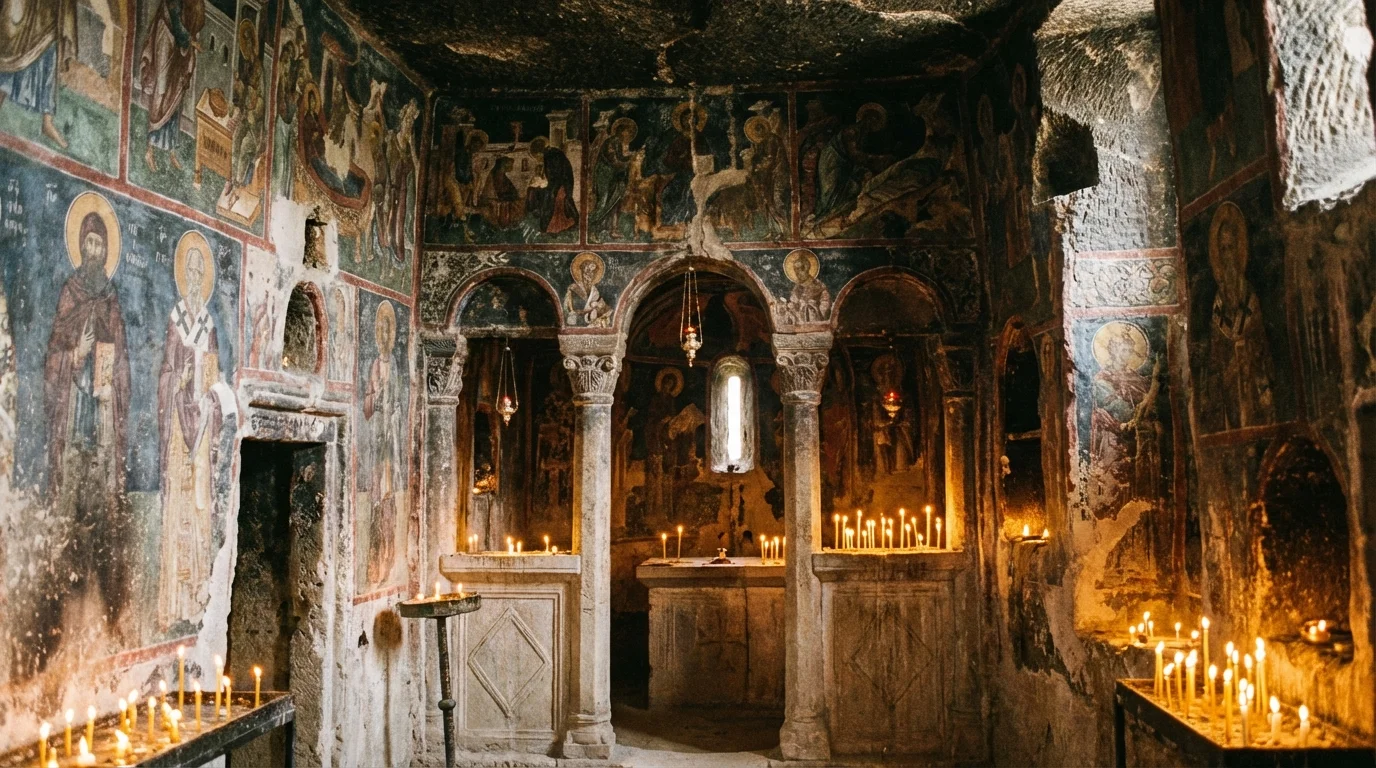
Antakya, in Turkey’s far south near the Syrian border, is ancient Antioch. According to the Book of Acts, this is where followers of Jesus were first called Christians. The Cave Church of St. Peter, carved into Mount Starius, may be one of the oldest church buildings in the world. Early tradition holds that Peter himself established the community here.
Antioch was the third largest city in the Roman Empire and became one of the most important centers of early Christianity. The theological school of Antioch shaped Christian thought for centuries.
Like Tarsus, Antioch is off the standard circuit. It requires planning and a group leader who understands why it matters. But for a church group studying the roots of their faith, there is no substitute for standing in the cave where the name “Christian” was first spoken.
If any of these places speak to what your community is looking for, I would be glad to talk through how they fit into a Turkey itinerary. Every group is different, and the route should reflect your story. You can start a conversation with us at Heritage Tours.
FAQ: Planning a Turkey Heritage Tour Beyond the Famous Sites
What is the Great Synagogue of Edirne and can groups visit? The Great Synagogue of Edirne was one of the largest synagogues in Europe when it was completed in 1909. After decades of disrepair, it was fully restored and reopened in 2015. Group visits are possible but require advance coordination with local community organizations. Heritage Tours handles this as part of itinerary planning.
What is Balat and why does it matter for Jewish heritage tours? Balat is Istanbul’s historic Jewish quarter, where Sephardic families settled after arriving from Spain in 1492. It contains the Ahrida Synagogue (still active, with its famous boat-shaped bimah) and remnants of five centuries of Jewish community life. It offers something the famous Istanbul sites do not: a sense of ordinary, sustained Jewish presence.
What is Tarsus and why is it significant for Christian groups? Tarsus, in southern Turkey, is the birthplace of Paul the Apostle. St. Paul’s Well and remnants of the Roman-era city are accessible to visitors. For church groups, standing in the city where Paul grew up adds a personal, physical dimension to the letters that form so much of the New Testament.
Can Heritage Tours arrange visits to sites outside Istanbul? Yes. Heritage Tours builds custom itineraries across Turkey, including Edirne, Izmir, Tarsus, and Antioch. These sites require advance planning for access and transportation, which is part of what we coordinate for every group.
How do I plan a Turkey heritage tour that goes beyond the standard circuit? Start by telling us which story matters most to your community, whether that is the Sephardic story, the early Christian story, or both. We will build the route around those sites and handle the coordination that makes lesser-known destinations accessible for a group. Reach out through our Turkey destination page to begin.