Why Timing Matters More for Heritage Groups Than Regular Tourists
If you search for “best time to visit Turkey,” every travel site will tell you the same thing: spring and autumn. And for individual travelers, that is fine advice. But for a group leader planning a heritage journey for 20 or 30 congregants, the answer is more specific than that.
You are not just thinking about weather. You are thinking about the Jewish holiday calendar, the church calendar, Ramadan, site access, crowd levels at sacred places where your group needs silence, and the physical reality of walking ancient ruins in Turkish summer heat.
Spring is usually the best time. April and May offer mild weather, manageable crowds, and a sweet spot between the major religious calendars. But let me walk through the full year, because every community’s calendar is different and the right window depends on your congregation, not the guidebook.
Spring (April to May): The Best Overall Window for Groups
April and May are when I send most heritage groups to Turkey, and there are several reasons.
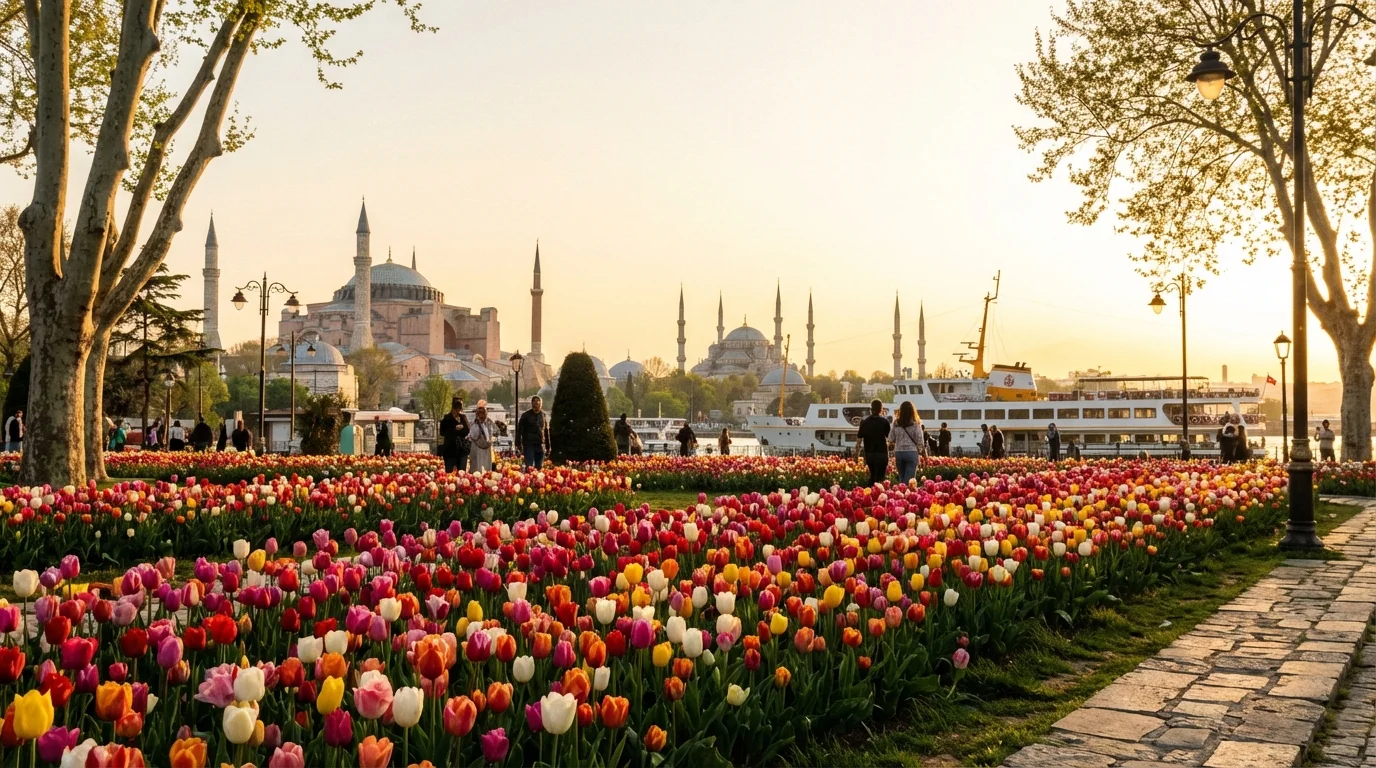
The weather is warm but not hot. Istanbul in April averages 15 to 20 degrees Celsius (roughly 60 to 68 Fahrenheit), perfect for walking the old city, exploring Balat, and spending time at outdoor heritage sites without the fatigue that summer heat brings.
Cappadocia in spring is at its most beautiful. The volcanic landscape turns green, the light is clear, and the balloon flights that many groups add to their itinerary run consistently.
Ephesus in spring is manageable. The marble ruins have almost no shade, and by summer the site becomes genuinely punishing for a group of adults, many of whom may be in their 50s, 60s, or older. In April and May, you can walk the site comfortably and spend real time at the Library of Celsus and the Church of Mary without watching the clock.
The main consideration in spring is Passover (usually in April). Jewish groups will need to avoid travel during the first and last days of Pesach, and kosher-for-Passover meals require additional planning. Heritage Tours factors this into every spring itinerary for Jewish congregations.
Easter (Western and Orthodox dates often differ) also falls in spring and can affect crowd levels at Christian sites, particularly the Hagia Sophia and Cappadocia’s churches. Planning around these dates is part of what we do.
Summer (June to August): What You Need to Know Before You Book
I will be direct about this: summer is difficult for heritage groups in Turkey. Not impossible, but difficult, and group leaders should understand why before committing to July or August dates.
Ephesus in July and August regularly exceeds 35 degrees Celsius (95 Fahrenheit). The site is exposed marble and stone with almost no shade. For a group of 30 people, including members who may have mobility concerns or heat sensitivity, an afternoon at Ephesus in midsummer is not a meaningful heritage experience. It is an endurance test.
Istanbul is more manageable in summer, but the crowds at the Hagia Sophia, the Grand Bazaar, and Sultanahmet are at their peak. The density of tourists changes the atmosphere at heritage sites. Standing in the Hagia Sophia surrounded by hundreds of visitors with selfie sticks is a fundamentally different experience than standing there in April with space to breathe.
Cappadocia in summer is hot during the day but cooler than the Aegean coast, and the underground cities provide natural relief from the heat. If your itinerary is weighted toward Cappadocia and Istanbul with minimal time at Ephesus, summer becomes more feasible.
Some church groups and synagogue groups can only travel in summer because of school schedules and congregational calendars. If that is your situation, we can build an itinerary that works. But we will be honest with you about what to expect, and we will sequence the outdoor sites for the cooler morning hours.
Autumn (September to October): The Second-Best Window
September and October offer many of the same advantages as spring: comfortable temperatures, lower crowds, and good conditions at all three major heritage regions.
September in Istanbul averages 20 to 25 degrees Celsius. Ephesus is warm but no longer brutal. Cappadocia’s landscapes take on autumn colors that photograph beautifully and, more importantly, make the experience of walking through the valleys and cave churches feel reflective rather than rushed.
The Jewish High Holidays (Rosh Hashanah and Yom Kippur, typically in September or early October) are the main scheduling consideration. These are non-negotiable for Jewish groups, and the dates shift each year. Sukkot follows shortly after. Heritage Tours builds autumn Turkey itineraries for Jewish congregations around these dates, not despite them.
For Christian groups, autumn is often ideal. The church calendar is relatively clear, schools are back in session (which means fewer family tourists at heritage sites), and the weather supports full days of walking and exploration.
October is the latest I typically recommend for groups planning to include Cappadocia. By November, temperatures drop and weather becomes less predictable.
Winter (November to March): Istanbul Without the Crowds
Winter in Turkey is not the obvious choice for a heritage group, but for the right itinerary, it has genuine appeal.
Istanbul in winter is cool (5 to 10 degrees Celsius, roughly 40 to 50 Fahrenheit), occasionally rainy, but the absence of summer crowds changes the experience dramatically. You can walk into the Hagia Sophia and actually hear the space. The Balat neighborhood feels like a neighborhood, not a backdrop. Neve Shalom Synagogue visits are easier to coordinate when the city is not at peak tourism.
The trade-off is that Cappadocia and the Aegean coast are significantly colder and less accessible in winter. Ephesus in January is not ideal. Cappadocia can be beautiful under snow, but balloon flights are frequently canceled and outdoor exploration is limited.
For a group focused specifically on Istanbul’s heritage, with a deep dive into the Ottoman Jewish story, the Byzantine and Ottoman Christian layers, and the city’s extraordinary museums and architecture, a winter trip of four to five days can be powerful. It is not for every group, but for the right community, the quiet and intimacy of winter Istanbul is worth considering.
The Jewish Holiday Calendar: Dates to Work Around
If you are a rabbi planning a Turkey heritage journey, the following periods require careful scheduling:
Passover (Pesach). Usually falls in April. The first two and last two days are observed as full holidays. Travel during Chol HaMoed (the intermediate days) is common, but kosher-for-Passover meals must be arranged in advance.
Shavuot. Falls in late May or early June. Two days of full observance.
Rosh Hashanah and Yom Kippur. September or early October. Non-negotiable for observant communities. Sukkot follows, adding another week of consideration.
Sukkot and Simchat Torah. Immediately following the High Holidays. The first two and last two days are full holidays.
Heritage Tours builds every Jewish group itinerary in Turkey around these dates. We confirm the exact Hebrew calendar dates for the travel year early in the planning process and structure the itinerary so that no heritage site visits conflict with holiday observance.
Ramadan: What Faith Group Leaders Need to Know
Ramadan shifts approximately 11 days earlier each year on the Gregorian calendar. In 2026, it falls roughly in February and March. In coming years, it will continue moving through the winter months.
During Ramadan, Muslims fast from dawn to sunset. For heritage groups, this means a few practical things:
Some restaurants, particularly outside Istanbul, may have reduced hours during daytime. Hotels and tourist-oriented restaurants in major cities remain open normally.
The atmosphere at mosques changes. The Hagia Sophia and other active mosques may have adjusted visiting hours or restricted access during prayer times. This is manageable with planning.
The evenings during Ramadan have their own beauty. The iftar (breaking of fast) is a communal event across Turkey, and the energy in cities like Istanbul after sunset is warm and festive. Some group leaders choose to schedule a Ramadan-period trip intentionally because the cultural experience is meaningful.
Heritage Tours monitors the Ramadan calendar and adjusts itineraries accordingly. If your trip overlaps with Ramadan, we will let you know what changes to expect and how to plan around them.
If you are ready to choose your dates, I would be glad to help you find the window that works for your community and the sites you want to visit. You can reach us through our Turkey destination page.
FAQ: When to Visit Turkey for a Heritage Tour
What is the best month to visit Turkey for a heritage tour? April and May are the strongest months for most heritage groups. The weather is comfortable across all three major regions (Istanbul, Cappadocia, Aegean coast), crowds are moderate, and the conditions at outdoor sites like Ephesus are ideal for groups. October is the next best option.
Is summer too hot for visiting Ephesus with a group? Yes, for most groups. Ephesus regularly exceeds 35 degrees Celsius (95 Fahrenheit) in July and August. The site has almost no shade, and for a group that includes older adults, the heat makes it difficult to engage meaningfully with the ruins. If summer is your only option, Heritage Tours schedules Ephesus visits for early morning.
What Jewish holidays should I factor into planning a Turkey trip? Passover (April), Shavuot (May/June), Rosh Hashanah, Yom Kippur, and Sukkot (September/October) all require scheduling consideration. Heritage Tours builds Jewish group itineraries around the Hebrew calendar, confirming exact dates at the start of planning.
How does Ramadan affect visiting heritage sites in Turkey? Ramadan shifts each year. During this period, some mosques (including the Hagia Sophia) may have adjusted visiting hours. Some restaurants outside major cities may reduce daytime hours. Hotels and tourist-area dining remain normal. Heritage Tours adjusts itineraries to account for Ramadan scheduling and can help you decide whether a Ramadan-period trip is right for your group.
When is Istanbul least crowded for heritage tourism? November through March. Winter in Istanbul means fewer tourists, easier access to the Hagia Sophia and other major sites, and a quieter atmosphere in neighborhoods like Balat. The trade-off is colder weather and limited access to Cappadocia and the Aegean coast. For groups focused on Istanbul’s heritage specifically, winter can be an excellent choice.