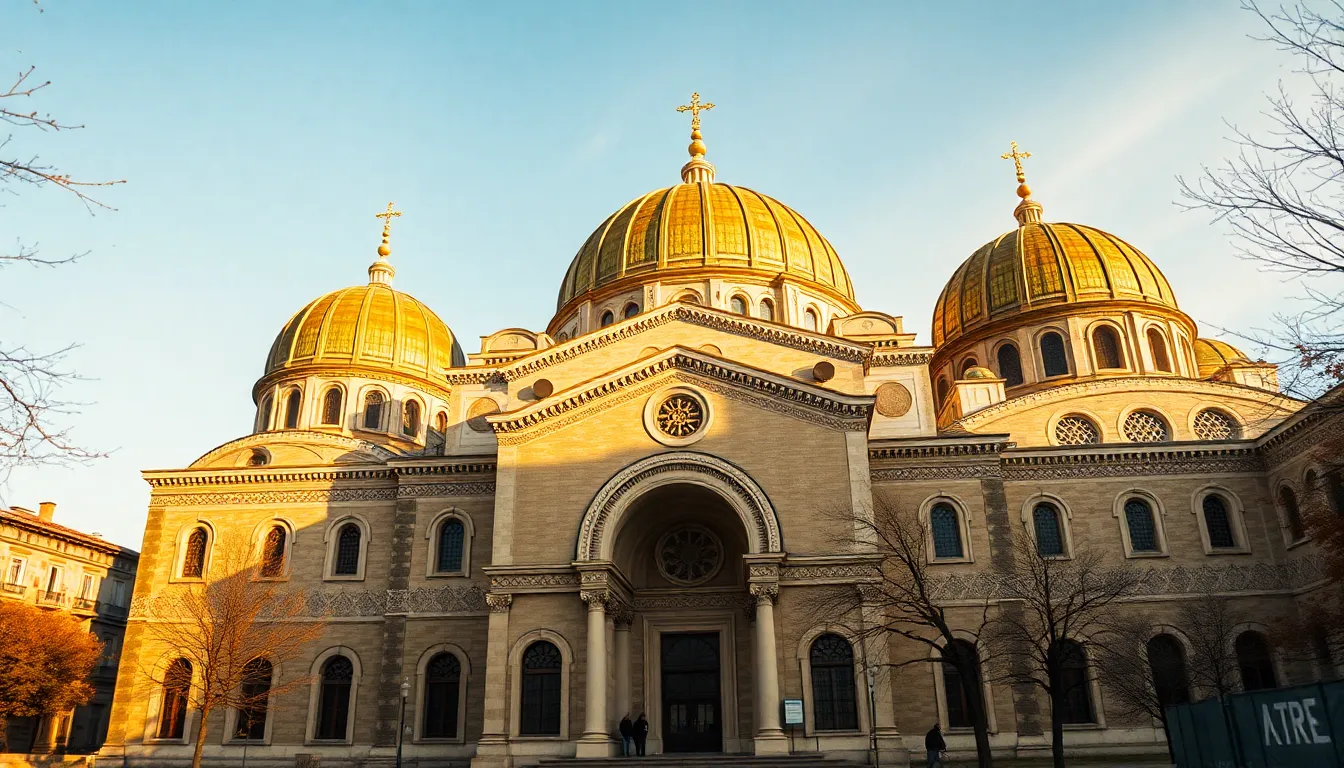
There is a moment I wait for whenever I bring a group to the Chora church in Istanbul. We walk in from a quiet residential street, and the ceiling opens up into a sky of gold, with figures from the Gospels worked in tiny glass tesserae across every surface above. People stop talking. One pastor told me he had spent thirty years preaching the resurrection and had never seen it rendered the way the Byzantines rendered it in the apse there, Christ pulling Adam and Eve up out of their tombs by the wrists. He stood under it for a long time. That is the trip this itinerary is built for.
Byzantium is the empire most Christians inherit without knowing they inherit it. The creeds your congregation recites, the canon of scripture, the shape of the church year, much of it was settled in this corner of the world, in councils and cathedrals that still stand. This itinerary traces that heritage through Istanbul, the imperial capital, and out to Iznik, the small lakeside town that the world once knew as Nicaea. It is built for groups who want the deep theological roots, not just the highlights.
Why Byzantium, and Why This Route
A quick orientation before the days, because Byzantine heritage can feel scattered until you see the logic. Constantinople was the Christian capital of the world for over a thousand years. Its greatest monuments survive inside modern Istanbul, layered under and beside the Ottoman city. And just two hours away sits Nicaea, where the first ecumenical council met in 325 and produced the creed that still defines orthodox Christian belief. Pairing the capital with the council city gives a group both the grandeur and the foundation in one trip. That is the spine of this itinerary.
Day 1: Hagia Sophia and the Heart of the Empire
We begin where Byzantium reached its height. Hagia Sophia was the largest cathedral in the world for nearly a thousand years, and for a Byzantine itinerary it is not a stop, it is the center of gravity. The dome seems to float. The Justinianic engineering that holds it up was not equaled for centuries.
Day 1 is a full, slow morning inside Hagia Sophia, looking specifically for the Byzantine layer. The surviving mosaics, the Deesis in the upper gallery with its tender face of Christ, the imperial portraits, the marble revetments cut to mirror each other. We talk through what it meant to worship here, when the patriarch and emperor stood beneath that dome together. In the afternoon, the Basilica Cistern, the vast underground reservoir that fed the imperial palace, and a walk to the surviving fragments of the Great Palace mosaics nearby.
Group leader note: Hagia Sophia is an active mosque again, so we plan visits around prayer times and brief the group on dress and conduct beforehand. Done right, it is seamless. Done without planning, you arrive during prayer and lose the morning.
Day 2: The Chora Mosaics and the Land Walls
Day two is the one groups remember most, because the Chora is the finest surviving Byzantine interior in the world and far less crowded than Hagia Sophia.
Day 2 is a full morning at the Chora church. The mosaics and frescoes here, from the early fourteenth century, are the high point of late Byzantine art. The cycle of the life of the Virgin, the infancy of Christ, and above all the Anastasis fresco in the side chapel, the resurrection rendered as Christ trampling the gates of death, are worth crossing an ocean to see. We give it real time. A rushed Chora visit is a wasted one.
In the afternoon, the Theodosian land walls, the great triple fortifications that protected the city for a thousand years until 1453. Walking a stretch of these walls, your group understands viscerally why Constantinople held out for so long and what its fall meant. We end at the Church of St. Saviour or one of the converted Byzantine churches scattered through the old city.
Group leader note: The Chora has been under phased restoration in recent years, and access to specific chapels can change. We confirm exactly what is open before your group arrives, so nobody travels expecting the Anastasis and finds it behind scaffolding.
Day 3: Iznik, the Council City of Nicaea
Day three is the heart of why a serious group comes. We drive to Iznik, around two hours from Istanbul including the ferry across the gulf, and a town most tourists never reach.
Day 3 is Nicaea. This small lakeside town hosted the First Council of Nicaea in 325, where the church first gathered from across the empire to confess that Christ is “of one being with the Father,” and the Seventh Council in 787, which settled the question of icons. For a Christian group, standing in the town where the Nicene Creed was born is a profound thing. We visit the Hagia Sophia of Nicaea, the church where the seventh council met, the Roman and Byzantine walls that still ring the town, and the lakeside where, by tradition, the ruins of the council church lie just offshore beneath the water. We read the creed aloud together here. I have never seen that fail to move a group.
Group leader note: Iznik is a long but rewarding day. We build in a relaxed lakeside lunch so the drive does not feel like a grind, and we keep the group together since the town has few facilities for large tours. The reward is a site almost no ordinary itinerary includes.
Day 4: Returning to the City, Byzantine and Ottoman Together
Day 4 brings the group back to Istanbul for the synthesis. We visit a few smaller converted Byzantine churches, then look at how the Ottomans inherited and transformed the Byzantine architectural legacy, with the great mosques of Sinan answering Hagia Sophia across the skyline. An afternoon Bosphorus cruise closes the trip, with the group seeing the city whole, the layers of empire spread across two continents. It is a fitting end, because Byzantium did not vanish so much as it was absorbed, and you can read that absorption in the skyline itself.
I find this final day matters more than groups expect, because it answers a question that hangs over the whole trip. People often arrive thinking of Byzantium as a fallen, finished thing, a lost empire to be mourned. By the end they see something truer. The faith those councils defined is still confessed every Sunday in their own churches. The art of the Chora shaped how the whole Christian world pictured the resurrection. The dome of Hagia Sophia changed architecture permanently, and you can see its descendants in the mosques across the water. Byzantium is not a ruin to visit so much as a root system to trace, and a good closing day helps a group feel that they have been walking among their own inheritance, not someone else’s relics.
Building Your Byzantine Itinerary
This four-day core can stand alone as a focused Byzantine study trip, or it can anchor a longer journey. Many groups pair it with the early Christian heritage of Cappadocia, where the cave churches carry the same Byzantine tradition into the countryside, or with the Seven Churches of Revelation along the Aegean. The fuller country route is in our 12-day Turkey heritage itinerary, and groups wanting to push further into the ancient Christian east will want our eastern Turkey itinerary. If your group has only a long weekend, our weekend Istanbul itinerary covers the Byzantine capital alone. The full picture is on our Turkey heritage page.
One thing worth knowing as you plan: with Heritage Tours, the group leader travels free when you bring fifteen or more participants. For a pastor or scholar leading a study group, that is worth factoring in early.
FAQ: Planning a Byzantine Heritage Trip
What are the most important Byzantine sites to see in Turkey?
Hagia Sophia and the Chora church in Istanbul are the two essential interiors, the first for its scale and engineering, the second for the finest surviving Byzantine mosaics anywhere. Beyond those, the Theodosian land walls and the council city of Nicaea at Iznik complete the picture. Together they cover the empire’s grandeur, its art, its defense, and its foundational theology.
Why visit Iznik on a Byzantine itinerary?
Because Iznik is ancient Nicaea, where the First Council met in 325 and produced the Nicene Creed, and where the Seventh Council settled the icon question in 787. For a Christian group, standing in the town where the creed your congregation still recites was written is one of the most meaningful experiences a heritage trip can offer. Almost no standard itinerary includes it.
How many days does a Byzantine heritage trip need?
Four days covers the core well, two in Istanbul, a full day at Iznik, and a synthesis day. If you want to add the Byzantine churches of Cappadocia or the Aegean coast, plan for eight to twelve days. The four-day version stands alone as a focused study trip.
Is the Chora church open to visitors?
It has been under phased restoration and reconverted to a mosque in recent years, so access to specific chapels can vary. We confirm exactly what is open before your group travels, so nobody arrives expecting the great Anastasis fresco and finds it behind scaffolding. This is the kind of detail that makes or breaks a specialist trip.
Can Heritage Tours arrange a scholar-led Byzantine study trip?
Yes. For groups wanting real theological and art-historical depth, we arrange specialist guides and structure the pace for study rather than sightseeing. This itinerary suits seminaries, clergy study groups, and serious lay congregations equally. Start the conversation here.
If you want to give your group the deep roots, the councils and the cathedrals where so much of the faith was settled, I would be glad to help you shape it. You can learn how the group experience works on our group heritage tours page, and reach out whenever you are ready.
Contact us to start planning.