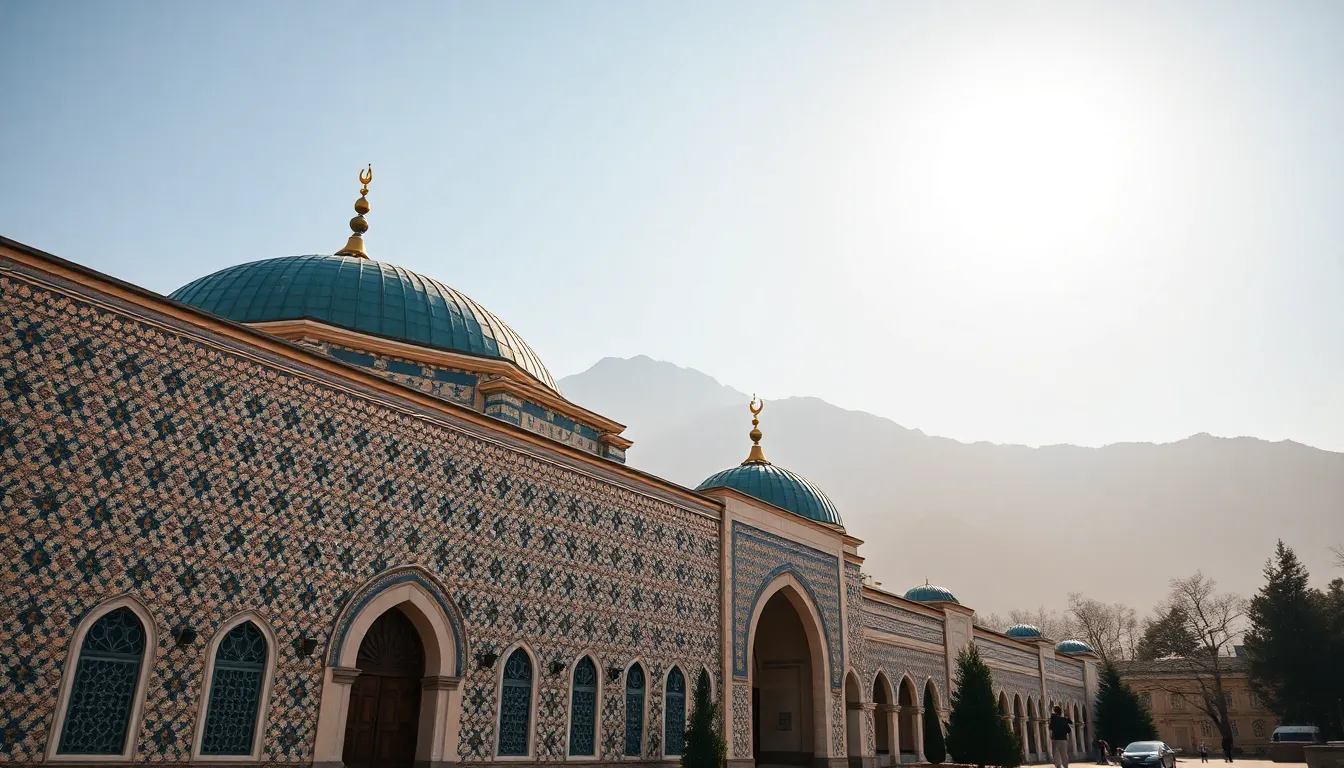
I brought a group to Bursa once on the way to somewhere else, almost as an afterthought, and it turned into one of the stops they talked about most. We were standing inside the Green Mosque, looking up at the tilework, when a rabbi in the group said, “This is where it all began.” He meant the Ottoman Empire, the empire that would later open its doors to the Jews expelled from Spain. Bursa is where that empire was born, and once you understand that, the city stops being a side trip and becomes a key to the whole Turkish story.
Bursa sits at the foot of Mount Uludag, an easy distance from Istanbul, and most heritage travelers skip it. I think that is a mistake. This was the first capital of the Ottoman Empire, it holds a quiet but real Jewish heritage, and underneath the Ottoman city run older Byzantine and Roman layers. For a group that wants to understand how the three-faith story of Turkey took shape, Bursa is where you go to find the beginning of the Ottoman chapter. Let me show you what is here.
Bursa: Where the Ottoman Empire Began
In the early fourteenth century, the Ottomans, then a small frontier power, captured Bursa and made it their capital. For decades, before they ever took Constantinople, Bursa was the heart of the rising empire. The early sultans are buried here, and the mosques and tombs they built set the pattern for everything Ottoman architecture would become.
This matters for heritage groups, especially Jewish ones, because the Ottoman Empire is the power that welcomed the Sephardic Jews after Spain expelled them in 1492. The tolerance that defined that welcome had its roots in the early Ottoman state that took shape right here in Bursa. When you stand in this city, you are at the source of the empire whose policy would later shelter tens of thousands of Jewish families. I make that connection explicit with groups, because it ties Bursa directly to the larger story they came to Turkey to follow.
The Green Mosque and Green Tomb
The two sites that anchor Bursa are the Green Mosque and the Green Tomb, both from the early fifteenth century. The Green Mosque is named for the blue-green tiles that line its interior, and the craftsmanship is extraordinary. Across from it, the Green Tomb holds the sarcophagus of Sultan Mehmed I, its exterior covered in turquoise tile that glows against the hillside.
These are working religious sites and revered monuments, so I prepare groups for modest dress and quiet. But beyond the rules, these buildings reward slow looking. The tilework here is some of the finest in the Islamic world, and it gives your group a sense of the artistry that the early Ottomans poured into their new capital.
The Grand Mosque, the Ulu Cami, is the other essential stop, a vast building with twenty domes and enormous calligraphy panels covering the walls. It is one of the most important early Ottoman mosques anywhere.
The Jewish Heritage of Bursa
Bursa’s Jewish history is quieter than Istanbul’s or Izmir’s, but it is real and it is old. Jews lived in Bursa long before the Ottomans arrived, and the community grew after the Sephardic arrivals of the fifteenth and sixteenth centuries. The old Jewish quarter, the Kuruçeşme area, was home to synagogues that served the community for centuries.
The Gerush Synagogue, whose name refers to the expulsion from Spain, is the heart of this heritage. Built by Sephardic exiles, it carried the memory of the lost homeland in its very name. The community in Bursa has dwindled greatly over the years, as it has across much of Turkey, but the synagogue and the quarter preserve the story.
For a rabbi bringing a group, Bursa offers something Istanbul cannot: a smaller, more intimate window into how Sephardic communities settled and survived in the Ottoman interior, away from the capital. Visiting synagogues like the Gerush usually requires advance coordination with the local community, which is something we arrange ahead of time. I always tell leaders that these visits, when arranged with care, are among the most moving moments of a Turkey journey.
The Byzantine and Roman Layers
Before it was Ottoman, Bursa was Byzantine, and before that Roman. The city was known in antiquity as Prusa, and it sat within the Christian Byzantine world for centuries. Traces of that older city survive in the walls and foundations beneath the Ottoman layer.
Not far from Bursa, the nearby town of Iznik, ancient Nicaea, holds enormous Christian significance. Nicaea is where the First Ecumenical Council met in 325 AD and produced the Nicene Creed, recited in churches around the world to this day. A second council met there in 787. For a Christian group, a day trip from Bursa to Iznik to stand in the town where the creed was written is a profound experience. The ancient walls, the lakeside setting, and the church remains make it well worth the drive.
This is what makes Bursa work as a heritage stop. In one region you have the birth of the Ottoman Empire, a Sephardic Jewish story, and a short drive to the birthplace of the Nicene Creed. Three faiths, layered close together.
Practical Orientation for Group Leaders
Here is how I plan Bursa for a group.
Getting There
Bursa is reachable from Istanbul by road and by a fast ferry across the Sea of Marmara, which cuts the journey nicely and gives groups a scenic crossing. Most groups visit Bursa as an extension from Istanbul rather than flying in separately.
How Much Time
One full day covers the core Ottoman sites: the Green Mosque, the Green Tomb, the Grand Mosque, and the old quarters. Add a second day if you want to include the Jewish heritage sites with proper coordination, or a day trip to Iznik for the Nicaea connection. For a group doing all three layers, two days in the region is ideal.
Fitting Bursa Into a Route
Bursa pairs most naturally with Istanbul, deepening the Ottoman and Jewish story that begins in the capital. For groups continuing to the Aegean, Bursa sits on the way south. Our Turkey heritage travel guide lays out how Istanbul, Bursa, and the wider regions connect.
Atmosphere
Bursa is a green, comfortable city, less hectic than Istanbul, with Mount Uludag rising behind it. Groups find the slower pace a relief after the capital. It is a good place to breathe and reflect partway through a journey.
FAQ: Heritage Travel to Bursa
Why is Bursa important for Jewish heritage groups?
Bursa was the first capital of the Ottoman Empire, the power that welcomed the Sephardic Jews expelled from Spain in 1492. The city also held its own Jewish community for centuries, centered on the old quarter and the Gerush Synagogue, whose name recalls the expulsion. It offers a smaller, more intimate window into Sephardic life in the Ottoman interior.
What are the main Ottoman sites to see in Bursa?
The Green Mosque and the Green Tomb, both early fifteenth century, are the anchors, famous for their turquoise tilework. The Grand Mosque, the Ulu Cami, with its twenty domes and giant calligraphy panels, is the third essential stop. Together they show the artistry of the early Ottoman capital.
Can we visit Nicaea from Bursa?
Yes. The town of Iznik, ancient Nicaea, is a day trip from Bursa and is where the First Ecumenical Council wrote the Nicene Creed in 325 AD. For a Christian group, standing in the town where the creed was composed is a powerful experience, and the ancient walls and lakeside setting make it well worth the drive.
How do we arrange to see the synagogues?
Visiting Bursa’s synagogues usually requires advance coordination with the local Jewish community, which we handle as part of planning your itinerary. These visits need to be arranged ahead of time, and when they are set up with care, they are often among the most meaningful moments of the whole journey.
Do group leaders travel free to Bursa with Heritage Tours?
Yes. With 15 or more participants, the group leader travels free on all Heritage Tours itineraries in Turkey, including Istanbul programs extended to Bursa and Iznik. This is our standard practice, so the spiritual leader can focus on guiding the group.
If you want your group to understand where the Ottoman story began, and to find the Jewish, Christian, and Byzantine layers gathered close together, Bursa belongs on your itinerary. It rewards the groups willing to step off the usual trail. You can see how we shape these trips on our Turkey heritage page or learn how the group experience works on our group heritage tours page.
Contact us whenever you are ready to start planning.