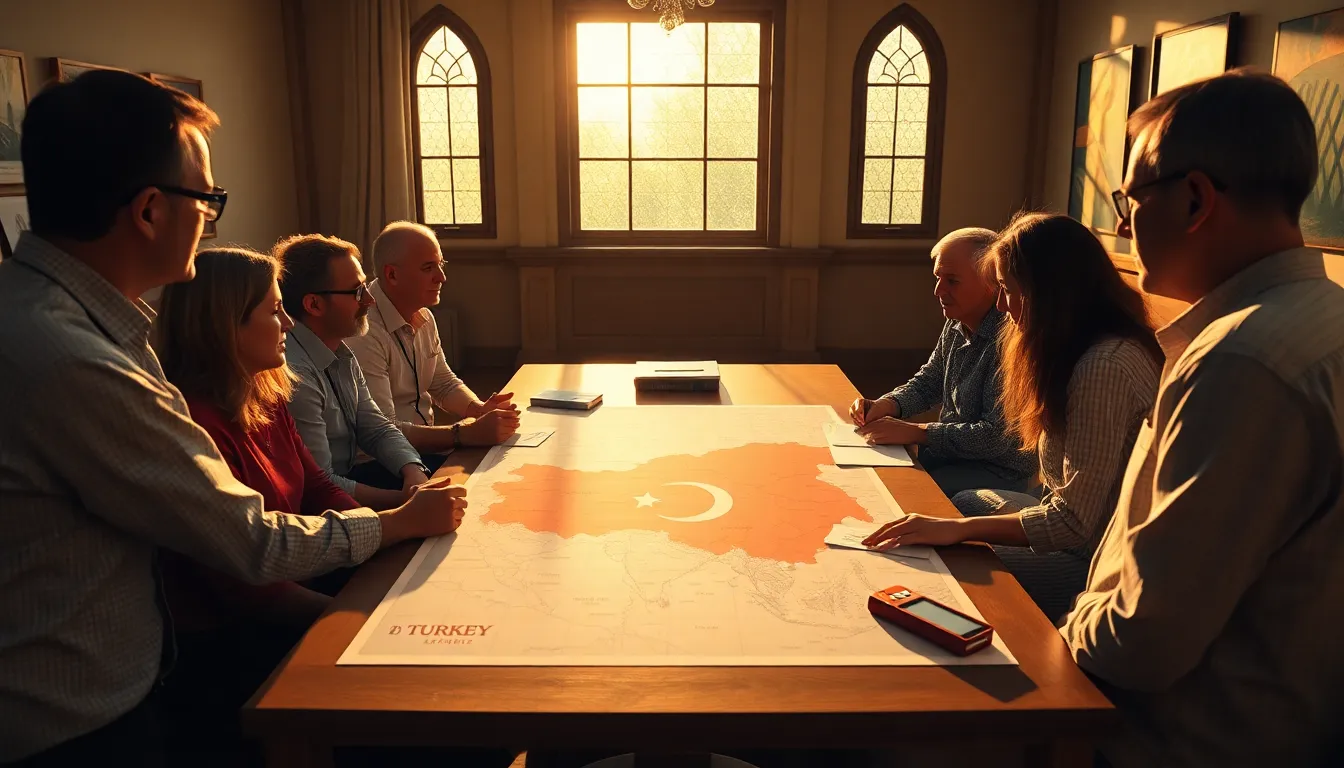
Every congregational trip I have ever helped build started the same way: somebody stood up front and said the word “Turkey” out loud, and a few heads turned. That is the whole beginning. Not a brochure, not a budget spreadsheet, just a leader naming the idea in a room full of people who trust them. What happens between that first mention and the morning your group is standing in the departure line is a process, and it is a process you can run without losing your mind.
I have watched leaders make this harder than it needs to be by trying to figure out everything at once. You do not have to. A congregation trip comes together in stages, each one unlocking the next. Here is the path from the first sermon mention to wheels up, the way I walk leaders through it.
Stage One: Plant the Idea Before You Build Anything
Do not start with logistics. Start with desire. Before you price a single hotel, you need to know whether your congregation actually wants to go.
Name it from the front, more than once. Mention the idea in a sermon, tie it to a passage your people already love. If you are following Revelation or Paul’s missionary journeys, the Seven Churches and Ephesus give you a natural hook. Let it sit for a few weeks. Watch who comes up to you afterward. The people who corner you in the lobby asking “are you serious about Turkey?” are your core group, and they will become your recruiters.
This stage costs nothing and saves you everything. If the idea generates real heat, you build. If it lands flat, you learn that before you have committed a deposit. I have seen leaders skip this and start booking, only to scramble for travelers later. Plant first.
Stage Two: Lock the Shape of the Trip
Once you know there is appetite, decide the basic shape. You do not need a day-by-day itinerary yet. You need four things settled.
Dates. Pick a window and a length. Spring, especially April and May, is the most popular season for heritage groups, and it books out. Eight to eleven days suits most first congregational trips. Choose dates far enough out that working people can request the time and savers can save. Nine to twelve months ahead is the sweet spot.
Approximate group size. You do not need a final count, just a working number. This matters because of a real threshold: with fifteen or more participants, the group leader travels free with Heritage Tours, and that changes your budget math considerably. More on that below.
Rough budget per person. Get a per-person estimate early so you can communicate an honest number to your congregation. People can plan around a real figure. They cannot plan around “we will let you know.”
The spiritual purpose. Discipleship, evangelism, a thank-you to long-serving members. Name it, because it shapes where you pause and what you build the trip around.
With those four settled, you have something concrete to bring to your board and your operator. I cover how the regions sequence together in the Turkey group heritage tour planning guide, which is worth reading before this conversation.
Stage Three: Bring In Your Operator and Build the Itinerary
This is where you stop carrying it alone. A heritage operator turns your shape into a real, costed itinerary, and just as importantly, handles the parts you should never try to manage yourself.
What the operator builds: the day-by-day route, internal flights between Istanbul, Izmir, and Cappadocia, ground transport, licensed guides who know both the archaeology and the scripture, hotels at group rates, and meals. What you keep: the spiritual leadership, the devotionals, the on-site readings, the pastoral care.
When you bring an operator in, vet them on whether they ask about your congregation before they pitch a package. The right operator wants to know who your people are and what story you are telling. The wrong one leads with their standard tour. If you are leading a first trip, the companion guide on how a pastor leads a first heritage trip walks through what to hand off and what to keep.
Stage Four: Open Registration and Collect Deposits
Now you go public to the whole congregation. An itinerary and a real price turn interest into commitment.
Hold an information night. Show the route, walk through the sites, name the price, and answer questions in the room. Bring your core group from stage one, because their enthusiasm does more recruiting than any slide you put up. Then open registration with a deposit.
The deposit is the moment the trip becomes real. A modest, refundable-up-to-a-date deposit separates the people who are coming from the people who are interested. Set a registration deadline that gives your operator the lead time they need to lock flights and hotels, usually several months before departure. Communicate the payment schedule clearly: deposit now, balance in installments, final payment by a set date.
This is also where the free-leader benefit pays off in plain numbers. Once you cross fifteen participants, your seat is covered, which means the budget you present to the board does not have to absorb the leader’s cost. That makes the whole trip easier to approve and easier to pitch.
Stage Five: Manage the Run-Up to Departure
With your group registered, the months before departure are about preparation, not scrambling.
Collect passports and confirm everyone’s documents are valid well past the travel dates. Hold a pre-trip meeting to set expectations on pace, walking, weather, and what to pack. Send a reading plan so your people arrive already inside the story. If you are following the Seven Churches, ask everyone to read Revelation 2 and 3 before they board. The trip lands deeper when people have done the reading.
Your operator handles the moving parts during this window: confirming flights, finalizing site access where advance coordination is needed, locking meal arrangements for any dietary needs. Your job is your people. Keep them informed, keep them excited, and keep the logistics off their plates and yours.
How the Free Leader Benefit Shapes the Whole Budget
It is worth pulling this out on its own, because it affects every stage above. With Heritage Tours, when you bring fifteen or more participants, the group leader travels free. The full itinerary is covered: flights, hotels, meals, and all site visits.
For a congregation trip, this does two things. It removes a hard line item from the budget you present to your board, and it lets the leader focus entirely on leading rather than on the cost of being there. You build the budget around the group rate, your seat is included, and the conversation with your finance committee gets a great deal simpler.
You can see how the group experience is structured on our group heritage tours page, and the full regional picture lives on our Turkey destination page.
FAQ: Building a Congregation Trip to Turkey
Where do I actually start when planning a church group trip to Turkey?
Start by planting the idea, not by booking. Name the trip from the front, tie it to a passage your people love, and watch who responds. The members who seek you out afterward are your core group and your recruiters. Once you know there is genuine interest, you settle dates, group size, budget, and purpose, then bring in an operator to build the itinerary.
How far in advance should I begin building the trip?
Give yourself nine to twelve months from idea to departure. That allows time to recruit your group, let working members request time off and savers save, secure group hotel rates and internal flights at good prices, and coordinate any site access that needs advance arrangement. Spring departures book out early, so plan accordingly.
How do deposits and payment schedules usually work?
Open registration with a modest deposit that separates committed travelers from interested ones, refundable up to a set date. Then collect the balance in installments, with final payment due several months before departure. Communicate the full schedule up front so your people can plan around real numbers.
Does the group leader travel free, and how does that affect the budget?
With Heritage Tours, when you bring fifteen or more participants, the leader’s full itinerary is covered, including flights, hotels, meals, and all site visits. For a congregation trip, this removes a line item from the budget you present to your board and lets you build the cost around the group rate, which makes the trip far easier to approve.
What do I handle, and what does the operator handle?
You keep the spiritual leadership: devotionals, on-site readings, services, and pastoral care, plus recruiting and shepherding your people. The operator handles the itinerary, internal flights, ground transport, licensed guiding, hotels, meals, and any site access that needs advance coordination. That division lets you lead well without drowning in logistics.
If you are ready to take the trip from a sermon mention to a real itinerary, I would welcome the chance to help. The path is clear, the stages build on each other, and the logistics are ours to carry. Start on our Turkey destination page or read the companion planning guide.
Contact us whenever you are ready to begin.