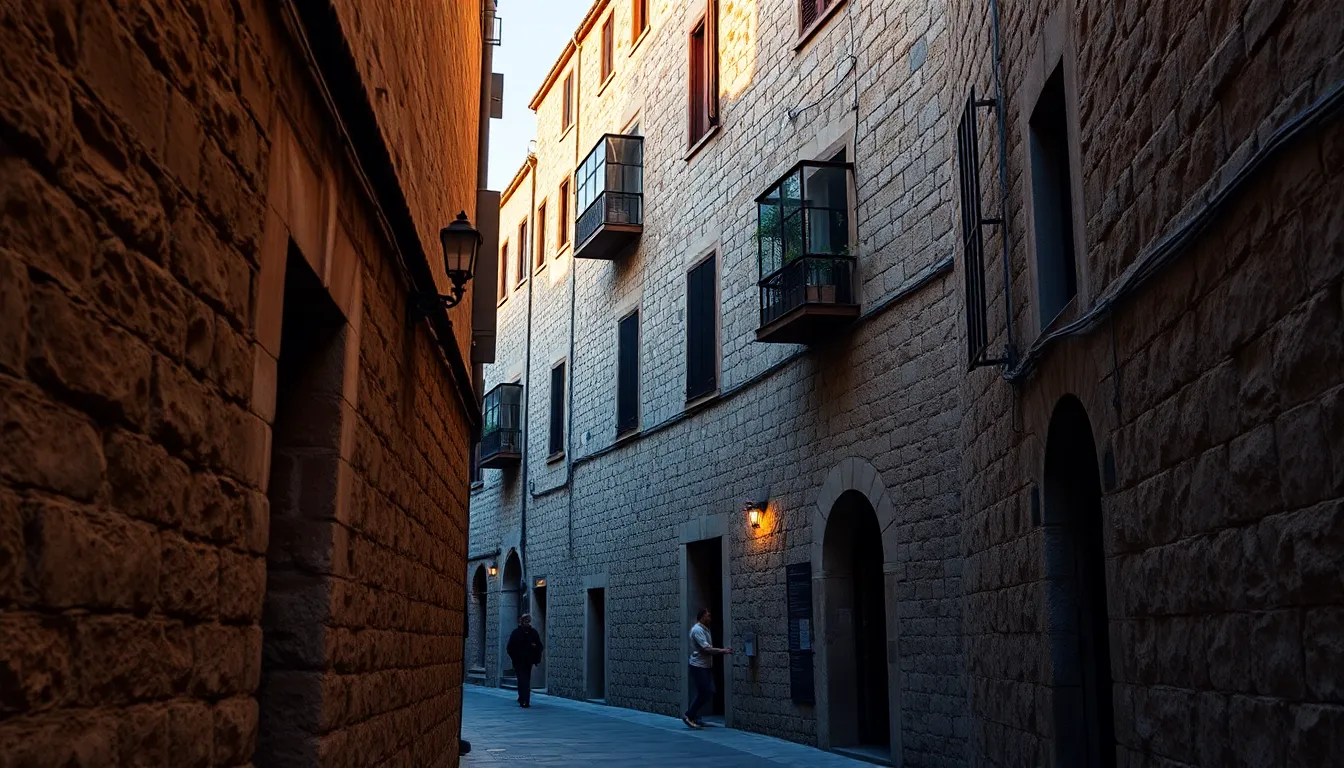
Almost every rabbi who calls me about a Sephardic heritage trip asks the same question within the first five minutes: “Should we go to Spain or Portugal?” It is a fair question, and I never give a quick answer, because the honest answer depends on what you want your community to walk away carrying.
Both countries hold the Sephardic story. The expulsions, the forced conversions, the centuries of secret faith, the slow return. But they hold that story differently, and the difference is not a small one. I have taken groups to both, sometimes on the same trip, and I want to lay out the real comparison so you can decide what fits your congregation.
The Two Stories Are Not the Same Story
People assume Spain and Portugal tell a single Iberian Jewish history. They do not.
Spain is the country of the 1492 expulsion. It is the grander, older, more documented chapter. Toledo, Girona, Córdoba, Seville, these were among the great centers of Jewish life in medieval Europe. Maimonides was born in Córdoba. The golden age of Sephardic scholarship, poetry, and philosophy happened on Spanish soil. When your group walks the Juderia in Toledo or stands in the Santa María la Blanca synagogue, they are standing in the ruins of a civilization at its height.
Portugal is the country of what came after. The Jews expelled from Spain in 1492 fled west into Portugal, and four years later Portugal forced them to convert. What Portugal preserves, more than any place on earth, is the story of the crypto-Jews, the people who kept the faith in secret for five hundred years. That story did not end in a museum. In Belmonte, it is still alive.
So the first question is not “which country” but “which chapter.” Spain gives you the height of Sephardic civilization. Portugal gives you its survival.
What Spain Offers a Heritage Group
Spain has scale and grandeur, and for some communities that is exactly right.
The synagogues that survive in Toledo and Córdoba are architecturally extraordinary. The Jewish quarters are larger, better preserved as tourist sites, and more thoroughly interpreted. If your community wants to understand the intellectual and spiritual achievement of Sephardic Jewry, Spain is where that achievement lived.
Spain is also easier to travel as a heritage circuit. The sites are spread across well-connected cities, the tourism infrastructure is mature, and a group can move between Toledo, Córdoba, Seville, and Girona on good roads with established kosher options in the larger cities. For a first Iberian trip with a group that wants breadth, Spain delivers more named, recognizable sites.
The trade-off is that Spanish Sephardic heritage is largely a heritage of absence. The communities were destroyed or driven out. What you visit are the beautiful remains of something that ended. That can be deeply moving. But it is contemplation of a past, not an encounter with a present.
What Portugal Offers That Spain Cannot
This is the section where I have to be direct, because it is the strongest reason to choose Portugal.
Portugal has a living crypto-Jewish community. Belmonte is a small town in the interior where descendants of converts practiced Judaism in secret for roughly five hundred years, revealed themselves in the twentieth century, and built a synagogue in 1996. They are not a display. They are families who worship today.
For a Jewish group, standing in Belmonte is a different spiritual event than standing in Toledo. In Toledo you mourn what was lost. In Belmonte you meet what survived. I have watched congregants weep in both places, but the weeping is different. One is grief. The other is something closer to wonder.
Portugal also gives you Tomar, with its small preserved medieval synagogue, and Porto, where the Kadoorie Mekor Haim synagogue and the recent revival of Jewish life add another living layer. The Portuguese route is smaller and more intimate than the Spanish one, and that intimacy is the point.
The one honest caution: Belmonte is a community, not an attraction. Visiting well requires relationships and advance coordination, which is exactly why working with an operator who has those relationships matters here more than almost anywhere. I wrote about this in detail in our piece on private versus group touring in Portugal.
The Practical Comparison: Logistics, Pace, and Cost
Let me set the spiritual question aside for a moment and talk logistics, because they matter.
Trip Length and Pace
A meaningful Spain Sephardic circuit usually wants 8 to 10 days to cover Toledo, Córdoba, Seville, and Girona without rushing. Portugal’s core Sephardic route, Lisbon, Tomar, Belmonte, Porto, fits comfortably in 6 to 8 days. If your congregation has limited vacation time, Portugal is the tighter, more focused journey.
Kosher and Logistical Infrastructure
Spain’s larger cities have more established kosher dining and a longer history of hosting Jewish groups. Portugal’s interior, where Belmonte sits, has very little. This is solvable with planning, but it is real. A group with strict kashrut needs will find Spain’s cities simpler, while Portugal requires more coordination from the operator.
Cost
The two are broadly comparable per person, but Portugal’s tighter geography can mean fewer travel days and slightly lower total cost for a focused trip. And on the cost question that matters most to you as a leader: with Heritage Tours the group leader travels free with 15 or more participants, in either country. That holds whether you choose Lisbon and Belmonte or Toledo and Córdoba.
So Which One Should You Choose?
Here is how I actually counsel group leaders.
Choose Spain if your community wants breadth, grandeur, and the great historic centers of Sephardic civilization, and if this is a first, sweeping introduction to the Iberian Jewish story. Choose Portugal if you want depth over breadth, a living encounter over a historic one, and the singular experience of Belmonte that no other country can offer.
And know that for many groups the real answer is both. A combined Iberian journey, Spain for the height and Portugal for the survival, tells the whole arc of the story from golden age to expulsion to secret faith to return. It asks for more days and more budget, but it is the most complete version of this trip. You can see how we structure the Portuguese side on our Portugal destination page, and explore how the group format works on our group heritage tours page. If you are deciding between a single focused country and a broader trip, our comparison of a Lisbon-only versus full-country Portugal trip may help.
FAQ: Portugal vs Spain for Sephardic Heritage
Is Portugal or Spain better for a Sephardic heritage trip?
Neither is simply better. Spain holds the great historic centers of Sephardic civilization, like Toledo and Córdoba, and tells the story of the golden age and the 1492 expulsion. Portugal holds the story of the crypto-Jews who kept the faith in secret for five hundred years, including the living community at Belmonte. Spain gives you breadth and grandeur. Portugal gives you a living encounter. The right choice depends on whether your community wants to contemplate a past or meet a present.
What makes Belmonte unique compared to Spanish Sephardic sites?
Belmonte is a living Jewish community descended from crypto-Jews who practiced in secret for roughly five hundred years and built a synagogue in 1996. Spanish Sephardic sites are beautifully preserved but are remains of communities that were destroyed or expelled. Belmonte is families worshipping today, which makes it a fundamentally different spiritual experience than visiting historic ruins.
Can we combine Spain and Portugal in one heritage trip?
Yes, and for many groups it is the most complete version of the journey. A combined route tells the full arc: Spain for the height of Sephardic civilization, Portugal for the expulsion’s aftermath and the survival of secret faith. It requires more days, typically 12 to 14, and a larger budget, but it leaves nothing of the story untold.
Does the group leader travel free in both countries?
Yes. With Heritage Tours, the group leader travels free with 15 or more participants on either a Spain or Portugal heritage tour, and on a combined Iberian itinerary as well. This applies to the rabbi or community leader who organizes the trip.
Which trip is easier for a group with strict kashrut needs?
Spain’s larger cities have more established kosher dining and a longer history of hosting Jewish groups, so it is logistically simpler for strict kashrut. Portugal’s interior, where Belmonte sits, has very little kosher infrastructure, so it requires more coordination from the operator. Both are workable with proper planning, but Spain asks less of the logistics in this respect.
If you are weighing Spain against Portugal for your community’s Sephardic journey, that conversation is one of my favorites to have. The right answer is always specific to your people, your calendar, and the story you want them to carry home. Contact us and let’s think it through together.