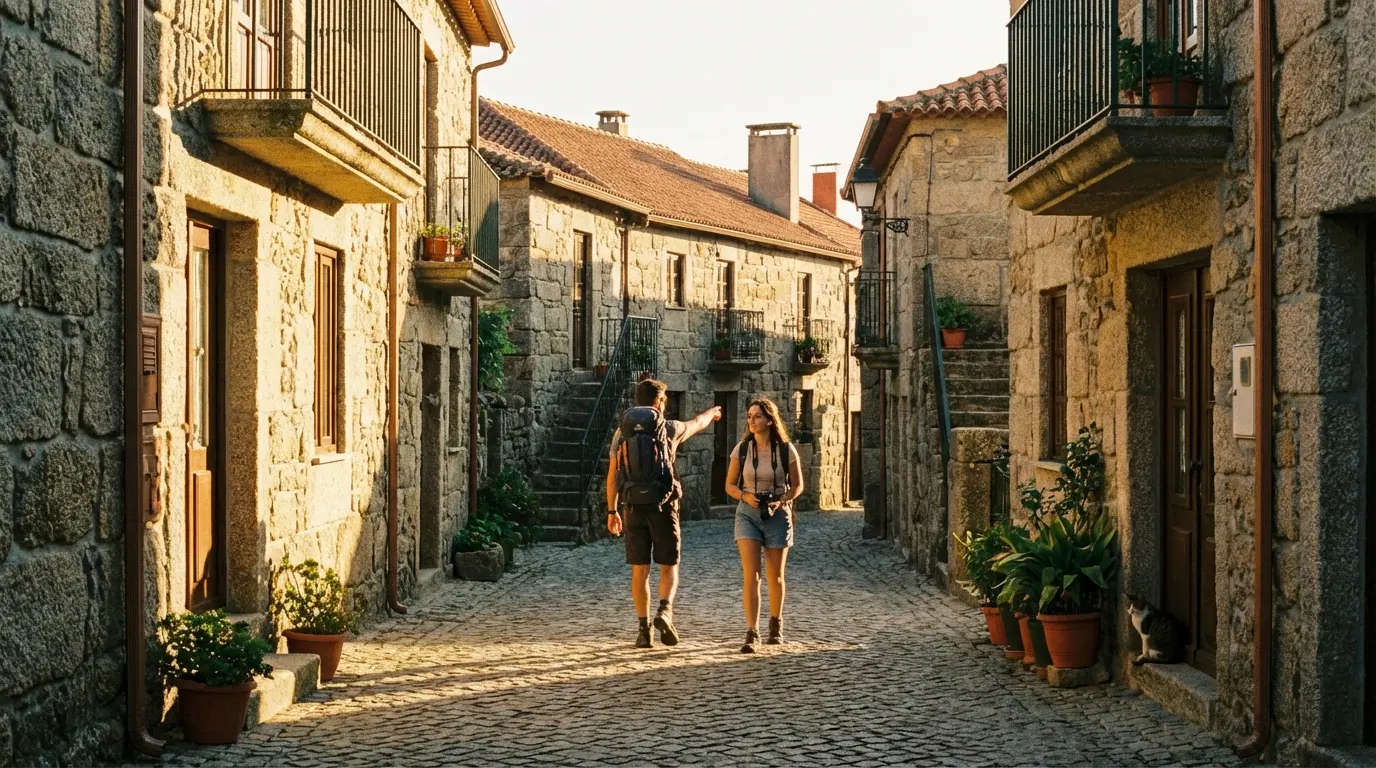
What “Private” and “Group” Actually Mean Here
Before we compare anything, let me clarify what these terms mean in the context of heritage travel, because they do not mean the same thing as they do in general tourism.
A group heritage tour means a community, typically a congregation or faith group of 15 to 40 people, traveling together under the guidance of their own spiritual leader. The rabbi or pastor shapes the itinerary with a heritage tour operator, and the operator handles transportation, hotels, local guides, and site access. The group travels as a unit, on a schedule designed for them.
A private tour means a smaller party, often a family or a few couples, traveling on their own customized schedule with a private guide and driver. There is no group dynamic. The pace is entirely yours.
Both are valid. The question is which structure serves your community and your goals better for this particular trip.
The Case for a Dedicated Group Heritage Tour in Portugal
If you are a pastor or rabbi considering bringing your congregation to Portugal, a group tour has advantages that go beyond cost.
The first is shared experience. When your group stands together in Belmonte’s synagogue, or walks the plaza at Fatima in the early morning, the experience is communal. People process what they see differently when they can talk about it with their community that evening at dinner. I have watched groups come back from Portugal with a shared vocabulary, a set of stories they all carry, and that shared memory strengthens the community in ways that individual travel simply cannot.
The second is access. Portugal’s heritage sites in the interior are not set up for independent visitors in the way that Lisbon and Porto are. Belmonte does not have a tourist information center. The synagogue does not have posted visiting hours for walk-ins. An operator with existing relationships in these communities can arrange access, schedule meetings with community members, and ensure that the visit is both meaningful for your group and respectful toward the people who live there.
The third is that someone else handles the parts that are genuinely difficult. Coordinating transport through the Portuguese interior for 20 or 30 people, booking kosher meals in towns that do not have kosher restaurants, arranging Mass attendance at Fatima during peak season, these are real challenges, and they are not the things a spiritual leader should be spending their energy on during a heritage trip.
When a More Private Experience Makes Sense
A private tour is the right choice in certain situations, and I want to be honest about that.
If your group is very small, say four to eight people, a full group tour structure may not make sense financially or logistically. A private tour with a dedicated guide and driver allows a small party to move at their own pace and to linger at the sites that matter most to them without being tied to a group schedule.
If your interests are very specific, a private tour offers more flexibility. A family tracing Sephardic ancestry through specific towns in the Portuguese interior, for example, may need to visit archives, municipal records offices, or meet with local historians on a schedule that would not fit a larger group.
If mobility is a concern, a private arrangement allows the guide to adjust the pace, modify walking routes, and choose accommodations based on specific needs.
The trade-off is straightforward: you gain flexibility and personal attention, and you give up the communal experience and the cost efficiencies that come with a larger group.
The Economics: Why Group Often Costs Less (Especially for the Leader)
I want to address cost directly, because it is a real factor in planning a heritage trip.
Group tours benefit from economies of scale. Hotels, transport companies, and local guides offer per-person rates that decrease as the group size increases. A group of 20 people traveling together will almost always pay less per person than four separate groups of five traveling on the same route.
But the most significant economic factor for group leaders is this: with Heritage Tours, the group leader travels free when the group has 15 or more participants. That means the pastor or rabbi who organizes the trip, does the work of building interest in the congregation, coordinates with the families, pays nothing for their own travel.
This changes the comparison fundamentally. If you are a leader weighing whether to organize a group trip or to go privately with a small party, the group option means your own costs are covered. For many leaders, that is the difference between going and not going.
The per-person cost for group participants is typically lower than what they would pay organizing something comparable independently, once you factor in the coordination of interior transport, guided access to sites like Belmonte, and the time saved by not having to plan the route themselves.
The Belmonte Factor: Why Operator Relationships Matter in Portugal
This is the section I consider most important, because it is specific to Portugal and it illustrates something about heritage travel that general travel advice does not cover.
Belmonte is home to a community of descendants of crypto-Jews who practiced their faith in secret for approximately five hundred years. In 1996, they built a synagogue. Today, they are a small, living Jewish community in a remote hilltop town in the Portuguese interior.
They are not a tourist attraction. They are families. They have a synagogue that is a house of worship, not a museum. They have experienced, over the past two decades, a growing number of visitors who arrive unannounced, sometimes in large groups, expecting to be welcomed on demand.
An operator with an established relationship with the Belmonte community can arrange a visit that is welcomed because it has been coordinated in advance. The community knows you are coming. They may make a member available to speak with your group. The visit happens on terms that respect their time and their space.
An independent traveler or a tour operator without these relationships may arrive and find the synagogue closed, or open but without anyone to provide context. Worse, they may show up with a group of twenty and create exactly the kind of intrusive visit that strains the community’s willingness to welcome future groups.
This is not a minor point. It is the practical reality of heritage travel in places where the heritage is not a building but a community. Heritage Tours has maintained relationships in Belmonte for years, and that investment of time and trust is part of what we offer. It is not something that can be replicated by reading a guidebook.
If Portugal is your destination and Belmonte is on your itinerary, this single factor may be the strongest argument for working with a specialist operator rather than organizing independently. You can explore group and private options on our Portugal destination page.
FAQ
What is the difference between a private tour and a group tour in Portugal?
A group tour brings a community of 15 to 40 people, typically a congregation, traveling together under their spiritual leader. An operator handles all arrangements. A private tour serves a smaller party, usually a family or a few couples, with a personal guide and driver on a fully customized schedule. The core difference is communal experience versus individual flexibility.
Does the group leader pay for a heritage tour to Portugal?
With Heritage Tours, the group leader travels free when the group has 15 or more participants. This applies to the rabbi, pastor, or community leader who organizes the trip. It is one of the most significant financial benefits of the group model and often makes the difference for leaders who could not otherwise justify the personal expense.
Can I visit Belmonte independently or do I need a guide?
You can physically travel to Belmonte on your own, but accessing the synagogue and meeting with community members is much more likely to succeed if the visit is arranged in advance through an operator with existing community relationships. Belmonte is a living community, not a tourist site, and unannounced visits from large groups are not always welcomed. For the best experience, coordination matters.
How large does my group need to be for group tour pricing in Portugal?
Group tour pricing typically begins at around 15 participants. At that threshold, you also unlock the benefit of the group leader traveling free. Groups of 20 to 30 are the most common size for heritage tours and allow for a strong communal experience while keeping the group manageable at smaller interior sites like Belmonte and Tomar.
Is a private Portugal tour better for a small faith community?
For groups under 10 or 12 people, a private tour often makes more practical and financial sense. You get a dedicated guide, a customized schedule, and the ability to move at your own pace. The trade-off is higher per-person cost and the absence of the larger communal dynamic. For very small groups with specific interests, such as a family tracing Sephardic ancestry, private is usually the better fit.