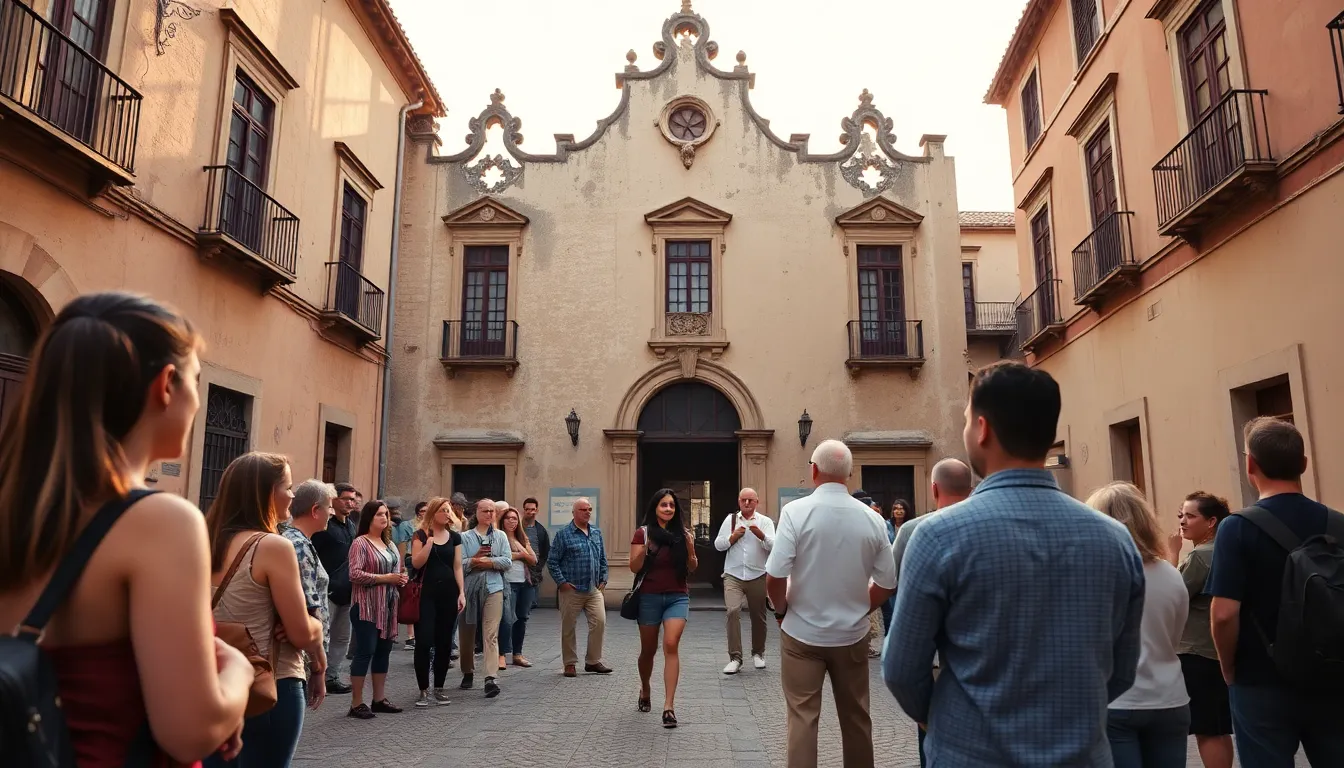
Group size is one of those questions that sounds logistical and turns out to be deeply about the experience. When a pastor or rabbi asks me how many people they should bring to Portugal, they are usually thinking about the budget. Fair enough, the economics are real. But the number you choose also decides what kind of trip your community actually has, how intimate the synagogue in Belmonte feels, how easily you move through a crowded Fatima, whether the quiet moments stay quiet.
So let me walk through both sides of it: the money and the experience. They pull in slightly different directions, and the right number is where they meet for your particular community. This pairs with the broader picture in our guide to what nobody tells you about heritage travel in Portugal, which covers the surprises beyond the planning math.
The Number That Changes the Math: Fifteen
Let me start with the single most important figure, because it reshapes the whole conversation.
With Heritage Tours, group leaders travel free with fifteen or more participants. That threshold is not a marketing detail. It is the hinge the entire planning conversation turns on. For a pastor or rabbi, it means that once your group reaches fifteen, your own travel cost is covered, which changes how you present the trip to your congregation and how you think about leading it.
Fifteen is also, not coincidentally, around where the per-person economics of a group trip start to work well. Below that number, fixed costs, the guide, the vehicle, certain site arrangements, are spread across fewer people, so each person carries more of them. As you climb toward and past fifteen, those fixed costs divide across a larger group, and the per-person price comes down. So fifteen does two things at once: it covers the leader and it brings the individual cost into a comfortable range.
If your community can realistically reach fifteen, that is the first target I point group leaders toward. The earlier you confirm the trip, the more runway you have to build to that number by marketing it properly to your congregation.
Below Fifteen: Small, Intimate, More Per Person
A group of eight or ten is not a failure. Some of the most moving trips I have led were small.
A small group moves differently. It fits in one vehicle easily. It slips into a tiny synagogue without filling it. It can change plans on a whim, linger longer, eat at a smaller restaurant, have a quieter and more personal experience of every site. For a tight-knit community, a board, a small congregation, a family group, that intimacy is the whole point.
The honest trade-off is cost. With fewer people sharing the fixed expenses, the per-person price runs higher, and the leader-travels-free threshold has not been reached. That does not make a small trip wrong. It makes it a choice you make with eyes open: you are paying a bit more per person for a more intimate experience. For some communities, that is exactly the right trade.
The Sweet Spot: Roughly Fifteen to Twenty-Five
If I had to name the size that balances economics and experience best, it sits in the range of fifteen to twenty-five.
At this size the per-person cost is comfortable, the leader travels free, and the group is still small enough to feel like a community rather than a crowd. One guide can hold the whole group’s attention. Everyone can hear the explanation in the Tomar synagogue. The group fits in a single coach. You can still get a table together at dinner. And when you reach a quiet, sacred space, the group does not overwhelm it.
This is the range most of my most successful Portugal heritage trips fall into. It is large enough that the economics sing and small enough that the trip stays personal. If your congregation can comfortably fill this band, it is the size I most often recommend.
Larger Groups: Real Savings, Different Logistics
Some communities can bring thirty, forty, or more. Larger groups are absolutely workable, and they come with genuine advantages, but the experience changes, and it is worth knowing how.
On the economics, bigger is cheaper per person, full stop. The fixed costs spread thinnest across a large group, so the individual price is at its lowest. For a congregation focused on making the trip affordable to as many members as possible, scale helps.
On the experience, larger groups require more structure. Above roughly twenty-five, we often split into smaller sub-groups for site visits, sometimes with more than one guide, so that nobody is straining to hear at the back of a crowd or waiting twenty minutes for a turn in a small chamber. Intimate spaces, a tiny interior synagogue, a narrow medieval lane, simply cannot hold forty people at once, so we stagger entries and rotate. The crowded moments at popular sites like Fatima also take more coordination to keep a large group moving together. None of this is a problem. It is just a different kind of trip, run with more moving parts, and it works best when everyone understands that going in.
How Group Size Interacts With Season and Sites
There is one more layer worth mentioning, because group size does not exist in a vacuum.
A large group is harder to move during peak crowds. If you are bringing thirty-five people and you want to be at Fatima for the May 13 pilgrimage, you are pairing a large group with the most crowded day of the year, and that combination needs serious planning and very early booking. A smaller group has far more flexibility in those crowded windows. Season choice and group size are connected decisions, which is why I usually work through them together. Our best time to visit Portugal guide and spring travel guide both speak to how crowds shift across the year.
The intimate interior sites also reward smaller numbers. If your itinerary leans heavily on Belmonte, Tomar, and the small interior towns, where the synagogues and quarters are genuinely tiny, a group in the fifteen-to-twenty-five range experiences those places far more naturally than a group of forty. You can see how we structure these journeys on our Portugal destination page and our group heritage tours page.
FAQ: Portugal Heritage Group Size
How many people do I need for a group heritage tour to Portugal?
There is no strict minimum, but fifteen is the number that matters most. With Heritage Tours, group leaders travel free with fifteen or more participants, and that is also around where the per-person economics start working well. Smaller groups are entirely possible and can be wonderfully intimate, they just carry a higher cost per person and do not reach the free-leader threshold.
What is the best group size for a Portugal heritage trip?
For most congregations, the sweet spot is roughly fifteen to twenty-five. At that size the per-person cost is comfortable, the leader travels free, one guide can hold the whole group, and the trip still feels personal rather than like a crowd. It is large enough for the economics to work and small enough to slip into Portugal’s intimate interior synagogues naturally.
Does the group leader really travel free?
Yes. Group leaders travel free with fifteen or more participants. That is the threshold that reshapes the planning math for a pastor or rabbi, because once your group reaches fifteen, your own travel cost is covered. It is one of the first things worth factoring in when you decide how big a group to build.
Can we do a Portugal heritage tour with a large group of thirty or more?
Absolutely, and the per-person cost is at its lowest with a large group. The experience just requires more structure. Above roughly twenty-five we often split into sub-groups for site visits, sometimes with more than one guide, and we stagger entries at the small interior synagogues and lanes that cannot hold a large crowd at once. It works well when everyone understands it is a more structured kind of trip.
Is a small group of eight or ten worth it?
It can be ideal for a tight-knit community. A small group moves easily, fits anywhere, changes plans freely, and has a quiet, personal experience of every site. The trade-off is a higher per-person cost, since fewer people share the fixed expenses and the free-leader threshold is not reached. For many small congregations and family groups, that intimacy is exactly the right choice.
The right group size is the one where the economics and the experience meet for your particular community. Some leaders are building toward fifteen to unlock the math. Others are protecting the intimacy of a smaller circle. Both are good trips, and the conversation about which is right for you is one I genuinely enjoy.
Contact us and tell me about your community, and we will find the number that fits.