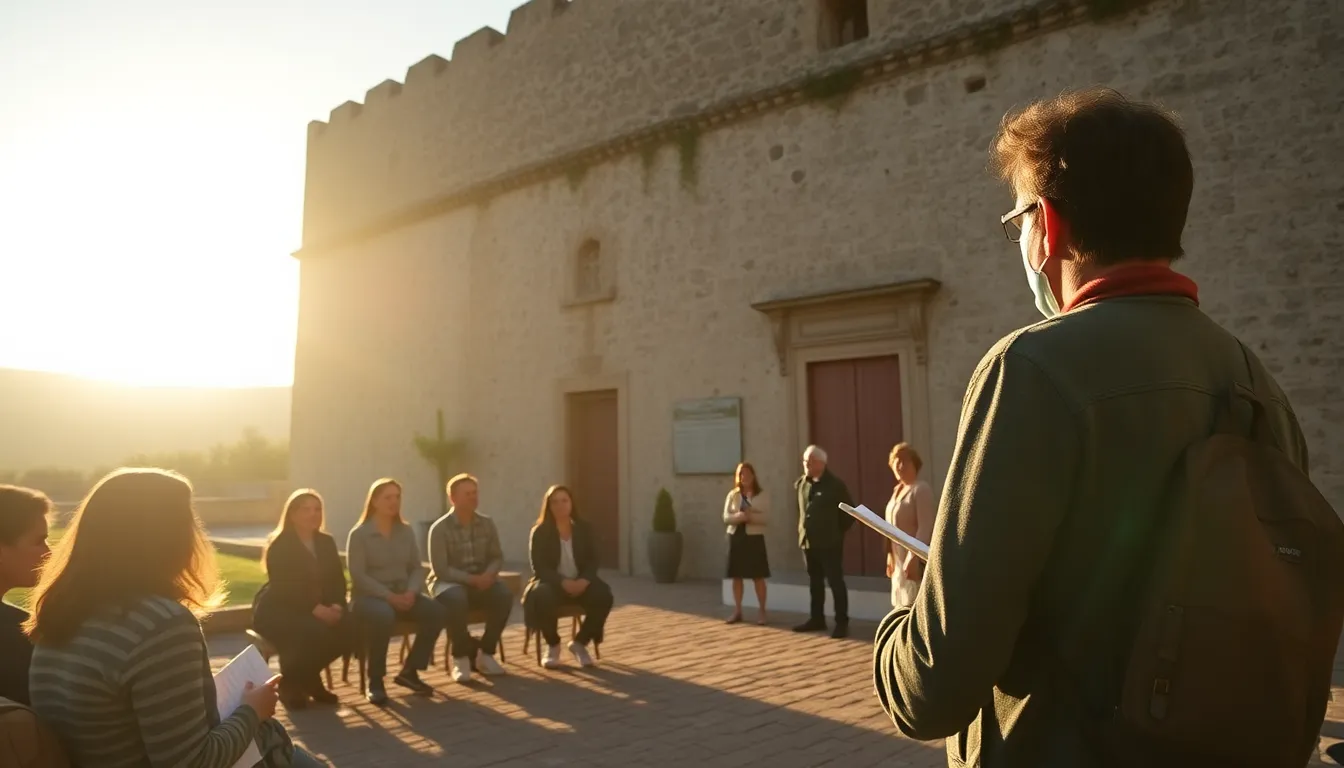
An educator once told me she was nervous about a heritage trip because she did not want it to feel like a vacation with a religious label slapped on top. “If we are going to take students and members out of their lives for ten days,” she said, “it has to teach them something they could not learn any other way.” She was right to push on that. The difference between a trip and an education is not the destination. It is the framing.
Portugal is one of the richest teaching grounds in Europe for clergy and educators, precisely because its history is so layered and so little known. But the country does not teach on its own. You make it teach. Here is how to turn a Portugal heritage trip into genuine learning, from the first session before departure to the conversations on the bus.
Why Portugal Teaches So Well
Some destinations are famous enough that students arrive already knowing the story. Portugal is the opposite, and that is its strength as a classroom.
Almost no one in your group will have heard of Belmonte, where families preserved Judaism in secret for more than 500 years after the expulsion, hiding their faith from neighbors and passing it down through the women of the household. Few will know that Tomar holds Portugal’s only surviving pre-expulsion synagogue, a stone room older than the expulsion itself. And while many will recognize Fatima as a Catholic pilgrimage site, fewer understand its place in the wider story of faith and devotion in twentieth-century Europe.
This unfamiliarity is a gift to an educator. You are not correcting half-remembered facts. You are opening a door. When a student encounters a story for the first time while standing in the place it happened, the learning is immediate and permanent in a way no textbook achieves.
Portugal also teaches across disciplines. Religious history, the expulsion and the conversos, the architecture of survival, the question of how identity persists under pressure. A single trip can hold theology, history, and ethics at once. For the foundational picture of the destination, our Portugal heritage tour guide for pastors and rabbis covers the ground.
Build the Learning Before You Leave
The most common mistake is to treat the trip itself as the entire lesson. The strongest educational journeys begin weeks before departure.
Build a short pre-trip curriculum, two or three sessions that give your group the framework they will need on the ground. Cover the expulsion of 1492 and 1497 and what it set in motion. Introduce the conversos and the meaning of crypto-Jewish survival. For Christian groups, frame the Fatima story and its significance. You are not trying to make everyone an expert. You are giving them the questions that the sites will answer.
This preparation transforms the experience. A student who arrives in Belmonte already wondering how a community hides a faith for five centuries will stand differently in that synagogue than one who arrives blank. The pre-trip work is where the education actually begins. The trip is where it lands.
If you are planning the full arc of preparation, building your congregation’s Portugal trip from scratch shows how the teaching fits into the wider timeline.
Teach On Site, Not Just Around It
When you arrive, resist the urge to let the guide do all the talking. The guide brings the history, the dates, the architecture. You bring the meaning, and the best learning happens when you layer your teaching on top of theirs.
Build short moments of reflection or study directly into the itinerary. A reading at the pre-expulsion synagogue in Tomar. A guided discussion in Belmonte about what survival of identity costs and what it preserves. A quiet question posed at Fatima about devotion and faith. These do not have to be long. A focused ten minutes at the right site does more than an hour in a hotel conference room.
Use the contrast that Portugal offers, too. The cosmopolitan coast of Lisbon and Porto against the rural, traditional interior where the survival story unfolded. That contrast is itself a lesson about where faith persisted and why. Point it out. Let your group feel the geography as part of the history.
Every itinerary Heritage Tours builds is custom, so you can shape the days around the teaching you want to do. If your group is study-driven, we build in time for text and discussion at the sites. You tell us where the learning matters most, and we make room for it.
Make Space for Reflection and Discussion
Education is not only input. It is digestion, and a heritage trip needs built-in time for the group to process what they are encountering.
The bus rides between sites are not dead time. They are some of the best teaching moments you will get, when impressions are fresh and people want to talk. Use them. A simple question posed as the group settles in, “what did that place make you feel,” opens conversations that go deeper than any lecture.
Build in evening reflection, too. A short gathering at the end of a day lets the group make sense of what they saw together. This is where individual experiences become shared learning, where one person’s insight sparks another’s. The most lasting education on a heritage trip happens in these unscripted conversations, so protect time for them rather than packing every hour with sites.
And leave room for silence. Not every moment needs to be analyzed. Sometimes standing quietly in Tomar’s ancient synagogue teaches more than any discussion could. Trust the places to do their own work.
The Educator-Travels-Free Structure
The practical side matters, especially for educators working within a school or institutional budget, so let me be clear about it.
For groups of 15 or more participants, the group leader travels free. This is not a promotion. It is how Heritage Tours has always worked, because the person who shapes the learning and shepherds the group is what makes a heritage journey meaningful. This applies to educators, clergy, and other leaders organizing the trip.
That structure helps the institutional conversation. When you bring a Portugal trip to your school, seminary, or congregation, your own participation costs the institution nothing once you reach 15 participants. Heritage Tours prices all-inclusive, covering accommodations, ground transport, guided site visits, and most meals, so the budget is one clear number rather than a scattered set of costs. Portugal also sits in a moderate range for European travel, well below Italy or France for comparable quality, which makes it reachable for an educational group.
If your group runs smaller than 15, reach out anyway. We work with groups of different sizes. The structure is laid out on our group heritage tours page and the destination on our Portugal page. If a rabbi is leading the educational journey, how a rabbi builds a Portugal heritage journey offers a parallel view.
FAQ: Educational Portugal Heritage Trips
What makes Portugal a good destination for educational travel?
Portugal’s history is layered and largely unknown to most groups, which makes it a powerful classroom. Belmonte’s 500-year crypto-Jewish survival story, Tomar’s pre-expulsion synagogue, and Fatima’s place in modern faith history let a single trip teach religious history, ethics, and identity at once, with learning that lands because students encounter it where it happened.
How do I make a heritage trip genuinely educational?
Build the learning before you leave with a short pre-trip curriculum, teach on site by layering meaning on top of what the guide provides, and protect time for reflection and discussion during bus rides and evenings. The framing is what turns a trip into an education, not the destination alone.
Does the educator pay for the trip?
For groups of 15 or more participants, the group leader travels free. Heritage Tours covers the educator’s travel because the person shaping the learning is what gives a heritage journey its meaning. This applies to educators and clergy alike. Smaller groups are welcome and can receive custom pricing.
Can the itinerary include time for study and discussion?
Yes. Every Heritage Tours itinerary is custom, so study time and discussion can be built directly into the days. If your group is learning-focused, the itinerary makes room for text, reflection, and guided conversation at the sites where it matters most.
How affordable is an educational trip to Portugal?
Portugal falls in a moderate range for European travel, meaningfully less than Italy or France for comparable quality. Heritage Tours prices all-inclusive, covering accommodations, transport, guided visits, and most meals in one clear number, and the leader-travels-free structure means your participation costs the institution nothing once you reach 15 participants.
If you want this trip to teach your group something they could not learn any other way, the framing is where it starts, and that is the part you and I can build together. Contact us whenever you are ready to turn the journey into a classroom.