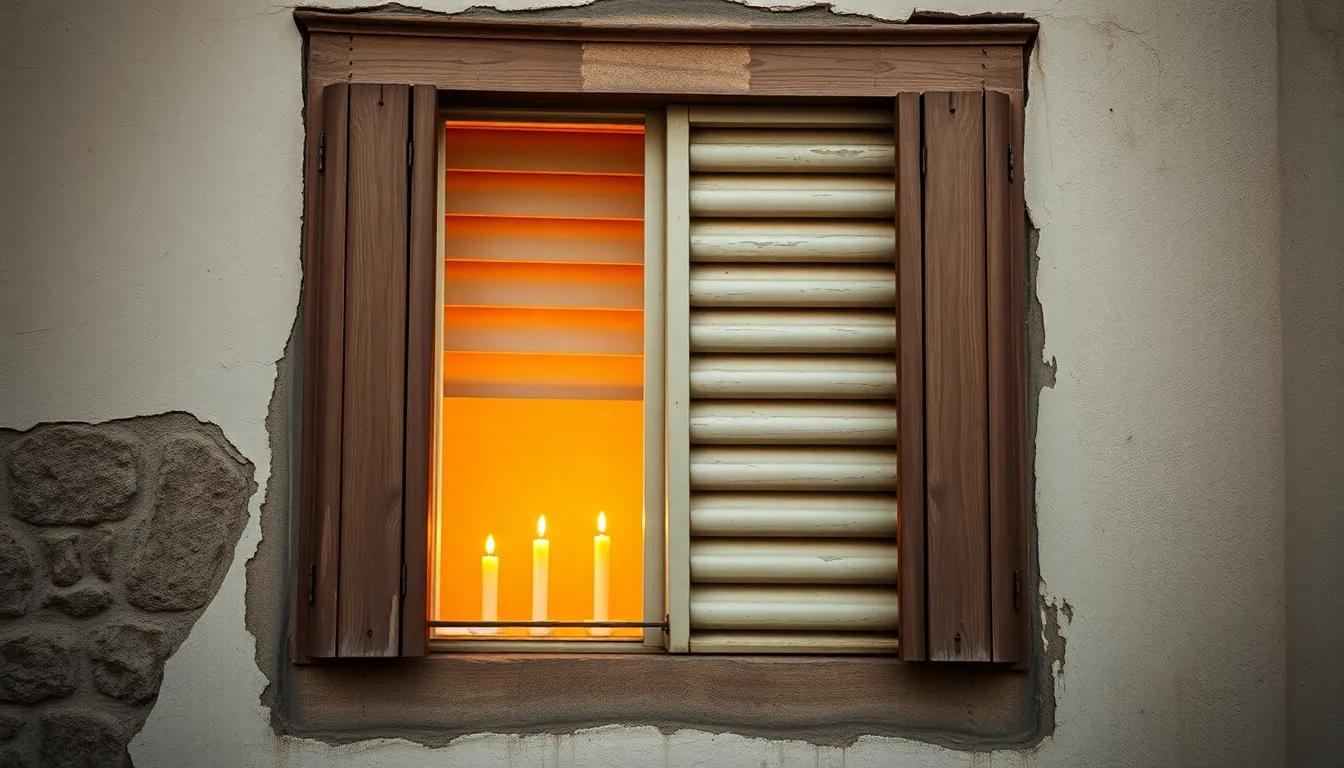
The first time I brought a group into Belmonte, an older woman in our party stopped me on the street and asked a question I have never forgotten. She pointed at an ordinary doorway and said, “How did they do it? How do you stay Jewish for five hundred years when staying Jewish could get you killed?” I did not have a clean answer for her then, and I am not sure I have one now. But that question is the heart of the crypto-Jewish story, and it is the reason I keep bringing groups back to Portugal.
If you are a rabbi, a pastor, or an educator thinking about leading a group here, you are going to spend a lot of time with that question. So let me give you the background you need to lead it well.
What “Crypto-Jew” and “Marrano” Actually Mean
The term crypto-Jew describes a person who outwardly lived as a Christian while secretly continuing to practice Judaism. In Portugal these people were also called New Christians, the legal category the state assigned to converts and their descendants after the forced conversions of 1497.
You will also hear the word Marrano. It is worth knowing where it comes from, because your group will ask. Marrano was a slur. In old Spanish it carried the sense of “swine,” and it was hurled at converts to question whether their conversion was real. Some Jewish communities have reclaimed the word over time, and you will see it on book covers and museum panels. Others find it painful and prefer “crypto-Jew” or the Hebrew term anusim, meaning the forced ones. I tend to use anusim when I am speaking carefully, and I explain the history of Marrano so my groups understand what they are reading. You should decide for yourself, but go in knowing the word has weight.
How the Secret Practice Survived
To understand what these families preserved, you have to understand what they were up against. The Portuguese Inquisition operated for nearly three centuries. It investigated New Christian families on the smallest suspicion: a neighbor who noticed no smoke from the chimney on Saturday, a household that bought no pork, a body buried too quickly. Denunciation was rewarded. Trials were secret. The punishments included confiscation, imprisonment, and death by burning.
So the faith went underground, and it adapted to survive. This is the part that moves groups most, because every adaptation is a small act of defiance.
Shabbat candles were lit inside cupboards or behind closed shutters so no light reached the street. Women became the keepers of the tradition, because the synagogue was gone and the home was the only sanctuary left. Prayers passed from mother to daughter by memory, recited in Portuguese because a written Hebrew text in the house was a death sentence. Over generations the Hebrew faded, and the prayers absorbed Catholic forms, sometimes invoking saints as cover. But the intention underneath stayed Jewish.
The holidays were disguised. Passover hid inside the spring cleaning. Yom Kippur was explained as a stomach illness so the fasting would not raise questions. Some families adjusted the dates of holidays slightly, so observance would not line up too neatly with the calendar an informer might recognize.
What strikes me, every single time, is that this was not survival for a generation or two. It held for more than five hundred years.
Belmonte: Where the Story Is Still Alive
Most of Portugal’s crypto-Jewish communities eventually dissolved, assimilated, or were destroyed. Belmonte is the exception, and it is the reason a heritage trip to Portugal is unlike any other I lead.
In the mountains of the interior, far from Lisbon, the Jewish families of Belmonte kept practicing in secret straight through the centuries. They married within the community. They taught their children the prayers. They believed, wrongly, that they might be the last Jews left on earth, because their isolation was so complete they did not know the wider Jewish world still existed.
In the early 20th century a mining engineer named Samuel Schwarz arrived in Belmonte and made contact. When he recited the Shema, the one Hebrew word the community recognized was Adonai. That single word of recognition, across four hundred years of silence, is the kind of detail that stops a group cold when you tell it standing in the town itself.
Today Belmonte has an open synagogue, Bet Eliahu, and a Jewish museum that tells this history with care. Part of the community formally returned to mainstream Judaism in the 20th century. Others kept their own distinct traditions. When your group visits, you are not looking at a reconstruction behind glass. You may be sitting in a room with people whose families carried this through everything.
I cover the wider arc of expulsion, survival, and return in our guide to Jewish heritage in Portugal, which is the natural place to start before you build an itinerary around it.
Reading the Landscape: Converso Traces in Other Towns
Belmonte is the climax, but the crypto-Jewish story is written across the interior, and a good itinerary lets your group read it town by town.
In Castelo de Vide, Trancoso, and Guarda, you can walk old Judiaria streets where converso families lived. Guides who know the region can point out doorways with a small diagonal groove carved into the stone frame, the spot where a mezuzah once sat before it had to come down. Some scholars debate which marks are genuine and which are later, and an honest guide will tell you that. But standing in front of a doorway and imagining the family that scraped away the visible sign while keeping the faith inside is a powerful moment for a group.
These towns also carry the gravestones. Many surviving Hebrew inscriptions were recovered from medieval cemeteries and reused as building stone after 1497, then rediscovered centuries later. If your group is drawn to that thread, our piece on Jewish cemeteries and lapidary stones of Portugal goes deeper into what those stones reveal.
Leading This Story Well With a Group
A few things I have learned from doing this many times.
First, give your people the historical frame before they arrive in Belmonte. The emotional weight lands harder when they already understand 1497 and the Inquisition. A bus session or an evening talk the night before pays off.
Second, hold the dignity of it. This is a story of immense loss and immense courage at the same time. The families who kept this faith were not curiosities. They were people who made impossible choices under threat. I ask my groups to receive the story the way you would receive a family member’s testimony, with respect rather than fascination.
Third, leave room for the personal. On nearly every trip, someone in the group discovers that a family name, a half-remembered custom, or a strange tradition from their own grandmother suddenly makes sense in this context. Those moments cannot be scheduled, but they happen, and they are often the reason a person signed up without fully knowing why.
For groups of 15 or more, the group leader travels free, which makes it realistic to bring a real cross-section of your congregation rather than a handful of people. You can see how we structure these journeys on our Portugal destination page and how the leader experience works on our group tours page.
FAQ: Crypto-Jews and Marranos of Portugal
What is the difference between a crypto-Jew and a Marrano?
They describe the same people: those who outwardly converted to Christianity after 1497 but kept practicing Judaism in secret. Crypto-Jew is the neutral descriptive term. Marrano was originally a slur meaning swine, used to question whether a convert’s faith was sincere. Some communities have reclaimed it; many prefer crypto-Jew or the Hebrew anusim, meaning the forced ones. I explain all three to my groups so they understand what they are reading on museum panels.
How did crypto-Jews keep their faith hidden for so long?
They adapted every practice to avoid detection. Shabbat candles were lit inside cupboards, holidays were disguised as illness or spring cleaning, and prayers passed orally from mother to daughter in Portuguese because keeping Hebrew texts was deadly. Women held the tradition together because the home replaced the synagogue. In isolated places like Belmonte, intermarriage within the community and total secrecy let the practice survive for more than five hundred years.
Can you still meet crypto-Jewish descendants in Portugal?
Yes, primarily in Belmonte, which has an open synagogue and a Jewish museum. Part of the community formally returned to mainstream Judaism in the 20th century, while others retained their own distinct customs. A respectful group visit can include encounters with this living community rather than only historical sites.
Why didn’t the crypto-Jews just leave Portugal?
After 1497, King Manuel I closed the ports and forcibly baptized Jewish children, which eliminated the practical option of departure for most families. Unlike Spain’s 1492 expulsion, which allowed emigration, Portugal’s approach trapped families inside the country as New Christians. Going underground was, for many, the only way to remain Jewish at all.
Is Belmonte worth visiting for a heritage group?
For a Jewish heritage group, Belmonte is often the emotional center of the entire trip. It is the one place where the crypto-Jewish story did not end in assimilation but survived into a living, practicing community. Pairing it with converso towns like Castelo de Vide and Trancoso lets your group trace the full arc from forced conversion to secret survival to open return.
If the crypto-Jewish story is pulling at your community the way it pulled at that woman on the street in Belmonte, I would be glad to help you shape a journey around it. Every group arrives with a different reason, and the planning conversation is where we find yours.
Contact us whenever you are ready to start.