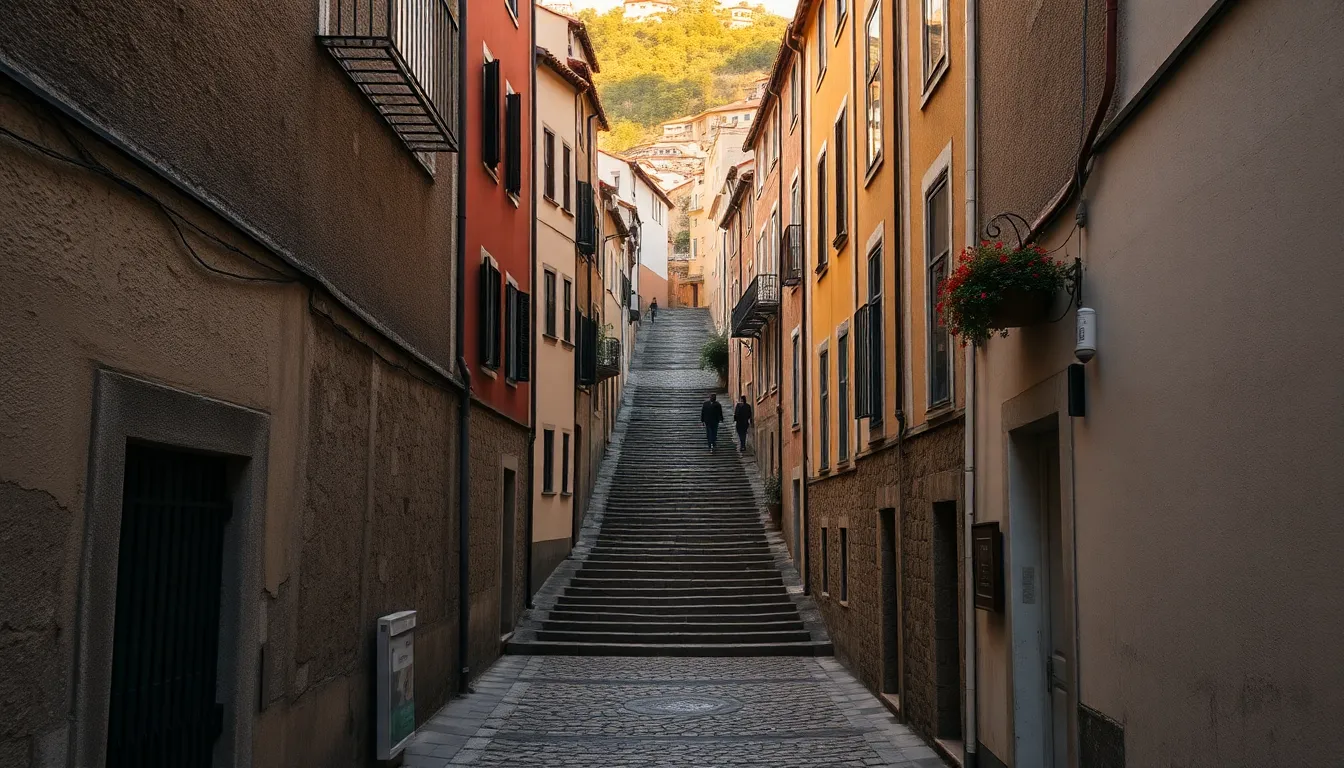
Of all the questions a group leader brings me before a Portugal trip, the one I most want people to ask early is the one about mobility. Not because it is hard to answer, but because answering it honestly changes the whole itinerary, and it is far easier to build the trip around real needs from the start than to discover a problem standing at the bottom of a staircase in Tomar.
Portugal is a country of hills and cobblestones and old stone buildings that were never designed with wheelchairs or unsteady knees in mind. That is part of what makes it beautiful, and it is also the honest challenge. This article is a site-by-site, plain-spoken look at what accessibility actually means on a Portugal heritage tour. It pairs with the broader picture in our guide to what nobody tells you about heritage travel in Portugal, which covers the surprises beyond mobility. Here I am going to be specific about the ground under your feet.
Why Portugal Is Harder Than It Looks
Let me set expectations honestly. Portugal’s heritage sites are old, and old in Europe means stairs, steep grades, narrow lanes, and stone surfaces worn smooth and uneven by centuries of feet. Many of the most meaningful places, the medieval Jewish quarters, the hilltop sanctuaries, the monasteries, sit at the top of a climb precisely because they were built to be defended or set apart.
This does not mean a group member who uses a wheelchair or walks with difficulty cannot have a rich, full Portugal experience. It absolutely can be done. But it means we plan differently. We choose accessible entrances where they exist, we build in rest, we sometimes split the group so that everyone gets the version of a site that works for them, and occasionally we substitute a comparable accessible site for one that simply cannot be reached. The trip is still whole. It is just shaped around the people in it.
Lisbon: The Seven Hills Problem
Lisbon is famous for being built on hills, and that fame is earned. The historic neighborhoods, Alfama especially, are a maze of steep, narrow, cobbled streets and staircases. For anyone with limited mobility, the old quarters of Lisbon are the single biggest challenge of a typical Portugal itinerary.
The good news is that Lisbon has worked hard at this. The city has accessible trams and funiculars in some areas, and a number of the major museums and sites are reachable by car and have step-free access once you are there. We use the city’s own infrastructure, the famous elevators and funiculars, to lift people up the hills rather than asking them to climb. We drop the group as close as vehicles are allowed, which in the tightest lanes is not very close, and we plan routes that follow the gentlest grades.
What we do not do is pretend Alfama is flat. If a group member cannot manage steep cobblestones, we build an alternative experience of Lisbon’s Jewish and Christian heritage that stays on the accessible routes and lets them see the city’s story without the punishing climbs.
Fatima: The Most Accessible Major Site
Here is a piece of genuinely good news. The Sanctuary of Our Lady of Fatima is one of the most accessible major heritage sites in all of Portugal.
Because it receives millions of pilgrims a year, including many who are elderly or ill or traveling specifically because of illness, the sanctuary was designed and maintained with accessibility in mind. The main esplanade is large, flat, and paved. The basilicas have accessible entrances. There are accessible restrooms. Wheelchair users can move across the grounds and participate fully in the major liturgies. For a group that includes members with mobility needs, Fatima is the site where everyone can be together, doing the same thing, without compromise.
The one caveat is scale during the big pilgrimages. On May 13 and October 13, the crowds are so large that simply moving across the grounds takes patience for everyone, and more so for a wheelchair. If accessibility is a priority and you have flexibility, an off-peak visit to Fatima gives mobility-limited members a far easier, calmer experience.
The Monasteries: Batalha, Alcobaça, Tomar
Portugal’s great monasteries are among the most moving sites on any itinerary, and they vary in how accessible they are.
The larger, more visited monasteries, Batalha and Alcobaça among them, have done meaningful accessibility work. Much of the main church and key spaces can be reached at ground level or with ramp access, and staff are accustomed to visitors with mobility needs. There are still thresholds, worn stone floors, and the occasional step, but the core of the experience is reachable for most.
The Convent of Christ at Tomar is more complicated. It sits on a hill, behind walls, with a layout that climbs and turns. Parts of it are reachable; parts involve stairs and grades that are difficult. For Tomar we plan carefully, identify in advance which spaces a mobility-limited member can reach, and make sure nobody is surprised at the gate. Tomar’s town synagogue, separately, is small and at street level, though the streets approaching it are the usual sloped cobblestone.
The Interior Towns: Belmonte, Castelo de Vide, Trancoso
The interior heritage towns are where Portugal’s Jewish story lives most powerfully, and they are also where the ground gets hardest.
These are hill towns. Their old Jewish quarters are tight grids of sloped, cobbled lanes, often with steps worked into the streets themselves. Belmonte, the heart of the crypto-Jewish story, has a museum and a synagogue, and while we can get vehicles reasonably close, the historic core still asks for steady walking on uneven stone. Castelo de Vide and Trancoso are similar.
For these towns, honesty up front is everything. A group member who walks with a cane and takes their time can usually manage a slow, well-paced visit with rest stops. A wheelchair user faces real barriers in the oldest lanes. We talk through each person’s situation before we commit to the itinerary, and we build the days so that those who need to can experience the accessible portions, rest while the rest of the group climbs, and rejoin without feeling left out. Sometimes the most meaningful version of a site is the quiet courtyard at the bottom, not the cramped chamber at the top.
How We Plan Around Real Needs
The pattern across all of this is the same. We ask early, we ask specifically, and we plan honestly.
Before an itinerary is set, I want to know exactly what each member can manage. Can they do stairs, and how many? Steep cobblestones for how long? Do they use a wheelchair full time, or a cane sometimes, or just need to sit every twenty minutes? Those answers reshape the trip. We choose accessible entrances, arrange vehicles to get as close as the lanes allow, build in generous rest, and where a site truly cannot be reached, we substitute a comparable one that can. We also keep the pace humane, because rushing is the enemy of accessibility.
None of this makes the trip lesser. Some of the most moving moments I have witnessed happened when a group adjusted itself so that everyone could be present together, in whatever way each person was able. You can see how we structure these journeys on our Portugal destination page and our group heritage tours page. And because heat compounds mobility challenges, the season you choose matters too, which our best time to visit Portugal guide and fall travel guide both address.
FAQ: Accessibility on Portugal Heritage Tours
Can someone in a wheelchair join a Portugal heritage tour?
Yes, with planning. Some sites, like the Fatima sanctuary, are fully accessible and let everyone participate together. Others, particularly the hilltop interior towns and Lisbon’s old quarters, present real barriers in their oldest lanes. We map each site’s accessibility in advance, choose step-free routes and entrances where they exist, and substitute comparable accessible sites where needed, so a wheelchair user has a full and meaningful trip.
Which Portugal heritage site is the most accessible?
The Sanctuary of Our Lady of Fatima. Because it serves millions of pilgrims a year, including many who are elderly or ill, it was built and maintained with accessibility in mind: a flat, paved esplanade, accessible basilica entrances, and accessible restrooms. It is the site where a group with mixed mobility can be together doing the same thing without compromise, especially outside the big May and October pilgrimage crowds.
How difficult is Lisbon for someone with limited mobility?
Lisbon’s historic quarters, especially Alfama, are steep, narrow, and cobbled, and they are the biggest mobility challenge on a typical itinerary. The city does have accessible trams, funiculars, and elevators we can use to avoid the worst climbs, and many major museums have step-free access. For anyone who cannot manage steep cobblestones, we build an alternative route that follows the gentlest grades.
Are the interior heritage towns wheelchair accessible?
Mostly not in their oldest cores. Towns like Belmonte, Castelo de Vide, and Trancoso are hill towns with sloped, stepped, cobbled lanes. We can get vehicles reasonably close and arrange visits to accessible portions like museums and street-level synagogues, but the historic Jewish quarters involve uneven stone that is difficult for wheelchairs and asks steady walking from anyone. We plan each person’s experience honestly so nobody is caught off guard.
How do you plan a tour around mobility needs?
We ask early and specifically: stairs, distances, cobblestones, rest frequency, and whether someone uses a wheelchair, a cane, or neither. Those answers shape the itinerary. We select accessible entrances, position vehicles as close as the lanes permit, build in generous rest, keep the pace unhurried, and substitute reachable sites where a site cannot be accessed. The goal is a whole trip shaped around the people in it.
If your group includes members with mobility needs, please raise it in our very first conversation. It is never an inconvenient question, it is the most useful one, and the earlier we have the details, the more fully we can build a trip where everyone belongs.
Contact us and tell me about your group, and we will plan it honestly together.