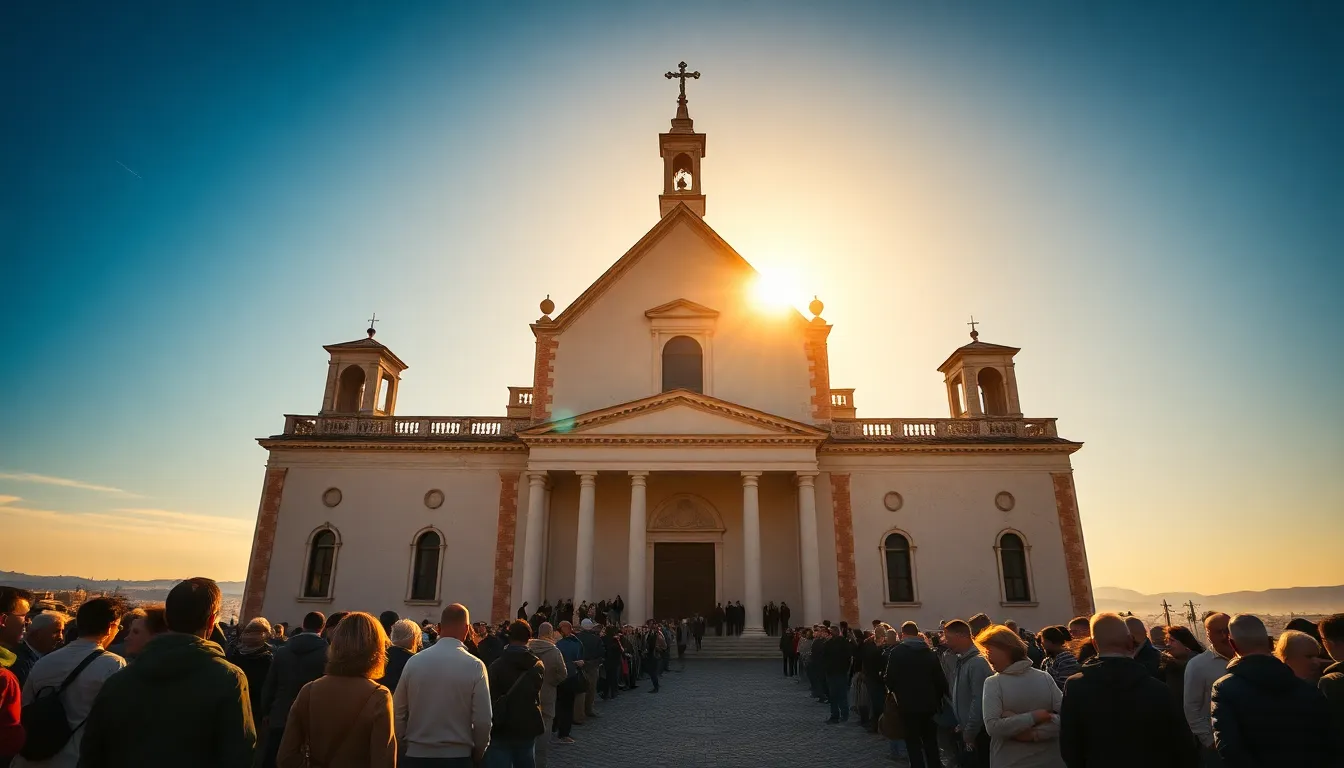
Some groups come to Portugal for the whole sweep of the country. Others come for one place. When a pastor tells me their parish has been praying about a Fatima pilgrimage for years, I do not try to talk them into a grand tour. I build a pilgrimage that puts Fatima at the center and lets everything orbit around it. The shrine itself, yes, but also the smaller places nearby where the apparitions happened and the children lived, and a day or two in Lisbon to ease the group in and out.
This itinerary is for that group. It runs about six days, it gives the Sanctuary real time, and it is paced for a congregation that wants to pray, not just sightsee.
Day 1: Arrival in Lisbon
Most groups land in Lisbon, and the first day is gentle on purpose. After an overnight flight, your people need rest more than they need a packed schedule. I keep it light: a slow afternoon, a visit to the Se cathedral or the Church of Saint Anthony, built over the birthplace of Anthony of Lisbon, and an early dinner. If the group has energy, a short walk through the old Alfama quarter sets a reflective tone. The point of day one is to arrive well, not to start sprinting.
I also use the first evening for a short orientation. A Fatima pilgrimage works best when the group understands the message before they reach the shrine, not only the apparitions themselves but what Our Lady asked of the children: prayer of the Rosary, penance, and consecration. Twenty minutes together over dinner, walking through what the group is about to encounter, changes how they pray in the days ahead. People arrive at the Capelinha ready rather than simply curious.
Day 2: Lisbon to Fatima, with Santarem on the Way
The drive north to Fatima takes about ninety minutes, and I like to break it at Santarem. The Church of Saint Stephen there holds the Eucharistic Miracle of Santarem, a relic venerated since the thirteenth century. For a Catholic group on the way to Fatima, it is a fitting place to pause and pray, a reminder of the long tradition of Eucharistic devotion that the Fatima message itself calls the faithful back to.
Arrive in Fatima in the afternoon and let the group have their first encounter with the Sanctuary in the quiet before evening. Many groups join the candlelit Rosary procession that night, the velas, when the plaza fills with light. It is a powerful way to begin the heart of the pilgrimage.
Days 3 and 4: The Sanctuary of Our Lady of Fatima
These are the two days the whole trip is built around, and I never shortchange them.
In 1917, three shepherd children, Lucia, Francisco, and Jacinta, reported six apparitions of the Virgin Mary between May and October. The final one, on October 13, 1917, was witnessed by an estimated 70,000 people who reported seeing the sun appear to spin and move across the sky. The Church recognized the apparitions in 1930. Pope Francis canonized Francisco and Jacinta in 2017.
The Sanctuary centers on the Capelinha das Aparicoes, the Chapel of the Apparitions, built on the exact spot where Our Lady appeared. The Basilica of Our Lady of the Rosary holds the tombs of all three children. The vast Church of the Holy Trinity, completed in 2007, seats over 8,000. Across the plaza stands the section of the Berlin Wall placed there as a sign of the message’s reach into history.
Build the days so your group can attend Mass in the Capelinha, walk the plaza in the early morning before the crowds, pray the Rosary together, and join an evening procession. Some pilgrims walk part of the plaza on their knees, a traditional act of penance, on the marked penitential pathway that leads toward the chapel. With two days you can do all of this without rushing, and you can leave space for your group to simply sit in the presence of the place.
Do not overlook the smaller corners of the Sanctuary. The chapel of perpetual adoration, the holy water fountains, and the large bronze statue of the Sacred Heart at the center of the plaza all reward unhurried attention. I also encourage groups to spend time at the tombs of the three children inside the basilica. Standing before the resting places of Francisco and Jacinta, who died young, and Lucia, who lived into her nineties as a Carmelite nun, draws the whole arc of the Fatima story into a single quiet moment. This is the same spirit the 10-day Christian heritage itinerary carries into the wider country.
Day 5: The Valinhos, Aljustrel, and the Way of the Cross
The apparitions did not happen only in the main plaza. A short distance away are the places where the children lived and where Our Lady also appeared, and giving them a day deepens the whole pilgrimage.
Aljustrel is the small village where the three children were born and raised. Their family homes are preserved and open, simple stone houses that show the ordinary lives these children led before 1917. You can stand in the kitchen where Lucia grew up and see how modest it all was, which makes what these children carried feel all the more remarkable. From there, the Way of the Cross, the Via Sacra, leads out to the Valinhos, the field where the Angel of Peace and later Our Lady appeared to the children. Along the path stands the Loca do Cabeco, the rocky outcrop where the angel first appeared in 1916, the year before the apparitions began. Walking the Via Sacra together, station by station, through the olive country where it all happened, is for many groups the most personal part of the trip. It moves the story out of the grand basilica and into the quiet fields where three children actually knelt.
The afternoon can return to the Sanctuary for a final Mass or hour of adoration. Groups that want to add the nearby monasteries of Alcobaca and Batalha sometimes use part of this day for them; the 5-day Lisbon and Tomar itinerary and our Portugal destination page show how those fit.
Day 6: Return to Lisbon and Departure
The drive back to Lisbon is about ninety minutes. Depending on flight times, the morning can hold a last visit to a Lisbon church or a quiet walk before the airport. What I have noticed over many Fatima trips is that the bus ride back is different from the ride out. People are quieter, more settled. A good pilgrimage does that. It does not just show people a shrine. It sends them home carrying something.
Shaping the Pilgrimage for Your Parish
This six-day frame is flexible. If your group wants a third day at the Sanctuary, perhaps to be present for the 13th of a month when Fatima sees its largest gatherings, I build that in. If your parish has a devotion to the Eucharist, we give Santarem more time. If your people are older, we keep the Via Sacra optional and arrange transport to the Valinhos.
With 15 or more participants, the group leader travels free, which lets the pastor lead the group spiritually rather than manage logistics. Our group heritage tours page explains how that works.
FAQ: Planning a Fatima Pilgrimage
How many days should a Fatima pilgrimage be?
I recommend giving the Sanctuary at least two full days, inside a trip of about six days that includes arrival, travel, and the nearby apparition sites. Two days lets your group attend Mass in the Capelinha, join an evening procession, pray the Rosary, and still have unhurried time. Shorter visits of a single afternoon almost always leave groups wishing they had stayed.
When is the best time to visit Fatima?
The Sanctuary is meaningful year round, but the 13th of each month from May through October draws the largest pilgrim gatherings, with the May 13 and October 13 anniversaries being the biggest. Being present for a 13th is powerful but crowded, so book early if that is your aim. For a quieter, more contemplative visit, other dates offer the same shrine with more room to pray.
What are the Valinhos and Aljustrel?
Aljustrel is the village where the three shepherd children lived, with their preserved family homes open to visitors. The Valinhos is the nearby field where the Angel of Peace and later Our Lady appeared to the children. A Via Sacra, or Way of the Cross, connects the area. Visiting these sites moves the pilgrimage from the grand plaza to the intimate places where the events actually unfolded.
Is a Fatima pilgrimage suitable for an older parish group?
Yes. The main Sanctuary is flat and accessible, with seating throughout, and Mass and processions require no strenuous walking. The Via Sacra to the Valinhos is optional and we can arrange transport for anyone who needs it. We pace the days gently and build in rest, so a mixed-age parish group can take part fully.
How far in advance should we book a group pilgrimage to Fatima?
Eight to twelve months is comfortable for a group of fifteen or more. If you want to be present for a major anniversary like May 13 or October 13, plan twelve to eighteen months ahead, since hotels near the Sanctuary fill quickly around those dates and securing a good block early makes everything easier.
If your parish has been waiting for the right time to make this pilgrimage, I would be honored to help you plan it with the care it deserves. The conversation almost always begins with Fatima and grows from there. Contact us whenever you are ready.