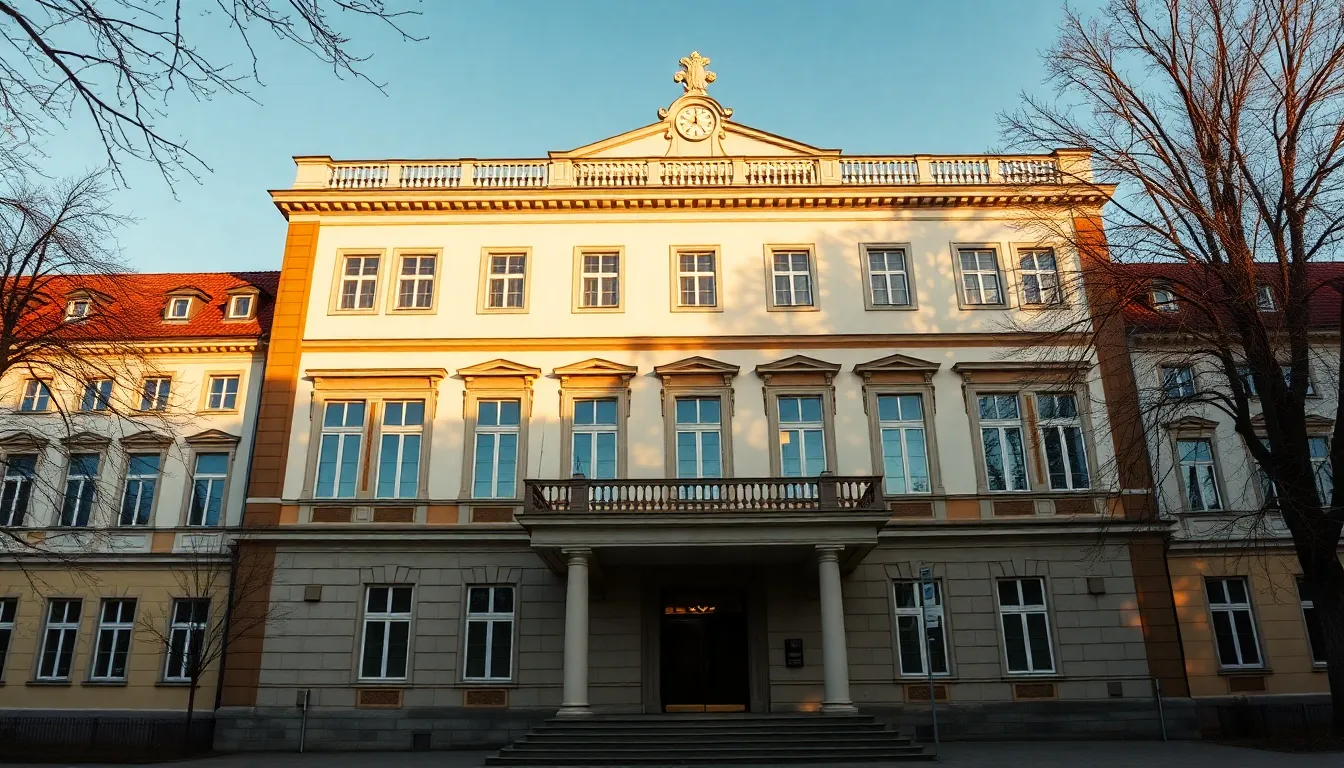
The first time I brought a group into the main study hall of Yeshivat Chachmei Lublin, a rabbi in our group stood in the doorway and did not move. He looked up at the high ceiling, at the long windows, at the room built to hold hundreds of students bent over open volumes of Talmud. Then he said something I have never forgotten. “They built this to last forever.” He was right. They did. The forever they imagined did not arrive in the way they hoped. But the building still stands, and the heritage it carries is still alive for anyone willing to walk in and pay attention.
I want to tell you the story of this place, because it is one of the great stories of Jewish Poland, and because most groups arrive in Lublin without knowing it. They know Lublin as a gateway to Majdanek, which it is. But Lublin was also one of the most important centers of Jewish learning in the world, and Yeshivat Chachmei Lublin is the reason why that title was earned in the modern era.
The Vision of Rabbi Meir Shapiro
A Yeshiva Built on Dignity
The yeshiva was the vision of one man, Rabbi Meir Shapiro, born in 1887 and known across the Jewish world as a brilliant scholar, a gifted organizer, and a leader who understood both Torah and the practical world. Shapiro served as a rabbi in several communities and held a seat in the Polish parliament, the Sejm, where he represented Jewish interests. But his lasting work was the yeshiva.
In the early twentieth century, most yeshivas in Eastern Europe were poor. Students often lived in difficult conditions, ate meals offered by different families on different days through a system called “eating days,” and studied in cramped, underfunded rooms. Shapiro believed Torah scholarship deserved better. He believed that the students who would become the next generation of rabbis and teachers should study in dignity, in a building worthy of the work.
So he set out to build the largest and most modern yeshiva in the world. It was an audacious idea, and he funded it the hard way, traveling across Poland, across Europe, and to the United States, raising money one community at a time. The cornerstone was laid in 1924. The building opened in 1930.
The Daf Yomi Idea That Spread Across the World
Before I describe the building, I want to mention the idea that Rabbi Meir Shapiro gave to the Jewish world, because your group will recognize it even if they have never heard his name. In 1923, at a rabbinical conference in Vienna, Shapiro proposed a program called Daf Yomi, a daily page. The idea was simple and powerful. Jews everywhere would study the same page of Talmud on the same day, advancing one page at a time, so that the entire Talmud would be completed over roughly seven and a half years.
That program continues today. Hundreds of thousands of people around the world study the same daf each day, finishing the whole cycle and beginning again at large gatherings called the Siyum HaShas. When a member of your group studies a daily page of Talmud, they are continuing an idea that was born in the mind of the man who built this yeshiva in Lublin. That connection lands with people. It makes the building feel less like a relic and more like a living root.
The Building That Was Meant to Last Forever
Scale and Ambition
When Yeshivat Chachmei Lublin opened in 1930, it was the largest yeshiva building in the world. Six stories. A library that held tens of thousands of volumes. Dormitories so students would no longer rely on the charity of eating days. A dining hall. A synagogue. And the centerpiece, a magnificent study hall designed to seat hundreds of students at once.
The opening was a major event in the Jewish world. Tens of thousands of people came to Lublin for the ceremony. Newspapers across Europe covered it. For a few years, the yeshiva fulfilled the vision Rabbi Meir Shapiro had carried across continents. Students came from across Poland and beyond to study in conditions no yeshiva had ever offered.
Rabbi Meir Shapiro did not live to see what came next. He died in 1933, at the age of forty-six, mourned across the Jewish world. The yeshiva he built continued without him.
The Destruction
The German occupation of Poland began in September 1939. Lublin fell quickly. The yeshiva, which had operated for less than a decade, was shut down. Its great library, one of the most important collections of Jewish books in the world, was a particular target. Accounts describe the books being removed and destroyed, a deliberate effort to erase not only the people but the learning they carried.
The students and faculty of Yeshivat Chachmei Lublin shared the fate of Lublin’s Jews. The community that had numbered roughly a third of the city’s population before the war was confined, deported, and murdered. Many were killed at Majdanek, on the edge of the city, and at the Belzec extermination camp. For the full weight of what happened in Lublin, our guide to Majdanek and remembrance near Lublin walks through that history with the care it requires.
The building survived. Unlike the people, the structure was too solid and too useful to destroy. It was used by occupying forces, and after the war it passed through various hands and functions for decades.
The Restoration: A Building Returned
How the Yeshiva Came Back
For most of the postwar period, the building stood as something other than what it was built to be. But in 2003, the building was returned to the Jewish community of Poland. A careful restoration followed.
What they accomplished is rare. The study hall was restored to its original purpose and appearance. The synagogue was rededicated. The building now operates partly as a hotel and partly as a living memorial and place of prayer. When your group walks into the main study hall today, you are standing in a room that has been brought back, as faithfully as possible, to the way it looked when hundreds of students filled it with the sound of Talmud study.
I have watched many groups have a quiet moment in that hall. There is something about a study space, as opposed to a memorial field or a camp, that reaches people differently. This is not a place built for death. It is a place built for life, for learning, for the continuation of a tradition. That it was nearly erased, and then returned, gives it a particular power.
What You Can See Today
A visit to Yeshivat Chachmei Lublin today includes several spaces worth your group’s time. The restored synagogue holds services and is open for prayer. The main study hall is the emotional center of any visit. There is a small museum and exhibition that tells the story of the yeshiva, Rabbi Meir Shapiro, and the world of Lublin Jewry. The building functions as a hotel, which means groups can sometimes stay on site, sleeping in a building that was meant to house Torah students nearly a century ago.
For groups building a full picture of Jewish Lublin, the yeshiva pairs naturally with the Grodzka Gate and the broader story of Jewish Poland. Lublin was called the Jerusalem of Poland for a reason, and the yeshiva is the clearest surviving expression of why.
Why Lublin Belongs on Your Itinerary
I said earlier that most groups arrive in Lublin focused on Majdanek. That focus is understandable and right. But a journey that visits only the place of destruction, without the place of creation, leaves your community with grief and no context. Yeshivat Chachmei Lublin is the context. It shows what was built before it was destroyed. It shows the ambition, the dignity, the seriousness of purpose that Polish Jewry brought to the life of the mind.
When I plan a Lublin day for a group, I often place the yeshiva first and Majdanek second. The order matters. Your community needs to understand what existed before they stand at the edge of where it was destroyed. A group that has walked through the study hall, that has heard the story of Rabbi Meir Shapiro and his daily page, that has stood in a room built to last forever, carries a different understanding to Majdanek. They are not only bearing witness to a crime. They are bearing witness to the destruction of a civilization that took its learning seriously enough to build the largest yeshiva on earth.
FAQ: Yeshivat Chachmei Lublin
What was Yeshivat Chachmei Lublin?
Yeshivat Chachmei Lublin was a yeshiva, a center of advanced Talmudic study, founded by Rabbi Meir Shapiro and opened in 1930 in Lublin, Poland. At the time it was the largest yeshiva building in the world, designed to house hundreds of students in dignified conditions with a library, dormitories, a dining hall, and a magnificent study hall. It operated for less than a decade before the German occupation shut it down in 1939.
Who was Rabbi Meir Shapiro?
Rabbi Meir Shapiro was a scholar, communal leader, and member of the Polish parliament who built Yeshivat Chachmei Lublin. He is also remembered for creating Daf Yomi, the program of studying one page of Talmud each day so that the entire Talmud is completed over roughly seven and a half years. Daf Yomi continues today and is studied by hundreds of thousands of people worldwide. Rabbi Shapiro died in 1933 at the age of forty-six.
Can you visit Yeshivat Chachmei Lublin today?
Yes. The building was returned to the Jewish community in 2003 and carefully restored. Today it functions partly as a hotel and partly as a memorial and place of prayer. Visitors can see the restored study hall, the rededicated synagogue, and an exhibition about the yeshiva’s history. Heritage Tours can arrange a guided visit and, when available, an overnight stay in the building itself.
Why is Lublin called the Jerusalem of Poland?
Lublin earned the title through the depth of its Jewish intellectual and religious life over several centuries. The Council of Four Lands, which governed Jewish communal affairs across the region, met in Lublin. The city produced generations of important scholars, and in the modern era Yeshivat Chachmei Lublin made it a world center of Torah study. Before the war, Jews made up roughly a third of Lublin’s population.
How does the yeshiva fit into a Poland heritage itinerary?
The yeshiva pairs naturally with a visit to Majdanek on the edge of Lublin, and I usually recommend visiting the yeshiva first. Seeing the place of creation before the place of destruction gives your group essential context. It also connects to the broader story of Jewish Poland, including Krakow’s Kazimierz district and the POLIN Museum in Warsaw. Heritage Tours builds Lublin into Poland itineraries with this sequence in mind.
If your community is planning a journey through Jewish Poland, I would be glad to help you build Lublin into it with the care this history deserves. You can read more about how we structure these journeys at our Poland destination page or our group heritage tours page. When you are ready to talk it through, contact us and we will start the conversation.