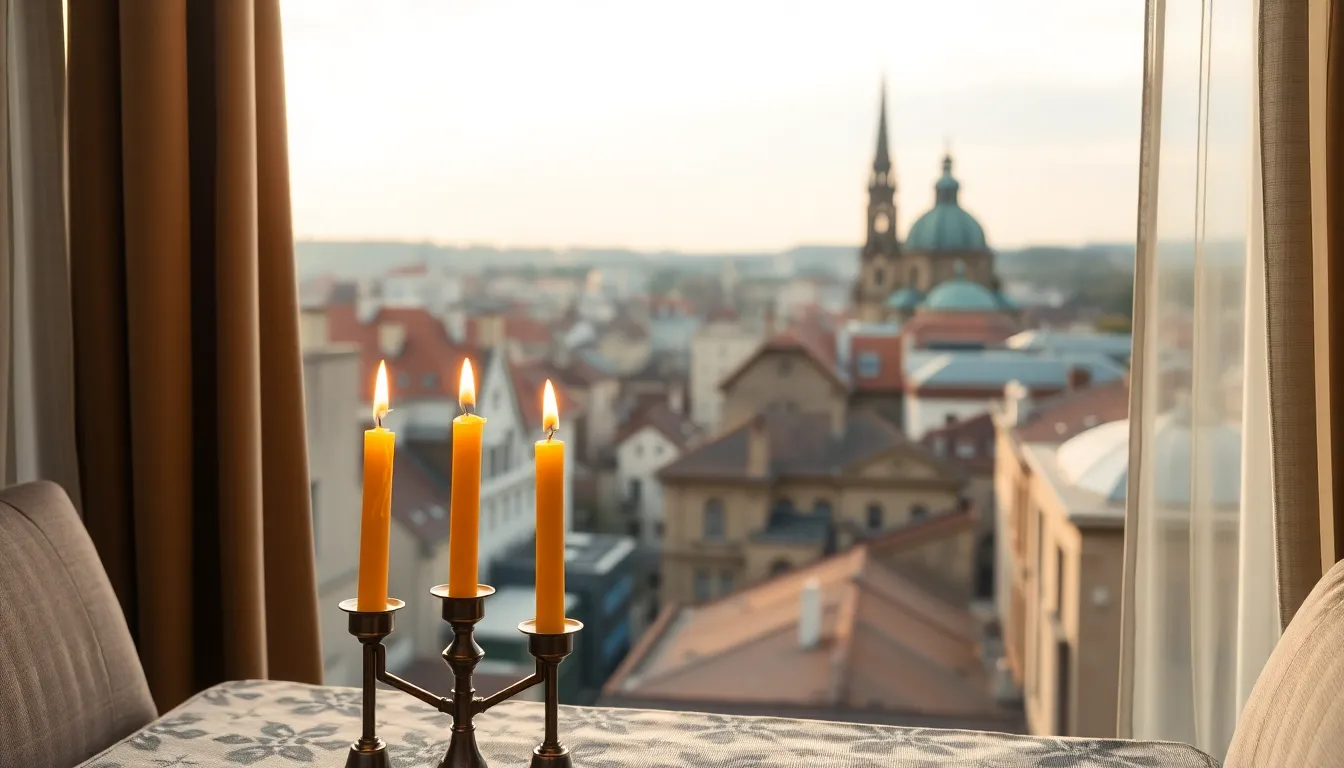
Of all the days on a Poland heritage itinerary, Shabbat is the one I plan with the most care, and the one that moves people the most. There is something that happens when a group keeps Shabbat in Krakow, in the very quarter where Jewish life was nearly erased, that no museum visit can reproduce. You are not studying the continuity of the Jewish people. You are being it.
But that experience does not happen by accident. A poorly planned Shabbat on a heritage trip is a logistical mess: people stranded too far from the synagogue, no proper meals, a group that meant to rest and instead spent the day frustrated. A well-planned Shabbat is the spiritual high point of the whole journey. The difference is entirely in the planning. Let me show you how to get it right.
Decide Early: Where Will You Spend Shabbat?
This is the first and most important decision, because everything else flows from it. For nearly every group, the answer is Krakow, specifically the Kazimierz district. It has an active Jewish community, the JCC Krakow, the historic synagogues including the Remuh, and enough kosher food infrastructure to feed a group properly across the day. Our guide on keeping kosher in Poland explains why Krakow is the natural base for observant logistics.
Warsaw is the other workable option, anchored by the Nozyk Synagogue. But for most heritage groups, Krakow gives you the richer combination of community, walkable synagogues, and the emotional weight of Kazimierz. Build your itinerary so the group is settled in Krakow before Shabbat begins, not arriving mid-afternoon Friday in a rush.
The Hotel Decision Drives Everything
Here is the single most practical piece of advice in this entire guide: book a hotel within walking distance of the synagogue. On Shabbat, an observant group does not drive. If your hotel is across the city, the day collapses. If it is a short, safe walk from Kazimierz, the day opens up.
Confirm the actual walking route, not just the map distance. Confirm it is a reasonable walk for your oldest and least mobile travelers, because a group moves at the pace of its slowest member and you do not want anyone left behind on the one day everyone should feel held. When I place a group for Shabbat, the walk to shul is the first thing I check, before stars, before breakfast, before the lobby.
Friday: Easing Into Shabbat
Plan a gentle Friday. The mistake I see leaders make is scheduling a heavy site visit Friday afternoon, so the group arrives at candle-lighting exhausted and scrambling. Instead, finish the day’s touring with real margin before sunset. Give people time to return to the hotel, rest, change, and arrive at Shabbat unhurried.
Coordinate candle-lighting times in advance, because they shift dramatically by season in Poland. A summer Shabbat in Krakow begins late in the evening; a winter Shabbat begins in mid-afternoon. This single fact reshapes your whole Friday, so check it the moment you set your dates.
Then walk to Kabbalat Shabbat together. Praying Friday night in a historic Krakow synagogue, as a group, is something your people will carry for the rest of their lives. Build the evening around it.
The Three Meals: Plan Them Like the Centerpiece They Are
Shabbat meals are not catering logistics. They are the heart of the day. Three meals, Friday dinner, Shabbat lunch, and seudah shlishit, all need to be arranged in advance with kosher supervision matched to your community’s standard.
For a group, the strongest path is communal or catered Shabbat meals coordinated through the Krakow community, often eaten together as a group. There is real power in your whole congregation sitting down to a Shabbat table in Poland, singing zmirot in the place their grandparents’ world was destroyed. I have watched people weep at that table, not from grief but from the sheer fact of being there, alive, together, keeping Shabbat.
Confirm every meal, its location, and the walk to it, in advance. And confirm refrigeration and hot-plate arrangements at the hotel if your group needs them, since these cannot be improvised on Shabbat itself.
Shabbat Day: Rest Is the Program
Resist the urge to program Shabbat day. The absence of an agenda is the point. After morning services, give the group the day: a long lunch, an afternoon walk through Kazimierz, rest, conversation, a quiet d’var Torah session if your community wants one.
If your group wants something structured, keep it Shabbat-appropriate: a guided walking tour of the Kazimierz synagogues and Jewish landmarks on foot, with no photography and no commerce, framed as learning rather than sightseeing. Walking the quarter slowly on Shabbat, with nowhere to rush, is a profoundly different experience than touring it on a weekday. Many of my groups say it was the most meaningful afternoon of the trip.
Havdalah and the Transition Back
End Shabbat together with Havdalah. There is a particular beauty to making Havdalah as a group in Poland, marking the close of the day and the return to the journey ahead, which often includes the heavier sites still to come. It is a natural moment to gather, reflect, and prepare the group emotionally for what comes next. Our broader Poland heritage travel tips cover how to pace the difficult days that often follow.
A Word on Mixed and Less-Observant Groups
Not every group keeps Shabbat fully, and that is fine. Even a group that does not observe strictly often finds that a deliberately Shabbat-shaped day, lighting candles together, sharing a Friday meal, resting from the intensity of touring, is one of the trip’s emotional anchors. You do not need a fully observant group to give your people a real Shabbat. You need intention and a good plan.
For groups that do keep Shabbat strictly, the planning has to be exact: the walk, the meals, the timing, the hotel. That precision is exactly what makes the day feel effortless to your travelers, even though it took real work behind the scenes.
Why It Is Worth the Planning
Most of a Poland heritage trip asks your group to confront loss. Shabbat asks them to celebrate survival. That contrast is the heart of the journey. To keep Shabbat in Krakow is to answer the destruction with continuity, to sing where there was silence, to gather where a community was scattered. No site visit delivers that. Only the lived practice does.
With Heritage Tours, the group leader travels free with 15 or more participants, and the Shabbat logistics, the walkable hotel, the catered meals, the service coordination, are handled as part of the planning. That frees you to do the one thing only you can do: lead your people into a Shabbat they will never forget.
FAQ: Observing Shabbat in Poland
Where is the best place to spend Shabbat on a Poland heritage trip?
For most groups, Krakow’s Kazimierz district, the historic Jewish quarter. It has an active community, the JCC Krakow, historic synagogues including the Remuh, and the kosher infrastructure to feed a group across all three Shabbat meals. Warsaw is a workable alternative anchored by the Nozyk Synagogue, but Krakow combines community, walkable synagogues, and the emotional weight of Kazimierz.
What is the most important Shabbat planning decision?
Booking a hotel within walking distance of the synagogue. An observant group does not drive on Shabbat, so a hotel across the city makes the day fall apart while a hotel a short walk from Kazimierz makes it work. Confirm the actual walking route and that it is reasonable for your oldest and least mobile travelers.
How are Shabbat meals arranged for a group?
Plan all three meals, Friday dinner, Shabbat lunch, and seudah shlishit, in advance with kosher supervision matched to your community’s standard. The strongest path is communal or catered meals coordinated through the Krakow community and eaten together as a group. Confirm each meal’s location, the walk to it, and any hotel refrigeration or hot-plate needs ahead of time.
Should we schedule activities on Shabbat day?
Generally no. Rest is the point, and the absence of a packed agenda is part of the experience. If your group wants structure, keep it Shabbat-appropriate, such as a guided walking tour of the Kazimierz synagogues on foot with no photography or commerce, framed as learning. Walking the quarter slowly on Shabbat is profoundly different from weekday touring.
Can a less-observant group still have a meaningful Shabbat?
Yes. Even groups that do not observe strictly often find a deliberately Shabbat-shaped day, lighting candles together, sharing a Friday meal, and resting from intense touring, becomes an emotional anchor of the trip. You need intention and a good plan more than full observance to give your people a real Shabbat in Poland.
If you want a Shabbat built into your Poland journey that your congregation will talk about for years, that is one of my favorite parts of planning these trips. Keeping Shabbat where a world was lost is the deepest answer a heritage group can give. See our Poland destination page and our group heritage tours, and when you are ready to plan the day, reach out to us.