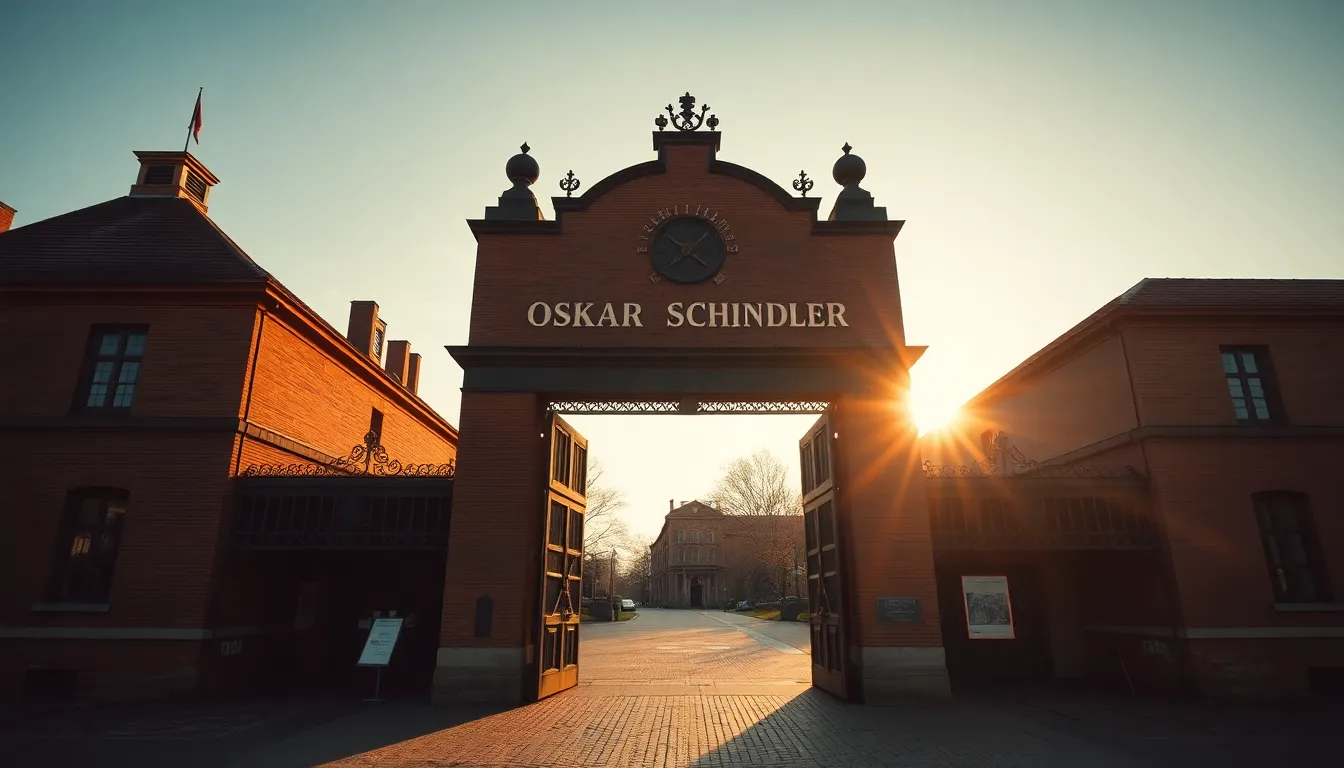
The first time I brought a group to Oskar Schindler’s factory in Krakow, a woman in my group stopped at the wall of photographs near the end and did not move for a long time. She had grown up watching the film. She thought she knew the story. What she had not expected was how ordinary the building felt. An administrative entrance. A staircase. Office windows. The place where more than a thousand people were kept alive does not announce itself. It looks like what it was, a factory, and that quietness is part of what makes the visit land the way it does.
I have led groups to Krakow for many years, and the Schindler factory museum is one of the sites I think about most carefully before we go. It is popular. It is moving. And it is also widely misunderstood, because most people arrive knowing the movie and not the history. My job, and the job of a good guide, is to help your group see past the film to the real and complicated story underneath. This guide is meant to help you do the same before you arrive.
What the Factory Actually Was
Oskar Schindler was a German industrialist who came to occupied Krakow in 1939, after the German invasion of Poland, looking to profit from the war. He took over a bankrupt enamelware factory in the Zablocie district and renamed it Deutsche Emaillewaren-Fabrik, known by its abbreviation Emalia. He staffed it with Jewish workers from the Krakow Ghetto, in part because their labor cost him almost nothing.
That is where the story begins, and it is important to begin there honestly. Schindler was not a saint who arrived to save people. He was a businessman, a member of the Nazi party, and a man with serious personal flaws. What changed over the years of the war is the heart of the story. As the persecution of Krakow’s Jews escalated, as the ghetto was liquidated and the Plaszow camp was built, Schindler began using his factory, his money, and his connections to protect his workers. By the end of the war, the list of people he employed and shielded had become a list of people he kept alive. More than 1,000 Jews survived because of it.
The factory you visit today is the actual administrative building of Emalia at 4 Lipowa Street. The production halls are largely gone, but the office wing, where Schindler worked, still stands. In 2010, the city of Krakow opened it as a museum.
Why the Museum Is Not Really About Schindler
Here is the thing most visitors do not expect, and the thing I always prepare my groups for. The museum inside the factory is not primarily a Schindler museum. Its full name is “Krakow under Nazi Occupation 1939 to 1945,” and that is exactly what it is. The permanent exhibition tells the story of the entire city during the German occupation. Schindler’s story is part of it, but only part.
I think this is the right choice, and I want your group to understand why before they walk in, so they are not disappointed to find less of Schindler than they expected. The film told one rescue story. The museum tells the story of a city of more than 200,000 people whose lives were broken by occupation, including the roughly 68,000 Jews of Krakow, most of whom did not survive. To stand only inside the rescue narrative is to miss the scale of what was happening all around it. The museum holds both. That is its gift.
Walking Through the Exhibition
The exhibition is large, immersive, and designed to move you through occupied Krakow almost like a set. You pass through reconstructed streets, a tram car, a photographer’s studio, the cramped interior of a ghetto apartment. The design is deliberate. It is meant to place you inside the daily texture of the occupation rather than behind glass looking at it.
For a heritage group, I find this approach powerful but demanding. It asks a lot of people emotionally, and it does so over a long route. I usually tell my groups to expect at least two hours inside, and to give themselves permission to sit when they need to.
The Rooms That Stay With People
A few spaces tend to affect groups most. There is a room representing the Krakow Ghetto, established in 1941 in the Podgorze district across the river, where the city’s Jews were confined before deportation. There is the reconstruction of Schindler’s office, with his actual desk, and behind it a structure made of enamel pots, a quiet reminder of the work that became a shelter. And near the end there is the “Hall of Choices,” a space that asks visitors to think about the decisions ordinary people made under occupation, to collaborate, to resist, to look away, to help.
That last room is the one I point my groups toward. The film makes Schindler exceptional, almost singular. The Hall of Choices reframes the question. It asks not “why was Schindler good” but “what did each person do.” For a faith community, that is a question worth sitting with.
Putting Schindler’s Factory in Its Place
The factory sits in Podgorze and Zablocie, on the same side of the river as the former ghetto. This matters for how you build your day. Within a short walk you have several sites that belong together, and seeing them as a group tells a fuller story than the factory alone.
Plaszow and the Ghetto Are Part of the Same Story
A short distance away is the site of the Plaszow concentration camp, the camp commanded by Amon Goth, which features heavily in the film. Today it is a large, open memorial landscape rather than a preserved camp. Many of my groups find that walking the Plaszow ground after the museum gives the rescue story its true weight. The people Schindler protected were being protected from this.
Nearby is Ghetto Heroes Square in Podgorze, marked by a field of empty metal chairs, a memorial to the Jews who were assembled here for deportation. The Eagle Pharmacy on the square, run during the occupation by a Polish pharmacist who aided ghetto residents, is now a small museum as well.
I encourage group leaders to think of these sites as one route rather than separate stops. To understand more about the wider story of Jewish Krakow, including the surviving Kazimierz quarter across the river, see our guide to Jewish heritage in Poland.
Booking Is Not Optional Here
I need to be direct about logistics, because this is the site where groups most often run into trouble. Schindler’s Factory is one of the most visited museums in Krakow, and timed tickets sell out, sometimes well in advance. You cannot simply arrive with a group and expect to enter. Group entry must be reserved ahead, and during busy seasons that means weeks of lead time.
This is one of the practical things Heritage Tours handles for the groups we work with. We book the timed slots, arrange a licensed guide who knows how to pace a group through the exhibition, and build the surrounding sites into the day so the factory does not stand alone. For the wider picture of how we structure a Poland journey, our group heritage tours page walks through how the leader experience works.
A Word on the Film, and the Truth
I want to say something gently to group leaders, because it comes up on almost every trip. Many of your people will arrive with the film as their entire frame of reference. That is not a bad thing. The film brought this story to millions and sent many of them to Krakow. But a film compresses, simplifies, and dramatizes, and the real history is both messier and, in its way, more honest.
Schindler died in relative poverty, having spent his fortune and never quite finding his footing after the war. He is buried in Jerusalem, on Mount Zion, and the people he saved and their descendants, the “Schindlerjuden,” tended his memory for the rest of their lives. The truer story is not one of a flawless hero. It is one of a deeply imperfect man who, in a time when almost no one acted, did. For a faith group, that gap between the man and the deed is exactly the part worth talking about.
When you prepare your community, I would not strip the film away. I would simply add the history to it, so that what they encounter in Krakow deepens rather than disappoints. For a sense of the broader Jewish Krakow your group will move through, our guide to Jewish heritage in Poland and our Poland destination overview are good places to start.
FAQ: Visiting Schindler’s Factory in Krakow
Is Schindler’s Factory worth visiting for a heritage group?
Yes, with the right expectation. The museum is one of the most affecting sites in Krakow, but it is a museum about the whole German occupation of the city, not only about Oskar Schindler. Heritage groups who arrive understanding that find it deeply rewarding, because it places the rescue story inside the full picture of what was happening to Krakow’s Jews. Groups who expect a film-style Schindler experience can be surprised. A good guide bridges that gap.
Do I need to book tickets in advance for a group?
Yes. Schindler’s Factory uses timed entry and is one of Krakow’s busiest museums. Group tickets sell out, often weeks ahead in peak season. You cannot reliably walk in with a group. Reserving slots in advance and arranging a licensed group guide are essential. Heritage Tours handles this booking for the groups we organize.
How much time should we allow inside the museum?
Plan for at least two hours, and ideally a little more for a group. The exhibition is large, immersive, and emotionally demanding, moving visitors through reconstructed streets and rooms of occupied Krakow. Groups need time to absorb it and time to rest. Rushing it undercuts the experience.
What other sites should we combine with the factory?
The factory sits near several connected sites on the same side of the river: the Plaszow camp memorial, Ghetto Heroes Square with its field of empty chairs in Podgorze, and the Eagle Pharmacy museum. Seeing these together tells a fuller story than the factory alone. Across the river, the surviving Kazimierz quarter rounds out the picture of Jewish Krakow.
Was Oskar Schindler really a hero?
The honest answer is complicated, and that complexity is part of why the story matters. Schindler was a German industrialist and Nazi party member who first employed Jewish workers because their labor was cheap. Over the course of the war he chose to protect them at growing personal risk and cost, and more than 1,000 people survived because of it. He was a flawed man who, in a time when almost no one acted to help, did. Heritage groups often find that the gap between the man and the deed is the most meaningful part to discuss.
If you are thinking about bringing your community to Krakow and want Schindler’s Factory to be part of a journey that tells the whole story, I would be glad to help you plan it. The booking, the pacing, the surrounding sites, the preparation of your group, those are the things I think about so you can focus on leading your people well.
Contact us whenever you are ready to begin that conversation.