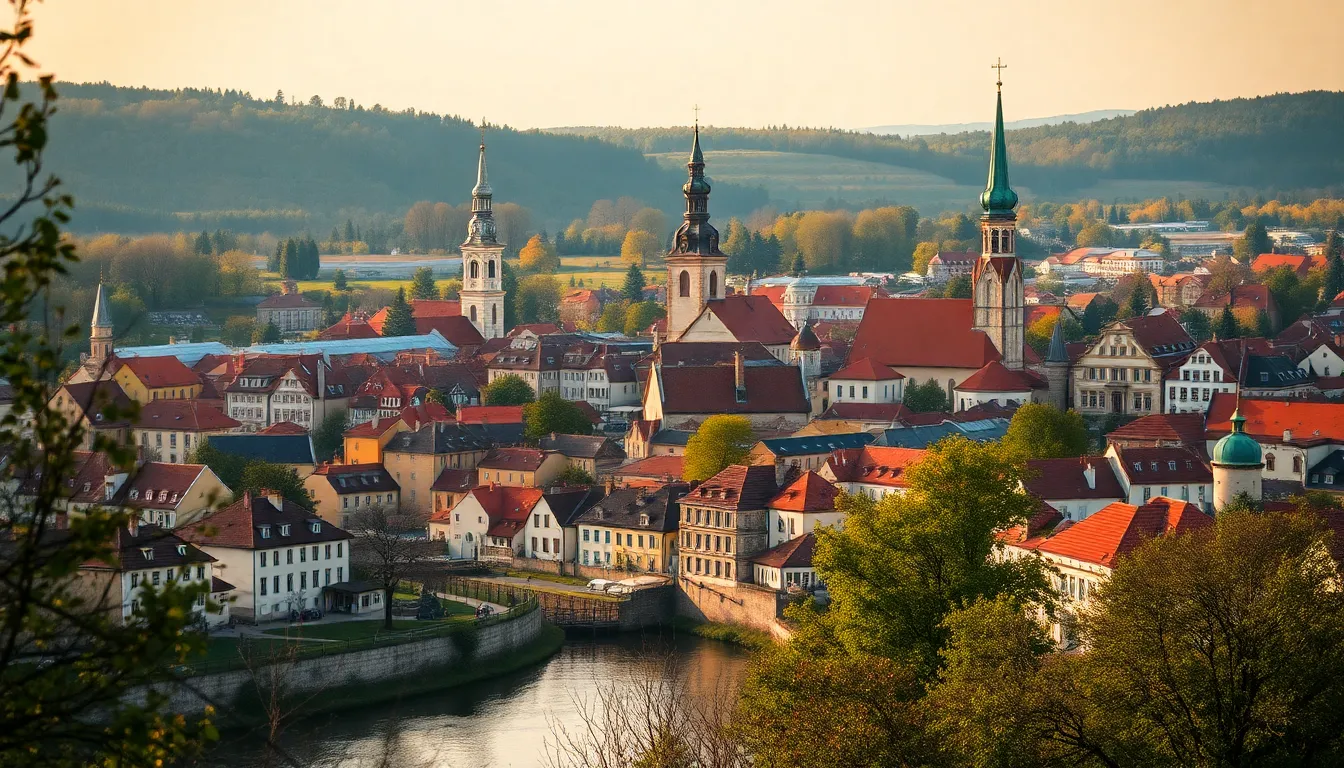
I have a soft spot for the towns that sit on borders, because borders are where the layers run deepest. Przemysl is one of those towns. It sits in the far southeast of Poland, on the San River, a few miles from the Ukrainian frontier, and for centuries it was a place where Poles, Jews, Ukrainians, and Armenians lived in the same streets, prayed in different buildings, and made a single city out of their differences. You can still read all of it in the architecture. Baroque Catholic churches, Greek Catholic and Orthodox cathedrals, surviving synagogues, all within a short walk of each other.
This is borderland heritage, and it teaches something the central Polish cities cannot. Poland’s eastern edge was never simple, never single, never one people. When I bring a group here, I am bringing them to a place where coexistence was the everyday reality, until the twentieth century tore it apart. If you are routing a group to the eastern reaches of the country, this is an orientation to what Przemysl holds.
The Borderland and Why It Matters
A City of Many Peoples
Przemysl is one of the oldest cities in Poland, and for most of its history it was profoundly mixed. In the eighteenth century, Jews made up more than half the population, with Latin Catholic Poles and Greek Catholic Ruthenians, the people we would now call Ukrainians, making up most of the rest, alongside Armenian and German communities. By the early twentieth century this was a true multiethnic city, where four faiths kept their cathedrals and synagogues in the same compact center.
For your group, this is the key to the place. Przemysl is not a city with one heritage and a layer of memory on top. It is a city where several living communities shared the ground for centuries. The Old Town still shows it. Walk it with a good guide, and your community sees Baroque Catholic churches, an Orthodox or Greek Catholic cathedral, and surviving synagogues, the silent witnesses to a time when Poles, Jews, Ukrainians, and Armenians genuinely coexisted here.
Why a Heritage Group Should Come
I bring groups to the borderlands because they complicate the story in the right way. The central narrative of Polish heritage is Polish and Jewish. Przemysl adds the Greek Catholic and Orthodox Ruthenian layer, the Armenian trace, and the lived reality of a multi-faith city. For a thoughtful faith community, that is a gift. It shows that the history of this part of Europe was always plural, and it asks harder, better questions about how that plurality was lost.
The Jewish Heritage of Przemysl
A Community at the Center
Jewish life in Przemysl reached back centuries and stood at the center of the city’s commercial and cultural life. The oldest synagogue, a fortress-like building designed by an Italian architect, was completed in the 1590s and served as a house of prayer until the war. By 1914 the city held four synagogues, including a Tempel for the Jewish progressives who wanted to integrate into Polish culture, with prayers and sermons in Polish. Before the Second World War, around 20,000 Jews lived here, roughly forty percent of the population.
What Survives
The Nazis burned the old fortress synagogue in 1939, and the war destroyed the community. Two synagogue buildings survive in Przemysl today: the New Synagogue and the Zasanie Synagogue, across the river. They no longer serve as places of worship, but they stand, and they let your group anchor the Jewish story in physical buildings rather than only in memory. The Jewish cemetery and the markers of the old Jewish quarter complete the picture. For a Jewish group, Przemysl holds a borderland community that was large, layered, and erased, distinct from the better-known stories of Krakow and Warsaw.
The Catholic and Greek Catholic Heritage
Two Cathedrals, Two Rites
Przemysl is one of the few cities where your group can see the Latin and the Eastern Christian traditions side by side, each with its own cathedral. The Roman Catholic cathedral anchors the Latin rite, the faith of the Polish community, in the heart of the Old Town. The city is also a seat of the Ukrainian Greek Catholic Church, whose cathedral carries the Eastern Christian tradition that belonged to the Ruthenian community.
For a Christian group, this is a rare and valuable encounter. The Greek Catholic Church holds Eastern liturgy and iconography in union with Rome, a tradition most Western Christians have never seen up close. Standing in both cathedrals in a single afternoon, your community grasps how the Christian world divided and overlapped along this border, and how two rites of the same faith lived in one city. The Armenian and Orthodox traces add still more layers to the picture.
The Fortress City
Przemysl carries one more layer worth knowing. It was a great fortress city of the Austro-Hungarian Empire, ringed with forts that became the site of one of the longest sieges of the First World War. The remnants of the fortress ring still stand in the hills around the city. For groups interested in how the borderlands became a battleground, the fortress adds the military dimension to the religious and ethnic story. It is not the reason most heritage groups come, but it deepens the sense of a city that sat on the fault line of empires.
Practical Orientation for Group Leaders
Where It Fits
Przemysl sits in the far southeast, near the Ukrainian border. It is a longer reach than the central sites, which means it suits groups going deeper into the eastern borderlands or combining Poland with travel further east. It pairs naturally with a route through southeastern Poland, including Sandomierz and the Vistula towns to the north. There are hotels in the city for groups that want to stay and walk the Old Town across two days.
Pacing
The Old Town is compact and walkable, which makes the heritage sites easy to cover on foot. The two cathedrals, the surviving synagogues, and the market square sit close together. A guide who knows the borderland history is essential here, because the layers are not obvious without someone to read them for your group. The fortress sites in the surrounding hills need transport and a half-day if your community wants them.
When to Visit
Late spring through early fall gives the best weather for walking the Old Town and the hills. The southeastern corner of Poland is quiet and green in late spring and early autumn, with the smallest crowds and the best light on the San River valley.
FAQ: Przemysl and the Eastern Borderlands
What makes Przemysl a borderland heritage city?
Przemysl sits in southeastern Poland near the Ukrainian border, on ground where Poles, Jews, Ukrainians, and Armenians lived together for centuries. The Old Town still holds Catholic churches, a Greek Catholic cathedral, and surviving synagogues within a short walk of each other, the marks of a genuinely multi-faith city.
What Jewish heritage survives in Przemysl?
Two synagogue buildings remain, the New Synagogue and the Zasanie Synagogue across the river, along with the Jewish cemetery and the shape of the old quarter. Before the war around 20,000 Jews lived here, about forty percent of the population, with four synagogues. The community was destroyed in the Holocaust, and the old fortress synagogue was burned in 1939.
What is the Greek Catholic heritage in Przemysl?
Przemysl is a seat of the Ukrainian Greek Catholic Church, whose cathedral carries the Eastern Christian tradition in union with Rome. With the Roman Catholic cathedral in the same Old Town, the city lets a group see the Latin and Eastern rites side by side, a rare encounter for Western Christian travelers.
Is Przemysl worth the longer journey southeast?
For groups going deeper into the borderlands, yes. It offers a multi-faith heritage that the central cities cannot, with Catholic, Greek Catholic, Orthodox, Jewish, and Armenian layers in one compact city. It pairs well with Sandomierz and the Vistula towns, and suits communities combining Poland with travel further east.
How long should a group spend in Przemysl?
One to two days. A full day covers the two cathedrals, the surviving synagogues, and the Old Town on foot. A second day allows the fortress ring in the surrounding hills and an unhurried pace. The compact center makes it manageable for mixed-age groups, though a guide who knows the borderland history is essential.
If the eastern borderlands draw you, let me help you reach them well. Begin with the full Poland heritage travel guide, then look at our group heritage tours and our Poland destination planning. When you are ready to talk it through, reach out through our contact page.