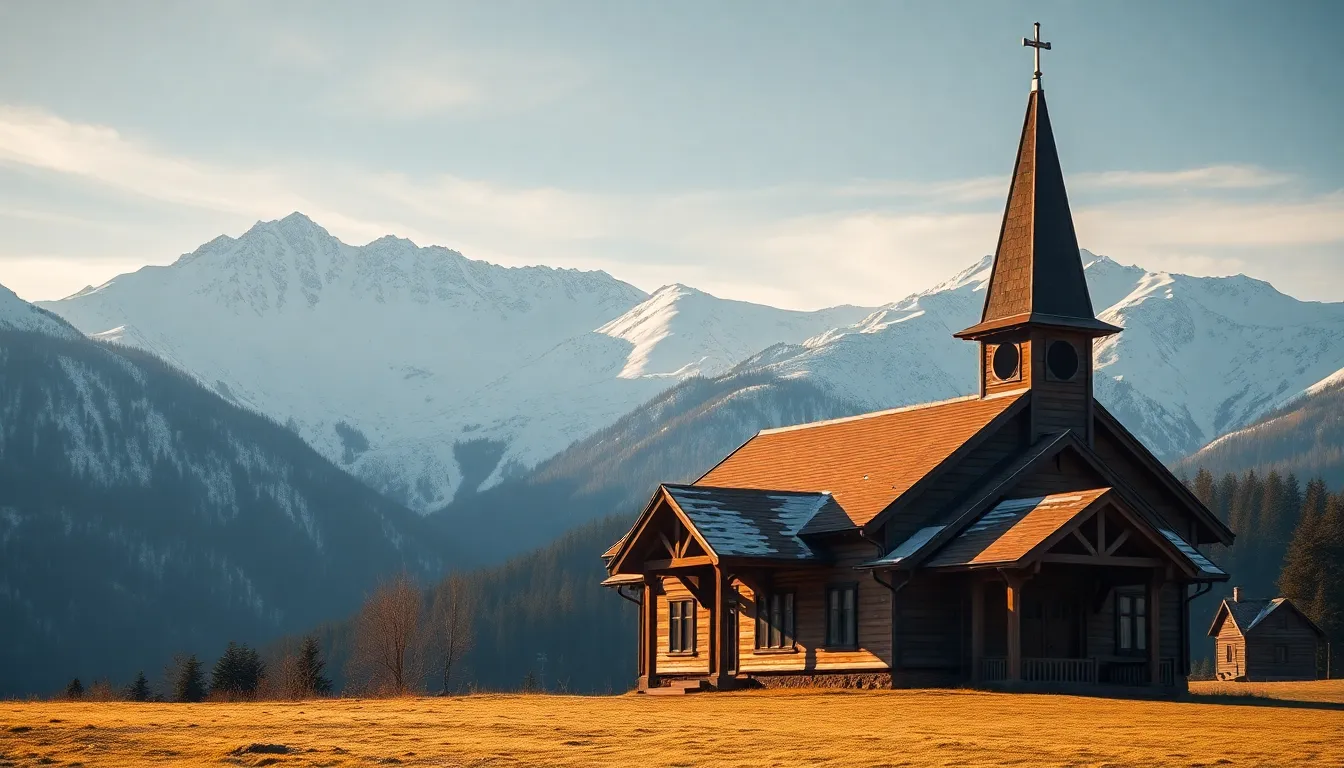
Most groups come to Poland for the cities. They land in Krakow, they visit Auschwitz, they walk Kazimierz, and they fly home changed. I understand why. Those are the sites that carry the weight. But over forty years of bringing communities here, I have learned that the groups who add a few days in the Tatras come home with something the city-only groups miss. They come home with breath in their lungs and a different kind of quiet in them.
The Podhale region sits at the southern edge of Poland, where the country runs up against the Tatra Mountains and the Slovak border. It is highland country. The faith here is older and rougher than the cathedral faith of the lowland cities, and the land itself does something to a group that no museum can. If you are weighing whether to bring your community south, this is the orientation I wish someone had given me the first time.
Where Podhale Sits and Why It Matters
Podhale means “below the meadows,” and that is exactly where you are. The region runs along the foothills of the Tatras, with Zakopane as its unofficial capital, about two hours south of Krakow by road. The drive itself is part of the experience. You watch the flatland give way to hills, then to the jagged limestone wall of the High Tatras, the only true alpine range in Poland.
This was frontier country for centuries. The people who settled here, the Gorale, or highlanders, came through medieval migrations that mixed Polish settlers with Vlach shepherds moving along the Carpathian arc. That mix produced a distinct culture: its own dialect, its own dress, its own music, and its own way of holding faith. When Poland was partitioned and erased from the map in the nineteenth century, the Tatras became a symbol of Polish endurance. Artists and writers came here to find something pure and unbroken. For your group, that history matters because it explains why this region feels different from the rest of the country. It was never fully conquered, never fully flattened. It kept its shape.
The Wooden Churches and the Highland Faith
Zakopane Style and the Sacred Buildings
The thing your group will notice first is the wood. Highland Catholicism built itself in timber, and the results are unlike church architecture anywhere else in Europe.
The Zakopane style was created by Stanislaw Witkiewicz in the late nineteenth century, drawing directly on the building traditions of the highlanders. He wanted a Polish architecture rooted in something native, and he found it here. The Holy Family Church on Krupowki, Zakopane’s main street, shows the style at work in a sacred building. It is worth walking your group through slowly. The carving, the steep roofs, the dark timber, all of it carries the conviction that faith and place belong together.
Debno and the UNESCO Wooden Churches
If you want your group to see the oldest expression of this tradition, take them to the Church of St. Michael the Archangel in Debno Podhalanskie. It was built around 1490 without a single nail, and it sits on the UNESCO World Heritage List as one of the wooden churches of southern Lesser Poland. The interior is covered in original painted decoration that has survived more than five centuries. Standing inside it, your community is standing in a space that has held prayer continuously since before Columbus sailed. For a faith group, that continuity lands hard.
Peksowy Brzyzek: The Old Cemetery
In Zakopane itself, the historic Peksowy Brzyzek cemetery sits beside a small wooden church. The Tatra guides, the artists, the mountain people who shaped this region are buried here under hand-carved highland headstones. It is a quiet stop, and a good one for a group that needs a moment of reflection between the bigger sites. It tells you who these people were and what they valued.
The Jewish Story in the Highlands
The Podhale region is not where most Jewish heritage groups expect to find their story, and that is precisely why it is worth understanding. The Jewish presence here was real but smaller and more rural than in the great lowland centers like Krakow or Lublin. Jewish families lived as traders, innkeepers, and craftsmen in the towns scattered across the foothills, including Zakopane itself once it grew into a resort. Nowy Targ, the old market town at the heart of Podhale, held the largest Jewish community in the region, with a synagogue and a community that anchored the area’s commercial life.
The Holocaust reached the highlands as completely as it reached everywhere else in Poland. The Jewish cemetery in Nowy Targ survives, and the deportation that emptied the region in 1942 sent its Jews to the death camps along with the rest of southern Poland’s communities. For a Jewish group already visiting Krakow, a stop in Nowy Targ adds a rural dimension to a story that is too often told only through the cities. It shows that Jewish life in Poland was not only urban. It reached into the mountain towns, and it was erased there too.
Practical Orientation for Group Leaders
Getting There and Getting Around
Zakopane is the natural base. The road from Krakow takes around two hours, though it can stretch longer on summer weekends when Polish vacationers fill the route. I tell group leaders to plan the Tatra days as a distinct segment of the itinerary, not as a day trip. Two or three nights in the region lets your group slow down, which is the entire point of coming here.
What the Land Asks of Your Group
The Tatras are real mountains. You do not need to summit anything, but the region rewards groups who are willing to walk. The cable car up Kasprowy Wierch and the walk to Morskie Oko, the glacial lake, are both manageable for mixed-age groups and both deliver the sense of scale that makes this region matter. For older travelers, the valley walks and the town itself offer plenty without any climbing. Be honest with your community about what each day involves so people can choose well.
When to Come
Summer brings green meadows, long days, and crowds. Winter turns Zakopane into a ski town, beautiful but busy and cold. My own preference for a heritage group is late spring or early fall, when the weather is mild, the crowds thin, and the light on the limestone walls is at its best. The wooden churches photograph beautifully in that light, and the walking is comfortable.
FAQ: The Tatra and Podhale Heritage Region
Is Podhale worth adding to a Poland heritage trip?
For most groups, yes, if you have the days. The Tatras give your community a change of pace and a different kind of encounter than the city sites. After the emotional weight of Auschwitz and the lowland heritage sites, the mountains offer space to breathe and reflect together. The wooden churches add a layer of Polish faith history that the cities do not show.
What are the main heritage sites in the Podhale region?
The wooden Church of St. Michael the Archangel in Debno is the standout, a UNESCO-listed church from around 1490. In Zakopane, the Holy Family Church shows the Zakopane architectural style, and the Peksowy Brzyzek cemetery holds the region’s cultural figures. Nowy Targ preserves the area’s Jewish cemetery and the memory of its highland Jewish community.
Is there Jewish heritage in the Tatra region?
Yes, though it is more rural and less concentrated than in Krakow or Lublin. Nowy Targ held the largest Jewish community in Podhale, with a synagogue and a surviving cemetery. The region’s Jews were deported in 1942 along with the rest of southern Poland. For Jewish groups, it shows that the story reached the mountain towns as well as the cities.
How many days should a group spend in the Tatras?
Two to three nights works well. That gives your group time for one or two mountain experiences, the wooden churches, and an unhurried day in Zakopane itself. A single day trip from Krakow is possible but loses most of what makes the region worth visiting.
Is the Podhale region suitable for older travelers?
Yes, with planning. The mountains offer everything from cable car rides and gentle valley walks to longer hikes. A good itinerary gives older members the views and the heritage sites without demanding any climbing. Be clear with your group about what each day involves so people can choose what fits them.
If the Tatras sound like the right addition to your community’s Poland journey, I would be glad to talk it through. Start with the full Poland heritage travel guide for the wider picture, then look at how we structure our group heritage tours and our broader Poland destination planning. When you are ready, reach out through our contact page and we will build the right route for your group.