Groups arrive in Warsaw and most of them never leave the city. I understand the pull. Warsaw holds POLIN, the Ghetto memorials, the Uprising sites, and enough heavy heritage to fill several days. But Warsaw sits at the center of a region, and the region is named Mazovia. It is the flat green heartland that the Vistula River runs through, and it tells you where Warsaw came from and why Poland is shaped the way it is. After forty years of bringing communities here, I have learned that a day or two beyond the city changes how a group understands the whole country.
This is an orientation to Mazovia as a heritage region, not just to Warsaw as a city. If you are planning your community’s time in the Polish capital, it helps to know what surrounds it.
Mazovia: The Heart of the Country
The Vistula Heartland
Mazovia is the broad central plain of Poland, and the Vistula is its spine. The river rises in the mountains far to the south and runs north through Krakow, Sandomierz, and Warsaw before reaching the Baltic. Where it passes through Mazovia, it shaped the towns, carried the trade, and gave the region its character. This was duchy country in the Middle Ages, a region of dukes and small fortified towns before it was absorbed into the Polish crown and Warsaw rose to become the capital.
For your group, knowing this puts Warsaw in context. The city did not appear from nowhere. It grew at a crossing point on a great river, in the middle of a region that had its own dukes, its own churches, and its own long history before the capital was ever moved here. Standing on the Vistula in Warsaw, your community is standing on the river that made the country.
Why a Group Should Look Beyond the City
Warsaw is essential, and no group should skip it. But the city was almost entirely destroyed in the Second World War and rebuilt afterward, which means much of what you see is reconstruction, however faithful. The surrounding region holds older, original heritage that survived. A short trip into Mazovia gives your group continuity that the rebuilt capital cannot, and it adds the rural dimension to a story too often told only through the city.
Warsaw as the Center of the Region
The Jewish Heritage
Warsaw was the largest Jewish city in Europe before the war, and its Jewish heritage is the reason most groups come. The POLIN Museum of the History of Polish Jews stands on the site of the former Ghetto and tells the full thousand-year story of Jewish life in Poland, beginning long before the Holocaust. It is, in my view, the single most important museum a heritage group can visit in the country. I recommend scheduling it early, because it gives your group the context for everything else they will see, in Warsaw and beyond.
The Ghetto area itself is now a modern neighborhood, marked by memorials rather than surviving buildings. The Warsaw Ghetto Uprising Memorial stands where the fighting began in April 1943. For Jewish groups in particular, these sites carry a weight that asks for a good guide and unhurried time.
The Catholic and National Heritage
Warsaw’s Catholic heritage is woven into the city’s survival and rebuilding. Holy Cross Church holds the heart of Frederic Chopin, sealed in a pillar, and was itself destroyed in the Uprising and raised again from rubble, a story that mirrors the whole city. The Old Town, painstakingly reconstructed after the war and recognized by UNESCO for the achievement, holds churches and squares that look centuries old and are in fact a monument to a nation’s refusal to let its heart be erased.
Czerwinsk and the Romanesque Heritage of Mazovia
The Abbey Above the Vistula
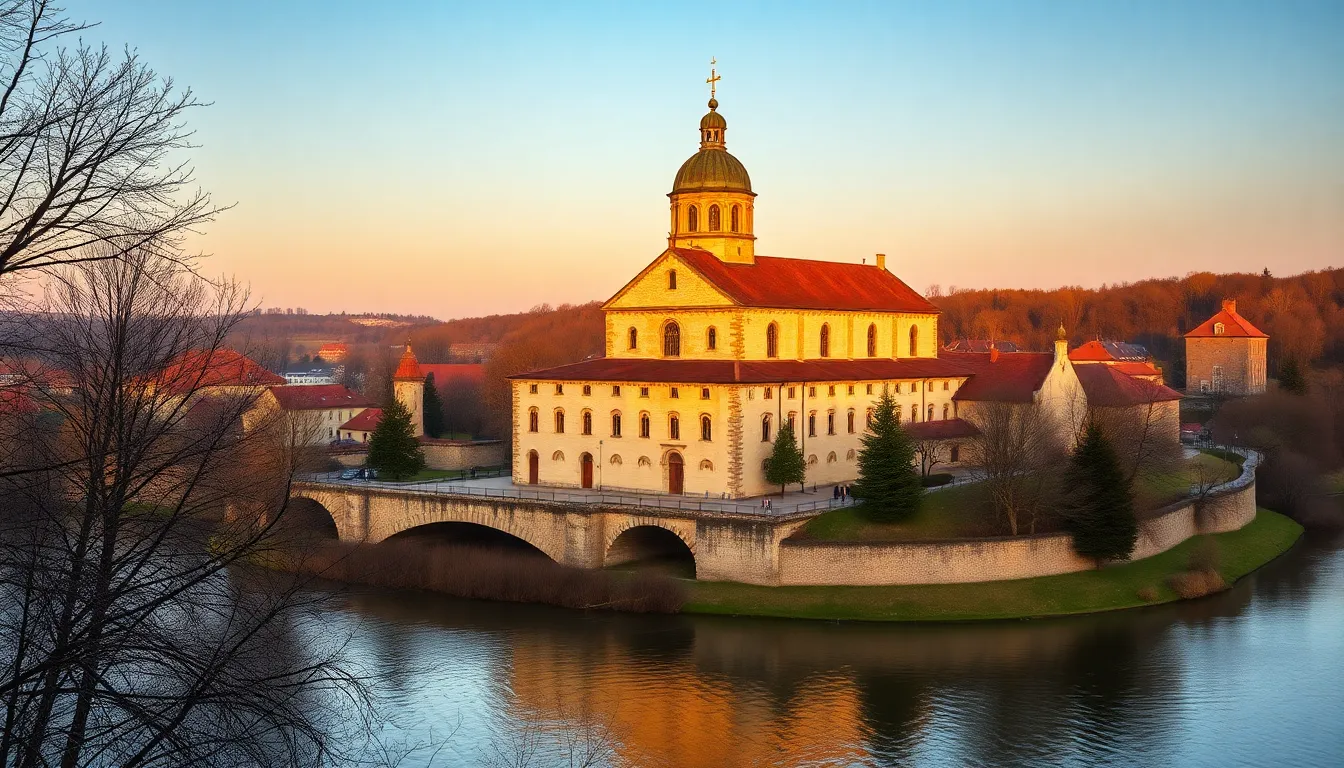
If you take your group to one place beyond Warsaw, I would point you to Czerwinsk nad Wisla. It is a small town on the Vistula, around an hour northwest of the capital, and it holds one of the most precious Romanesque buildings in Poland.
The Abbey Church of Our Lady of Consolation was founded in the twelfth century by the bishop of Plock, who brought canons here from an abbey in Liege. It is a three-aisled Romanesque basilica with twin western towers, and it carries something rare: the largest collection of Romanesque wall paintings in Poland, dating to the thirteenth century, along with a richly carved twelfth-century main portal. This was one of the first places in Polish architecture where brick was used in the Romanesque manner.
For a faith group, Czerwinsk offers what the rebuilt capital cannot. This is original, continuous, nearly nine hundred years of unbroken prayer in a single building. The Vasa kings made pilgrimages here. The abbey stands above the river much as it has for centuries, and a group standing in it feels the long reach of Polish Christianity in a way no reconstruction can provide.
A Quiet Counterpoint
Czerwinsk is a quiet site, and that is the point. After the intensity of POLIN and the Ghetto memorials, a morning at a Romanesque abbey above a slow river gives your community room to breathe and reflect. I often use it as a deliberate change of pace, a place to absorb what the city has given before the group moves on.
Practical Orientation for Group Leaders
Basing and Day Trips
Warsaw is the base for the entire region, with the hotels, the airport, and the major sites. Czerwinsk works as a half-day or full-day trip, around an hour each way. Other Mazovian towns along the Vistula reward a group with extra days, but Czerwinsk is the one I would prioritize.
Sequence and Pacing
I never schedule the heaviest Warsaw sites on the first morning, and I build in room to breathe across the days. Pairing a heavy city day with a quieter regional day, like Czerwinsk, gives the trip a rhythm that helps a community process what they are seeing. The emotional arc matters as much as the sites.
When to Visit
Spring through early fall gives mild weather and long days. Late April brings Yom HaShoah, Holocaust Remembrance Day, when memorial ceremonies take place across Poland, which many Jewish groups choose to plan around. The Vistula countryside is at its best in late spring and early autumn.
FAQ: The Mazovia Heritage Region
What is Mazovia and where is it?
Mazovia is the broad central plain of Poland, with Warsaw at its heart and the Vistula River running through it. It was medieval duchy country before Warsaw rose to become the national capital. For heritage groups, it is the region that gives Warsaw its context.
What are the main heritage sites in the Mazovia region?
Warsaw holds the major sites: the POLIN Museum, the Ghetto memorials, the Uprising Memorial, Holy Cross Church, and the reconstructed Old Town. Beyond the city, the Romanesque abbey at Czerwinsk nad Wisla holds Poland’s largest collection of Romanesque wall paintings and nearly nine centuries of continuous worship.
Is it worth leaving Warsaw to see the surrounding region?
For groups with the time, yes. Warsaw was largely destroyed and rebuilt, so much of it is faithful reconstruction. The surrounding region holds older, original heritage that survived the war. Czerwinsk in particular offers continuity and a quieter pace that the rebuilt capital cannot.
What makes Czerwinsk worth a visit?
The twelfth-century abbey church above the Vistula is one of Poland’s most valuable Romanesque buildings, with the country’s largest collection of Romanesque wall paintings and a carved medieval portal. It has held prayer continuously for nearly nine hundred years and once drew royal pilgrimages. It offers a calm counterpoint to the intensity of Warsaw’s sites.
When is the best time to bring a group to the Warsaw region?
Spring through early fall offers the best weather. Late April includes Yom HaShoah, Holocaust Remembrance Day, which many Jewish groups plan around. The Vistula countryside is most beautiful in late spring and early autumn.
If Mazovia and the Warsaw region fit your community’s plans, I would be glad to help you shape the days. Start with the full Poland heritage travel guide, then look at our group heritage tours and our Poland destination planning. When you are ready, reach out through our contact page and we will build the route that fits your group.