I will tell you something that surprises most group leaders. Lower Silesia is the part of Poland where the borders moved more than the people. For most of its history this was German land. The cities had German names, the churches held German Lutherans, and the maps drew it outside Poland entirely. Then 1945 came, the border shifted west, the German population left, and Polish families who had themselves been displaced from the east moved in. The buildings stayed. The people changed.
That layering is what makes the region worth understanding. When you bring a group here, you are not visiting a single story. You are walking through Catholic, Lutheran, and Jewish heritage stacked on top of each other, in a place that has been Polish, German, Bohemian, and Habsburg by turns. Wroclaw, the regional capital, holds all of it. Over the years I have found that groups who grasp this layering before they arrive get far more out of the region than groups who treat it as just another stop.
Understanding Lower Silesia Before You Arrive
A Border That Kept Moving
Lower Silesia sits in southwestern Poland, against the Czech border, with Wroclaw at its heart on the Oder River. For your group, the single most useful thing to know is that this region’s identity was rebuilt within living memory. The Germans who lived here for centuries were expelled after the Second World War, and Poles arriving from the eastern territories that Poland lost to the Soviet Union took their place.
This means the heritage you encounter belongs to communities that are no longer here, preserved by communities that arrived later. It is a place of inheritance rather than continuity. That sounds abstract until you stand in a Lutheran church built by people whose descendants now live in Germany, maintained by a Polish Catholic town. Then it becomes very concrete, and very moving.
Why It Suits a Heritage Group
The reason I bring groups to Lower Silesia is that it teaches something the better-known sites cannot. Poland’s story is usually told as Polish and Jewish. Lower Silesia adds the German Protestant layer and the experience of populations uprooted and resettled. For a thoughtful faith community, that complexity is a gift. It complicates the simple version and replaces it with something truer.
The Peace Churches: A Protestant Heritage Like No Other
What Makes Them Extraordinary
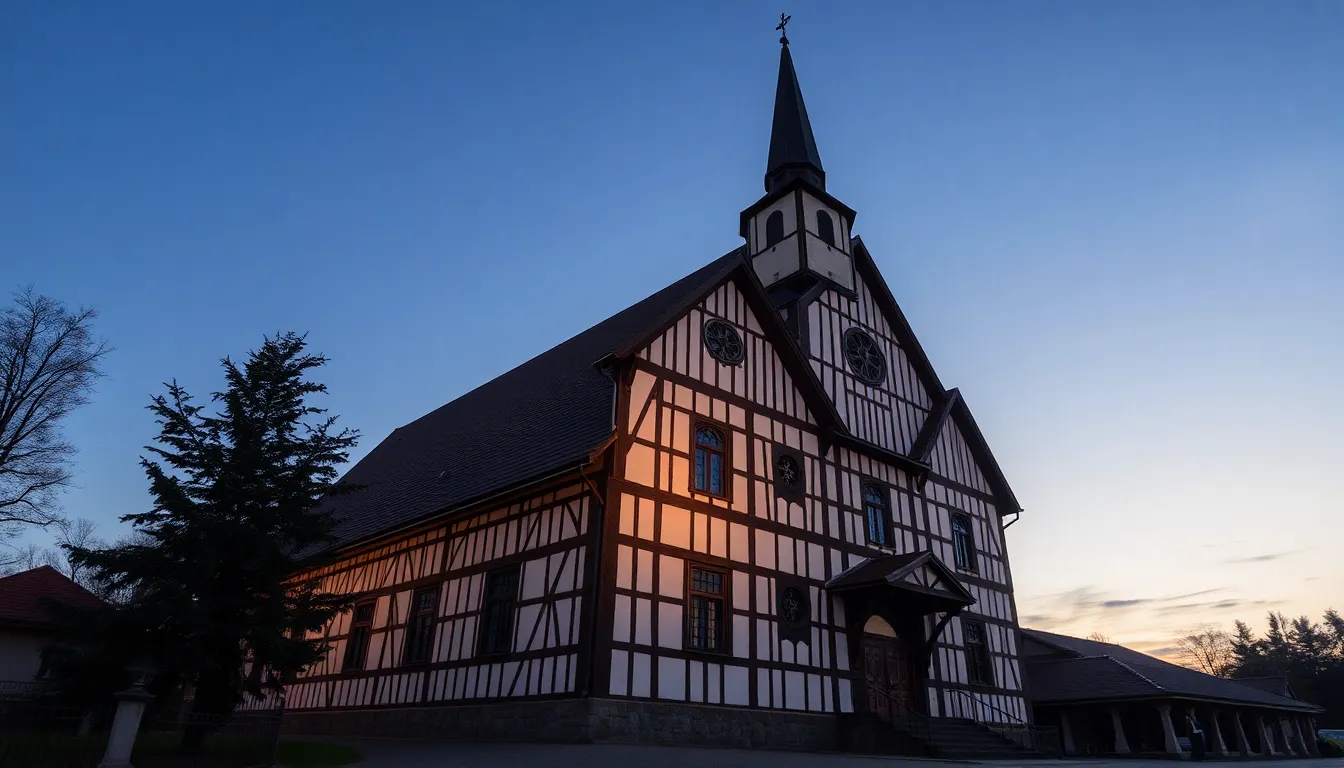
The two Churches of Peace, in Swidnica and Jawor, are the heritage sites I send every group to in this region. They are the largest timber-framed religious buildings in Europe, and they exist because of a single grudging clause in a peace treaty.
After the Thirty Years War ended in 1648, the Peace of Westphalia stripped the Lutherans of Silesia of nearly all their churches. Through Swedish diplomatic pressure, the Emperor allowed three exceptions. The Lutherans could build three churches, but only from wood, loam, and straw, with no steeples and no bells, outside the city walls, and they had one year to finish each one. The terms were meant to be impossible and humiliating.
Austerity Outside, Glory Inside
What the Lutherans built in response is one of the great acts of faith under pressure that I know of anywhere. From the outside the churches look plain, exactly as the restrictions demanded. Step inside, and the interiors explode into Baroque painting and carved galleries. The church in Jawor holds around 180 painted Biblical scenes. The church in Swidnica adds apocalyptic visions and the panorama of the surrounding land. They seat thousands. UNESCO recognized both in 2001.
For a Protestant group, these churches are essential. They are a monument to a community that was told it could not worship and built cathedrals out of timber and straw in defiance. For any faith group, they are a lesson in what people do when their faith is constrained.
The Jewish Heritage of Wroclaw
Wroclaw, known as Breslau under German rule, held one of the most significant Jewish communities in German-speaking Europe. This was a community of scholars and reformers, the city where the modern movements within Judaism took intellectual shape in the nineteenth century.
The White Stork Synagogue is the survivor. Built in the Neoclassical style and completed in 1829, it sits in what was the Jewish quarter. It is the only synagogue in Wroclaw that came through the Holocaust standing, and after a long restoration it was rededicated in 2010. Today it serves as the religious and cultural center of the city’s Jewish community again. Walking your group through it, you are in a space that holds both the destruction of Breslau’s Jews and the quiet return of Jewish life to the city.
The surrounding district preserves the shape of the old Jewish quarter, and a knowledgeable guide can help your group read the streets, the memorial markers, and the layered German-Polish-Jewish history written into them. For a Jewish group, Wroclaw offers a story distinct from Krakow or Warsaw. This was German Jewry, with its own character, its own scholarship, and its own loss.
Wroclaw Itself and the Catholic Heritage
Wroclaw rewards a group that simply walks it. The Cathedral Island, Ostrow Tumski, holds the Gothic Cathedral of St. John the Baptist and a cluster of churches that go back to the city’s beginnings as a bishopric over a thousand years ago. The market square, rebuilt after wartime destruction, is one of the largest in Europe. The Catholic heritage here is genuine and deep, layered with the same German and Polish history that marks everything in the region.
For a Christian group, Wroclaw pairs naturally with the Peace Churches. In two or three days your community can encounter Catholic, Lutheran, and Jewish heritage within a short radius, which is rare anywhere.
Practical Orientation for Group Leaders
Where to Base
Wroclaw is the obvious base. It has the hotels, the restaurants, and the airport, and it puts the Peace Churches within day-trip reach. Swidnica is around an hour by road, Jawor a little further. I recommend two nights in Wroclaw at minimum, with a full day given to the Peace Churches.
Pacing and Sequence
The region works well as a calmer counterpoint to the intensity of Krakow and the Holocaust sites. Some group leaders open their Poland trip here before heading to the heavier sites, which gives the community a gentler entry. Others close here, which gives them room to process. Either sequence works. What does not work is rushing it. The layering of this region takes time to absorb.
When to Visit
Late spring through early fall gives the best weather and light. The Peace Churches, with their painted interiors, are worth seeing on a bright day when the light reaches the galleries. Wroclaw is comfortable from May through October.
FAQ: The Lower Silesia Heritage Region
What are the must-see heritage sites in Lower Silesia?
The two Churches of Peace in Swidnica and Jawor lead the list, both UNESCO sites and the largest timber-framed churches in Europe. In Wroclaw, the White Stork Synagogue, the Cathedral Island, and the market square give your group Jewish, Catholic, and civic heritage within the city itself.
Why is Lower Silesia different from the rest of Poland?
For most of its history this was German territory. After 1945 the border moved west, the German population left, and displaced Poles resettled the region. The heritage you see was built by communities no longer present and preserved by those who arrived later. It adds a German Protestant layer to Poland’s usual Polish-Jewish story.
What are the Churches of Peace?
They are Lutheran churches in Swidnica and Jawor, built in the mid-1600s after the Peace of Westphalia stripped Silesian Protestants of their churches. The Emperor allowed only three, built from wood, loam, and straw, without steeples or bells, each within a year. Plain outside and richly painted inside, they stand as a monument to faith under restriction.
Is there Jewish heritage to visit in Wroclaw?
Yes. Wroclaw, formerly Breslau, held a major German-Jewish community known for scholarship and religious reform. The White Stork Synagogue, completed in 1829, survived the Holocaust and serves the Jewish community again today after restoration. The old Jewish quarter around it still carries its history.
How long should a group spend in Lower Silesia?
Two to three days. That allows a full day for the Peace Churches, a day for Wroclaw’s heritage sites, and time to absorb the layered history. The region suits groups who want depth over speed.
If Lower Silesia fits the journey you are imagining for your community, let me help you place it well. Begin with the full Poland heritage travel guide, then explore our group heritage tours and our Poland destination planning. When you are ready to talk, reach out through our contact page.