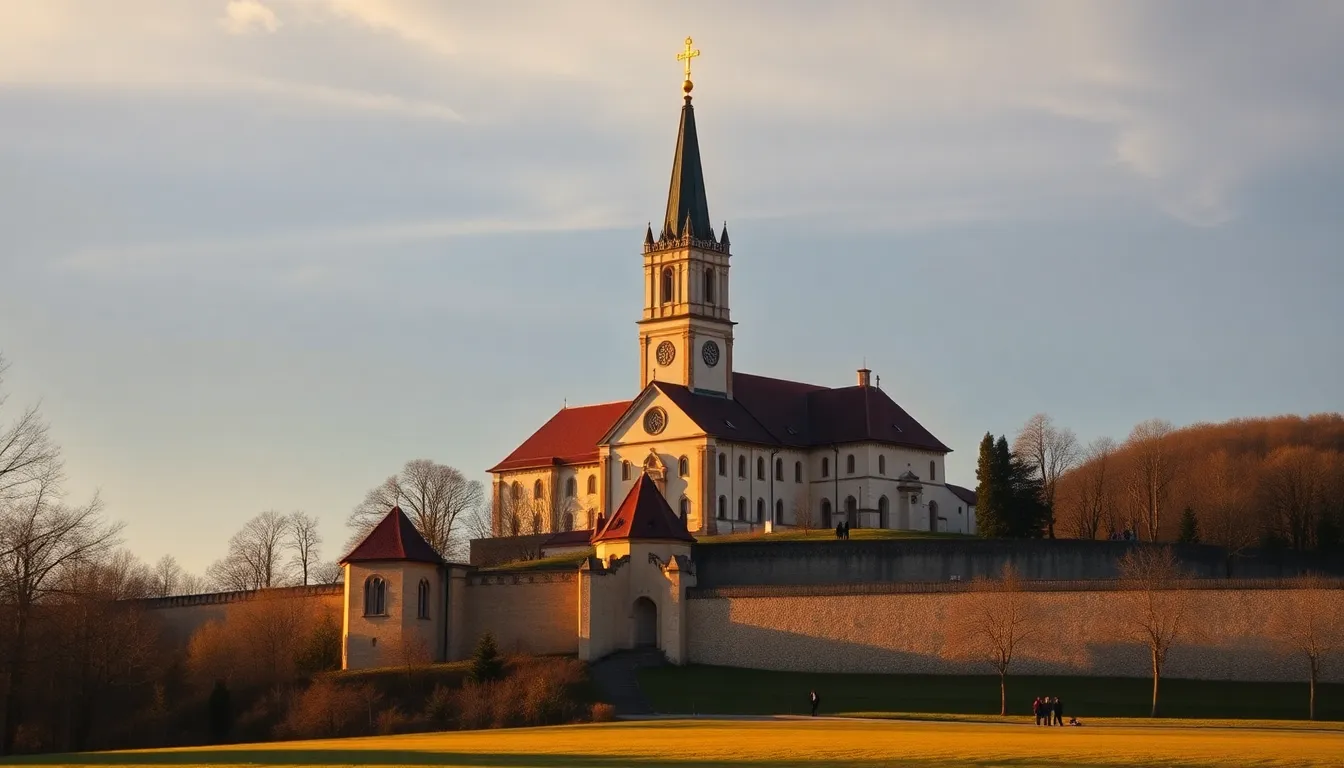
The first time I brought a Christian group to Czestochowa, one of the pastors leaned over to me as we walked up toward the monastery and said, “I did not expect to feel this.” He had read about the Black Madonna. He knew the facts. But standing in the chapel, watching Polish families kneel on the stone floor, hearing the silver shutters open to reveal the icon, something moved in him that no briefing had prepared him for.
I have spent more than forty years helping group leaders plan heritage journeys, and Czestochowa is one of the places I return to most often. For Christian groups, it is the spiritual center of Poland. For any group trying to understand the country, it explains something that Krakow and Warsaw cannot. Let me walk you through what this city holds and how to bring your community here well.
Why Czestochowa Matters
Czestochowa is a city in southern Poland of around 220,000 people. On most days it looks like an ordinary industrial town. But for over six hundred years it has been the heart of Polish Catholic faith, and on the major feast days it becomes something else entirely. Hundreds of thousands of pilgrims walk here, some on foot for nine days from Warsaw, to stand before one icon.
That icon is the Black Madonna of Czestochowa, also called Our Lady of Czestochowa. It is a painting of Mary holding the infant Jesus, her face darkened by age, candle smoke, and centuries of veneration. Two scars cut across her right cheek, damage from a 1430 raid that has never been fully repaired, deliberately, because the scars are part of the story now.
For Poles, this image is not only religious. It is national. When the country was partitioned and erased from the map for over a century, when it was occupied and broken, Czestochowa stood. The Black Madonna was crowned “Queen of Poland” in 1656 after the monastery withstood a Swedish siege. That title still holds. Understanding Czestochowa means understanding that for Poland, faith and survival are the same story.
Jasna Gora: The Monastery at the Center of It All
Everything in Czestochowa orients around Jasna Gora, which means “Bright Mountain.” It is a fortified monastery on a hill, run by the Pauline order since 1382, and it is one of the most visited pilgrimage sites in the world.
The Chapel of the Black Madonna
The icon lives in a side chapel, not the main basilica. This surprises some visitors. The chapel is dark, dense with candlelight, and almost always full. The icon itself is set behind a silver and ebony altar, and it is revealed and covered at set times each day with a ceremonial opening and closing of metal shutters, accompanied by trumpet fanfare.
I tell every group leader the same thing: time your visit around the unveiling. Standing in that chapel when the shutters open, surrounded by people who have walked for days to be there, is the moment your group will remember. Check the daily schedule with your guide before you arrive, because the times shift between summer and winter.
The Basilica and the Treasury
The main basilica is baroque, ornate, and worth time on its own. Beyond it, the monastery holds a treasury of votive offerings, gifts left by pilgrims over the centuries, including military decorations, jewelry, and crutches left by those who believed they were healed. The Knights’ Hall and the museum tell the story of the 1655 siege, when roughly 70 monks and 180 soldiers held off a much larger Swedish army. That defense became the turning point of the war and a permanent symbol of Polish resilience.
Walking the Ramparts
The monastery is still a fortress, with bastions and walls you can walk. From the ramparts you see the long avenue, Aleja Najswietszej Maryi Panny, that runs straight from the city center to the monastery gate. On pilgrimage days that avenue fills with people. Even on a quiet weekday, walking it toward the monastery gives your group a sense of arrival that driving up never will.
Beyond the Monastery: The Wider Heritage
Czestochowa is best known for Jasna Gora, but the city holds a fuller story for groups willing to look.
The Jewish Memory of Czestochowa
Before the war, Czestochowa had a Jewish community of around 30,000 people, roughly a third of the city. There were synagogues, schools, a vibrant commercial life, and a Yiddish press. The Germans established a ghetto here in 1941, and most of the community was deported to Treblinka in 1942.
Today the physical traces are few, but they matter. There is a Jewish cemetery on Zlota Street, one of the larger surviving Jewish cemeteries in Poland, with thousands of gravestones. There is a memorial at the site of the former Umschlagplatz, where Jews were assembled for deportation. For mixed groups, or for Jewish groups passing through southern Poland, acknowledging this history alongside the pilgrim story gives Czestochowa its full weight. The city was not only a place of faith preserved. It was also a place of faith destroyed.
The Old Market Square
The original heart of the city, the Old Market Square, sits apart from the monastery district and is often skipped. It is quieter, more local, and gives your group a feel for everyday Czestochowa beyond the pilgrimage crowds. If your schedule allows an hour here, it grounds the visit.
How Group Leaders Should Plan Czestochowa
Where It Fits in an Itinerary
Czestochowa sits between Krakow and Warsaw, roughly two hours from each by road. Most groups visit it as part of a wider Poland journey rather than as a standalone destination. Many Christian groups choose to begin or end their trip here, using Czestochowa as the spiritual frame for everything else they will see. If you are building a broader route, our Poland heritage travel guide lays out how the major sites connect.
How Much Time to Allow
A focused visit to Jasna Gora takes about half a day. If you want to include the unveiling ceremony, the treasury, the siege museum, and the ramparts without rushing, give it most of a day. Adding the Jewish heritage sites and the Old Market Square makes a full, unhurried day.
Crowds and Timing
Czestochowa’s biggest pilgrimage days are around the major Marian feasts, especially August 15 (the Assumption) and August 26 (the feast of Our Lady of Czestochowa). On these days the city receives hundreds of thousands of pilgrims. The atmosphere is extraordinary, but logistics get difficult, and accommodation books out far in advance. For a first group visit, I usually recommend a quieter date so your community can actually move through the site and reflect. If you want the full pilgrimage experience, plan a year ahead.
A Note on Reverence
Jasna Gora is an active place of worship, not a tourist attraction with religious decoration. People are praying. Some are weeping. Brief your group before you enter the chapel: quiet voices, no flash, modest dress, and patience with the crowds. A respectful group is welcomed warmly here. Your guide can help you read the rhythm of the space so your visit honors the people around you.
The Free Leader Program
If you are organizing a heritage group of 15 or more, your own travel is covered. You fly free, stay free, and tour free. For a pastor or priest building a pilgrimage within a parish budget, that changes the conversation entirely. The person carrying the work of organizing and leading should not also carry the cost. You can see how this works across our group heritage tours.
FAQ: Visiting Czestochowa
What is the Black Madonna of Czestochowa?
The Black Madonna is a centuries-old icon of Mary holding the infant Jesus, kept in the Jasna Gora monastery. Its face is darkened by age and candle smoke, and it bears two scars from a 1430 raid. It is the most venerated religious image in Poland and was crowned “Queen of Poland” in 1656. Millions of pilgrims have visited it over the centuries.
How long do you need in Czestochowa?
A focused visit to Jasna Gora takes about half a day. To include the unveiling ceremony, the treasury, the siege museum, the ramparts, and the city’s Jewish heritage sites without rushing, plan a full day. Most groups visit as part of a wider Poland route rather than as a standalone trip.
When is the best time to visit Jasna Gora?
For a reflective first visit, choose a regular weekday outside the major feast days, when your group can move through the chapel and museums comfortably. If you want the full pilgrimage atmosphere, the feasts of August 15 and August 26 draw enormous crowds and require booking a year in advance. Always time your chapel visit around the daily unveiling of the icon.
Is Czestochowa only for Catholic groups?
No. Czestochowa is the heart of Polish Catholicism and carries the deepest meaning for Christian groups, but it also holds an important Jewish history. The city had a community of around 30,000 before the war, most deported to Treblinka in 1942. The Jewish cemetery on Zlota Street and the deportation memorial make Czestochowa meaningful for mixed groups and for Jewish groups traveling through southern Poland.
Where does Czestochowa fit in a Poland itinerary?
Czestochowa sits between Krakow and Warsaw, about two hours from each. Many Christian groups begin or end their Poland journey here, using it as a spiritual frame. It pairs naturally with Krakow and the Galicia region to the south and with Warsaw to the north.
If you are thinking about bringing your congregation to Czestochowa, I would welcome the chance to talk it through. Every group arrives with a different reason and a different rhythm, and the right plan is the one that fits yours. You can reach us through our contact page whenever you are ready.