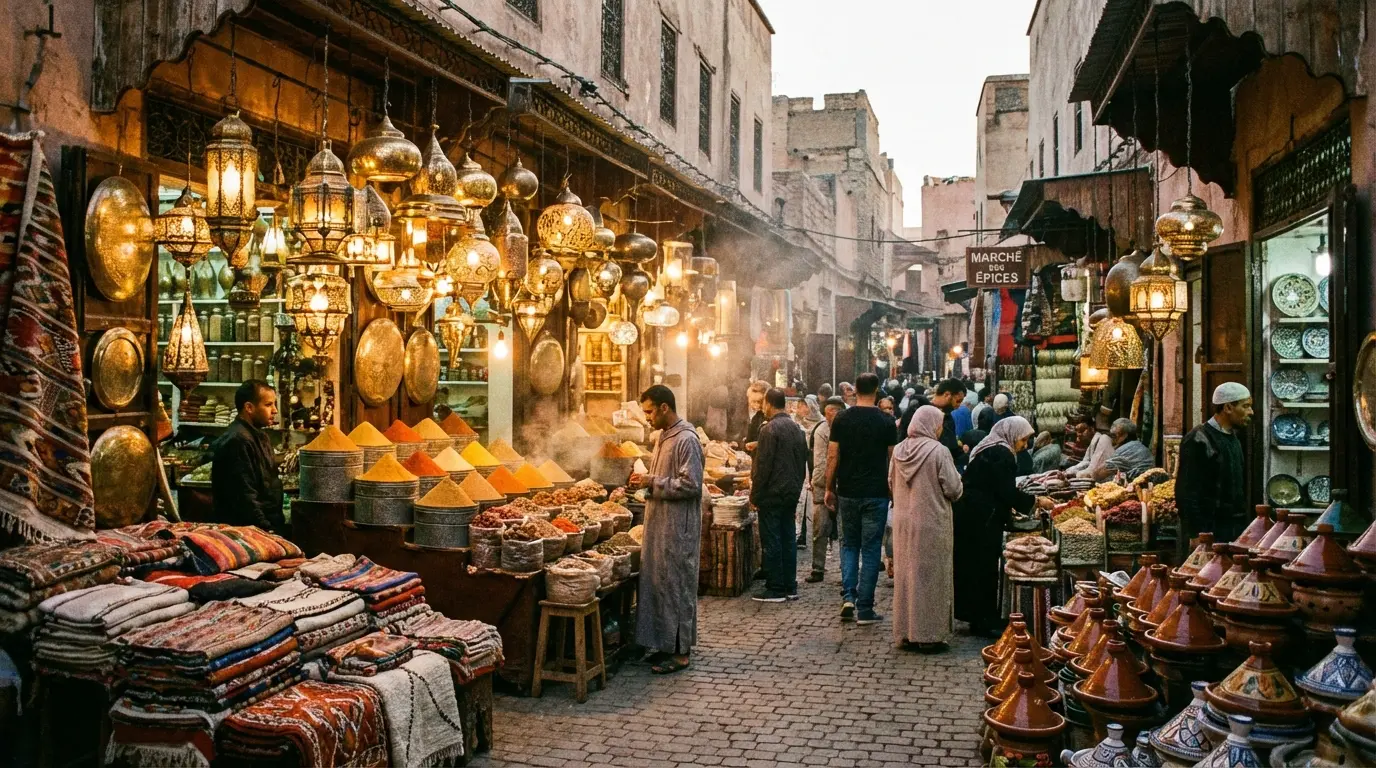
Every Morocco travel guide will tell you to haggle in the souks and try the mint tea. That’s fine. But if you’re a group leader bringing 25 people from your congregation to walk through Jewish cemeteries, visit restored synagogues, and stand inside the Hassan II Mosque, you need a different kind of preparation.
These are the things I wish someone had told every group leader before their first Morocco heritage trip. They’re not in the guidebooks because the guidebooks aren’t written for you.
The Things You Won’t Read in a Standard Travel Guide
Standard Morocco travel advice covers weather, currency, and what to pack. That’s all useful. But heritage group travel adds layers that most guides ignore entirely.
Your group isn’t visiting Morocco to shop. They’re visiting to stand at the threshold of places where their ancestors prayed, where faith communities lived for centuries, and where the sacred architecture of multiple religions shares the same streets. That kind of travel has its own rules, written and unwritten, and knowing them in advance makes the difference between a good trip and one that stays with your community for years. For the broader context of Morocco as a heritage destination, our heritage guide covers the full picture.
Tips for Faith Travelers Specifically
Visiting a Synagogue in Morocco: What to Know Before You Go
Morocco’s surviving synagogues are not tourist attractions with regular hours and ticket booths. Many require coordination in advance. A local caretaker may need to unlock the door. Visiting hours can shift.
Men should bring a kippah. Women should dress modestly, covering shoulders and knees. If your group plans to pray at a synagogue, discuss this with your Heritage Tours guide beforehand so the visit can be arranged with the appropriate respect and time.
The most important thing: don’t treat these spaces as photo opportunities first. They’re prayer spaces. Your group should enter them that way.
For a deeper look at Morocco’s synagogues and other Jewish sites, our spiritual sites guide covers each one in detail.
Entering a Mosque as a Non-Muslim Visitor
Most mosques in Morocco are closed to non-Muslim visitors. The Hassan II Mosque in Casablanca is the significant exception, offering guided tours of the interior.
When visiting mosque exteriors, courtyards, or the rare open-access site, remove shoes, cover shoulders and knees, and keep voices low. Women should bring a headscarf. Don’t walk in front of anyone at prayer. Don’t touch Qurans or prayer items without permission.
These aren’t restrictions. They’re signs of respect. Your community would expect the same from visitors in their own house of worship.
Jewish Cemetery Visits: A Few Quiet Rules
Jewish cemeteries in Morocco are among the most powerful stops on a heritage trip. They’re also sensitive.
Men should cover their heads. Walk between graves with care. Don’t sit on gravestones or place anything on them unless following a known tradition. Photography is generally acceptable at the larger cemeteries, but always ask your guide first. Some caretaker families prefer that certain areas not be photographed.
At smaller, more remote cemeteries, the caretaker may have been tending the graves for generations, paid by the Jewish community or Moroccan government. A tip is appropriate and appreciated.
The quiet matters. These are not scenic overlooks. For many in your group, especially those with Moroccan Jewish ancestry, these cemeteries hold family.
Tips for Group Leaders Specifically
Managing Expectations Before You Land
The single most important thing a group leader can do is prepare their community for what Morocco actually feels like. Not the postcard version. The real version.
It’s loud. The medinas are dense. The infrastructure is different from Israel or Europe. Heritage sites are embedded in living neighborhoods, not set apart with entry plazas and gift shops.
Tell your group: This is not a polished, packaged experience. That’s what makes it real. The synagogues feel like synagogues, not museums. The cemeteries sit in fields, not behind velvet ropes. Morocco asks you to meet it where it is.
Our group leader guide walks through how to manage this preparation in more detail.
What Happens When Someone in Your Group Doesn’t Connect
It happens. In every group, someone expected something different. Maybe the physical demands of the medinas are more than they anticipated. Maybe a particular site didn’t move them the way it moved others.
The best group leaders anticipate this. Check in with members who seem quiet. Offer alternative activities when one exists (a rooftop terrace with tea while the group walks a market, for example). Don’t force every moment to be meaningful for every person.
Morocco gives generously. But it gives different things to different people. That’s fine.
The Local Guide Relationship: It Changes Everything
Your Heritage Tours guide in Morocco isn’t reading from a script. They live there. They know the caretakers by name. They know which door to knock on at the synagogue. They know when the medina is too crowded for a group of 30 and they know the back route that avoids the crush.
The relationship between your group and the local guide will shape the trip more than any single site. Trust them. Lean on their knowledge. And when they suggest a stop that wasn’t on the itinerary, say yes. Those unplanned moments are often the ones your group remembers most.
Practical Things That Trip Up First-Timers
The Medina Has No Addresses: Navigation Reality
GPS doesn’t work well inside most medinas. Street names, where they exist, may not match any map. Alleys dead-end. Turns look identical.
For a group of 25, this means one thing: don’t wander. Your guide knows the way. Stay together. Establish a meeting point at the start of each medina visit. And if someone does get separated, they should stand still and wait. The guide will find them. Our first-timer’s guide covers more about what to expect in the medinas.
Photography at Sacred Sites and in the Mellah
Take photos. Morocco is beautiful. But be mindful of context.
Inside synagogues, ask first. At cemeteries, photograph the landscape but think twice before photographing individual graves, especially if other visitors are present who may be there for personal or religious reasons.
In the mellah, the former Jewish quarter, people live there now. It’s their home. Photograph the architecture, not the residents, unless you’ve asked and received permission.
At mosques, follow your guide’s direction. Some exterior views are fine. Interior photography at the Hassan II Mosque is permitted during tours. Other mosque sites may restrict any photography.
Tipping Culture for Groups
Tipping in Morocco is standard and expected. For heritage group travel specifically, here’s the framework.
Local site guides and caretakers: 20 to 50 dirhams per visit, depending on the size of the group. Your primary guide: a larger tip at the end of the trip is customary. Restaurant servers: 10 to 15 percent. Hotel porters: 10 to 20 dirhams per bag.
Heritage Tours can brief your group on specific amounts before each situation. Some group leaders collect a communal tip fund to simplify this. That works well.
What “Haggling” Is and When to Opt Out
Negotiating prices in the souks is part of Moroccan market culture. It’s expected, not offensive. But for heritage group travelers whose focus isn’t shopping, it’s also completely fine to skip the haggling. Pay the price offered, or walk away. Nobody is obligated to negotiate.
If your group does want to shop, the guide can advise on fair pricing and steer them toward reputable vendors. The key is not to let market interactions become the dominant memory of the trip. The synagogues are more important than the souks.
What Morocco Will Ask of You (And What It Gives Back)
Morocco asks patience. The pace is different. Things don’t always run on schedule. A door that should be open may not be open yet. A road that was clear yesterday may be under construction today.
Morocco asks presence. Put the phone away at the heritage sites. Look at the mezuzah marks in the stone. Listen when the guide tells you who lived here. Be in the place, not documenting the place.
Morocco asks openness. It’s a Muslim-majority country with a deep Jewish history and a complicated relationship with colonialism, modernity, and tradition. It doesn’t fit neatly into anyone’s existing framework. Let it be what it is.
What does Morocco give back? Stories your group will tell for years. Moments of connection they didn’t expect. A deeper understanding of their own heritage, wherever it comes from. And a sense that the world is both larger and more connected than they thought.
One Thing to Leave Behind
Leave behind the need to control every moment.
If you’re a group leader, you’re used to managing experiences. The sermon is prepared. The program runs on time. The outcomes are predictable.
Morocco doesn’t work that way. The best moments will be the ones you didn’t plan. A conversation with a cemetery caretaker that goes twenty minutes longer than scheduled. A wrong turn in the medina that leads to a courtyard with a 400-year-old fountain. A member of your group recognizing their family name on a gravestone.
Let Morocco unfold. Trust your guide. Trust your group. And trust that the trip will give your community exactly what it needs, even if it doesn’t look like what you planned.
If you’re a group leader considering Morocco and want to talk through what the trip looks like in practice, reach out through our group tour page. We’ll cover the things the guidebooks miss.
Frequently Asked Questions
What should you know before visiting a synagogue in Morocco? Coordinate the visit in advance through your tour operator, as many synagogues require a caretaker to unlock the door. Men should bring a kippah. Women should dress modestly, covering shoulders and knees. Enter as you would a prayer space, not a museum. Photography is often permitted but should be approached respectfully and only after confirming with your guide.
Is it appropriate to take photos in Moroccan Jewish cemeteries? Generally yes, but with care. Photograph the landscape and architecture rather than individual graves, especially when other visitors are present. At smaller cemeteries, ask your guide about the caretaker’s preferences. These are sacred sites and, for some visitors, places where family is buried. Let the gravity of the place guide your judgment.
What are the etiquette rules for visiting mosques in Morocco as a non-Muslim? Most mosques are closed to non-Muslim visitors. At the Hassan II Mosque and other open sites, remove shoes, cover shoulders and knees, bring a headscarf (for women), speak quietly, and don’t walk in front of anyone praying. Follow your guide’s instructions on photography. These are the same courtesies you’d extend to visitors in your own house of worship.
How do you navigate Morocco’s medinas as a large group? Stay with your guide. GPS is unreliable inside medinas, and the winding streets look similar. Establish a meeting point at the start of each visit. If someone gets separated, they should stop and wait. Heritage Tours’ local guides know every turn and manage group movement daily. The key is trust and togetherness, not individual exploration.
What is tipping culture like in Morocco for heritage tour groups? Tipping is standard and expected in Morocco. For heritage groups: 20 to 50 dirhams for local site guides and caretakers, 10 to 15 percent at restaurants, 10 to 20 dirhams per bag for hotel porters, and a larger tip for your primary guide at the trip’s end. Many group leaders collect a communal tip fund to simplify the process for everyone.