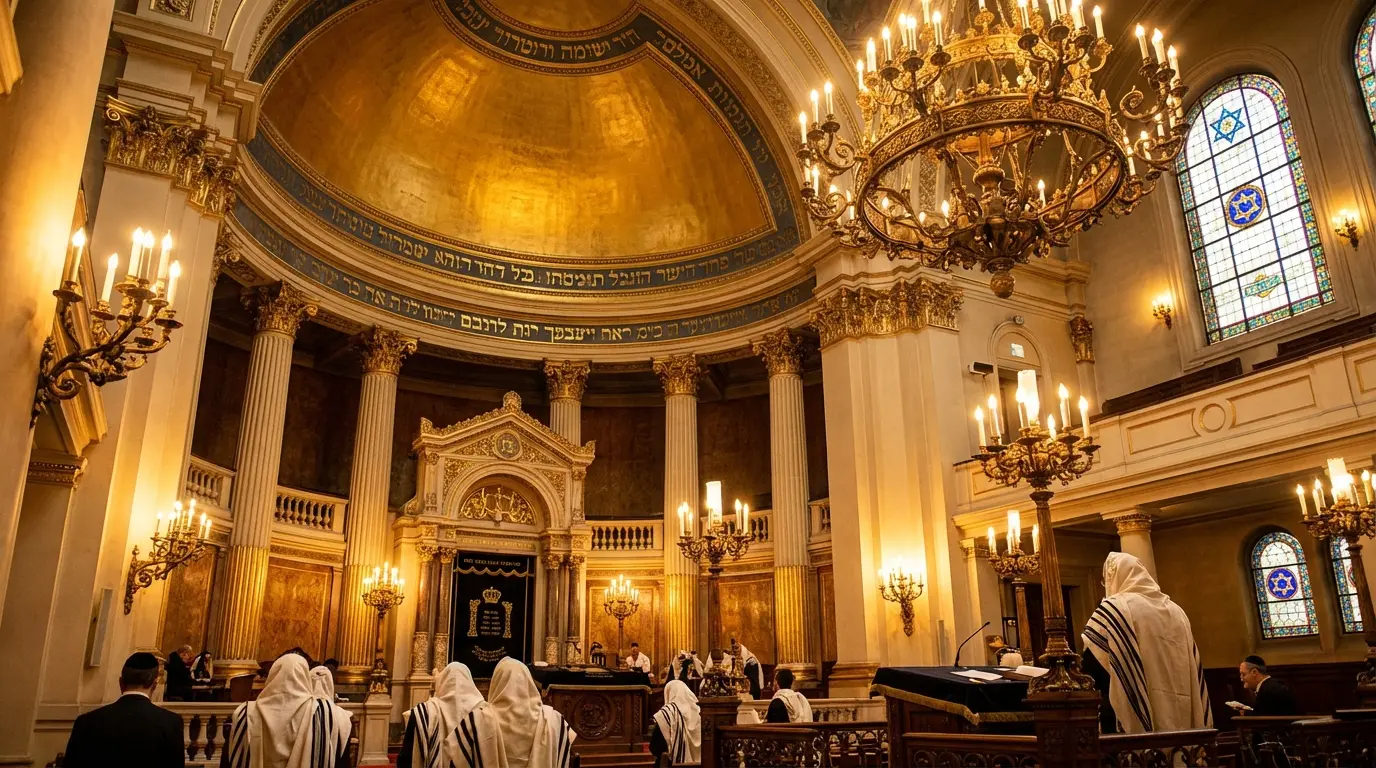
France’s Jewish Story: A Thousand Years in Brief
Jewish communities have lived in France since at least the Roman period. By the Middle Ages, French Jewry had become one of the great intellectual centers of the Jewish world. Scholars like Rashi of Troyes and the Tosafists shaped Talmudic study in ways that endure to this day. Communities thrived in Paris, Alsace, Provence, and the Rhone Valley.
That story is also one of expulsion, persecution, and resilience. The great expulsion of 1394 scattered Jewish life across France, yet pockets survived, especially in the papal territories of Provence. Centuries later, France became the first European country to grant full citizenship to Jews during the Revolution. The Dreyfus Affair, the Vichy deportations, and the rebuilding of Jewish life after the Shoah are all chapters written on French soil.
For a rabbi or community leader planning a group heritage journey, France offers something rare: the chance to walk through all of these chapters in a single trip. For a broader overview of France as a heritage destination, see our France heritage travel guide.
Troyes: Where Rashi Lived and Wrote
Rabbi Shlomo Yitzchaki, known to the world as Rashi, was born in Troyes in 1040. He is arguably the most widely read Jewish commentator in history. His commentary on the Torah accompanies every printed Chumash. His commentary on the Talmud is the first reference for every student opening a page of Gemara.
Troyes, a modest city in the Champagne region about ninety minutes from Paris, was his home. He studied in the Rhineland yeshivot and returned to Troyes to establish his own school. He lived here, taught here, and wrote here until his death in 1105.
Today, the town preserves his legacy through a heritage trail that winds through the medieval quarter. The Rashi interpretive center offers context on his life, his methods, and the community that supported his work. The narrow streets of the old quarter are largely unchanged from the medieval period.
For a synagogue group, visiting Troyes is more than a historical excursion. It is a pilgrimage to the place where some of the most foundational Jewish scholarship was created. When your group stands in the neighborhood where Rashi walked to his study house, that is a moment no classroom can replicate.
Our hidden heritage sites in France guide covers Troyes alongside other sites most travelers never find.
Paris: The Marais, Pletzl, and the Memorial de la Shoah
Paris is home to France’s largest Jewish community and to several of its most important heritage sites.
The Marais, particularly the area around Rue des Rosiers known as the Pletzl (Yiddish for “little square”), has been the heart of Jewish Paris for centuries. The Agoudas Hakehilos synagogue, designed by Hector Guimard in the Art Nouveau style, is one of the most architecturally significant synagogues in Europe. The street itself still has kosher bakeries, bookshops, and the unmistakable texture of a living Jewish neighborhood.
The Memorial de la Shoah stands a short walk from the Marais. It is both a museum and a memorial, housing the Wall of Names that lists the 76,000 Jews deported from France during the Shoah. The memorial handles group visits thoughtfully, and the experience is one that stays with participants for a long time. It is part of the journey, not a side note. It asks your group to hold the full arc of Jewish experience in France, not just the chapters of flourishing.
The Shoah Memorial at Drancy, in a suburb northeast of Paris, marks the site of the internment camp from which most French Jews were deported. For groups that want to engage more deeply with this history, Drancy is a meaningful addition.
Alsace: Strasbourg, Colmar, and the Oldest Jewish Cemeteries in Europe
Alsace, along the German border in northeastern France, has one of the deepest Jewish roots in Western Europe. Jewish communities have lived in this region since at least the 12th century, and the density of heritage sites here is remarkable.
Strasbourg’s Great Synagogue, rebuilt after World War II on the site of the synagogue destroyed by the Nazis, is a powerful symbol of continuity. The Jewish community in Strasbourg remains active and welcoming to visiting groups.
Colmar and the smaller towns around it tell an older story. Jewish cemeteries in places like Jungholtz and Rosenwiller hold headstones dating back centuries. The inscriptions record the names of scholars, merchants, and community leaders who built lives in these small towns across generations.
Many of these cemeteries are not open to the general public. Heritage Tours works with local custodians to arrange group access, which is one of the reasons these sites are so rarely visited and so deeply moving when you do reach them.
The Alsatian Jewish Heritage Trail connects dozens of sites across the region, from restored synagogues to ritual baths. A group with even one full day in Alsace can encounter heritage that few travelers ever see.
Provence and the Comtat Venaissin: Protected Under the Pope
When Jews were expelled from the Kingdom of France in 1394, one territory offered refuge. The Comtat Venaissin, controlled by the papacy, allowed Jewish communities to remain. For centuries, the Jews of Carpentras, Cavaillon, Avignon, and L’Isle-sur-la-Sorgue lived under papal protection while Jewish life disappeared from the rest of France.
The Carpentras synagogue, dating to 1367, is the oldest active synagogue in France. Its interior has been renovated over the centuries, but the building has stood on the same site for more than 650 years. Services are still held here.
The Cavaillon synagogue, built in the 15th century, is now a museum. The building preserves the layout of a medieval Provencal synagogue with extraordinary fidelity. The women’s gallery, the carved ark, and the original bimah are all intact.
The story of the Comtat Venaissin communities is one of those rare historical narratives that contains both sorrow and hope. When you tell your group that this synagogue stood because one authority chose protection over expulsion, that is a teaching moment no textbook can match.
Planning a Jewish Heritage Tour to France with Your Group
If you are a rabbi or community leader considering France for a group heritage journey, here is what you should know.
The geography is manageable. Paris, Troyes, Alsace, and Provence can all be covered in a 7-to-10-day itinerary with thoughtful routing. Heritage Tours builds custom routes that connect these sites without exhausting the group.
Group leaders travel free. With 15 or more participants, your travel costs are covered by Heritage Tours. For a synagogue group, this is a meaningful financial benefit.
Shabbat is part of the planning. Heritage Tours builds Shabbat into the itinerary, whether that means scheduling a free Shabbat in Paris with access to local synagogues or arranging Shabbat hospitality in Strasbourg. This is not an afterthought.
Local expertise matters. At sites like the Alsatian cemeteries and the Comtat Venaissin synagogues, Heritage Tours works with local historians and community contacts who can open doors that are simply closed to general tourists.
For a practical walkthrough of the group planning process, see our guide for pastors and rabbis organizing a group heritage tour to France. For a day-by-day example of how these sites connect, see our 10-day France heritage itinerary.
FAQ: Jewish Heritage Travel in France
Where did Rashi live and is there a heritage site in Troyes? Rashi lived in Troyes, in the Champagne region, from 1040 to 1105. The town has a heritage trail through the medieval quarter and an interpretive center dedicated to his life and work. Troyes is about ninety minutes from Paris.
What is the Jewish Quarter in Paris and what can you visit there? The Marais, particularly the Pletzl around Rue des Rosiers, is the historic Jewish quarter. You can visit the Guimard-designed synagogue, kosher bakeries and shops, and the Memorial de la Shoah, which is a short walk away.
What makes Alsace significant for Jewish heritage travel? Alsace has some of the oldest Jewish communities in Western Europe, with cemeteries dating back centuries, the rebuilt Great Synagogue of Strasbourg, and a network of heritage sites across small towns. The density of Jewish history here is exceptional.
What is the Comtat Venaissin and why were Jews protected there? The Comtat Venaissin was a papal territory in Provence where Jews were allowed to remain after their expulsion from France in 1394. The synagogues in Carpentras and Cavaillon are among the oldest in Europe and stand as evidence of this protection.
Is the Memorial de la Shoah in Paris appropriate for group visits? Yes. The Memorial handles group visits with care and sensitivity. The Wall of Names, the permanent exhibition, and the crypt create a powerful experience. For groups engaging with the full arc of Jewish life in France, it is an essential stop.
France’s Jewish heritage is vast, layered, and deeply moving. If you are thinking about leading your community on this journey, explore our France destination page or get in touch with us. We would welcome the conversation.