Why France? The Case for a Heritage Journey
When most people think of France, they think of the Eiffel Tower or a café on the Left Bank. But if you lead a faith community, France means something else entirely. It means standing where Rashi studied Torah in Troyes. It means walking through the synagogues of Provence that survived when every other Jewish community in Europe was being expelled. It means Lourdes, where five million pilgrims arrive each year, and Chartres, where medieval Christians poured their deepest beliefs into stone and glass.
I have spent more than forty years in heritage tourism, and I can tell you that France holds one of the most layered sacred landscapes on earth. For a rabbi or pastor planning a group journey, the question is not whether France belongs on your list. The question is where to begin.
This guide is written for you, the leader. Not the individual tourist browsing options. You are the one your congregation will look to for direction, and this is the overview you need before you take the next step.
Jewish Heritage in France: From Troyes to Provence
France’s Jewish story goes back more than a thousand years. The communities that flourished here produced some of the most important scholars in Jewish history, and the physical traces of that life are still visible if you know where to look.
Troyes is where Rashi, Rabbi Shlomo Yitzchaki, lived and composed his commentary on the Torah and Talmud in the 11th century. His work shaped Jewish learning across the world and is still studied in every yeshiva today. The town preserves his legacy with a heritage trail and interpretive center. Most English-speaking travelers have never heard of visiting Troyes, which makes it all the more meaningful when you bring a group there.
Paris holds the historic Marais district, the old Jewish quarter known as the Pletzl. The Rue des Rosiers, the synagogues, and the Memorial de la Shoah are all within walking distance of each other. The Memorial is one of the most important Holocaust remembrance sites in Europe, and it handles group visits with real care.
Alsace, in the northeast, is home to Strasbourg’s Great Synagogue, ancient Jewish cemeteries in small towns like Jungholtz and Rosenwiller, and a living Jewish heritage that stretches back centuries.
Provence and the Comtat Venaissin tell an extraordinary story. When Jews were expelled from the Kingdom of France in 1394, the papal territories in Provence remained open. The synagogues of Carpentras and Cavaillon still stand, among the oldest in Europe. For a deeper look at these communities, see our guide to Jewish heritage in France.
Christian Heritage in France: Cathedrals, Abbeys & Pilgrimage Sites
France has been a center of Christian pilgrimage for over a millennium. The sites here are not just historical landmarks. They are living places of worship and devotion.
Lourdes draws roughly five million visitors each year, making it one of the most visited pilgrimage sites in the world. The grotto where Bernadette Soubirous reported her visions in 1858, the healing spring, and the nightly candlelight processions create an experience that many describe as the most moving of their lives.
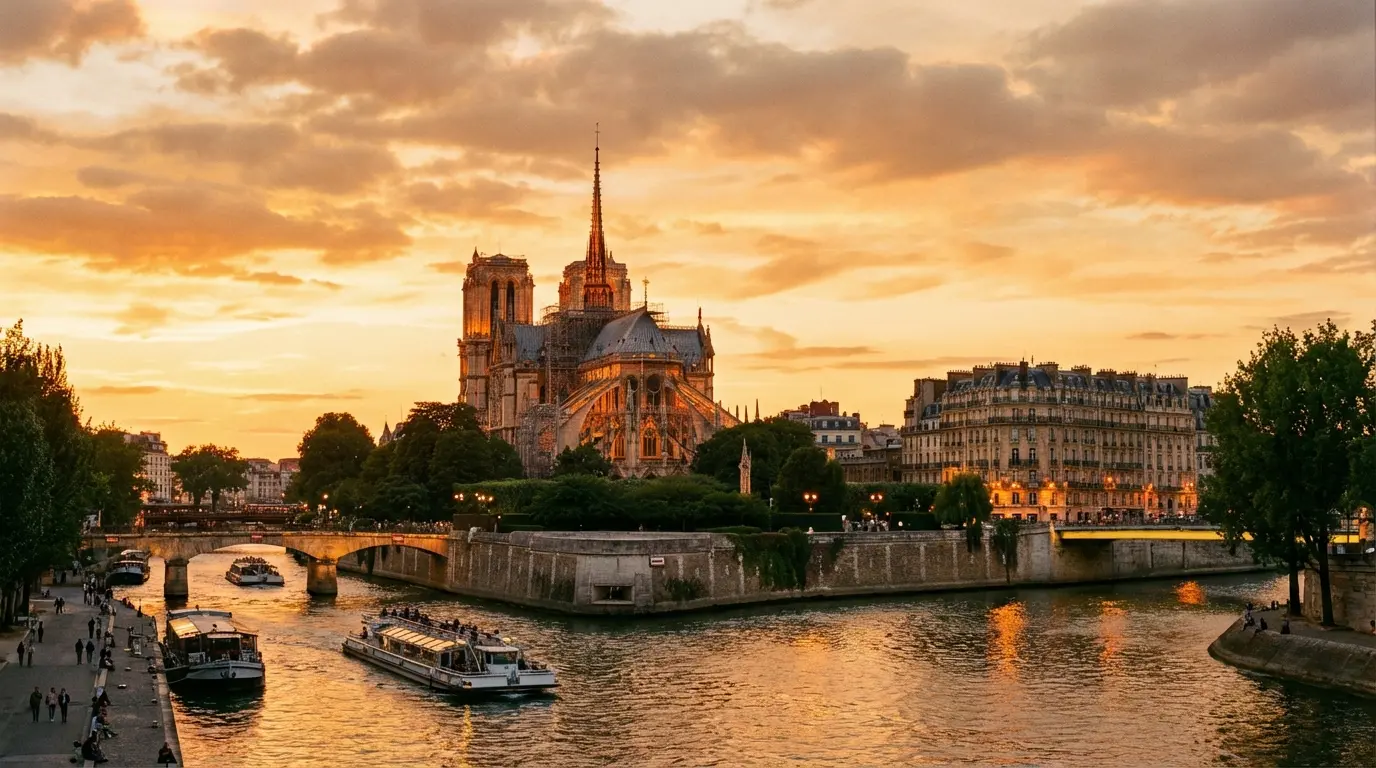
Notre Dame de Paris reopened in December 2024 after its devastating fire and painstaking restoration. For faith travelers, visiting the cathedral now carries an added layer of meaning, a story of loss and renewal that resonates deeply.
Chartres Cathedral is a masterwork of Gothic architecture. The labyrinth on the nave floor has been walked by pilgrims since the 13th century. The rose windows fill the interior with a blue light that photographs cannot capture.
Mont Saint-Michel, the abbey perched on a tidal island off the Normandy coast, has drawn pilgrims since the 8th century. Vezelay, where Bernard of Clairvaux preached the Second Crusade, remains one of the great Romanesque churches in Europe.
For a site-by-site guide to these places and more, see our article on spiritual sites in France for faith travelers.
Regions to Know
France is a large country, and heritage sites are spread across distinct regions. Here is a brief orientation for planning purposes.
Ile-de-France (Paris region): Notre Dame, the Marais, Memorial de la Shoah, Sainte-Chapelle. The natural starting point for most groups.
Champagne (Troyes): Rashi’s hometown. About 90 minutes southeast of Paris by road. Easy to include as a day trip or a stop between Paris and Alsace.
Alsace (Strasbourg, Colmar): Jewish cemeteries, the Great Synagogue of Strasbourg, charming medieval towns with centuries of interfaith history. Also home to stunning Romanesque and Gothic churches.
Loire Valley: Chartres sits at the northern edge. The abbey churches and castles of the Loire tell the story of medieval French Christianity in extraordinary detail.
Provence: The Comtat Venaissin communities (Carpentras, Cavaillon), plus Avignon with its Papal Palace, the seat of the papacy for nearly a century.
Southwest (Lourdes): The great Marian shrine in the foothills of the Pyrenees. Worth at least two days for any Christian pilgrimage group.
Planning a Group Heritage Trip to France: What Leaders Need to Know
If you are a rabbi or pastor considering France for your next group journey, here are the essentials.
Group size matters. With 15 or more participants, group leaders travel completely free with Heritage Tours. This is a meaningful benefit for community leaders organizing on behalf of their congregations.
Start early. France’s most popular heritage sites have group booking windows that fill months in advance, especially Lourdes during pilgrimage season and Notre Dame since its reopening. Six to nine months of lead time is wise for most groups.
You don’t carry the planning burden. Heritage Tours handles the itinerary building, hotel arrangements, local guides, and ground transportation. Your role is to lead the spiritual experience. We take care of the rest.
Custom itineraries are the norm, not the exception. A synagogue group from New York will have different priorities than a church group from Atlanta. The itinerary is built around your community’s interests and faith tradition.
For a detailed walkthrough of the organizing process, read our guide for pastors and rabbis planning a group heritage tour to France.
FAQ: France Heritage Travel
What are the most important Jewish heritage sites in France? Rashi’s Troyes, the Marais and Memorial de la Shoah in Paris, the synagogues of Carpentras and Cavaillon in Provence, and the Jewish cemeteries and communities of Alsace. These span a thousand years of Jewish life in France and each tells a distinct chapter of that story.
Is France a good destination for Christian pilgrimage groups? Yes. Lourdes alone draws five million pilgrims annually. Combined with Notre Dame, Chartres, Mont Saint-Michel, and Vezelay, France offers one of the richest Christian pilgrimage circuits in the world.
How do group leaders benefit from traveling with Heritage Tours to France? Group leaders travel free when they bring 15 or more participants. Beyond the financial benefit, Heritage Tours handles the full itinerary, local guides, hotel coordination, and ground transport, so you can focus entirely on leading your group’s experience.
What is the best region in France for heritage travel? It depends on your group’s focus. Paris and Troyes are essential for Jewish heritage. Lourdes and Chartres anchor Christian pilgrimage. Alsace and Provence serve both traditions beautifully. Most groups visit multiple regions over 7 to 10 days.
How far in advance should a group leader book a France heritage tour? Six to nine months is ideal. Popular sites like Lourdes and Notre Dame have group booking windows that fill well ahead of time, and early planning gives you the best options for hotels and scheduling.
France is not a destination you visit once and forget. It stays with you, and it stays with your group. If you are considering leading a heritage journey to France, explore our France destination page or reach out to us directly. We would be glad to walk through the possibilities with you.