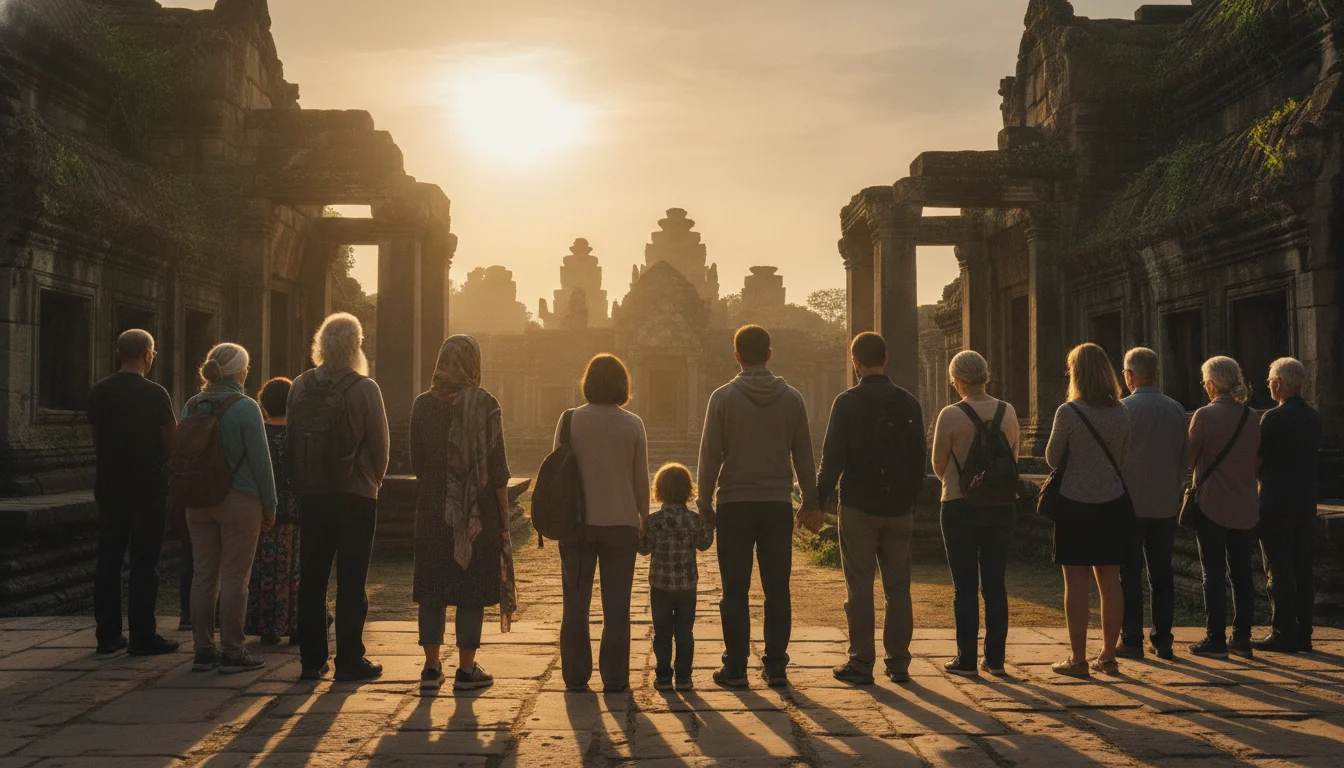
A rabbi once asked me, early in a planning call, “So is this basically a vacation with a synagogue stop?” I understood why he asked. Most travel companies do treat heritage as a bullet point, a half-day detour between the beach and the shopping district. I told him the truth: no, it isn’t, and if that’s what he wanted, we weren’t the right operator for his group. We build trips where the faith and the history are the entire point, not a garnish on top of a regular vacation.
That conversation comes up often enough that I want to lay out, plainly, what “spiritual heritage travel” actually means, and how it’s different from a regular trip that happens to include a few religious landmarks.
It Starts With Intent, Not Itinerary
The difference between spiritual heritage travel and general tourism isn’t really about which buildings you walk into. It’s about why you’re going. A leisure trip to Turkey might stop at Ephesus for an hour because it’s a famous ruin and the bus has time. A spiritual heritage trip goes to Ephesus because your group wants to stand where Paul preached, read the relevant scripture on site, and understand what that means for their own faith. Same coordinates on a map. Completely different trip.
This is the reason we describe ourselves as a heritage and faith travel operator, full stop, not a general tour company that also does religious trips. Every itinerary we build starts from biblical, Jewish, Christian, or broader historical significance first. The beach days and free shopping afternoons that fill out a normal vacation simply aren’t part of the model.
Three Things That Make a Trip “Spiritual Heritage”
1. The Sites Are Chosen for Meaning, Not Popularity
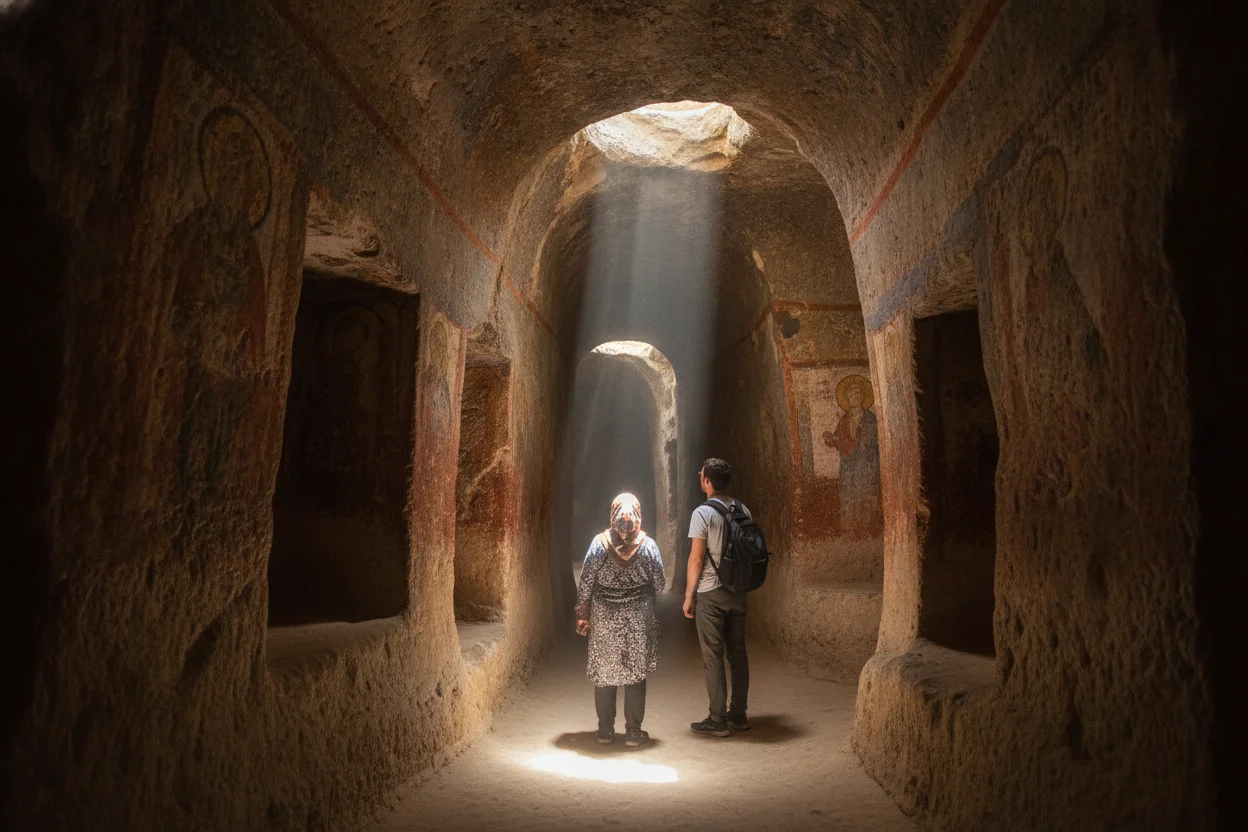
A spiritual heritage itinerary prioritizes the places that carry weight in your group’s story, whether that’s a synagogue with five centuries of continuous Jewish life, a cave church where early Christians hid from persecution, or a well tradition holds as an apostle’s family home. Some of these are famous. Some are quiet and easy to miss unless someone points you toward them. Popularity isn’t the filter. Relevance to the story is.
2. The Guide Frames History Through Faith, Not Just Facts
Any tour guide can recite dates and dynasties. A spiritual heritage guide connects the ruins to the text, the tradition, and the reason your group is standing there. When we walk a group through Cappadocia’s underground cities, we’re not just describing Byzantine architecture. We’re talking about believers hiding from persecution, and what that says about the cost of faith in the early church. That framing is the whole difference.
3. The Group Is Built Around Shared Faith, Not Individual Leisure
Spiritual heritage travel is almost always a group experience, led by a pastor, rabbi, educator, or community leader, traveling with people who share a common faith framework. That shared context changes everything, from how a site is explained to how the group processes it together afterward, often over a meal or in a closing reflection at the end of the day. It’s a fundamentally different experience than a solo tourist reading a placard.
Where This Shows Up in Practice
You can see this approach across our full range of destinations. In Turkey, it means grounding a trip in the spiritual sites tied to Paul’s ministry rather than treating Ephesus as a photo stop. In Malta, it means centering the traditional site of Paul’s shipwreck as the anchor of the trip, not an afternoon aside. Every one of our destination itineraries is built this way, country by country, faith by faith.
It’s also why we’re honest about the limits of tradition. When a site’s connection to a biblical figure rests on tradition rather than archaeological proof, we say so plainly. That honesty is part of what spiritual heritage travel means to us: we care more about your group having an accurate, meaningful experience than about oversell.
What This Means for a Group Leader
If you’re planning a trip for your congregation or community, this distinction should shape how you evaluate any operator, including us. Ask what a company’s itinerary is actually built around. Ask whether the guide is trained to connect sites to faith and text, or just to recite history. Ask whether the trip treats your group’s shared purpose as central or incidental.
We built our whole model around this question, which is also why the group leader travels free when you bring fifteen or more participants. A pastor or rabbi leading a meaningful trip for their community shouldn’t be priced out of leading it.
If you want to see how this plays out for a specific destination, our group heritage tours page walks through the model, and our private tours option covers what a fully custom spiritual itinerary looks like for smaller or more specific groups.
FAQ: Spiritual Heritage Travel
Is spiritual heritage travel only for religious groups?
It’s built primarily for faith groups led by clergy, educators, or community leaders, but the audience isn’t limited to any one denomination. We’ve led trips for pastors, rabbis, and educators across a range of traditions. What defines the trip is the intent to engage sites through faith and history, not leisure.
How is this different from a regular guided tour that visits religious sites?
A regular tour visits religious sites as stops among many other kinds of stops, often with a guide trained in general history rather than faith context. A spiritual heritage trip is built entirely around the faith story, with every site chosen and explained through that lens, and no leisure or vacation stops diluting the itinerary.
Do you tell groups when a site’s history is based on tradition rather than proof?
Yes, always. Some sites, like traditional apostolic homes or wells, rest on centuries of tradition rather than archaeological certainty. We say so plainly rather than oversell it. Most groups find the honest version more meaningful, not less, because they can trust everything else we tell them too.
Can a spiritual heritage trip include historical, non-religious sites too?
Yes. Understanding the broader historical and cultural context, Roman rule, Ottoman history, the Knights of Malta, often deepens a group’s understanding of the faith sites around it. We include that context throughout, but it supports the spiritual core of the trip rather than replacing it.
What size group works best for this kind of trip?
Spiritual heritage trips work at almost any size, from an intimate group of fifteen to a large congregational trip of eighty or more. The group leader travels free at fifteen or more participants, which is often the number congregations aim for when they start planning.
If you’re trying to figure out whether your congregation’s trip should be built this way, I’d be glad to talk it through. You can start with our about page to see our full approach, or go straight to tours to see the destinations we build these itineraries around.
Contact us and we’ll help you shape a trip that’s actually about what your group came for.