
A pastor called me a few years ago and asked a question that sounds simple but is not: “What exactly am I buying when I book a heritage tour instead of just a vacation package to the same country?” I have thought about that answer for years, and I still think it is the right question for every group leader to ask before signing anything. The two trips can visit the same cities and still be completely different experiences.
So let me answer it properly, the way I would if you called me tomorrow.
What Makes a Tour a Heritage Tour
A cultural heritage tour is built around a specific intent: understanding a place through its religious, historical, and ancestral significance, not through its beaches, nightlife, or shopping. Every stop, every guide’s script, every meal, and every day’s pacing gets chosen to serve that purpose. A regular tour operator will happily add a half day at a biblical site to a vacation itinerary. A heritage operator builds the entire itinerary around sites like that, and everything else supports them.
That distinction matters more than people expect going in. On a heritage tour, your guide is trained to connect a ruin or a synagogue or a church to the text or the history your group actually cares about. On a generic tour, the same site gets three minutes and a photo stop. Same location, entirely different depth.
What’s Actually Included
A well-built heritage tour typically bundles these pieces into one package:
- A licensed local guide who understands the specific religious or historical context of the region, not just general tourism facts
- An itinerary sequenced around the story you are telling, whether that is the footsteps of Paul, the Jewish communities of a region, or a specific historical period
- Group logistics: coach transport, hotel blocks, site entry fees, and meal planning built around your group’s needs
- Time built in for reflection, prayer, or teaching at the sites that call for it, rather than a rushed photo-stop pace
- Support for the group leader specifically, since you are the one fielding questions from your congregation or class before, during, and after the trip
What is usually a separate conversation, and worth having early, is international airfare, personal spending, and travel insurance. Good operators are upfront about this rather than folding it into a headline number that turns out to be incomplete once you get the real invoice.
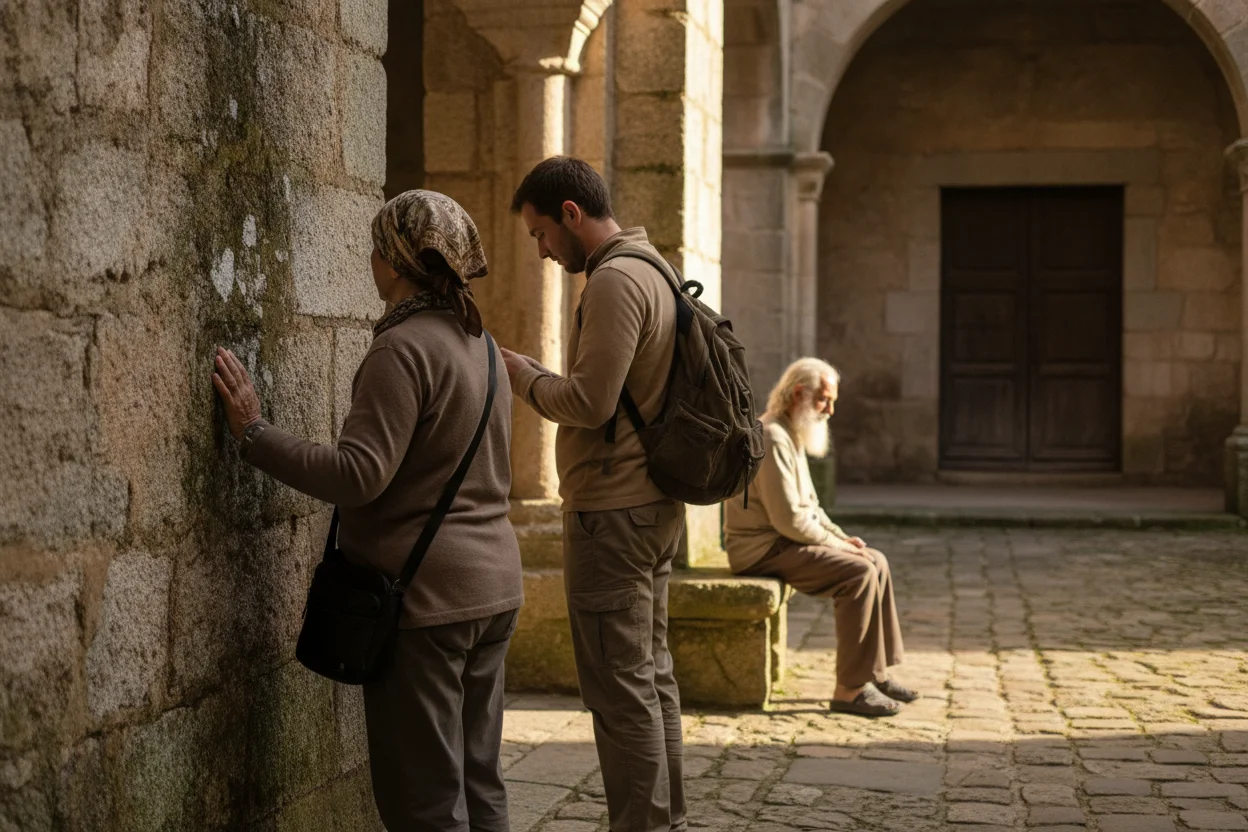
How Heritage Tours Differs From a Regular Tour Operator
We only run heritage and faith-intent travel. That is not a marketing line, it is the actual constraint we operate under. We do not build beach add-ons or leisure extensions into our itineraries, and we do not sell heritage trips as a side product next to a general vacation catalog. Every itinerary across our nineteen destinations in Europe, the Middle East, and North Africa gets built around the same question: what does this group need to see, and in what order, to understand this place the way they came to understand it.
That focus shows up in small ways that matter. Our guides are chosen for their ability to speak to pastors, rabbis, and educators, not just tourists. Our pacing assumes a mixed-age group that wants to stand somewhere and absorb it, not just check a box. And our pricing model assumes group travel from the start, which is why the group leader travels free when you bring fifteen or more participants. That policy only makes sense for an operator built around groups, not individual leisure bookings.
How to Choose the Right Heritage Tour Operator
A few questions separate a real heritage operator from a generic company that added a religious itinerary to its catalog.
Ask who writes the guide scripts. If the answer is generic tourism content, the depth will show its limits fast. You want guides trained specifically for faith and heritage groups.
Ask how they handle group size. A heritage operator that regularly moves groups of ten to forty people has systems for it: hotel blocks, coach sizing, meal logistics. An operator that mostly does small private tours may struggle with your congregation’s numbers.
Ask what happens with dietary needs, mobility concerns, or a mixed-age group. These come up on nearly every congregation trip, and a seasoned operator has answers ready rather than improvising.
Ask for a real cost breakdown, not a headline number. Our guide to heritage tour packages walks through exactly what should be included and what tends to get quoted separately.
If you want to see the range of destinations we run this model across, our tours page lays out the full picture, and our about page covers how we got into this specific niche of travel.
A Word on Honesty
I try to be straightforward with every group leader I talk to, and that habit shows up across everything we publish. If a site’s historical claim is debated, I say so. If a cost is going to be higher than people expect, I say that too. A cultural heritage tour done right is not a sales pitch dressed up as a pilgrimage. It is a carefully built experience for people who came for something specific, and the operator’s job is to deliver that honestly, not to oversell it.
FAQ: Cultural Heritage Tours
What is the difference between a heritage tour and a regular vacation tour?
A heritage tour is built entirely around religious, historical, or ancestral significance: the itinerary, guide training, and pacing all serve that purpose. A regular vacation tour may include a heritage site as one stop among many, with far less depth and context given to it.
Is a heritage tour more expensive than a regular tour?
Not necessarily more expensive, but the money is spent differently. You are paying for specialized guiding, a slower and more intentional pace at the sites that matter, and group logistics built around congregations and educational groups rather than leisure travelers.
Who typically goes on a heritage tour?
Pastors and their congregations, rabbis and their communities, educators bringing student groups, and community leaders organizing ancestral or historical journeys. Group sizes commonly run from ten to forty participants traveling together.
How do I know if an operator is a genuine heritage specialist?
Ask who writes their guide content, how often they run groups your size, and whether heritage and faith travel is their core business or an add-on to a general vacation catalog. A specialist will have clear, specific answers to all three.
Can a heritage tour be combined across more than one country?
Yes, and many groups do this well. Our guide on combining multiple countries into one heritage tour covers which destinations pair naturally and how to avoid rushing the itinerary.
If you are trying to figure out whether a heritage tour is the right fit for your group, I would be glad to talk through what you are hoping to see and build a real itinerary around it.
Contact us whenever you want to start that conversation.